Photographers › Aerial Photographers
Aerial Photographers on a Tight Budget: Where to Save, and Where Saving Backfires
Aerial photography has a seductive price spread. One pilot quotes you $600 for drone photographs of your property, your business, or your event; another offers what sounds like the same thing for $150; a third — a friend of a friend with a nice drone — offers to do it for beer. All three will produce pictures taken from the air. They are not selling the same product, and the difference is not snobbery: it is certification, insurance, airspace homework, and the probability that you get usable images on the one day you needed them. I managed a portrait studio and watched clients learn the cheap-photography lesson in a field where a reshoot costs an afternoon. In aerial work, a failed shoot can cost the listing, the event, or the inspection window itself. This guide separates the savings that are real from the ones that send the bill later. This site lists 877 aerial photographers, so a tight budget still leaves you a wide field — if you spend the money in the right places.
First, what aerial work actually costs
Published 2026 pricing for drone photography clusters into a few recognizable shapes:
| Booking | Typical price | Notes |
|---|---|---|
| Basic stills package, one property or site | $175–$400 | A set of edited aerial stills, one location, one visit |
| Aerial stills plus short video | $300–$600 | Adds a one- to two-minute edited aerial video |
| Hourly hire | $100–$250 per hour | Usually with a two-hour minimum; travel may be extra |
| Half day / multiple locations | $400–$900 | Events, several nearby sites, or a construction series |
| Twilight aerials | Priced as an add-on or a premium visit | A separate trip at dusk, weather permitting |
Against those bands, a quote of $75 for a full aerial package is not a discovery; it is a question. Usually the answer is an uncertificated pilot, no insurance, or a hobbyist pricing a hobby. Sometimes it is a legitimate new professional building a portfolio — those exist, and the checks below are how you tell one from the other without being unkind about it.
Where saving is safe — genuinely
Shrink the scope, not the pilot. The single most effective budget move is ordering fewer deliverables: stills only, no video; ten finished images, not thirty; one location, one flight window. Pilots price production and editing time, and a tight shot list is real money off without touching quality or legality.
Book the boring hour. Twilight aerials are beautiful and priced like it, because they consume an evening and a second trip. Mid-morning light on a clear day is unglamorous and entirely effective for most purposes — property layout, land, roofs, construction progress, venue scale. If your goal is information or a clean listing gallery rather than a poster, daylight stills do the job for the base rate.
Be flexible on the day. A pilot who can fold your job into a route they are already flying — another shoot in your area, a weather window they choose — can often price keener than one making a dedicated trip on your fixed date. Weekday and off-peak flexibility is the aerial version of the standby fare.
Do the groundwork yourself. Clear access, permission from the property owner in writing, gates unlocked, vehicles moved, the site contact on site, a shot list with the three images that matter marked as such. Pilots bill for friction; a client who removes it is cheaper to serve, and good pilots say so in the quote.
Buy the package, not the hour, for a defined job. For one property or one event, a fixed package with named deliverables beats an hourly rate whose total depends on wind, waiting, and how the day unfolds. Hourly pricing suits open-ended work — a long event, a series of sites — where a package would be padded against the unknowns.
Ask about the portfolio-builder — and then verify them like anyone else. New professionals building an aerial portfolio legitimately charge less. The saving is safe only if they pass the non-negotiables in the next section. Cheap and certificated, insured and prepared is a find. Cheap instead of those things is the backfire with a deposit paid.
Where saving backfires
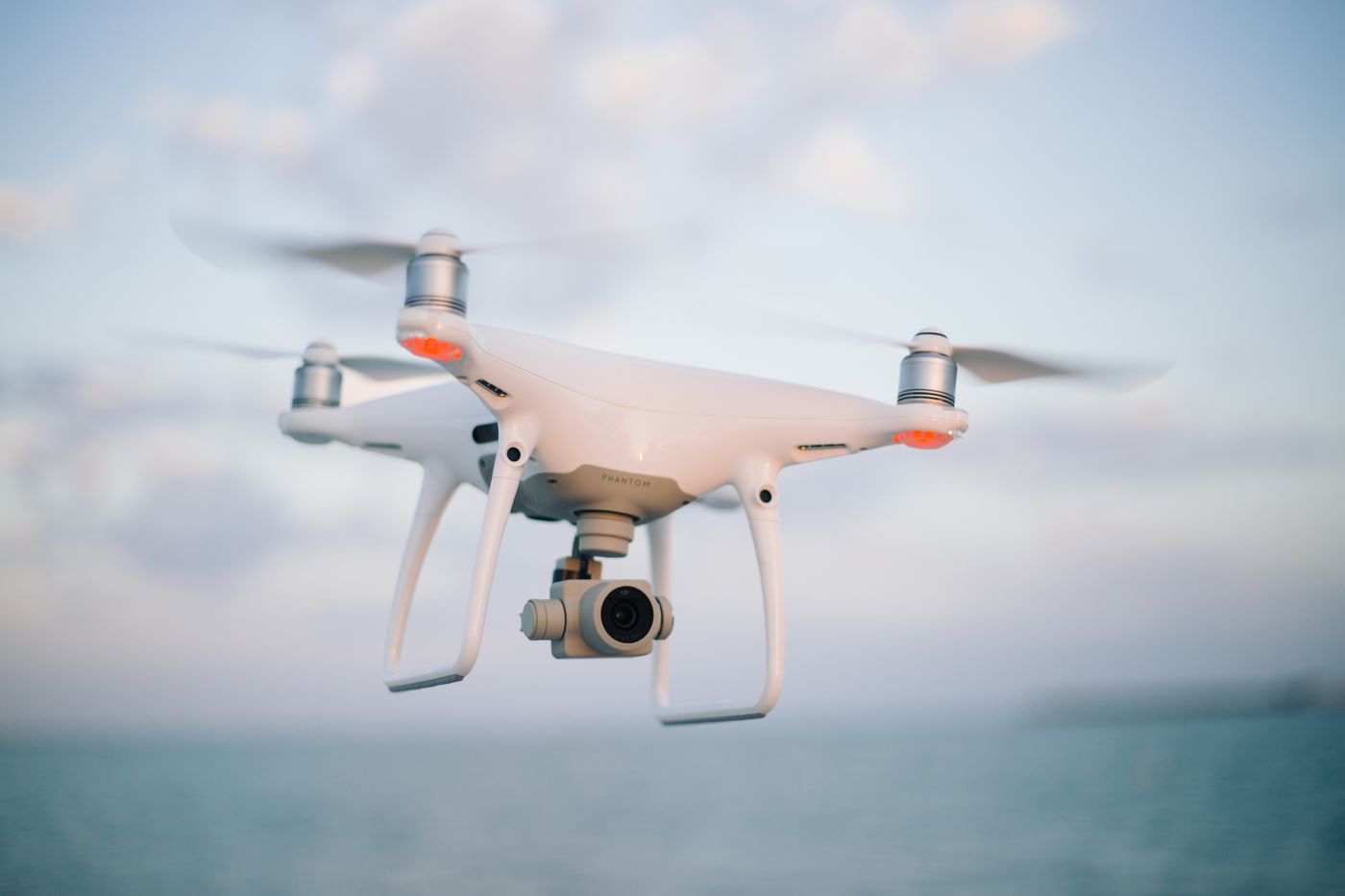
The uncertificated pilot. Flying a drone to photograph anything for a business purpose — a listing, a venue, a company's marketing — is commercial work under the FAA's Part 107 rules, and the FAA's own example of a flight requiring its Remote Pilot Certificate is taking photos to help sell a property or service. The pilot must hold the certificate; the aircraft must be registered and, under current rules, broadcast Remote ID. This does not become optional because the flight was cheap or free: the rule follows the purpose of the flight, not the invoice. Hiring an uncertificated pilot puts your business's name on an illegal flight, and "the photographer said it was fine" is not a defense that has ever improved anyone's afternoon. Ask to see the certificate. A legitimate pilot produces it the way a driver produces a license — without blinking.
No insurance. Drones are reliable right up to the moment one isn't. If an uninsured pilot's aircraft comes down on a roof, a car, or — the scenario that empties rooms — a person, the liability conversation will find the business that hired the flight as well as the pilot who flew it. Professional aerial photographers carry liability cover, commonly around $1 million, and venues and property managers increasingly require a certificate of insurance naming them before a flight is allowed at all. Saving $150 by skipping the insured pilot can convert directly into being underinsured for someone else's crash.
Skipping the airspace homework. Much of the map is controlled airspace, where a commercial flight needs authorization — usually through LAANC, the FAA's automated approval system, available at hundreds of airports — and some addresses cannot be flown legally at all, or only at limited altitude. A professional checks your address before promising anything. A cheap quote given without the address is a quote for a flight that may not happen, discovered on the day, when your listing launch or event cannot move.
The one-battery, one-card, no-backup operator. Professional aerial work runs on redundancy: spare aircraft or at least spare batteries and cards, a weather plan, a postponement policy. The budget failure mode is a single point of failure meeting an immovable deadline. Ask what happens if the aircraft fails or the wind is up on the day — the answer you want is a reschedule policy in writing, not optimism.
Rock-bottom editing. The difference between a dull aerial and the one that stops a scroll is often thirty minutes of competent editing: straightened horizons, balanced exposure, the property's boundaries and context composed properly. A quote that saves by delivering unedited files transfers that cost to you — in software, in skill, or in photographs that quietly underperform for the entire life of the listing.
The budget allocation that works
If your total budget is small, spend it in this order:
- A certificated, insured pilot. Non-negotiable, whatever it does to the rest of the list.
- The three shots that matter. Name them. For a property: the full-plot view, the approach, the setting. For a venue or event: the scale shot, the setting, the detail. Everything else is a bonus the pilot may include anyway once airborne.
- Editing of those shots. Finished images of the essentials beat raw files of everything.
- Flexibility. Offer the pilot their choice of day within your window; it is the cheapest concession you own and pilots price it as one.
- Only then, the extras — video, twilight, extra locations — bought with whatever is left, in that order of value for most purposes.
Questions that protect a small budget
- May I see your Remote Pilot Certificate — and will you be the pilot on the day?
- Is the aircraft registered and Remote ID compliant? What insurance do you carry, and can the venue or property be named on the certificate?
- Have you checked the airspace at this address? Is authorization needed, and is the flight possible at the altitude the shots need?
- What exactly is delivered — how many images, edited how, in what sizes, and when?
- What is your weather and equipment-failure policy — is a reschedule included, and what does it cost?
- What would make this quote go up on the day?
One more legitimate saving: repeat the flight, not the search
If your need recurs — a construction site photographed monthly, a venue that wants seasonal aerials, a farm or marina documenting change across a year — say so at the first booking. Pilots price repeat work keenly, because the airspace check, the site knowledge and the client relationship are already paid for; a standing series can cost meaningfully less per flight than the same flights bought one at a time, and the images gain value as a set, shot from matched positions across the seasons. It is the rarest kind of saving in this trade: one where both sides genuinely win, and it is available only to clients who mention the future before they negotiate the present.
The short version
Save on scope, on timing, on deliverables, on flexibility — all real money, none of it missed later. Do not save on the certificate, the insurance, or the airspace check: those are not upgrades, they are the difference between a photograph and a liability. This site lists 877 aerial photographers, and at every honest price point there is one who will fly your job legally, insured, and prepared. On a tight budget, your task is not to find the cheapest pilot in that list. It is to find the cheapest complete one — and now you know what complete means.
Sources
- Federal Aviation Administration, Part 107 rules for commercial small unmanned aircraft — Remote Pilot Certificate requirement, aircraft registration, Remote ID, and LAANC airspace authorization.
- ZigZag Aerial, "Drone Photography Pricing 2026" — published package rates for aerial stills and video.
- Astral Pic, "Drone Photography Pricing: Hourly vs Package" — hourly, package and day-rate models for aerial photography.
- Finaax, "How to Hire a Commercial Drone Photographer in the U.S." — 2026 price bands and the point that the FAA does not require insurance, so contracts must.
- Photographs: drone in flight — photo by Josh Sorenson, https://www.pexels.com/photo/1034812/ ; house, aerial view — photo by Binyamin Mellish, https://www.pexels.com/photo/106399/ ; house at twilight — photo by Littlehampton Bricks, https://www.pexels.com/photo/modern-house-facade-with-glowing-lights-at-dusk-4626268/
More guides
- How to Find a Wedding Photographer: The Complete, Honest GuidePhotographers › Wedding Photographers
- How Much Does a Wedding Photographer Cost? Packages DecodedPhotographers › Wedding Photographers
- 10 Questions to Ask a Wedding Photographer Before You BookPhotographers › Wedding Photographers
- Wedding Photography Styles Explained: Documentary, Editorial, Traditional, Fine ArtPhotographers › Wedding Photographers
- Hiring a Wedding Photographer in California: Venue Light, Permits, and Price LevelsPhotographers › Wedding Photographers
- All Guides & ArticlesBrowse the full guides library