Photographers › Aerial Photographers
Aerial Photographers Red Flags: The Warning Signs Most People Walk Straight Past
Booking a drone photographer feels like booking any photographer: look at the pretty work, agree a price, pick a date. That is exactly how people walk into the one corner of photography where the client can inherit a federal problem. Aerial work is aviation conducted for hire, and it is regulated like aviation. The photographer who flies your wedding venue, your listing or your construction site without the right certificate, insurance or airspace authorization is not just cutting a corner — they are cutting it over your property, at your event, with your name on the booking.
I book photographers for events for a living, and I have learned to read aerial operators the way insurers do: the work matters, but the tells show up earlier, in the first conversation, in what a pilot will and will not put in writing. These are the warning signs, roughly in the order you will meet them — and what to do the moment one appears.
Red flag 1: "We're fully compliant" — but no certificate number
Commercial drone flight in the United States requires an FAA Part 107 Remote Pilot Certificate. Not experience, not a business license, not "we've done hundreds of these." The certificate, held by the person who will actually fly.
The check takes less time than reading this paragraph: ask for the certificate number and verify it in the FAA's airman database. Working pilots get asked routinely and produce the number without friction. The red flag is never an outright "no" — it is the fog that replaces the number. We're fully compliant. You don't need one for this kind of shoot. Our pilot has been flying for years. Every one of those sentences means the same thing: there is no certificate, or the person flying does not hold it. A related variant is the bait-and-switch crew, where a certified owner sells the job and an uncertified helper flies it. Ask who, by name, will be pilot in command on your date, and verify that person.
Why it matters beyond principle: the FAA has stepped up enforcement and says so. In its 2025 enforcement roundup, the agency reported fines from $1,771 to $36,770 across eighteen operations — including $36,770 for flying near emergency aircraft during a wildfire and $14,790 for flying near a stadium on Super Bowl day — plus license suspensions or revocations for eight remote pilots. Federal law now allows fines of up to $75,000 per violation for the worst conduct. And the exposure is not only the pilot's: industry analyses of the rules put civil penalties for unlicensed commercial operation at up to $32,666 per violation and warn that the hiring business can find its own insurance voided after an incident involving an unlicensed operator. "I didn't know" is not a defense the FAA accepts from the person who commissioned the flight.
Red flag 2: Insurance that is always "being sent over"
A professional aerial operator carries liability insurance — $1 million of general liability is the standard ask from brokerages, venues and general contractors — and proves it with a certificate of insurance, a COI, which a real operator can email within the hour.
The red flags: hesitation, irritation at being asked, or the sentence "I'm careful, so I don't need it." Care is not coverage. A drone that loses power comes down on whatever is underneath it — a roof, a car, a guest — and the first document everyone reaches for afterward is the COI that either exists or does not. The second flag is a COI that exists but is wrong: expired, in a different company's name, or with limits far below the venue's requirement. Read the dates. Venues that host events professionally read them too, and a venue that waves your uninsured pilot through is telling you something about the venue as well.
Red flag 3: "We can fly anywhere" — airspace amnesia
Legal drone flight is location-specific. Near airports and in other controlled airspace, a Part 107 pilot needs advance authorization, usually through the FAA's LAANC system; near stadiums during games, in temporary flight restrictions, over emergency operations, flight is simply closed. An unlicensed operator cannot obtain LAANC authorization at all.
So listen for how a pilot talks about your address. The professional checks the airspace before quoting and tells you plainly what applies: authorization needed, altitude cap, or a flat no. The red flags are the opposites — promising to fly anywhere, at any height, with no questions asked; quoting a downtown or near-airport job for tomorrow when authorizations and permissions take time; or suggesting you "just not mention the drone" to the venue. A pilot who will fly illegally for you will also fly carelessly near you. The promise of a restricted-location shoot with no lead time is not hustle. It is a confession that no permit is being applied for.
Red flag 4: A price that is 60 percent under everyone else
Legitimate aerial work carries real fixed costs: certification and recurrent training, insurance premiums, registered aircraft broadcasting Remote ID (a federal requirement for drones over 250 grams), software, and the unbillable time of checking airspace and filing authorizations. An operator who has quietly deleted all of those costs can undercut the field dramatically — which is why a quote 60 to 80 percent below the others is rarely a bargain. It is usually the sound of the compliance being left out.
Treat the too-cheap quote as a diagnostic, not a windfall: ask what it includes. Certificate, insurance, authorization, a backup aircraft, edited deliverables? The answer will locate the missing money. The mirror-image flag also exists — premium pricing with consumer-grade deliverables — but in aerial work the dangerous direction is down, because what is being discounted is your legal cover.
Red flag 5: A highlight reel and nothing else
Every aerial portfolio opens with sunsets. Sunsets are the one shot a drone makes easy. What you are buying is repeatable work in your conditions: a listing's rooflines shot straight, a construction site's progress documented identically month after month, an event covered without hovering over the crowd — flying over people is one of the most restricted things a drone can do, and the $20,370 fine in the FAA's roundup was for exactly that, at a music festival.
Ask for one complete recent delivery for a job like yours, not a reel of the best ten seconds from twenty shoots. Then look at the delivery itself: professionals deliver edited files through a proper cloud link, in sizes usable for print and listing services. "I'll text you the photos" is a genuine red flag — texted images are compressed into uselessness, and no working pro delivers that way. So is a turnaround promise of "soon." The industry norm is about 24 hours for edited stills and three to five business days for finished video; a professional commits to a number, in writing, because their pipeline actually has one.
One more portfolio trick deserves naming, because it is unique to aerial work: borrowed altitude. Stock aerial footage is cheap and beautiful, and more than one "operator" has built a reel entirely from licensed clips and other pilots' showreels. The tell is a portfolio with no two shots from the same event, no unglamorous work at all — no construction progress, no plain rooftops, no gray-day listings — and no willingness to show a full delivery. Real aerial businesses shoot a great deal of boring, useful work and are proud to show it, because boring and useful is what most clients are actually buying.
Red flag 6: Nothing in writing — or the wrong things
The contract for aerial work should name the pilot in command, state the deliverables and turnaround, address weather rescheduling (drones have hard wind and rain limits, and a pilot with no weather clause is a pilot who will be tempted to fly in weather), and say who obtains airspace authorization and location permission. Vagueness anywhere in that list is information.
Two subtler flags live here. The disappearing deposit structure: large cash-only payments up front, no invoice, no business name that matches the insurance. And the rights grab in reverse: no statement at all about who may use the footage. Professionals license their work to you for defined uses and keep raw files unless raw delivery is priced in — all normal, all written. What is not normal is discovering after the shoot that your marketing team cannot legally use the video, or that the "photographer" has listed your property footage for resale. Settle usage before the flight, when it costs nothing.
| The sign | What it usually means | Your move |
|---|---|---|
| No certificate number, or fog instead of one | No Part 107, or the flyer isn't the certificate holder | Ask for the number; verify it in the FAA airman database; walk if it doesn't come |
| COI delayed, expired or "unnecessary" | Uninsured, or insured in another name | No COI, no booking — this one has no exceptions |
| "We fly anywhere," tomorrow, no questions | No authorization is being obtained | Ask what authorization your address needs; a non-answer ends it |
| Quote far below the field | Certification, insurance or permits deleted from the cost | Ask what compliance the price includes |
| Highlight reel only; delivery by text | No repeatable professional pipeline | Ask for one full delivery from a job like yours |
| No weather clause, no named pilot | Improvised operation | Get pilot, weather and authorization terms in writing |

What to do when a flag appears
Do not negotiate with a red flag; route around it. One flag on paperwork is sometimes sloppiness — an expired COI gets renewed by real operators in a day, and a pilot who responds to a certificate question by sending the number has passed the only test that matters. But a flag defended is a flag confirmed. The operator who argues that insurance is unnecessary, or that your venue's airspace "doesn't really count," has told you how every future problem will be handled.
The checks cost almost nothing: five minutes for the certificate, one email for the COI, one question about your address's airspace, one full gallery instead of a reel. This site lists 877 aerial photographers, so walking away from a flagged operator never means going without — it means choosing from a deep bench the one whose paperwork is as good as their sunsets. In aerial photography, that is not bureaucracy. That is the whole job, done by the people who do it properly.
Sources
- Federal Aviation Administration, "FAA Steps Up Drone Enforcement in 2025" — establishes 2025 fines from $1,771 to $36,770 across eighteen operations, the wildfire, stadium and festival cases, eight license actions, and fines of up to $75,000 per violation.
- NE Ohio Drone, "The $32,000 Question" white paper — establishes civil penalties of up to $32,666 per violation for unlicensed commercial operation and the insurance-voiding risk for hiring businesses.
- Sky Knight, "Is Your Drone Operator Actually Licensed?" — establishes the red-flag pattern: no certificate number, vague permits, impossible timelines and prices 60–80 percent below the field.
- LT Drone Services, "How to Choose a Drone Photographer in Salt Lake City" — establishes verifying the certificate number in the FAA airman database, the $1 million liability standard, COI practice, LAANC authorization, and 24-hour stills / 3–5 day video turnaround norms.
-
Hustlway, "Hire a Drone Photographer: What to Look For Before You Book" — establishes airspace-checking before quoting, full-delivery portfolio review, and raw-file and licensing terms agreed in advance.
-
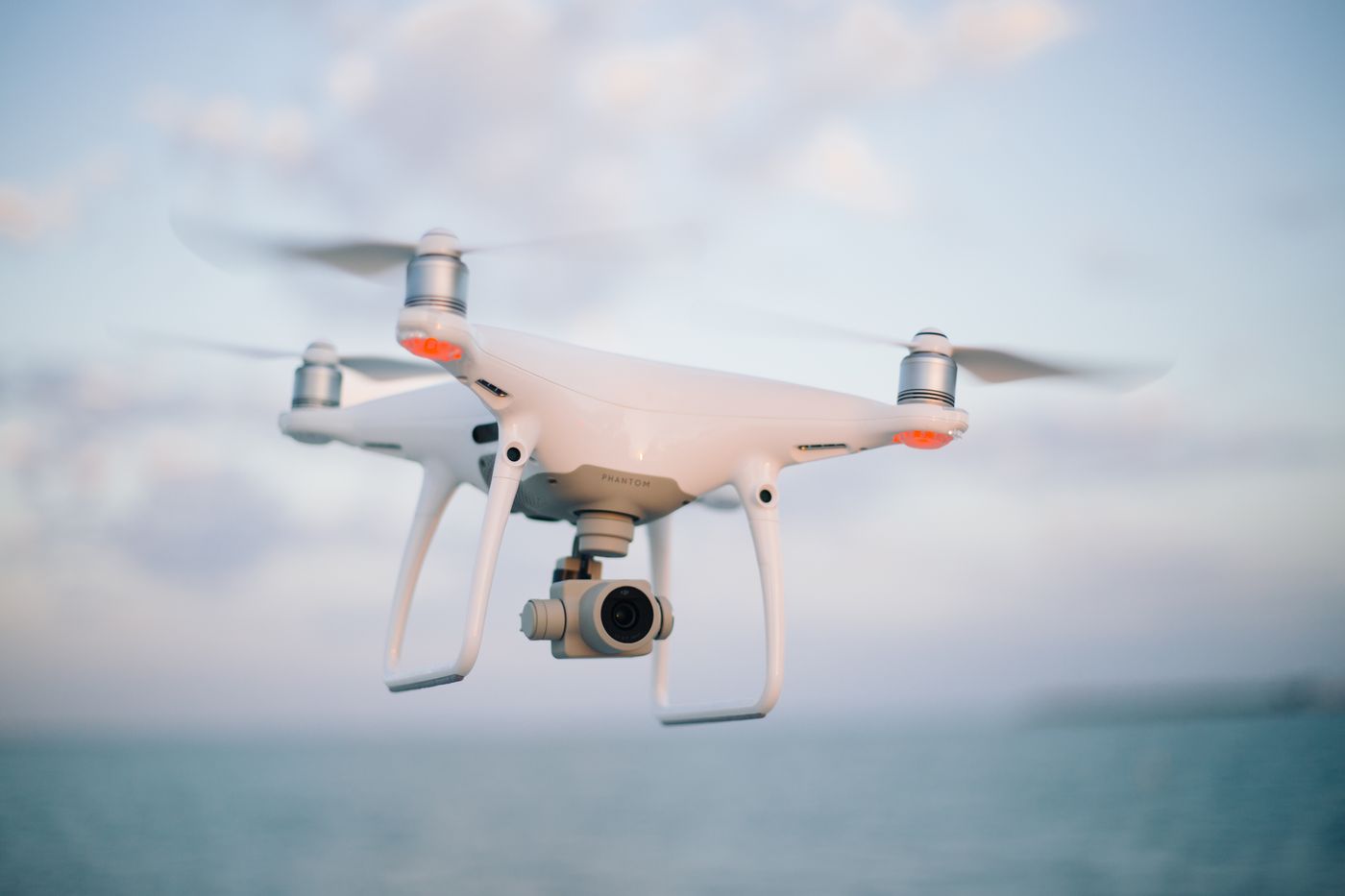
Drone in flight against a clear sky — photo by Josh Sorenson, https://www.pexels.com/photo/quadcopter-flying-on-the-skey-1034812/
- House and garden in one wide frame — photo by Binyamin Mellish, https://www.pexels.com/photo/106399/
More guides
- How to Find a Wedding Photographer: The Complete, Honest GuidePhotographers › Wedding Photographers
- How Much Does a Wedding Photographer Cost? Packages DecodedPhotographers › Wedding Photographers
- 10 Questions to Ask a Wedding Photographer Before You BookPhotographers › Wedding Photographers
- Wedding Photography Styles Explained: Documentary, Editorial, Traditional, Fine ArtPhotographers › Wedding Photographers
- Hiring a Wedding Photographer in California: Venue Light, Permits, and Price LevelsPhotographers › Wedding Photographers
- All Guides & ArticlesBrowse the full guides library