Photographers › Architectural Photographers
Architectural Photography Scams and Pressure Tactics: How to Spot Them Before You Pay
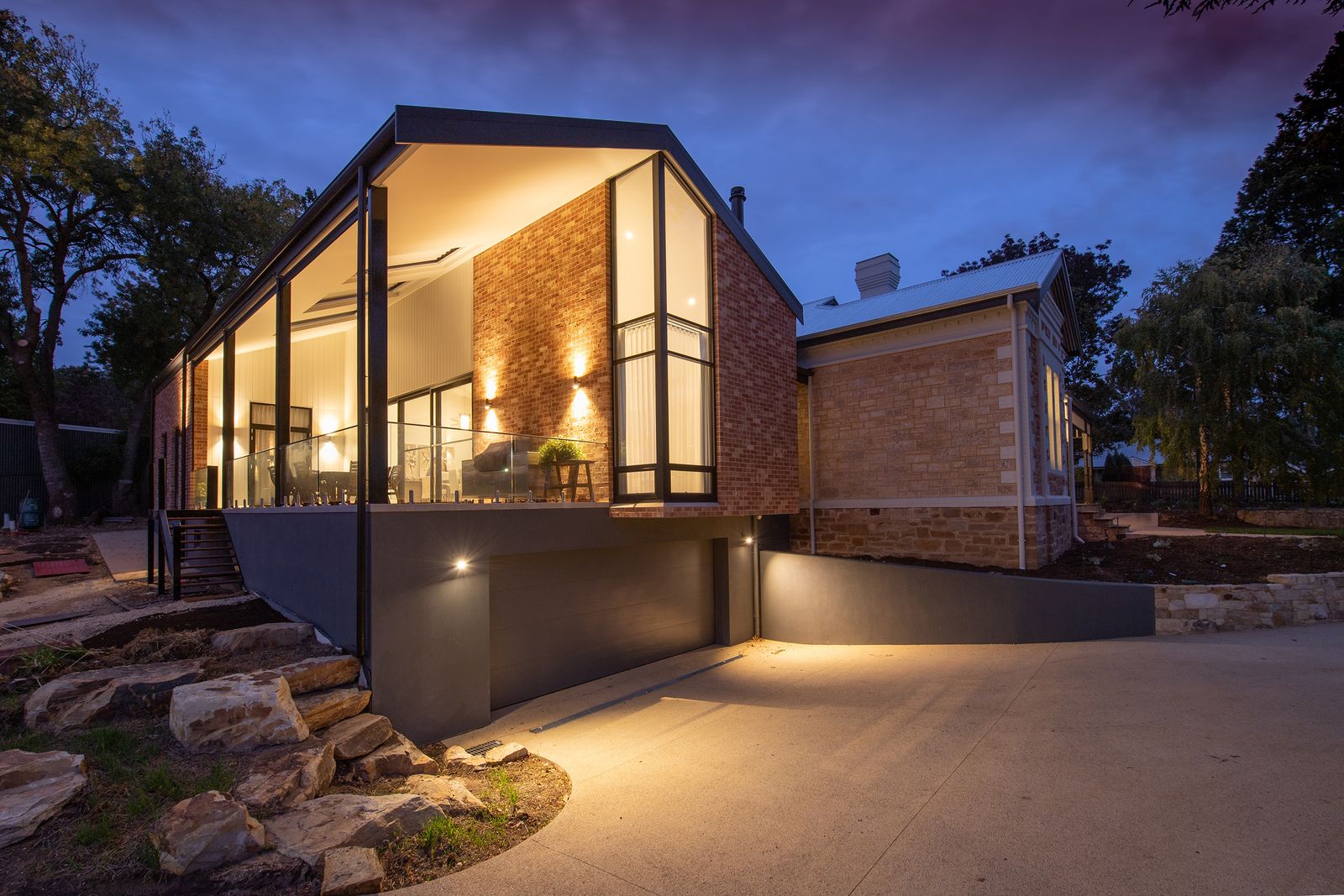
Architectural photography is unusually easy to scam, for a structural reason: the pricing is genuinely complicated. A legitimate quote has three moving parts — a creative fee for the shoot day, post-production per finished image, and a licence for how the images may be used — and a typical single-party project lands between $2,000 and $5,000 all-in. To a first-time buyer, that already looks arbitrary. Into that confusion step two kinds of bad actor: the outright fraudster, who takes a deposit and vanishes, and the pressure seller, who is a real photographer with a real camera and a business model built on surprises. I assisted a commercial photographer on architectural work, and the legitimate trade has tells as clear as the scams do. This guide names both.
First, what legitimate looks like — so you can spot what isn't
A professional architectural quote in 2026, from published pricing guides, is built like this. The creative fee or day rate runs about $1,500 to $4,000 per shoot day — industry surveys put most North American architectural specialists between $1,000 and $2,000 a day, with major-metro names above that — and a shoot day yields roughly 10 to 15 finished images. Half days run $800 to $2,000. Retouching, when it is not bundled, is billed at $50 to $200 per finished image, because architectural post-production is slow: blending exposures, correcting perspective, removing exit signs and cords, compositing a better sky. Twilight sessions add $400 to $900, because dusk is a separate setup in a separate light. Standard turnaround from published regional pricing is 10 to 14 business days, with a rush at roughly 25 percent more.
And then there is licensing, the part that surprises every first-time buyer and is not, by itself, a scam. The photographer keeps the copyright. Your fee includes a licence for your firm — typically your website, portfolio, social media, print collateral, and award submissions. Other firms on the project — the builder, the interior designer, the developer — each need their own licence, commonly priced at 25 to 50 percent of the creative fee per additional party, and when those licences are arranged up front, the total invoice is split among the parties: cost-sharing, the one genuinely pleasant surprise in this trade, can cut each firm's bill nearly in half. Extended uses cost more in the open: paid advertising, third-party publication, and unlimited buyouts are published at premiums of 25 to 100 percent of the creative fee.
Hold that picture. Everything below is a deviation from it.
Scam 1: The stolen portfolio and the vanishing deposit
The Better Business Bureau's scam alert on photographer fraud describes the pattern in its wedding form, and it transfers to commercial work unchanged: a polished portfolio assembled from other photographers' images, a booking conversation conducted entirely through social media or email, a digital contract that looks professional, and a deposit demanded through a peer-to-peer payment app. Then the turns: cancellation days before the shoot, a no-show, or work delivered that bears no relation to the portfolio — followed by silence and disconnected contact details. BBB Scam Tracker reports include losses of $1,700, $2,400, and $5,300 from single victims.
The checks that defeat it are boring and total. Run a reverse image search on three or four portfolio images; stolen galleries surface under the real photographer's name, often in another country. Verify the business independently of the profile that contacted you — a real website on its own domain, a listing history, reviews in more than one place, a phone number that a person answers. Insist on a conversation with the person who will shoot, and ask the question a portfolio thief cannot answer fluently: walk me through how you made this image — the light, the time, the lens. And never let the deposit travel by a method with no reversal path. A legitimate business can take a card payment; "our card system is down, please use a payment app" is, in the FTC's and BBB's telling, one of the most reliable lines in the script.
Scam 2: The price that is a tenth of the market
A comprehensive package offered at a fraction of every other quote — the pattern investigators describe as a $4,000 package dangled at $1,200 with a 50 percent non-refundable deposit due within 24 to 48 hours because "another client is asking about your date" — is not a bargain; it is the bait half of Scam 1, or the entry to Scam 3. Architectural photography has a hard cost floor set by physics: a day of a specialist's time, an assistant, insurance, equipment, and hours of retouching per image cannot be sold for the price of a listing shoot — published comparisons note architectural work legitimately costs five to ten times what real-estate listing photography costs, because it is a different job with a different output. A quote far below the $1,500-a-day floor is telling you the portfolio is borrowed, the deliverables will shrink, or the invoice will grow. Usually all three.
Scam 3: The licensing ambush
This is the pressure tactic unique to architectural work, and it exploits the one part of legitimate pricing that buyers do not understand. It runs like this: the quote is kept vague about usage — "you get the photos" — the shoot happens, and then the invoice education begins. Your marketing team cannot use the images in paid ads; that is an extended licence. The builder who wants copies owes a full per-party fee that was never mentioned when cost-sharing could have halved it. The images arrive watermarked or low-resolution until a "buyout" is purchased at a price invented on the spot.
Compare it with the legitimate version and the tell is obvious: real photographers publish their licensing structure before the shoot — standard licence included and defined, additional parties at a stated 25 to 50 percent, extended uses at stated premiums — because surprises are bad for their referral business too. The check takes one email: before signing, get in writing which uses are included, for which parties, in which channels, for how long, and what each expansion costs. A photographer who will not write it down is planning to price it later, when you have no leverage and a launch date.
Scam 4: Per-image pricing with no shot list
Per-image billing is a legitimate model — published rates run $75 to $200 per additional finished image beyond a package — but without an agreed shot list it invites scope drift in both directions, and the pressure version is one-directional: every angle becomes a separate chargeable frame, the "finished images" count balloons or shrinks to suit the invoice, and the buyer discovers at delivery that the ten views they needed were shot as thirty billable variants or as six. The professional norm is a shot list agreed in pre-production — walkthrough, priorities, the elevations that need specific light — with the finished-image count and the per-image rate for extras written beside it. No shot list, no signature.
Scam 5: Urgency, deposits, and the contract illusion
Pressure has a tempo: the discount expires tonight, the date is about to go, the full balance is due before the shoot, and the contract — a handsome PDF — turns out to allocate every risk to you: no delivery date, no remedy if the photographer cancels, no licence terms, a deposit labelled non-refundable in all circumstances including the photographer's own failure to appear. Investigators of the wedding variant call this the contract illusion: standard legal vocabulary deployed as set dressing. Read for the five clauses that matter — deliverables and finished-image count, delivery date, licence scope and parties, cancellation terms for both sides, and what happens if the photographer cannot attend — and treat a large pre-shoot balance with suspicion. Staged payments are the trade's norm: a booking retainer, with the balance around the shoot or delivery, by a traceable method, to a business whose name matches the contract.
A related fraud targets photographers rather than buyers — the overpayment cheque, in which a "client" sends a cheque larger than the fee and asks for the excess to be forwarded to another vendor, days before the bank discovers the cheque is bad; the American Society of Media Photographers has warned its members about it for years. It belongs in this guide because businesses get cast in it as the supposed sender: if your firm's name is ever attached to such an approach, it is not your firm.
The pre-payment checklist
| Check | How to run it | What a pass looks like |
|---|---|---|
| Portfolio ownership | Reverse image search on 3–4 images; ask for one full delivered project | Images trace to this photographer; a named client confirms the work |
| Business reality | Independent website, reviews in several places, answered phone | A business that existed before it contacted you |
| Price sanity | Compare against $1,500–$4,000 day rates and $2,000–$5,000 typical projects | A quote you can reconcile line by line with the market |
| Licence in writing | Email asking included uses, parties, channels, term, expansion prices | Stated numbers — standard included, extra parties 25–50%, before the shoot |
| Shot list and count | Agree the list and finished-image count in pre-production | Extras priced per image, in advance |
| Payment structure | Retainer, staged balance, card or transfer to the contracting business | No full prepayment, no payment-app-only deposit, no expiring discount |
If you have already paid
Act while the payment trail is warm. The FTC's guidance for scam victims starts with the payment provider: contact the card issuer or payment service immediately, explain the fraud, and ask about reversal — which is precisely why the payment method mattered. Save every message, the contract, and the portfolio pages before they disappear, report the account to the platform it operated on, and file reports with the BBB's Scam Tracker and the FTC. For a pressure-sold but real photographer, your leverage is the written record: the quote, the licence emails, the shot list. It is a short list of documents. It is also the whole difference between a dispute and a donation — which is why everything in this guide happens, deliberately, before you pay.
Sources
- Sean G Photo, "Architectural Photography Pricing in 2026" — day rates of $1,500–$4,000, retouching at $50–$200 per image, additional-party licensing at 25–50 percent, typical projects at $2,000–$5,000. https://seangphoto.com/articles/architectural-photography-pricing-2026
- Grand Rapids Marketing Co., "Architectural Photography Cost" — half- and full-day ranges, 10–14 business day turnaround, rush premium, licensing tiers and add-on prices. https://grandrapidsmarketingco.com/articles/photography/architectural-photography-cost/
- Steven Gray, Architectural Photography Rates & Packages — per-package finished images, $75 per additional image, 30 percent additional-party cost-sharing structure. https://www.stevengray.work/rates
- Better Business Bureau, "BBB Scam Alert: Picture-perfect deception — how to spot a wedding photographer scam" — stolen-portfolio and deposit scam patterns, Scam Tracker losses, and avoidance checks. https://www.bbb.org/article/news-releases/31640-bbb-scam-alert-picture-perfect-deception-how-to-spot-a-wedding-photographer-scam
- TrustMatch, "How Fake Wedding Photographer Deposit Scams Target Engaged Couples" (2026) — the discount-and-urgency playbook and peer-to-peer payment demands. https://trustmatch.app/blog/how-fake-wedding-photographer-deposit-scams-target-engaged-couples
- ASMP, "Scams Targeting ASMP Members" — the overpayment cheque fraud against photographers. https://www.asmp.org/legal/scams-targeting-asmp-members/
Photos: House at twilight — photo by Littlehampton Bricks, https://www.pexels.com/photo/modern-house-facade-with-glowing-lights-at-dusk-4626268/ ; Bright interior — photo by Max Vakhtbovych, https://www.pexels.com/photo/sofa-with-cushions-in-living-room-5998023/ ; Kitchen — photo by Saviesa Home, https://www.pexels.com/photo/kitchen-island-2089698/
More guides
- How to Find a Wedding Photographer: The Complete, Honest GuidePhotographers › Wedding Photographers
- How Much Does a Wedding Photographer Cost? Packages DecodedPhotographers › Wedding Photographers
- 10 Questions to Ask a Wedding Photographer Before You BookPhotographers › Wedding Photographers
- Wedding Photography Styles Explained: Documentary, Editorial, Traditional, Fine ArtPhotographers › Wedding Photographers
- Hiring a Wedding Photographer in California: Venue Light, Permits, and Price LevelsPhotographers › Wedding Photographers
- All Guides & ArticlesBrowse the full guides library