Photographers › Studios
Booking a Photography Studio: Contracts and Paperwork — What to Read, Question and Never Sign Blind
Here is what nobody tells you until you have assisted on commercial shoots: the most expensive hour of a studio day is rarely the shooting. It is the forty minutes of load-in you forgot to book, the half hour of overtime billed at double rate because hair and makeup ran long, or the deposit that evaporated when a client's product launch moved by a week. Every one of those outcomes was decided before anyone picked up a camera — in the rental agreement, in clauses most renters scroll past on a phone while the studio manager waits.
I spent my assisting years inside that paperwork from the other side: checking certificates of insurance at the door, logging the minute the first case crossed the threshold (because that, contractually, is when the day begins), and photographing the cyclorama wall before and after a shoot so a scuff dispute had evidence. This guide is the read-through I wish every seller, creator, and small brand booking studio time would do: what the contract's clauses actually mean in money, which numbers to question, and the three things you should never sign blind.
The rate is the least interesting number in the document
Studio pricing looks simple and is not. Published rates span an enormous range because "a studio" can mean a spare room with a paper backdrop or a production stage with a crew. Small studios commonly run $40–$150 an hour, with mid-tier spaces around $100–$175 and large commercial studios in major markets at $200–$500 an hour, usually with two-to-four-hour minimums. Full days run from roughly $300–$500 at entry-level spaces to $700–$1,200 mid-tier and $1,500–$3,500 and up for premium commercial rooms. Real rate cards sit inside those ranges: one Denver studio lists $100 an hour with a two-hour minimum, $475 for a five-hour half day, and $895 for ten hours; a Miami studio lists $110 an hour on weekdays and $130 on weekends, with an eight-hour weekday at $750.
What the headline rate hides is the second price list — the one in the agreement:
| Line item | Typical range | What to check |
|---|---|---|
| Security deposit | $100–$300 entry; $300–$600 mid-tier; $500–$2,000 premium | Refundable? Against what — damage only, or also overtime and cleaning? |
| Deposit to book | Commonly 50% of the rental, or a flat per-day amount | Is it a booking deposit, the security deposit, or both? They are different money |
| Overtime | 1.5× hourly standard; 2× at premium studios and after long days | Billed in what increment — 30 minutes rounded up, or full hours? |
| Cleaning fee | $25–$75 entry; up to $400 premium; "excessive mess" clauses to $500 | What counts as excessive, and who decides? |
| Insurance | Certificate of insurance, commonly $1 million general liability, studio named as additional insured | Do you already have a policy that can issue this, and how long does that take? |
Two studios can post the same $120 hourly rate and finish $400 apart on an ordinary day. Compare agreements, not rate cards.
Clause by clause: where the disputes live
The clock clause — when your rental actually starts and ends
Nearly every agreement counts setup and teardown inside your booked hours: load-in, lighting, hair and makeup, packing, and cleanup all happen on your clock, and some agreements state explicitly that studio time starts when the first person enters the space. A five-minute grace period is a courtesy one studio writes down; another bills overtime in full one-hour increments from the scheduled end. One Washington, D.C. studio's terms go further: if your overrun delays the next booking, there is a $500 penalty and you may be barred from returning.
Read this clause and then rebuild your call sheet around it. If the crew needs ninety minutes to light and thirty to wrap, a four-hour booking is a two-hour shoot. Book the day you actually need — overtime at 1.5–2× is the most expensive way to buy the hours you could have had at the day rate.
The deposit clauses — plural, on purpose
Studios use "deposit" for two different pots of money, and agreements do not always distinguish them clearly. The booking deposit secures the date — commonly 50 percent of the rental, sometimes a flat amount such as $100 a day — and is usually applied to your balance. The security deposit sits against damage, overtime, and cleaning, and is refundable if you leave the room as you found it. Ask, in writing, which you are paying, how much of each, and the exact mechanism and timing of any refund. "Refundable" without a timeline is a hope, not a term.
Cancellation and rescheduling — the clause that tightens as the date approaches
This is the clause that decides what a changed plan costs, and it varies more than any other. One pro guide's summary of standard practice: deposits commonly become non-refundable inside 24–30 days of the shoot. Actual studio terms scatter widely around that. One studio keeps a $100 deposit on any cancellation and charges the full booking if you cancel inside five days, while letting you move the date free if you ask five or more days out. Another refunds in full (less a 3 percent fee) with more than 48 hours' notice, nothing inside 48 hours, and reschedules free with the same notice. A third requires 72 hours for a full deposit refund and 48 for half.
None of these is unreasonable. All of them are different. The mistake is assuming the terms you remember from the last studio apply at this one. For a commercial seller, the practical question is sharper: if your product samples slip by a week — the single most common reason shoots move — what does this agreement charge you? Find the reschedule line, not just the cancellation line; at many studios, moving is far cheaper than cancelling, but only inside a notice window.
Insurance — the clause that can stop the shoot at the door
Many studios require a certificate of insurance naming the studio as additional insured, commonly with a $1 million per-occurrence general liability limit. Some agreements state the consequence plainly: no valid COI means you accept full responsibility for any damage to the studio, its equipment, and the property during your rental, and for your own crew's injuries. Short-term production insurance exists precisely for renters who do not carry an annual policy, but it takes time to arrange — days, not minutes. This is the clause to read first if your shoot is soon, because it is the only one that cannot be fixed with money on the day.
Permitted use, occupancy, and the messy-materials list
Agreements limit what the room may be used for and how many people may be in it — and rates can be tied to headcount, with additional occupants raising the hourly price. The rules sections are where productions get surprised: confetti, smoke and haze, body paint, food, liquids, open flame, and pets commonly require prior written approval; a fresh cyclorama repaint after a shoot that scuffed or painted the cyc is a real line item at real studios (one Miami rate card lists $75 for a fresh white repaint, and four figures for a custom color). If your creative involves anything that leaves the room different from how you found it, get it approved in the agreement, priced, and initialled — not waved through in a chat thread.
Damage, cleaning, and the walk-through
You are responsible for returning the space in the condition you received it, with cleaning fees for excessive mess assessed — at some studios explicitly at staff discretion and charged to the card on file. Protect yourself the way assistants do: photograph the room, the cyc wall, and any rented equipment at load-in and at wrap, with timestamps. A scuff that predates you is only provably not yours if you documented it before your first case opened.
Liability and the studio's own cancellation right
Read what happens if the studio cancels — power failure, equipment failure, building emergency. Typical agreements offer a refund or priority rescheduling at the studio's discretion and exclude liability for your consequential losses: the model's fee, the client's deadline, the launch. That exclusion is standard, and it means the risk of a lost day sits with you. For a shoot that cannot slip, the mitigation is not a fiercer clause; it is a backup studio identified in advance.
The paperwork stack, in the order you will meet it
- The estimate or quote — the rate, the block, and the inclusions. Check the kit list line by line: one Denver studio includes a starter three-light kit and grip with every rental and prices premium lighting, cameras, and lenses as add-ons; a Miami studio includes lighting and sets in the rate. "Studio rental" without a kit list is an unfinished quote.
- The rental agreement — everything above, signed before the deposit is taken.
- The certificate of insurance — requested by the studio, issued by your insurer or a short-term production policy, naming the studio as additional insured.
- The credit card authorization — the form that lets the studio charge overtime, cleaning, and damage after you leave. Know it exists and what it can be charged for; ask for itemized notice before any charge beyond the agreed balance.
- The final invoice — reconcile it against the agreement while the day is fresh: overtime increments, cleaning, repaint, equipment add-ons. Errors are easy to fix in week one and nearly impossible in month two.
Never sign blind: the three
If you read nothing else, read these. The clock and overtime clause, because it converts directly into money at 1.5–2× and starts counting earlier than you think. The cancellation and reschedule ladder, because plans change more often than shoots do, and the difference between moving a date at five days' notice and at four can be the entire fee. The insurance requirement, because it is the one obligation you cannot satisfy at the door with a credit card.
Everything else is negotiable or survivable. Those three are the contract. The rest of the document is commentary — read it anyway, question anything you cannot price, and get the answers into the agreement itself. Studios that do this professionally — and this site's directory lists 769 studio businesses among its photography listings, so you have choices in every market — will not be offended by a renter who reads. In my assisting years, the clients the managers trusted most were never the ones who signed fastest. They were the ones who arrived with the paperwork already understood, and left the room exactly as the agreement said they would.
Sources
- Ken Jones NYC, "Studio Rental Contracts and Fees: A Pro's Guide" — rate tiers ($40–$150/hr small studios; $200–$500/hr large commercial; full-day $300–$3,500+), security deposits $100–$2,000, cleaning fees, overtime at 1.5–2×, 50% booking deposits, refunds tightening inside 24–30 days, COI requirements commonly $1 million general liability. https://www.kenjonesnyc.com/blog/studio-rental-contracts-and-fees-a-pros-guide/
- StudiowerksDC, studio use terms and conditions — non-refundable $100/day deposit, full payment the day before the shoot, $500 penalty when an overrun delays the next booking, setup/teardown inside booked time, deposit transferable with 5 days' notice, full charge for cancellation inside five days, overtime prorated in 30-minute intervals rounded up. https://www.studiowerksdc.com/terms-and-conditions
- Blok Photo Studio, studio rental agreement — 50% deposit to secure bookings; full refund less 3% with 48+ hours' notice, no refund inside 48 hours; overtime in one-hour increments, 1.5× after 8 p.m.; studio's own cancellation limited to refund or rescheduling without consequential damages. https://www.blokphotostudio.com/s/Studio-Rental-Agreement.pdf
- Three Lines Studio, studio and equipment rental agreement — COI with $1,000,000 single-occurrence limit naming the studio as additional insured; renter fully responsible for damage without a valid COI; 72-hour written notice for full deposit refund, 48 hours for 50%. https://3linesstudio.com/wp-content/uploads/2025/01/Rental-Agreement-2025.pdf
- photospace Denver, studio rental pricing — $100/hr with 2-hour minimum, half day (5 hours) $475, full day (10 hours) $895; starter light kit and grip included, premium lighting/cameras/lenses as add-ons. https://photospacedenver.com/studio-pricing
- Creative Canvas Studios Miami, photo studio rental cost guide — $110/hr weekday, $130/hr weekend, 8-hour weekday $750; lighting, cyclorama and sets included; extras including cyclorama repaint at $75. https://ccstudiosmiami.com/how-much-does-it-cost-to-rent-a-photo-studio-in-miami/
Photographs
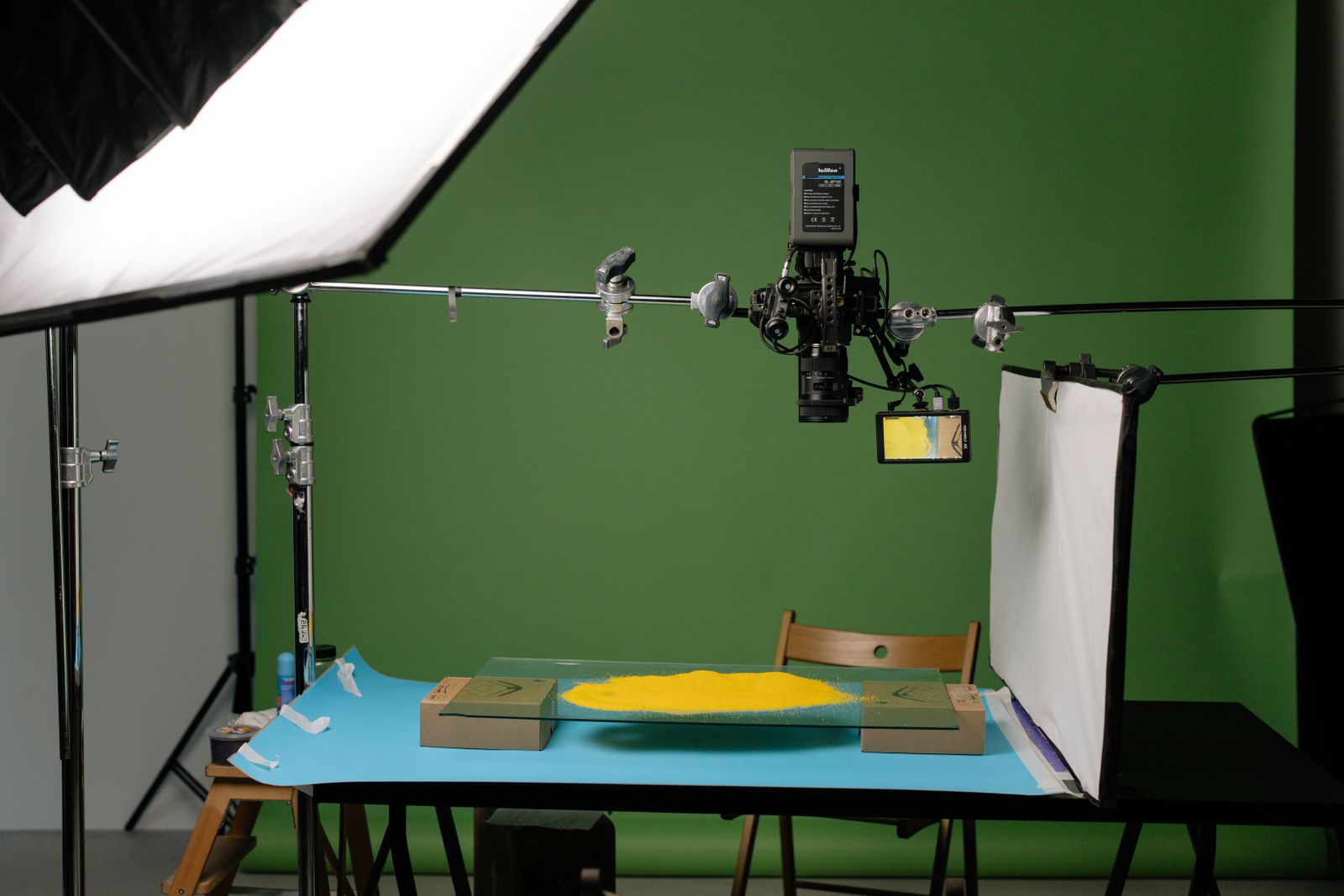
- photo by cottonbro studio, https://www.pexels.com/photo/yellow-sand-on-glass-surface-5878878/
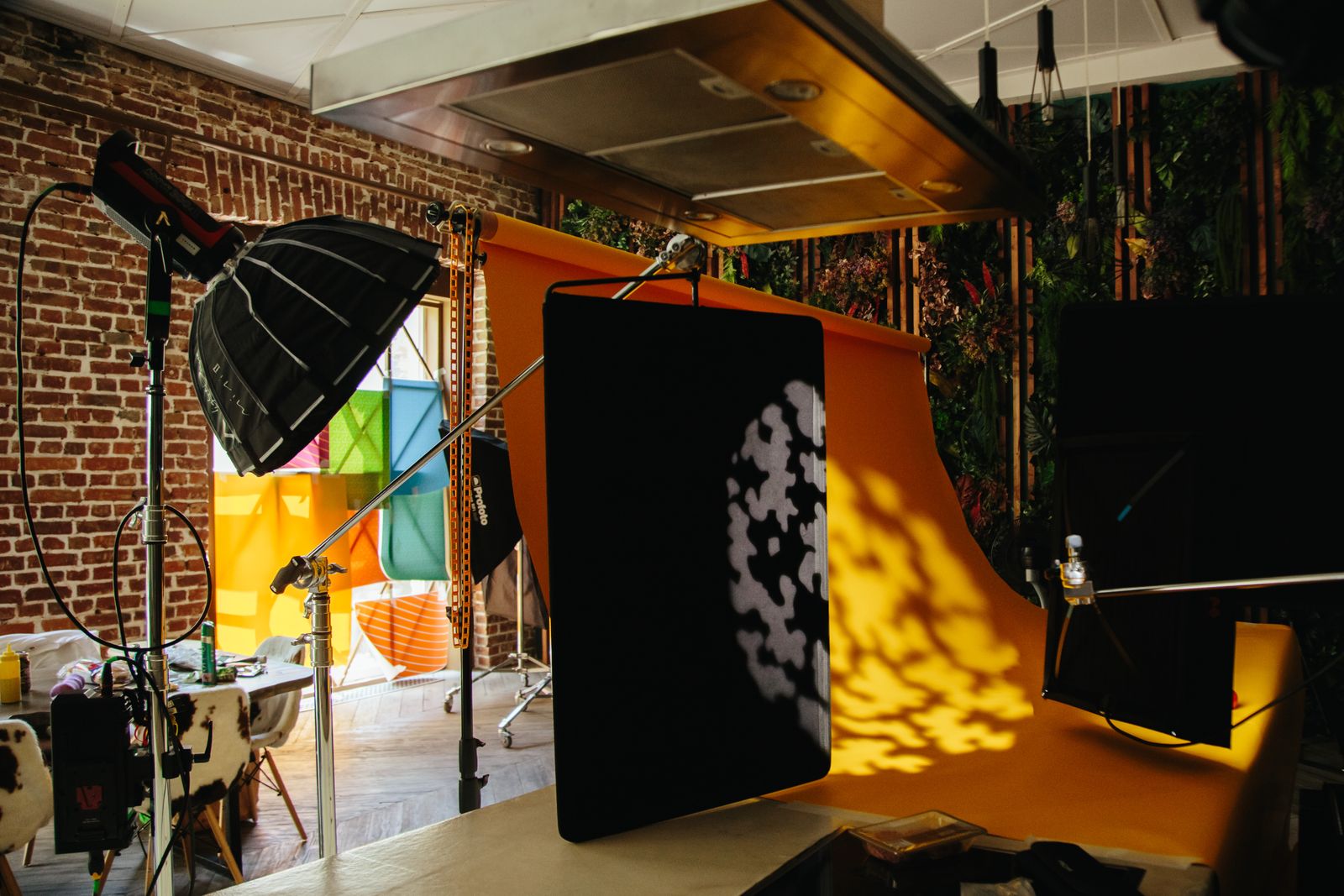
- photo by Ron Lach, https://www.pexels.com/photo/studio-decoration-for-photoshoot-8857043/
More guides
- How to Find a Wedding Photographer: The Complete, Honest GuidePhotographers › Wedding Photographers
- How Much Does a Wedding Photographer Cost? Packages DecodedPhotographers › Wedding Photographers
- 10 Questions to Ask a Wedding Photographer Before You BookPhotographers › Wedding Photographers
- Wedding Photography Styles Explained: Documentary, Editorial, Traditional, Fine ArtPhotographers › Wedding Photographers
- Hiring a Wedding Photographer in California: Venue Light, Permits, and Price LevelsPhotographers › Wedding Photographers
- All Guides & ArticlesBrowse the full guides library