Photographers › Aerial Photographers
Booking Aerial Photographers Online vs. In Person: What Changes, What Does Not
Every other kind of photographer, you can audition in a studio. An aerial photographer you audition in the sky, over somebody's property, inside regulated airspace — which is why the booking channel matters for this specialty more than for any other. Book online and you get speed, published prices, and a pilot you have never met. Book in person — through referral, a local operator, a conversation at the site — and you get judgment you can interrogate, at the cost of days. I book photographers for a living, including drone operators for listings, venues, and events, and the honest answer is that the two channels do not sell the same product. They sell the same flight. Everything around the flight — the vetting, the paperwork, the accountability when the wind rises — is what changes. This guide separates the two, so you can choose the channel that matches the job instead of the channel that matches your habits.
What the work costs, in either channel
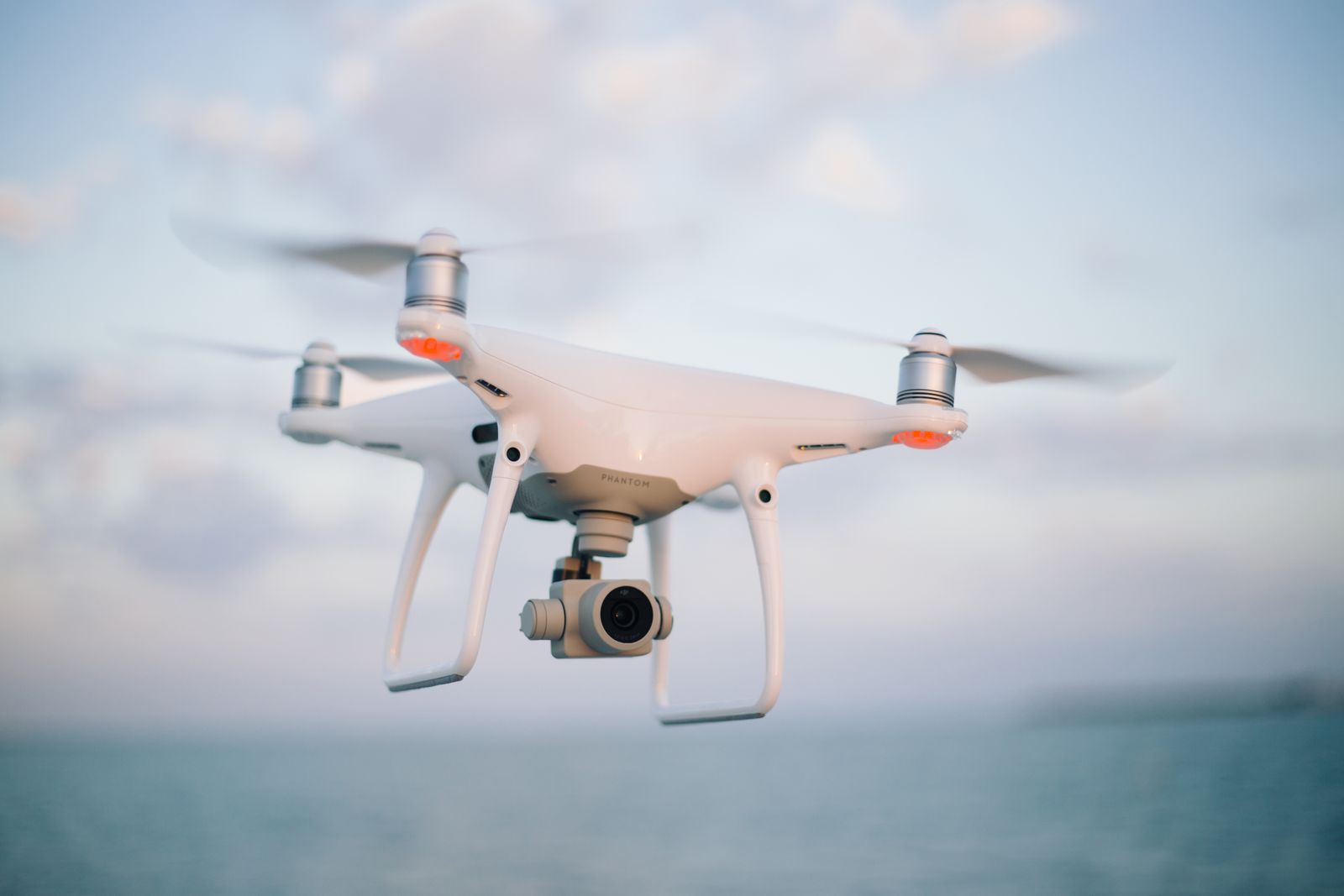
Prices first, because they are the online channel's home turf. Published 2026 rate guides put aerial photography at $150 to $400 an hour for a professional operator; marketplace data runs lower and wider — Thumbtack's national figures put a typical aerial job at $180 to $377, with a low end of $114 and a high end of $708 — because marketplaces blend beginners and short residential jobs into the average. Packages are priced by deliverable: listing aerials run $150 to $400 for a standard home, rising to $249–$499 with a short video; one operator's published schedule charges $275 for ten edited aerial photos and an hour on site, $525 for a video-focused package, and $850 for a luxury tier with 4K video. Construction and inspection work prices higher — $250 to $600 an hour for construction and surveying — because the deliverable is data, not beauty.
Notice what those numbers imply about channels. Online marketplaces are very good at the standardized end: a defined shot list, a fixed file count, a house of known size. Their prices are real, because the job is genuinely commoditized — this site lists 877 aerial photographers, and for a straightforward listing flight, competition among them is a buyer's friend. In-person booking earns its premium exactly where the package stops fitting: the property with airspace complications, the event with a crowd, the site where somebody has to walk the ground first and say whether the flight is even a good idea. You are not paying more for the same hour. You are paying for the scoping that the package price assumes away.
What does not change: the law, the weather, the physics
Three things are identical however you book, and any channel that implies otherwise is misleading you.
The certification is the same. Paid drone photography in the United States is commercial work under the FAA's Part 107 rules, full stop — the pilot must hold a Remote Pilot Certificate, earned by passing the FAA's knowledge test (60 questions, a $175 testing fee) and clearing the application process, with recurrent training every 24 months to stay current. The rule follows the purpose of the flight, not the booking channel or the invoice: a marketplace pilot and a referral pilot are equally legal or equally illegal, and "the platform sent them" is not a defense available to either of you.
The airspace is the same. Flying in controlled airspace near an airport needs authorization, obtained through LAANC — the FAA's automated system, which grants near-real-time approvals at pre-approved altitudes and handles requests up to 90 days ahead — or, above the grid altitudes, through a further-coordination request that must go in at least 72 hours ahead. A property in a zero-grid zone may not be flyable at all on your timeline. Online, this surfaces as a pilot messaging you the day before that the flight "can't happen." In person, it surfaces in the first conversation, because a local operator usually knows their airspace map the way you know your own street.
The weather is the same. Wind, rain, and light do not care how the booking was made. What differs is who absorbs the cancellation — and that is a contract question, which brings us to what actually changes.
What changes online
Information quality drops, and rises. That sounds like a contradiction; it is the channel's real shape. Online, you get more information of a narrower kind: verified reviews, response times, published packages, portfolio grids, and prices you can compare across twenty operators in an evening. What you cannot get is the information that lives off the profile — whether the pilot's portfolio work was actually shot by the person who will arrive (platforms dispatch; the profile may belong to the company, not the pilot), whether their insurance is current this month, and whether they have ever flown your kind of site. The portfolio grid also flatters: every operator's page is their ten best flights in perfect light. In person, the information inverts — one operator, deeply known, and no market context at all. You learn exactly how good this pilot is and nothing about whether their price is sane. The professional habit is to use each channel to audit the other: scope the market online, then interview the finalist like a hire.
Accountability moves. On a platform, accountability is procedural: the platform holds the payment, hosts the dispute, and can refund you. That is real protection for a $275 listing flight. It is thin protection for a $5,000 commercial shoot, because a refund does not reshoot a missed event or a construction milestone that has since been poured over. In person — which in practice means a direct contract with a named operator — accountability is personal and legal: a signed agreement with that pilot, their insurance certificate naming the job, and a relationship that makes them answer the phone. Platforms also insert a stranger into your chain of responsibility: if the dispatched pilot is unlicensed or uninsured and something goes wrong over your property, the platform's terms will explain, at length, why that was your hire. Read them before you need them.
Price behaves differently. Online prices are sharper for standard work and slipperier at the edges: the package is cheap, and everything outside the shot list — extra files, a return visit, faster delivery, the video upgrade — is an add-on priced at the moment of maximum weakness, which is after the flight. In-person quotes run higher and hold steadier, because the operator has scoped the job and priced the whole thing, including the judgment calls. Neither is dishonest. They are different games, and the buyer who compares a $275 package against a $600 direct quote without comparing the deliverables line by line is playing both badly.
What changes in person
The in-person channel's real product is the site conversation. A local operator who has flown your area will tell you things no booking flow asks about: that your property sits under a hospital's helicopter route, that the light over your lot is wrong after 3 p.m. because of the ridge, that the venue's own rules — not the FAA's — are the binding constraint, that the twilight shot you want requires the pilot to be set up forty minutes before the money moment. For events, the difference sharpens further: an aerial shot over a crowd is an operations-over-people question with its own Part 107 conditions, and the pilot you want is the one who raises it before you do.
In person also changes the failure modes, in your favor, for anything unrepeatable. When weather kills a flight day, a platform rebooks you into a queue. A local operator you've actually met drives past your site on the next clear morning because their reputation in a small market is worth more than your fee. That is not sentimentality; it is how repeat-business markets work, and aerial work in most towns is a repeat-business market wearing a gig-economy coat online.
The verdict, by job
| The job | Better channel | Why |
|---|---|---|
| A standard listing flight, flexible date | Online | Commoditized deliverable, published packages, price competition is real |
| A roof or property record, one-off | Either | Compare the package deliverables against a direct quote; the work is defined |
| An event, a wedding, anything unrepeatable | In person | You are buying accountability and judgment, not a flight; a refund cannot reshoot it |
| Recurring work — construction progress, a venue, a portfolio of listings | In person, after an online start | Use the marketplace to find and test operators, then contract directly with the one who performs |
| A site with airspace, crowd, or access complications | In person | Scoping is the product; a package price assumes the complications away |
However you book, the closing checks are the same, and none of them are optional: see the Part 107 certificate, see a current insurance certificate, get the deliverables, delivery date, weather rule, and license to use the images in writing, and confirm who — by name — is flying. The channel decides how easy those checks are to run. It does not decide whether they matter. They matter at 400 feet in both worlds, which is, in the end, the thing that does not change.
Sources
- The Drone U, Drone Service Pricing Guide 2026 — establishes hourly ranges by service type ($150–$400 for aerial photography; $250–$600 for construction and surveying) and day-rate structures.
- Astral Pic, Drone Photography Pricing: Hourly vs Package, compiling Thumbtack, Drone U, UAV Coach, and HomeJab figures — establishes Thumbtack's typical job range of $180–$377 (low $114, high $708), package ranges of $150–$400 for listing aerials and $249–$499 with video, and the deliverable-based package model.
- ZigZag Aerial, published pricing schedule — establishes package examples ($275 for ten edited aerial photos; $525 video-focused; $850 luxury tier) and per-structure commercial pricing.
- Federal Aviation Administration, Part 107 Airspace Authorizations — establishes LAANC near-real-time authorization, requests up to 90 days in advance, and the 72-hour further-coordination requirement above grid altitudes.
- HSM University, PHOT-350 lesson on US drone regulations — establishes the Part 107 framework: Remote Pilot Certificate requirements, the knowledge test, 24-month recurrent training, and core operating limits including the 400-foot ceiling.
- DFI Rentals, Drone Filming in Los Angeles guide — establishes that any commercial purpose, including real estate photography and business social content, requires the Part 107 certificate, and the $175 knowledge-test fee.
Photographs: drone in flight — photo by Josh Sorenson, https://www.pexels.com/photo/quadcopter-flying-on-the-skey-1034812/ ; house from the air — photo by Binyamin Mellish, https://www.pexels.com/photo/106399/ ; twilight aerial — photo by Littlehampton Bricks, https://www.pexels.com/photo/modern-house-facade-with-glowing-lights-at-dusk-4626268/
More guides
- How to Find a Wedding Photographer: The Complete, Honest GuidePhotographers › Wedding Photographers
- How Much Does a Wedding Photographer Cost? Packages DecodedPhotographers › Wedding Photographers
- 10 Questions to Ask a Wedding Photographer Before You BookPhotographers › Wedding Photographers
- Wedding Photography Styles Explained: Documentary, Editorial, Traditional, Fine ArtPhotographers › Wedding Photographers
- Hiring a Wedding Photographer in California: Venue Light, Permits, and Price LevelsPhotographers › Wedding Photographers
- All Guides & ArticlesBrowse the full guides library