Photographers › Photo Restoration- Preservation- & Supplies
Booking Photo Restoration and Preservation for Someone Else: Adult Children, Parents and Caregivers
The photographs usually arrive the same way. An adult child has been clearing a parent's house, or helping a mother downsize, and somewhere in that work a box surfaces: prints curled at the edges, a wedding portrait with a crease through the bride's face, a baby picture stuck to its frame glass. The person who owns those photographs often cannot book the restoration themselves — the technology baffles them, the decisions exhaust them, or they are in care and the family is acting for them. So someone else books it. That someone is you, and booking restoration for another person is a different job from booking it for yourself. The photographs are not yours. The memories are only partly yours. And the mistakes families make here are remarkably consistent — I watched them repeat at my studio desk for a decade.
This guide is about doing it well: getting consent right, choosing what to restore and in what order, understanding what restoration can and cannot do, what it costs, and how to handle originals that may be the only copies in existence.
First, whose photographs are these?
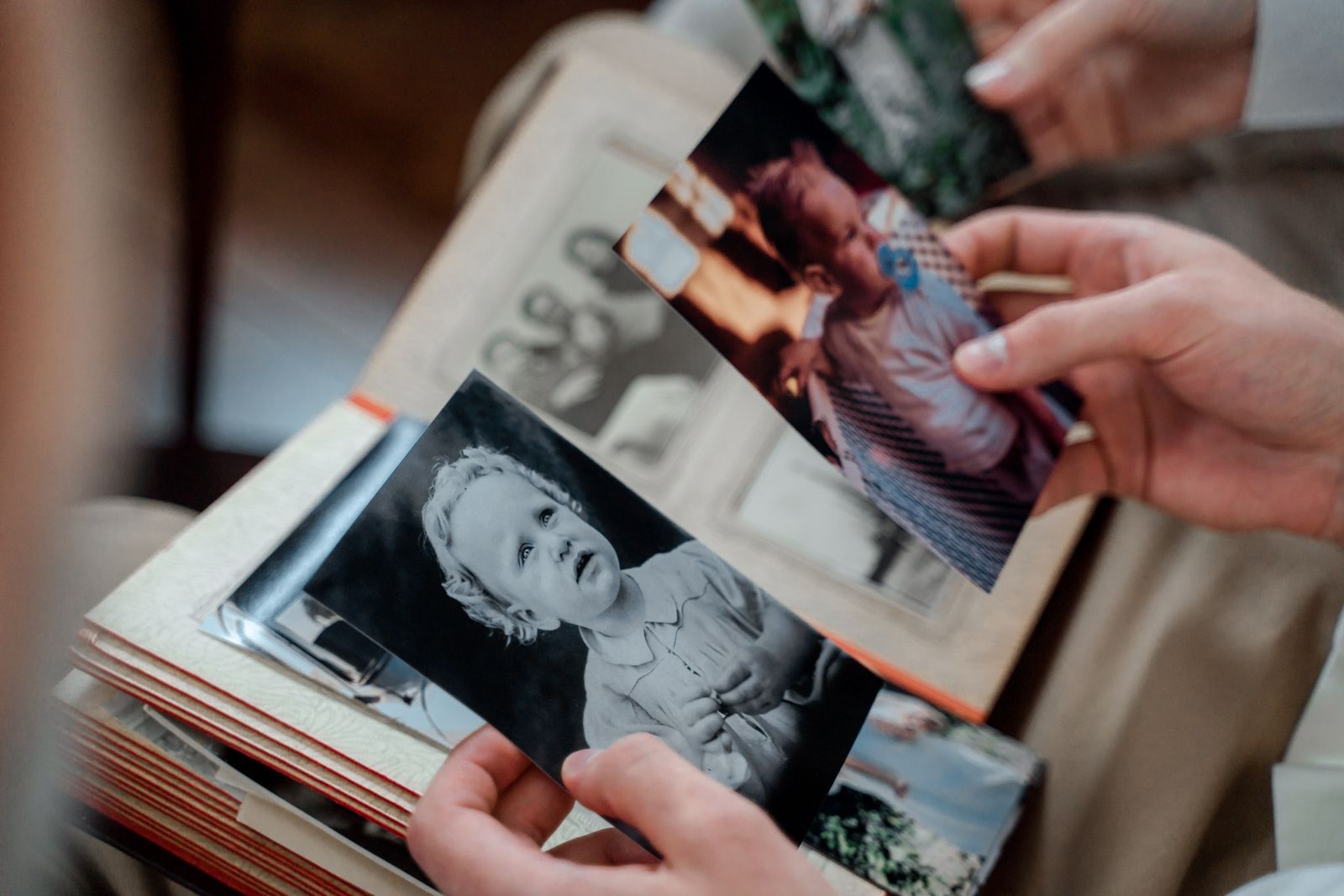
The legal and emotional starting point is the same: the prints belong to your parent or relative, and so does the decision. If they are alive and able to decide, your role is to arrange, pay and manage — not to choose in secret. That sounds obvious until you see the most common version of this project, which is the surprise gift: restore Mother's wedding portrait, frame it, present it at Christmas. The instinct is kind. The failure mode is real. Some people do not want a damaged photograph repaired. The crease may be part of how they remember it. The faded ex-husband a well-meaning daughter had removed from a group portrait may not have been theirs to remove.
Practical consent, in the families who did this well, looked like this:
- Ask about the project, even if you keep one print as a surprise. "I'd like to have some of these scanned and a few repaired — would that be all right, and are any of them off-limits?" is a five-minute conversation that prevents the only truly bad outcomes.
- Ask which photographs matter. You will guess wrong. Children pick the formal portraits; parents, in my experience, more often pick the informal ones — the picnic, the porch, the dog — because those are the ones that feel like the life as lived.
- Agree who pays, and say it out loud. Restoration for a parent is often a gift, sometimes a shared family cost, occasionally paid from the parent's own funds by the person holding power of attorney. All three are fine. What causes friction is silence, followed by a sibling discovering a charge.
- If the owner has died, or cannot decide, the honest rule is to restore faithfully and edit nothing away. Repair damage; do not revise history. Removing people, slimming faces or "improving" a scene for someone who cannot approve it crosses a line that faithful repair does not.
One more ownership wrinkle: whoever pays, the restored files should be held by the family, not stranded in one person's account. More on that below.
Restoration and preservation are two different jobs
Families use the words interchangeably; studios do not, and confusing them wastes money.
Preservation is about stopping loss: getting every print scanned at good quality, storing the originals safely, and keeping the digital files backed up. It is cheap per image — bulk scanning services charge around a dollar or so per print, roughly $1.19 at the low end for large orders — and it protects everything, including photographs nobody wants restored today.
Restoration is repair work on individual images: fixing tears, cracks, fading, water stains and mold spots, and rebuilding small missing areas by hand on a digital copy. It is priced per photograph, at tens to hundreds of dollars each, and it only makes sense for a chosen few.
The right order is preservation first, restoration second. Scan the whole box — or at least the whole album — before you commission a single repair. The scan is what the restorer works from, and a good scan sent digitally means the fragile original may never need to travel. Once everything is scanned, the family can choose candidates together, on a screen, without passing fragile prints around. And scanning is the insurance policy: if a print is lost or deteriorates further, the scan is what remains.
What a good scan looks like
Restorers can only work with the detail a scan captures, so this step decides the quality of everything after it. The guidance from the Library of Congress and from working restorers converges on the same points:
- Scan on a flatbed scanner, in colour even for black-and-white prints — the colour channels hold extra information about stains and fading that a restorer uses.
- Use 600 dpi for a standard print as a working default; 300 dpi is the Library of Congress's starting point for ordinary prints, and small originals you may want enlarged deserve the higher figure.
- Turn off the scanner's automatic sharpening, dust removal and colour correction. Those features discard detail the restoration step needs.
- Save an untouched master file (TIFF or maximum-quality JPEG) and never let anyone — including the restorer — overwrite it. Work happens on copies.
- Handle prints by their edges, dust them with an air blower rather than a brush, and never tape a tear, peel apart stuck prints, or try to separate a photograph that has bonded to frame glass. All of those are conservator jobs, and a tear is easy to repair digitally once both halves are scanned as they lie.
If there is no scanner in the family, a careful phone photograph — print flat, indirect daylight, no flash, phone held parallel, frame filled — is a workable copy for a quote, though a flatbed scan is the better basis for paid work.
What restoration can do, and where it stops
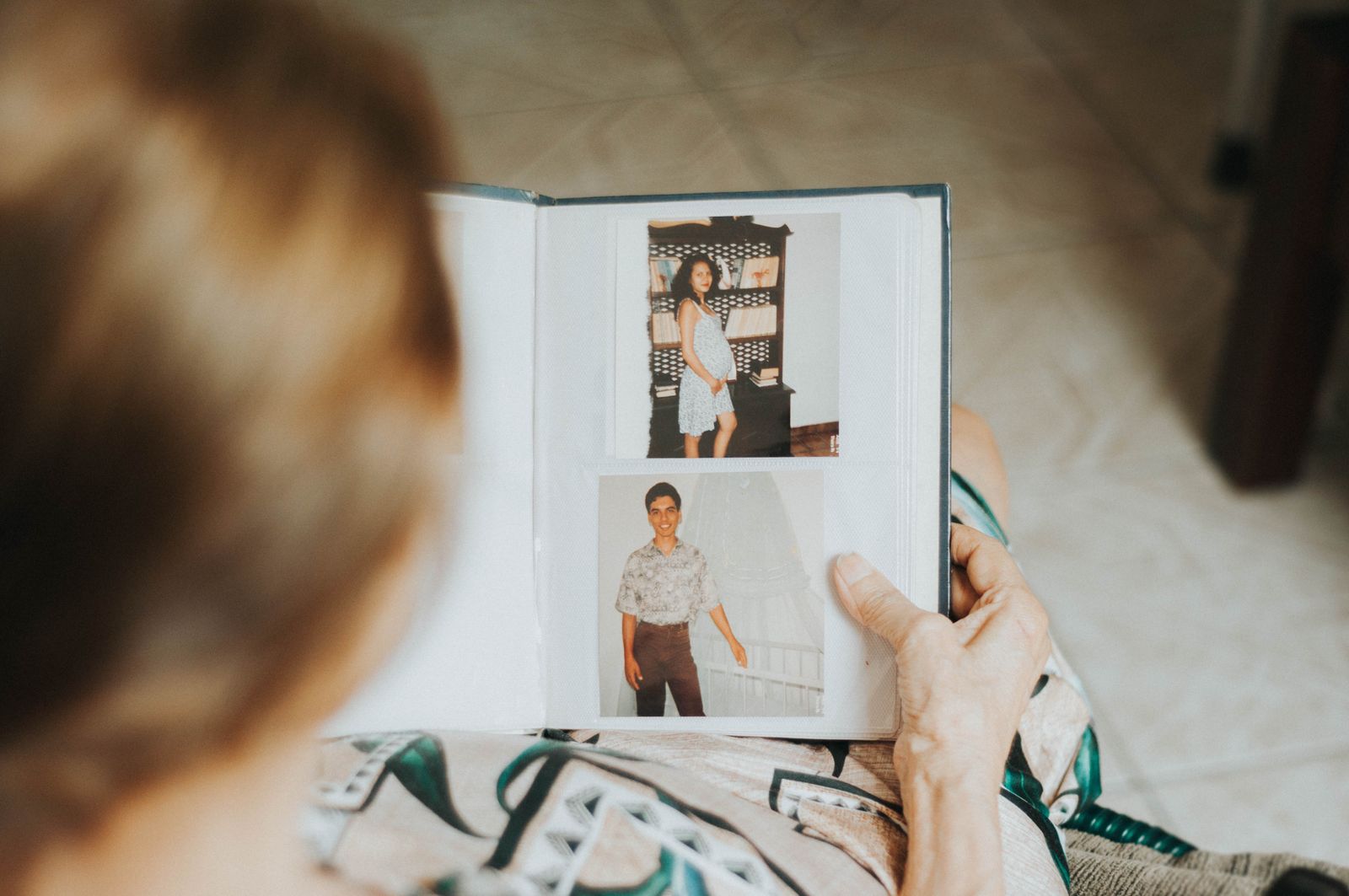
Honest restorers describe their work as repair of a copy. Nothing is done to the original print; all of it happens on the scan. Within that, the craft is genuinely impressive — and genuinely limited.
It can: remove dust, scratches and spots; mend tears and creases, including across a face, when enough of the face survives on either side of the damage; recover faded contrast and colour; remove water stains and many mold spots; rebuild small missing areas — a corner, an edge, a patch of background — from what surrounds them; and, as a separate, interpretive step, colourise a black-and-white photograph.
It cannot: sharpen a photograph that was blurred when it was taken — a completely blurred photo cannot be brought back, and reputable services say so at the quote stage rather than charging you to discover it. It cannot recover detail that fading has erased entirely; it can only rebuild a plausible version, which is reconstruction, not recovery. And colourisation is always an interpretation: the colours are chosen to look right, not retrieved from the original. For a parent's photograph, that distinction matters. If you colourise your mother's wedding dress, tell her it was colourised, and keep the faithful black-and-white restoration as the primary version.
Faces deserve a specific warning. Automated, one-click restoration tools can quietly beautify — smoothing skin, reshaping features — until the person is subtly not the person. For photographs of someone else's life, check any restored face against the original side by side: the shape of the eyes, the line of the nose and mouth, moles and scars. A skilled human retoucher, briefed that likeness matters more than prettiness, is the safer choice for the one or two portraits that matter most.
What it costs
Restoration is priced by damage, not by the photograph's size or age. Published prices from working services cluster like this:
| Level of damage | Typical price per photo | What it usually covers |
|---|---|---|
| Light | About $20–$85 | Dust, scratches, mild fading, contrast and tone recovery |
| Moderate | About $60–$150 | Creases, noticeable fading, stains, colour correction |
| Heavy | About $100–$250 | Tears, water damage, larger missing areas rebuilt |
| Severe / complex | $250–$500 or more | Major reconstruction, faces rebuilt, painted repair |
Those ranges are wide because the market is wide: high-volume online services list basic work from as little as a few dollars a photo and complex work from around $97 upward, while a local studio doing hand restoration prices light work at $75–$125 and major work at $185–$250. Thumbtack's cost guide puts the average local job at $78, with a typical range of $55 to $100. Colourisation is usually an add-on — published figures run from about $25 to $100 on top of the repair, with some services bundling restoration and colourisation at around $110 a photo.
For a family project, budget by selection, not by box. A sensible shape is: scan everything (around a dollar a print in bulk, or free if a family member scans), restore perhaps five to fifteen photographs properly, and print and frame two or three. Ten moderate restorations at $85–$150 each is a $850–$1,500 project; families who try to restore sixty photographs either blow the budget or buy cheap automated work for images that deserved better. Get a fixed quote on the actual scans before work starts — every reputable service quotes free from the scan — and confirm that an unrestorable photo is not charged for.
Sending originals: the risk nobody should take casually
If a service works from scans, the originals never leave the house. Prefer that. Some local studios want the print itself for their own high-end scanning; that can be worth it for a fragile, valuable original, but then treat the handover like the irreplaceable object it is:
- Use a rigid, non-bendable mailer and an acid-free sleeve if posting; use a tracked, insured service with signature on delivery. Studios that take national work specify exactly this.
- Never send the only copy of anything by ordinary post, and never send a whole box when one print is being restored.
- Photograph or scan every original before it travels, so a scan exists whatever happens.
- Agree in writing how and when originals are returned, and check them back in, one by one, when they arrive.
And repeat the handling rules to anyone helping: no tape, no glue, no peeling prints off album pages that resist, no separating a print from glass. If a photograph is stuck, bring the whole frame to the studio. Conservators exist for the physical object itself — surface cleaning, flattening, separating stuck prints — which is preservation of the artefact, a different trade from digital restoration, and the right referral when the object, not just the image, is failing.
Communication: run it like a family project, because it is one
The bookings that went smoothly at my desk had one person coordinating and everyone else informed. The ones that generated angry phone calls had three siblings separately commissioning work, or one person presenting a finished, altered album as a fait accompli.
A workable pattern: one coordinator (usually the person reading this); a shared folder holding the scans, named with people, places and years; a short list of restoration candidates that siblings can comment on before money is spent; and the finished files delivered to at least two family members, in at least two places. Keep three files for each restored photograph — the untouched scan, the faithful restoration, and any colourised version — clearly labelled, so nobody mistakes the interpretation for the original in twenty years' time. The Library of Congress's storage advice is the right standard: at least two copies, stored as far apart as practical, checked periodically.
Decide, too, what happens to the prints after scanning. "Preservation" that ends with originals in a damp garage has preserved nothing. Cool, dry, stable storage in acid-free sleeves is the unglamorous half of the job — and for the parent who still lives with their photographs, ask where they want them kept. They are, still, theirs.
Questions to ask the restorer
- Will you work from my scans, or do you need the originals — and if so, how are they shipped, stored and returned?
- Is the quote fixed, per photograph, before work starts? What happens if a photo turns out to be unrestorable?
- Do you keep my untouched master scan unchanged and return it with the restored files?
- For portraits: will a person do the face work, and can I approve a proof before final delivery?
- What file formats and sizes do I receive, and can I print from them at the size I want?
- Is colourisation priced separately, and will the un-colourised restoration be delivered too?
- How long will it take, and how many revision rounds are included?
Finding the right help
This site lists 1,063 photo restoration and preservation services, alongside hundreds of portrait studios — many of which take restoration work across the counter even when it is not their headline service. For a project on someone else's behalf, favour the provider who asks questions about the photographs and their owner over the one who quotes instantly from a thumbnail. Bring the scans, bring the owner's wishes, restore a few photographs faithfully and well, and put the originals back safely where they belong. Done in that order, this is one of the kindest errands an adult child can run — and one of the few whose results will still be on the wall, and in the family, decades from now.
Sources
- Thumbtack, photo restoration cost guide — establishes average local job cost of $78 and the typical $55–$100 range.
- ScanCafe, photo restoration pricing — establishes tiered online pricing from a few dollars for basic work to $96.79 and up for complex restoration, and that unrestorable photos are identified at quote stage.
- Dale Studios, restoration pricing and scanning comparison — establishes hand-restoration prices of $75–$250 by damage level, colourisation at +$25–$60, and bulk scanning at around $1–$1.19 per image.
- Library of Congress, photograph care and digitisation guidance — establishes handling by edges, 300 dpi as a starting point for prints, and keeping at least two copies of digital files stored apart.
- National Camera Exchange and FOREVER, published restoration prices — establish moderate and complex tiers from $60 and $100 upward, and a bundled restoration-and-colourisation price of $109.99 per photo.
Photo credits
- Hands examining a photo album — photo by cottonbro studio, https://www.pexels.com/photo/person-holding-baby-pictures-8848784/
- Senior woman with a photo album — photo by Jessika Arraes, https://www.pexels.com/photo/a-person-looking-at-the-photo-album-14013483/
- Elderly couple with vintage photographs — photo by SHVETS production, https://www.pexels.com/photo/people-holding-pictures-7545270/
More guides
- How to Find a Wedding Photographer: The Complete, Honest GuidePhotographers › Wedding Photographers
- How Much Does a Wedding Photographer Cost? Packages DecodedPhotographers › Wedding Photographers
- 10 Questions to Ask a Wedding Photographer Before You BookPhotographers › Wedding Photographers
- Wedding Photography Styles Explained: Documentary, Editorial, Traditional, Fine ArtPhotographers › Wedding Photographers
- Hiring a Wedding Photographer in California: Venue Light, Permits, and Price LevelsPhotographers › Wedding Photographers
- All Guides & ArticlesBrowse the full guides library