Photographers › Portrait Photographers
Booking Portrait Photographers Online vs. In Person: What Changes, What Does Not
If you sell anything for a living — a product, a service, yourself — your portrait is not vanity. It is packaging. It sits on your marketplace profile, your shop page, your speaker bio and your listings, and it converts or it doesn't. So when the time comes to book the photographer who will make it, the first decision is not which photographer. It is which channel: a marketplace or booking platform, where you compare profiles and pay in an app; the photographer's own website, with its booking calendar and gallery; or the oldest route — walk into a studio, or pick up the phone, and deal with a human being.
I book photographers professionally, through all three. Clients assume the channel changes everything. It changes less than they think, and the things it does change are not the ones in the advertisements. Here is the honest split.
First, the prices — because they barely move
Start with the fact that surprises people: the photographer's price is broadly the same animal in every channel, because it is set by the same market. Thumbtack's national data — the largest pool of actually-booked portrait work in the country — puts portrait photography at an average of $277 a session, typically $212 to $362; headshots average $304, typically $216 to $427; and the average hourly rate across professional photography is $164. Those figures describe marketplace bookings, but walk-in studios in the same cities quote into the same bands, because both are pricing against each other. A premium portrait specialist charges $350 to $800 and up whether you found them on Instagram, on a platform, or through the door of their studio.
Where the channel does move money:
Platform bookings compress the bottom of the market. Marketplaces rank by price and responsiveness, which pulls newer photographers into visible competition: mini-sessions and marketplace headshots at $50 to $200 — 15 to 30 minutes, a handful of edited files — are largely an online phenomenon. In person, that tier barely exists; a studio's floor is set by its rent.
In-person bookings hide their extras better. The studio quote that sounds complete in a conversation may separate the session fee from the images — prints and digital files priced at the viewing appointment. Online, the package contents are usually written in the listing, because the platform makes the photographer type them. Neither channel is more honest by nature; online is more documented by design.
Rush costs the same everywhere. Expedited delivery — 24 to 72 hours — commonly adds a 25 to 50 percent surcharge in every channel. If your listing launch is Friday, that number matters more than the booking route.
| Online / marketplace | In person / direct | |
|---|---|---|
| Typical portrait session | $212–$362 (average $277) | Same bands; studio floors set by overheads |
| Headshots | $216–$427 (average $304) | Same bands; premium specialists $350–$800+ in both |
| Bottom of market | Minis at $50–$200, easy to find | Rare — walk-in studios seldom sell 15-minute sessions |
| Price discovery | Written quotes, side by side, before you commit | Conversational; get it in writing yourself |
| Extras | Itemized in the listing, usually | May surface at the viewing appointment — ask first |
| Payment protection | Platform payment, dispute route, review system | Card chargeback rights; the relationship itself |
| Scheduling | Instant, 24/7, after hours | Business hours, a human who can flex them |
What genuinely changes online
When you can book. Survey data on appointment booking is consistent across firms: about two-thirds of consumers prefer booking online to calling, and roughly 40 percent of bookings now happen outside traditional business hours. For a seller working around their own customers, booking a photographer at 11 p.m. is not a trivial convenience — it is often the difference between booked and not booked. In-person booking cannot compete on this axis and does not try.
How much you know before you pay. Online, you get a portfolio, a review history, a written package and a written price before money moves. That is a real information advantage — with one distortion to correct for: platform portfolios are highlight reels by design, and review systems reward responsiveness and likability as much as photographic quality. The correction is the same in both channels: ask for one complete session gallery, start to finish, of work like yours. Online, that request is a message. In person, it is a conversation. Either way, a photographer who will not show a full gallery is telling you something.
Accountability has an address. A platform booking creates a record — messages, payment, terms — and a dispute route that does not depend on the photographer's goodwill. That matters most with a photographer you will never use again, for a one-off job, in a city you don't live in. Its limit is equally real: the platform can refund your money, but it cannot reshoot your launch day.
Speed of comparison. For a creator who needs three quotes on a standard headshot package, online wins outright — an hour of messaging against a day of phone tag. Phone calls, interestingly, convert far better than web forms per contact — service-industry data puts inbound call conversion at 25 to 40 percent against a few percent for form submissions — which is a statistic about sellers, not buyers. As the buyer, what it means for you is simpler: a photographer who answers the phone is statistically a photographer who closes and delivers. Responsiveness in any channel is the best single predictor of a smooth job.
What does not change at all
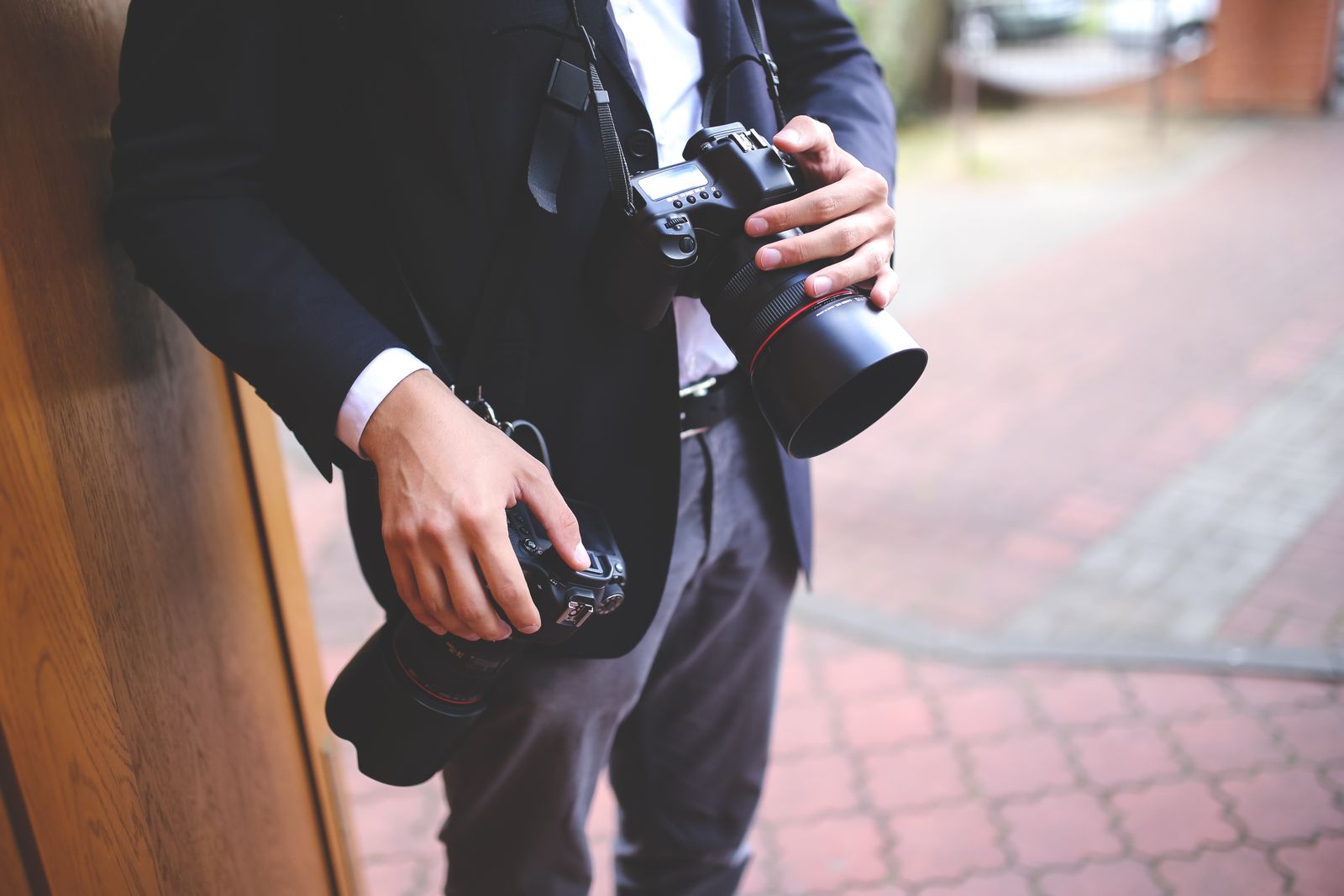
The session itself. The lights, the direction, the photographer's eye, the way they handle a subject who hates being photographed — identical. No platform improves a photographer's craft, and no studio's marble floor worsens it. Judge the work, not the wrapper.
The contract questions. Usage rights — can you put this portrait on packaging, in ads, on a book cover? — are negotiated the same way in both channels, and they matter more to creators and sellers than to almost anyone else: a standard portrait license often covers profiles and editorial use, while advertising and merchandising use is a separate right with a separate price. Delivery timelines, retouching depth, the number of finished files, rescheduling terms: channel-independent, and all of them belong in writing whichever route you took. An online booking that lives only in a chat thread deserves the same one-page summary email as a handshake deal.
The retouching divide. In both channels, the gap between a lightly corrected file and a properly retouched one is where quality — and later cost — lives. Ask what "edited" means in the package you are buying: color and crop, or skin work, stray hairs, background cleanup? Sellers feel this divide commercially: a product-page portrait with sloppy retouching reads as an amateur business at thumbnail size.
The photographer's reliability problem. Backups — of gear, of files, of the photographer themselves if they are ill on your date — are a property of the professional, not the platform. Ask in both channels. The answer is the same question with the same right answer.
What in-person still does better
Judgment calls. If your brief is unusual — a portrait that has to match an existing brand campaign, a difficult location, a subject with strong feelings about a scar or a wheelchair or a birthmark and how it is shown — a conversation beats a booking form. In person (and a video call counts as in person for this purpose), you can watch how the photographer thinks. For commercial work that will represent your business for years, that thirty minutes is the highest-value step in the whole purchase.
Negotiation with texture. Packages bend in conversation in ways platforms do not allow: an extra look thrown in, a second location on the same street, usage extended to your shop banner because the photographer likes the project. None of this is available at a "book now" button.
The studio itself. Walking in tells you things no listing can: whether the space is professional, whether the work on the walls matches the work online, whether the person you are trusting with your face runs an orderly business. Studios also remain the natural home of the full-service end — makeup, wardrobe guidance, coached posing, same-day viewing — which is why premium portraiture has stayed stubbornly physical while everything else moved online.
A decision rule for sellers
Book online when the job is standard, the deadline is tight, and the deliverable is well defined: a headshot refresh, a set of profile portraits, a marketplace listing package. The written record, the after-hours booking and the price comparison are worth real money, and the work itself will be identical.
Book in person — or at least by real conversation — when the portrait is the business: a founder portrait for a launch, imagery for packaging, anything with complicated usage rights or a subject who needs directing with care. Pay the premium tier's price in either channel when the image will sell for you for years; the difference between a $277 average session and a $500 specialist session is the cheapest advertising you will ever buy, amortized over every click it earns.
And whichever channel you choose, do the three things that do not change: see a full gallery, get the usage rights in writing, and confirm what "edited" means. This site lists 672 portrait photographers and 177 headshot and portfolio photographers — enough that the right one for your business is in there under either booking route. The channel is logistics. The photographer is the product.
Sources
- Thumbtack, 2026 Photographer Prices — portrait photography averages $277 (typical range $212–$362); headshot photography averages $304 ($216–$427); average professional photography hourly rate $164.
- BetterPic headshot pricing breakdown, via Amy Marlan's headshot pricing guide — tiers from $75–$150 for newer photographers to $350–$800+ for premium specialists; rush delivery surcharges of 25 to 50 percent for 24-to-72-hour turnaround.
- Quasa, Professional Headshots Cost — mini-session and marketplace route at $50–$200 for short sessions with a few edited files; standard studio sessions $200–$500.
- GetApp scheduling survey data, compiled in appointment-scheduling statistics reviews — 67 percent of consumers prefer booking online over calling; about 40 percent of bookings occur outside traditional business hours; inbound phone leads convert at 25–40 percent against low single digits for web forms.
Photos: photographer at work — photo by Karolina Grabowska, https://www.pexels.com/photo/6182/ ; studio portrait of a woman — photo by Andrea Piacquadio, https://www.pexels.com/photo/774909/ ; studio portrait of a man — photo by Italo Melo, https://www.pexels.com/photo/2379004/
More guides
- How to Find a Wedding Photographer: The Complete, Honest GuidePhotographers › Wedding Photographers
- How Much Does a Wedding Photographer Cost? Packages DecodedPhotographers › Wedding Photographers
- 10 Questions to Ask a Wedding Photographer Before You BookPhotographers › Wedding Photographers
- Wedding Photography Styles Explained: Documentary, Editorial, Traditional, Fine ArtPhotographers › Wedding Photographers
- Hiring a Wedding Photographer in California: Venue Light, Permits, and Price LevelsPhotographers › Wedding Photographers
- All Guides & ArticlesBrowse the full guides library