Photographers › Studios
Booking Studios Online vs. In Person: What Changes, What Does Not
You can now rent a photography studio the way you rent a car: search, filter by size and price, look at photographs of the space, pay, receive a door code. Or you can do it the older way — phone the studio, talk to the person who runs it, walk the space before you commit. Both channels book the same rooms. They do not book them with the same information, the same accountability, or the same failure modes, and the difference matters most to the people studios serve best: creators and sellers shooting products, portraits and content that has to convert. This site lists 769 photography studios. I book them professionally, in both channels, and this is the honest comparison — what actually changes when you book online, what stubbornly does not, and how to get the advantages of each channel without its characteristic regrets.
The two channels, plainly
Online booking means marketplaces and studio websites with live calendars: you see availability, hourly or day rates, equipment lists and house rules, and you pay by card, usually in advance, under a stated cancellation policy. The transaction is documented by the platform, messages run through its system, and access is often self-service — a code, a lockbox, a host who may never appear.
In-person booking — which in practice means phone, email, and a site visit before money moves — is a direct negotiation with the studio's owner or manager. The rate may be the same rate card, but everything around it is discussable: load-in, overtime, equipment substitutions, the quirks of the room, and who answers when something fails at 7 a.m. on your shoot day.
What genuinely changes online
Price transparency — in your favor, up to a point. Online, rates are published and comparable: you can line up six studios' hourly prices, ceiling heights and included equipment in an afternoon, which quietly disciplines the whole market. Typical published rates run roughly $50–$150 an hour for small studios in most cities, $150–$400 an hour for large, well-equipped urban spaces, with half-day and full-day rates discounting the hourly figure. What the listing price does not show is the tail: cleaning fees, equipment surcharges, overtime multipliers, minimum hours. Online comparison is honest about the headline and silent about the tail; read the full rate card before the platform takes your card.
Availability is real, and instant. The live calendar is the online channel's cleanest win. No phone tag, no "let me check the book," no double-booked Saturday discovered by email. For a seller working to a launch date, certainty about the slot is worth money by itself.
Information quality drops exactly where it matters. A studio photographs beautifully — it would; that's its job. What photographs don't tell you: whether the freight elevator fits your product's crates, whether the "natural light" is a north-facing gift or a west-facing furnace at 4 p.m., whether the street outside is a loading zone or a tow-away, whether the air conditioning can hold against four lights and six people in August, whether the last tenant's podcast studio bleeds through the wall. Online reviews help, but they review the transaction — clean, easy, nice host — more readily than the room under working conditions.
Accountability becomes procedural. When an online booking goes wrong, your remedy is the platform's process: documented messages, a dispute, a refund under the policy you clicked past. That paper trail is a genuine advantage — it beats a verbal agreement with a handshake studio every time. But it is slow, and it cannot fix a shoot day. The platform can refund your Tuesday; it cannot re-stage your product launch.
What genuinely changes in person
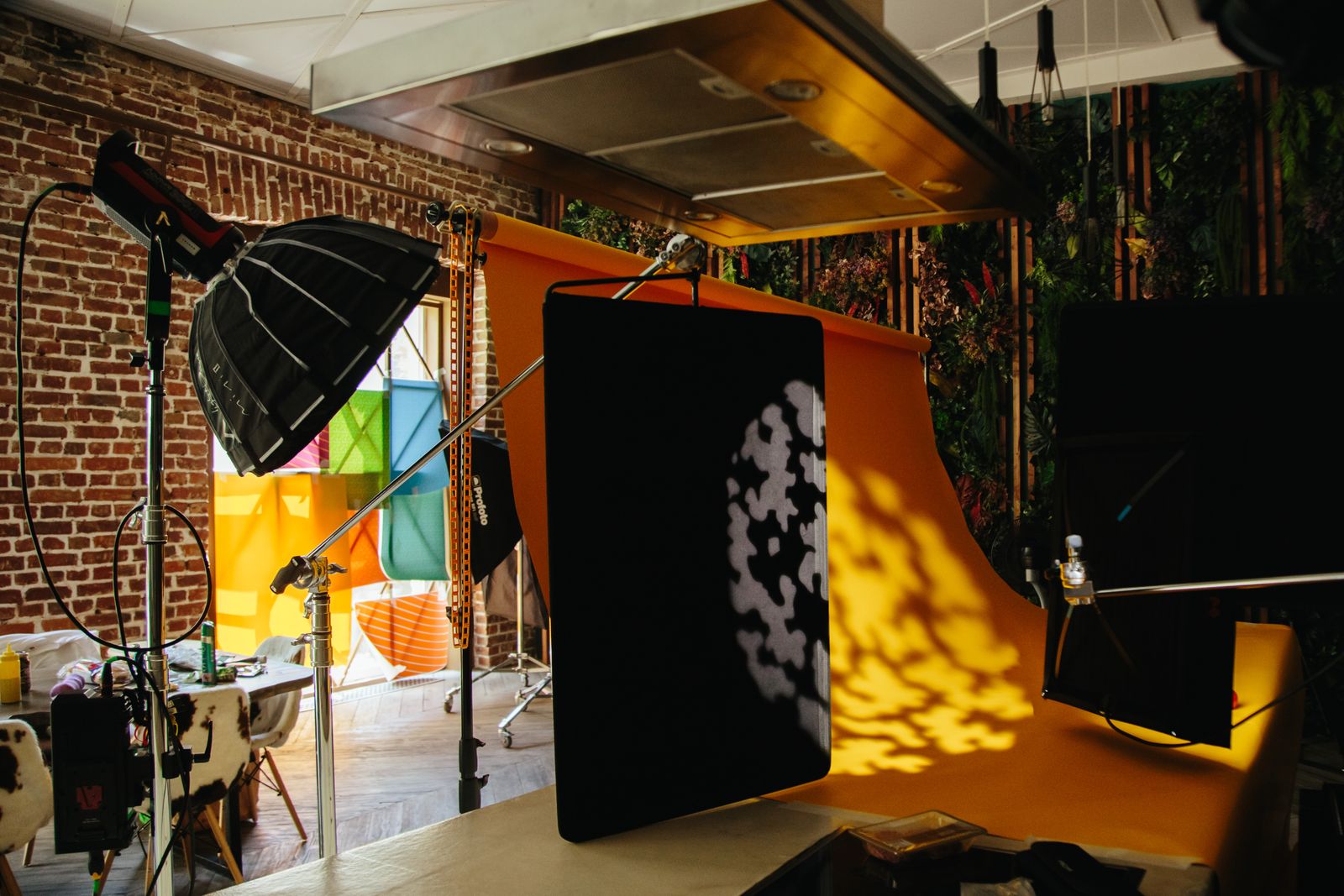
The conversation is the product. A ten-minute call with the person who runs a studio surfaces the things no listing carries: the room's real best hours, which backdrop is freshly painted, whether the big softbox is actually available that week or out for repair, whether your plan to shoot a motorcycle indoors is a yes, a no, or a yes-with-conditions. Studios are run by people who have watched a thousand shoots; a booking conversation is a free consultation with the person who knows the room's failure modes, if you ask.
Negotiation exists. Published rates are the opening position for direct bookings in a way platforms discourage: off-peak discounts, a thrown-in lighting package for a full day, a standing rate for a monthly product shoot, overtime at the standard rate for a good client. Sellers with recurring shoots — the creators this matters most to — build their best economics in person, across a relationship, not in a cart.
The walk-through is unrepeatable online. Standing in the room, you learn its ceiling height in your body, hear its noise floor, find its outlets, test its light with your own eyes at the hour you'll shoot. Every professional I know has a story of the studio that photographed like a cathedral and worked like a closet. A thirty-minute visit is the cheapest insurance in production.
Accountability becomes personal — for better and worse. A direct booking's remedy is a person: usually faster, more flexible, and more motivated than a platform process — a manager who can open early, swap your room, or send their own assistant to fix the rig. The worse is real too: a verbal promise from a person is worth what their memory and goodwill make it. The professional answer is not to choose the channel by its accountability style; it is to put the agreement in writing in both.
The cost tail, compared honestly
The headline rate is where online comparison shines; the tail is where bookings diverge. A realistic accounting of a one-day product shoot shows why two studios quoting the same $100 an hour can invoice $300 apart:
| Cost element | Online booking | In-person booking |
|---|---|---|
| Room rate | Published, comparable at a glance | Same rate card, but open to off-peak and repeat-client discussion |
| Cleaning and service fees | Added at checkout, standardized | Sometimes included, sometimes waived — ask |
| Equipment | Itemized add-ons in the listing | Bundling is negotiable, especially for full days |
| Overtime | Automatic, at the platform's stated multiplier | Often settled at the standard rate for clients the studio knows |
| Cancellation | The policy you accepted, enforced by the platform | The policy in your agreement — which you could negotiate before signing |
Neither column is "cheaper" in general. The online column is predictable, which is worth money to a first booking. The in-person column is elastic, which is worth money across a year of monthly shoots. Sellers who shoot products regularly should run their own arithmetic: the platform's fees and rigid overtime against the value of a standing rate and a manager who rounds in your favor — most find the crossover arrives around the third or fourth booking with the same room.
What does not change at all
- The room. The studio you get is the studio that exists. No channel edits its ceiling height, its light, or its neighbors.
- The paperwork that matters. Insurance requirements, damage liability, cancellation exposure and overtime terms exist in both channels; online, they are standardized and non-negotiable; in person, they are negotiable and therefore your job to negotiate.
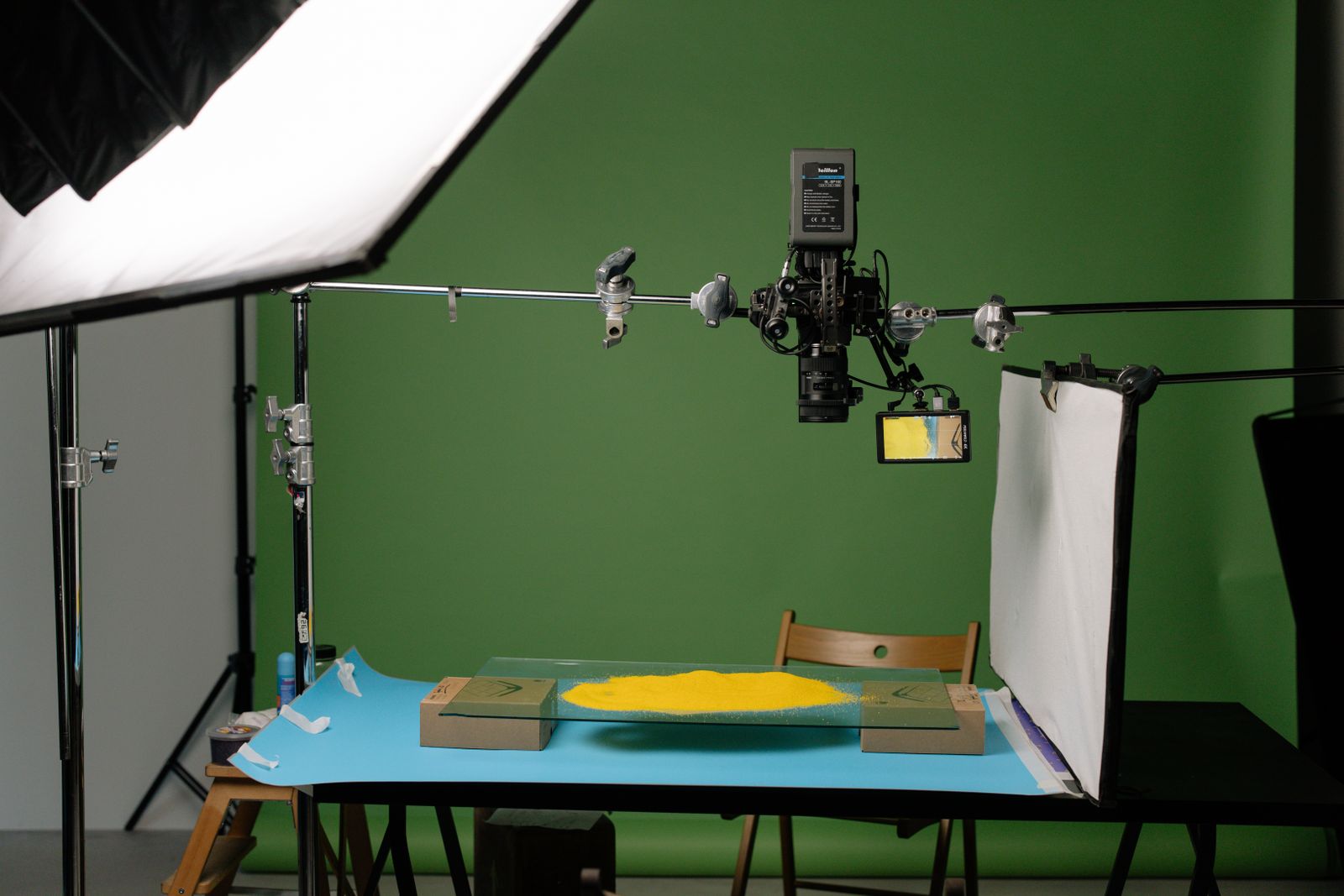
- Your preparation. Shot list, load-in plan, power and data needs, the product staged and steamed the night before — the shoot succeeds or fails on these in a platform-booked palace exactly as in a handshake-booked loft.
- The people problem. If the studio's one technician is sick, both channels feel it. What differs is only how you find out, and who calls you.
A practical hybrid, which is what professionals actually do
Book the first shoot with a new studio in person — call, visit, walk the room, meet the human. You are not buying that Tuesday; you are buying information about every future Tuesday. Then book the repeats online, where the calendar certainty and the paper trail serve you, with a named contact from your visit in your phone for the day something fails. Use the online channel's transparency to keep the direct relationship honest on price, and the direct relationship to keep the online booking honest about the room.
For one-off, low-stakes shoots — a half day of flat-lays in a standard space — pure online booking is entirely rational, and the industry's center of gravity has moved there for good reason. For a launch shoot, a large product, a client-facing day, or anything where failure costs more than the room, the in-person premium is not nostalgia. It is the price of knowing the elevator fits.
Questions to ask in either channel
- What is the total price — minimum hours, cleaning, equipment, overtime rate — in writing?
- What is the cancellation and rescheduling policy, exactly, and what triggers it?
- What equipment is included, what is rented, and what condition is it in this week?
- What are the load-in arrangements: elevator size, parking, loading hours, stairs?
- Who is on site or on call during my booking, and what is their number?
- What are the rules on food, animals, vehicles, paint, water, and anything else my shoot involves?
- What insurance do you require of me, and what does yours cover?
The short version
Online booking wins on price transparency, live availability and paper trail. In-person booking wins on information about the room, negotiation, and a human remedy when the day goes wrong. Neither changes the room, the preparation, or the physics. So: scout in person, book repeats online, get the total price and the failure plan in writing either way — and spend the difference in effort on the shoot itself, which is the part your customers will actually see. This site lists 769 studios; the right one is the one whose room you understand before your products are standing in it.
Sources
- Peerspace — photography studio rental listings, hourly rate structures, and platform booking and cancellation terms for creative spaces.
- Giggster — studio rental marketplace rate cards, minimum-hour and cleaning-fee practices for film and photography locations.
- Photographs: studio interior with backdrops — photo by Ron Lach, https://www.pexels.com/photo/8857043/ ; product setup in studio — photo by cottonbro studio, https://www.pexels.com/photo/5878878/ ; empty studio — photo by Kunno Jayson, https://www.pexels.com/photo/6989087/
More guides
- How to Find a Wedding Photographer: The Complete, Honest GuidePhotographers › Wedding Photographers
- How Much Does a Wedding Photographer Cost? Packages DecodedPhotographers › Wedding Photographers
- 10 Questions to Ask a Wedding Photographer Before You BookPhotographers › Wedding Photographers
- Wedding Photography Styles Explained: Documentary, Editorial, Traditional, Fine ArtPhotographers › Wedding Photographers
- Hiring a Wedding Photographer in California: Venue Light, Permits, and Price LevelsPhotographers › Wedding Photographers
- All Guides & ArticlesBrowse the full guides library