Photographers › Wedding Photographers
Booking Wedding Photographers Online vs. In Person: What Changes, What Does Not
Twenty years ago you booked a wedding photographer by visiting a studio, drinking the coffee, and flipping through sample albums with your hands. Today the entire transaction — discovery, portfolio, consultation, contract, payment — can happen without either of you leaving a chair, and for most couples it does. The question worth asking is not which channel is better. It is which parts of the decision each channel makes easier, which parts it makes quietly worse, and which parts it does not touch at all — because the wedding day, notably, still happens in person.
I book photographers professionally through marketplaces, direct websites, referrals, and studio visits. Here is the honest comparison, channel by channel, drawn from what actually changes.
What "online" and "in person" actually mean now
The channels blur more than the labels suggest. Online booking usually means one of three routes: a marketplace or directory (The Knot, Zola, Thumbtack and their kin) where photographers list starting prices and collect reviews; a photographer's own website and social presence, contacted directly; or a booking service that assigns you a photographer from its roster. In person means the older route — referrals from venues, planners, and married friends, followed by a meeting, in a studio or over coffee, before anything is signed. Most real bookings are hybrids: found online, vetted on a video call, contracted by e-signature. The pure versions are still worth comparing, because the failure modes live at the extremes.
Price: what changes
Online channels make starting prices visible, and that is a genuine improvement. Marketplace listings show you a market's floor at a glance — in the Kansas research for this site's guides, Wichita-area listings ran from $600 to $3,800 before a single conversation — and they discipline photographers who would otherwise quote by mood. Against the national anchor (The Knot's 2026 study puts average photographer spend at $3,000 for 2025 weddings), you can see instantly whether a quote is in the market or out of it.
What online prices do not show is the package. A "starting at" figure buys the minimum hours, one photographer, no album; the comparable full package may be double. In-person conversations surface the real number faster, because a photographer across a table builds the package around your day while you watch. Online, you do that assembly yourself, across six tabs, from six differently-structured price lists. Neither channel is cheaper in the end — the work costs what it costs — but they distribute the effort differently: online gives you breadth and a visible floor; in person gives you a finished quote sooner.
| Dimension | Online | In person |
|---|---|---|
| Price discovery | Starting prices visible across a whole market at once | One quote at a time, but a complete one |
| Comparing packages | Your job: normalize hours, shooters, albums across tabs | Their job: the quote is built around your day |
| Negotiation | Limited on marketplaces; real on direct websites | Natural, and informed by rapport — for better and worse |
| Information quality | Reviews at scale; portfolios curated to highlights | Full albums in hand; references you can call |
| Accountability | Platform records, card payments, review consequences | A physical business, a community, a reputation in one town |
| The scam surface | Larger: fake portfolios and vanished deposits live here | Smaller, not zero: the protections are social, not technical |
Information quality: what changes
A portfolio online is a highlight reel by design — thirty frames chosen from tens of thousands. It tells you a photographer's ceiling, not their average, and it cannot show you the thing that actually predicts your gallery: one complete wedding, start to finish, in light like yours. In person, the sample album on the table is closer to that evidence — a whole day, bound, including the dull frames — and you can ask for the full digital gallery of a recent wedding and scroll all of it while they watch you scroll.
Reviews cut the other way. Online, you get them at scale, with patterns no single reference would reveal: the photographer who is brilliant and always three weeks late will say so across forty reviews. In person, references are curated by the seller. The strongest process uses both: online reviews to build the shortlist and spot the patterns, then a full gallery — requested digitally, reviewed at your pace — to judge the work itself.
And one modern hazard belongs entirely to the online channel: the portfolio that never happened. The Better Business Bureau's scam alert on wedding photographer fraud describes the pattern — couples find a photographer online, sign a digital contract, send a deposit by a peer-to-peer payment app, and meet silence, a cancellation days before the wedding, or a no-show. Reported losses in the BBB's cases run from $1,700 to $5,300. Security researchers tracking wedding scams add the 2025 refinement: AI tools can now generate an entire convincing wedding portfolio — images of weddings that never occurred — in minutes. The defenses are old-fashioned and they work in both channels: a full gallery from one real wedding (AI portfolios struggle with consistency across a whole event), a live video or in-person conversation about your specific venue, references contacted directly, and payment by a method with dispute rights.
Accountability: what changes
Online booking leaves a paper trail by default: platform messages, e-signed contracts, card payments, a review you can still write. That trail is real protection, and platforms add their own pressure — a photographer who ghosts couples does not keep a marketplace listing long. In-person booking substitutes social accountability: a studio with a door, a venue community that refers them, a name in one town. That is also real, and older, and it evaporates the moment the "studio" is a rented desk and the town is one they just moved to.
Payment method is where the channels converge into one rule. The BBB's cases share a detail: deposits sent through peer-to-peer apps, which offer no meaningful dispute route. Whichever channel you book through, pay the retainer — typically 40 to 50 percent of the package in published wedding terms — by credit card or another reversible method, against a signed contract that names the business, the date, the deliverables, and the reschedule terms. A legitimate photographer in either channel will accept that structure without blinking. Resistance to it is the loudest red flag in this entire guide.
What does not change at all
The consultation's real questions are identical on a video call and across a table: Have you shot my venue? Who is your backup? What does the contract say about illness, delivery dates, and overtime? The retainer is the same size, the contract terms the same shape, the delivery window — six weeks is a published norm in more than one market — the same negotiation. Chemistry, the thing couples assume requires a room, mostly survives video: you are judging whether this person will be calm and kind at hour nine of your wedding, and thirty unscripted minutes on camera reveals that about as honestly as coffee does. What genuinely requires presence is narrower: handling the physical albums (their print quality is a product you may be buying), and photographing you — which is why the engagement session, bookable through either channel, remains the only true audition, and why smart couples in both channels treat it as one.
Running the meeting, in whichever channel
Wherever the conversation happens, run it the same way. Ask for the full gallery first and the highlights second, and notice whether the order bothers them. Ask who exactly will hold the camera on your date — marketplaces and booking services can send a roster photographer rather than the name on the listing, and studios can send an associate; neither is automatically bad, and both must be said out loud. Ask what the package's number becomes with your actual hours, your actual guest count, and an album included, and write that number down in the room. Ask for the contract before the retainer, not after. And end every meeting, on screen or across a table, with the same request: two recent couples you may contact directly. The channel determines how you found the photographer. These five asks determine whether you should hire them, and they have not changed since the studio-and-coffee era — only the furniture has.
The verdict, by couple
Book online-first if your wedding is in a market you don't live in, if your date is close and you need breadth fast, or if you are the kind of buyer who will actually read forty reviews and normalize six price lists — the channel rewards exactly that diligence. Book in-person-first if your venue is local and its referral list is strong, if print products matter to you and you want to handle them, or if the amounts involved make you want a door you can knock on. And in both cases, run the hybrid that working bookers use: discover online, verify with a full gallery and a live conversation, contract in writing, pay reversibly. The channel is a tool for reaching a decision. The decision — a named photographer, a full gallery you have scrolled, a contract you have read — is the same one it always was.

This site lists more than 560 wedding photographers, which makes it part of the online channel it describes — so take its advice in the spirit given: use the list for breadth, then do the unglamorous verification that no channel does for you. The couples who get photographed well are not the ones who picked the right channel. They are the ones who checked the same things, whichever screen or table they checked them across.
Sources
- Better Business Bureau, "Scam Alert: Picture-perfect deception: How to spot a wedding photographer scam" — the online-booking fraud pattern (digital contract, peer-to-peer deposit, cancellation or no-show), reported losses of $1,700 to $5,300, and the BBB's verification advice.
- Guard.io, "Wedding Season Scams: Protect Your Big Day" — AI-generated fake portfolios as the current refinement of the fake-vendor scam, with the full-gallery and live-meeting defenses.
- The Knot, 2026 Real Weddings Study — average wedding photographer spend of $3,000 for couples married in 2025.
- The Knot marketplace listings for the Wichita, Kansas area — starting prices from $600 to $3,800, grounding the online price-discovery passage.
- Milestone KC, 2026 pricing guide — six-week digital delivery and a 40 percent retainer, grounding the "what does not change" terms.
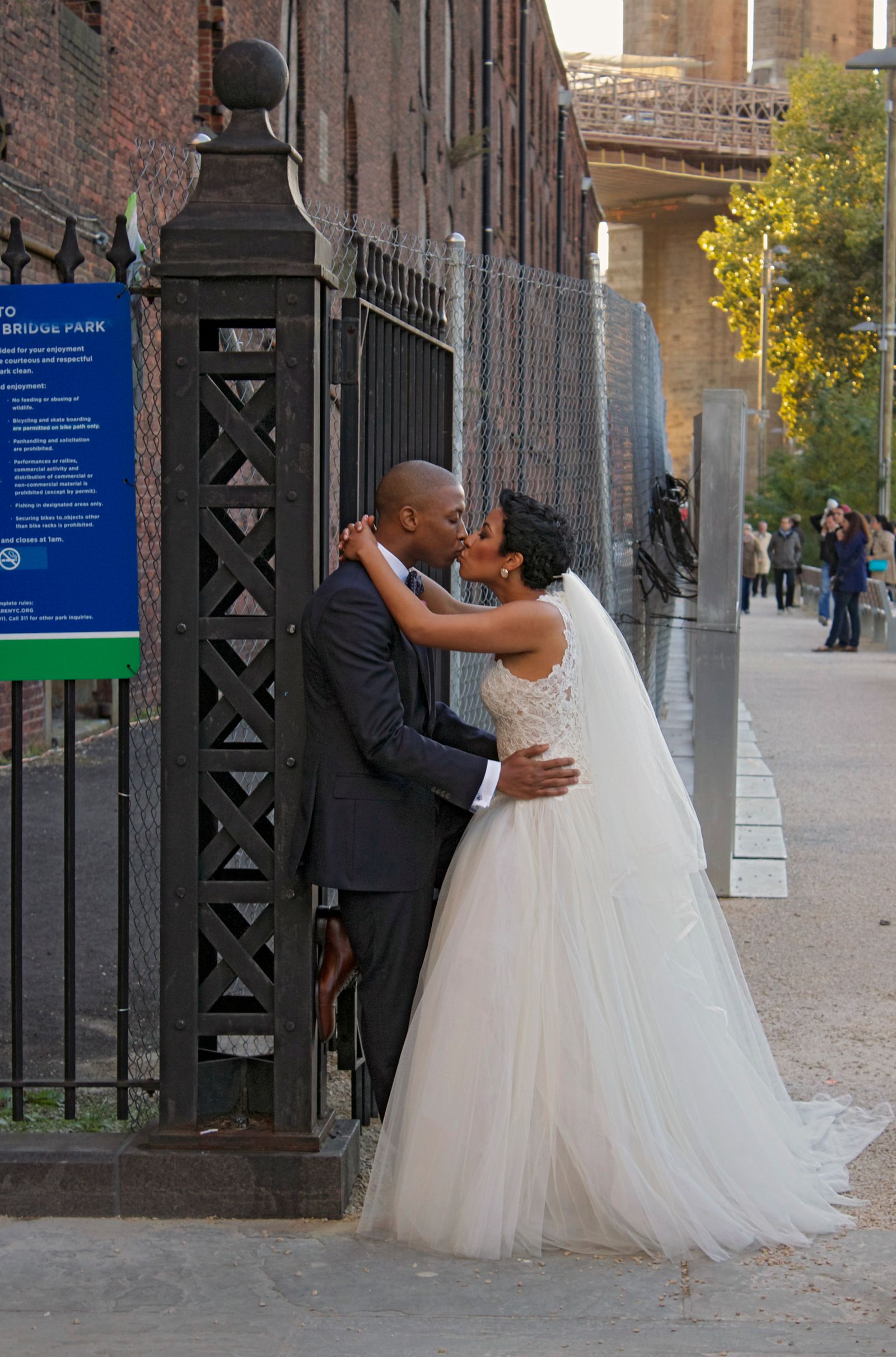
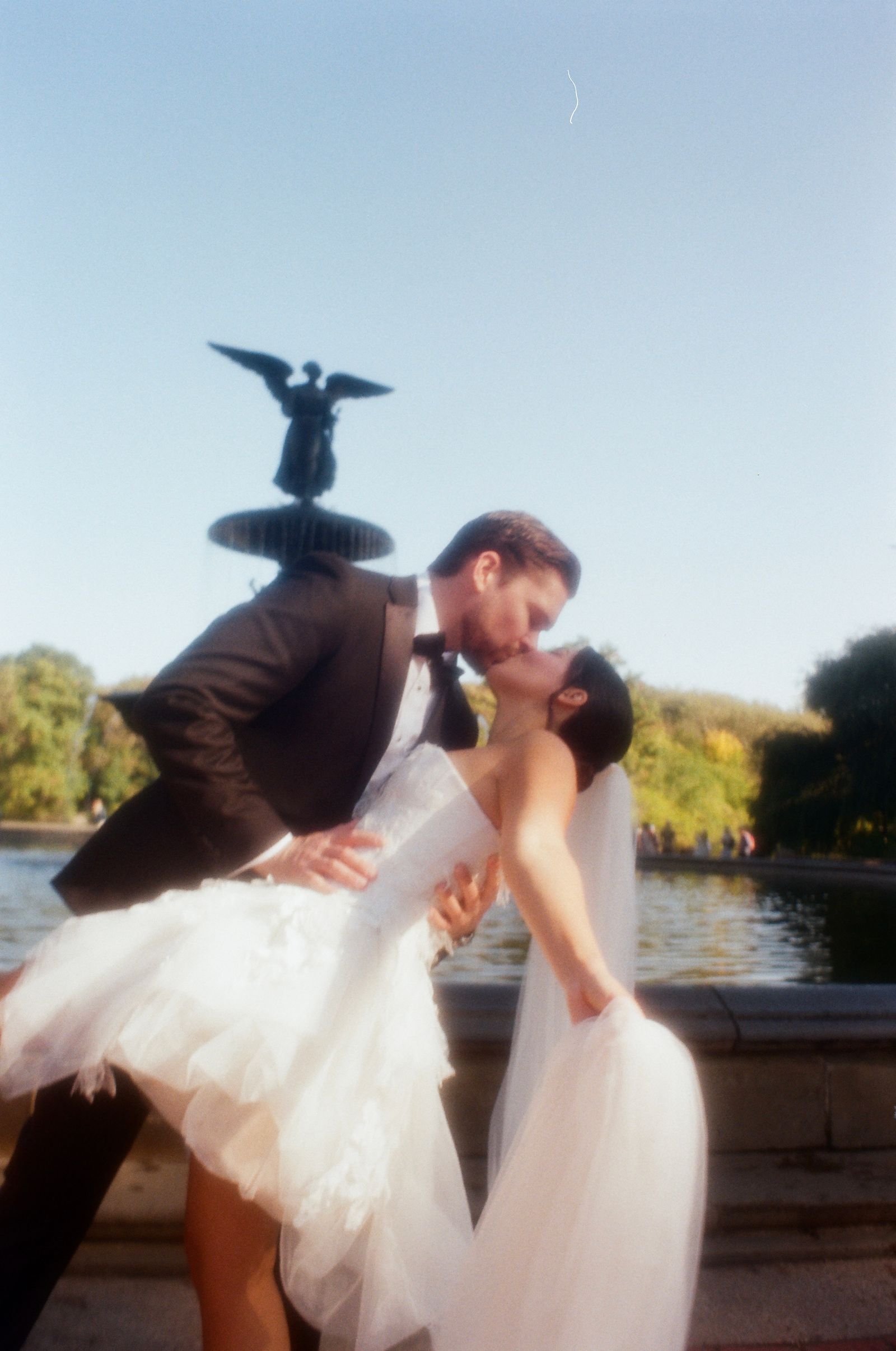
Photos: Newlyweds in the city — photo by Following NYC, https://www.pexels.com/photo/16261963/ · Newlyweds at a fountain — photo by Sarah O'Shea, https://www.pexels.com/photo/19713822/ · Couple silhouetted at sunset — Pexels photo 1024994, https://www.pexels.com/photo/1024994/
More guides
- How to Find a Wedding Photographer: The Complete, Honest GuidePhotographers › Wedding Photographers
- How Much Does a Wedding Photographer Cost? Packages DecodedPhotographers › Wedding Photographers
- 10 Questions to Ask a Wedding Photographer Before You BookPhotographers › Wedding Photographers
- Wedding Photography Styles Explained: Documentary, Editorial, Traditional, Fine ArtPhotographers › Wedding Photographers
- Hiring a Wedding Photographer in California: Venue Light, Permits, and Price LevelsPhotographers › Wedding Photographers
- All Guides & ArticlesBrowse the full guides library