Photographers › Cameras & Camera Supplies
Buying Cameras and Supplies: Scams and Pressure Tactics — How to Spot Them Before You Pay
If your business needs its own camera — for product shots, listings, job sites, or content — you will shop in one of the most scam-dense corners of retail. Cameras are expensive, model numbers are bewildering, prices vary legitimately by hundreds of dollars between sellers, and a large share of buyers purchase once and never again. That combination is a scammer's ideal habitat. The good news: the camera trade's cons are old, well documented, and remarkably consistent. Regulators have shut down whole storefronts over them, and the scripts have barely changed in twenty years. Learn the five patterns below and the checks that defeat each one, and you can buy gear at a genuinely good price without becoming a case study.
Scam 1: The too-cheap listing and the confirmation call
This is the classic, and it is documented at the highest level. In 2009, the New York Attorney General secured settlements with seven online electronics companies — $665,000 in restitution and penalties, two companies dissolved outright — over a scheme federal and state enforcers have seen ever since. The mechanics, from the Attorney General's own findings: advertise cameras far below competitors' prices; once the order is placed, call the customer and push additional or "upgraded" merchandise at inflated prices; if the customer refuses, cancel the sale or claim the item is backordered for months; if the customer agrees, ship lower-quality merchandise than promised; and when customers try to return anything, deny them or hit them with undisclosed fees, behind a phone line that never gets answered.
The modern version wears better clothes — a clean website, a marketplace storefront, a sponsored listing — but the skeleton is identical:
- The price is an outlier. Not 5 percent below the big authorized dealers; 25–40 percent below, on a current model that nobody else is discounting.
- You cannot simply check out and be done. An email or call says you must "confirm" the order by phone. Legitimate confirmation exists (fraud checks are real), but at a legitimate store it takes ninety seconds and involves no sales pitch.
- On the call, your camera becomes a problem. The version you ordered is suddenly an import model, a body with no battery or charger, a camera with a plastic mount, a model whose menus are in another language — and for a few hundred dollars more, they can fix all of it.
- Refusing the upsell kills the order. The camera goes out of stock, or ships in six to eight weeks, or your card "can't be processed." Agreeing to the accessories makes it miraculously available.
The defense is structural, not clever: never complete a camera purchase on a sales call. If a seller requires a phone confirmation, take the call, decline everything beyond the original order, and if the original order then becomes unavailable, walk away and mean it. A real deal survives your "no." A bait listing does not — the cheap camera was never the product; the accessories were.
Scam 2: The stripped box and the inflated bundle
The second pattern works in both directions. In one direction, the "deal" is a camera body quietly missing what the manufacturer includes — battery, charger, strap, cables — which the seller then sells back to you as accessories. In the other, a "Pro Kit" or "Everything Bundle" pads the box with accessories whose retail value is a fraction of the bundle price: a flimsy tripod, a generic flash, filters, a bag, and cleaning trinkets presented as hundreds of dollars of value.
Both directions are defeated by the same two checks, done before you pay:
- Read the manufacturer's "what's in the box" list for the exact model, on the manufacturer's site. Every legitimate camera listing matches it. If the seller's box contents are shorter, you are being stripped; if a "body only" listing is priced like a kit, you have found the trick in the listing itself.
- Price the bundle's accessories separately at a mainstream dealer. Bundles from honest sellers survive this arithmetic. Scam bundles collapse under it: the " $400 accessory kit" prices out at $80, and the bundle premium is pure margin.
A real-world echo of this pattern appears in consumer complaints to the Better Business Bureau: buyers who ordered an advertised premium bundle — a drone combo listing a controller, three batteries, and a charging hub — and received only the base unit, then had to fight for the difference. Screenshot the listing, the bundle contents, and the price before you order, from any seller. If what arrives differs, that screenshot is your chargeback evidence.
Scam 3: Gray market sold as US stock
Gray market gear is genuine equipment imported outside the manufacturer's authorized channel — a camera intended for sale in Japan or another Asian market, resold in the US. It is not counterfeit and not illegal to own. The scam is not the gear; it is selling it to you as if it were US stock, at a discount too small to compensate for what you lose:
- No US manufacturer warranty. Canon USA and Nikon USA check serial numbers. A gray market body is not covered, full stop.
- Service can be refused entirely. Nikon USA will not service gray market gear even for a paid repair. Canon and Sony are generally more flexible about paid repairs on gray items, decided case by case — which is a very different promise from a warranty.
- The "store warranty" substitute is only as good as the store. Gray sellers often substitute their own warranty. Against a seller who also runs the confirmation-call play, that paper is worth little.
- The small print gives it away. "Import model," "international version," "USA warranty may be additional," accessories or manuals that "may differ" — these phrases in a listing are the disclosure, placed where you won't read it.
Gray market bought knowingly, at a steep discount, from a reputable dealer who labels it clearly — some major dealers sell labeled import models with their own warranty — is a legitimate choice some experienced buyers make, particularly for manual lenses. Gray market discovered after the fact, on a business camera you depend on, is a loss. The check is one question, asked in writing before payment: "Is this a USA model with a US manufacturer warranty, yes or no?" A seller who won't answer plainly has answered.
Scam 4: Counterfeit supplies — the cards and batteries that fail quietly
Bodies and lenses get the attention; the supplies are where counterfeits do the damage, because they fail later, on a job, silently.
Memory cards are the most counterfeited product in the camera bag. The common fake is a small-capacity card reprogrammed to report a much larger one: a 32GB card that presents as 128GB. It works fine until your files pass the real capacity — then they corrupt or vanish. For a business, that is a product shoot, a property listing, or an event, gone. The defense is a ten-minute test on every new card before it ever carries real work: run a full write-and-verify test (H2testw on Windows, F3 on Mac), which fills the card and reads it back, exposing the true capacity. Buy cards from authorized sellers, distrust marketplace prices far below the mainstream, and treat packaging with missing warranty information or a proper UPC as a warning sign.
Batteries follow the same pattern with worse failure modes: counterfeit lithium cells with optimistic capacity ratings and none of the genuine article's protection circuitry. Buy batteries from the manufacturer or an authorized dealer, and be suspicious of "OEM" batteries at a third of the OEM price — that listing is usually selling you the label.
The unifying rule for supplies: the discount on genuine cards and batteries at legitimate dealers is small, because margins are small. A price far below the pack is not a deal you found; it is a different product wearing the packaging.
Pressure tactics that are not quite scams — and how to hold your ground
Between fraud and honest retail sits a band of pressure that is legal and still worth refusing:
- "This price expires when we hang up." Camera prices do not work like airline seats. Any price that cannot survive you sleeping on it is a price designed to prevent comparison.
- Extended warranties and protection plans sold at panic pitch. Some are legitimate products from legitimate sellers; the tell is the framing — catastrophe stories at the checkout rather than terms in writing. Decide about warranties at home, from the written terms, never mid-transaction.
- The "recommended accessories" ambush. On scam sites, the giveaway is arithmetic: cameras priced hundreds below everyone else, accessories priced drastically above. Compare the accessory prices and the store reveals itself.
- Restocking fees and return friction discovered after the fact. Read the return policy before ordering — the 2009 enforcement actions specifically targeted undisclosed fees and unreachable return lines. A seller whose returns require phoning during narrow hours is telling you how your return will go.
- Multiple storefronts, one operation. Investigators and reviewers have repeatedly found the same boiler-room operation running three or four near-identical sites; when one accumulates too many burned customers, it closes and a twin pops up. A seller with no history is a risk factor in itself — check how long the storefront has existed and what its complaint record looks like, not just its star rating.

The pre-payment checklist
Run these eight checks before money moves, on any camera purchase outside the biggest authorized dealers:
- Compare the price against at least two authorized dealers. More than ~20 percent below them on a current model means find out why — in writing.
- Confirm, in writing: USA model, US manufacturer warranty, full manufacturer box contents.
- Read the manufacturer's in-the-box list and match it to the listing, line by line.
- Price any bundle's accessories separately. If the math collapses, so does the deal.
- Read the return policy: window, restocking fee, and whether returns need a phone call.
- Search the seller's name plus "complaints" and check its BBB profile — pattern matters more than any single review.
- Pay by credit card, never by wire, gift card, or payment app. The chargeback is your enforcement mechanism of last resort, and the scam ecosystem knows it, which is why scam sellers steer you away from cards.
- Screenshot the listing, price, and box contents before ordering. If the box that arrives differs, you hold the evidence.
This site's directory lists more than 460 camera and supply retailers alongside its photographer listings — a starting map, not a guarantee. The guarantee comes from the checks above, which take fifteen minutes and have not changed in twenty years, because the scams haven't either. The camera trade's honest sellers — and there are many, at fair prices — pass every one of them without blinking. Insist on the blink test.
Sources
- New York Attorney General, "Attorney General Cuomo Secures Agreements With Seven Electronics Companies…" (June 25, 2009) — $665,000 in restitution and penalties; the bait-and-switch mechanics: below-market ads, upsell calls, cancellations/backorder claims on refusal, lesser merchandise on acceptance, undisclosed return fees: https://ag.ny.gov/press-release/2009/attorney-general-cuomo-secures-agreements-seven-electronics-companies-new-york
- Bit-tech, "Guide to Digital Photography" — the boiler-room pattern: loss-leader cameras, hard-sold accessories at inflated prices, identical "recommended accessories" across multiple storefronts run by one operation: https://bit-tech.net/reviews/digital_photo_1/3/
- Better Business Bureau complaint record, Focus Camera LLC — consumer complaint describing an advertised premium drone bundle (controller, three batteries, charging hub) delivered as the base unit only, characterized by the buyer as bait-and-switch: https://www.bbb.org/us/ny/brooklyn/profile/photography-equipment/focus-camera-llc-0121-2754/complaints?page=2
- Focal Point Photo, "What is Grey Market Camera Gear?" — gray market defined; loss of US manufacturer warranty; Nikon USA will not service gray gear even for pay; Canon/Sony more flexible on paid repairs; store warranties only as good as the store: https://focalpointphoto.com/what-is-grey-market-camera-gear
- Expert Photography, "Should You Buy Grey Market Cameras/Gear?" — manufacturer-listed risks: counterfeit accessories, wrong power adapters, fake or nonexistent warranties, ineligibility for promotions and rebates: https://expertphotography.com/grey-market-cameras-gear
- Ken Rockwell, "The Gray Market" — gray goods receive no US factory warranty or support from the legitimate importer; legitimate dealers label gray items clearly and back them with their own warranty: https://KENROCKWELL.COM/tech/gray-market.htm
- TP-Link, "Fake SD Card Test and Verification Guide" — the common fake is a reduced-capacity card reprogrammed to report more (e.g., 32GB reporting as 128GB); data beyond real capacity corrupts; verify with H2testw (Windows) or F3 (Mac); packaging checks (labels, warranty info, UPC): https://www.tp-link.com/id/support/faq/2592/?app=decoSome
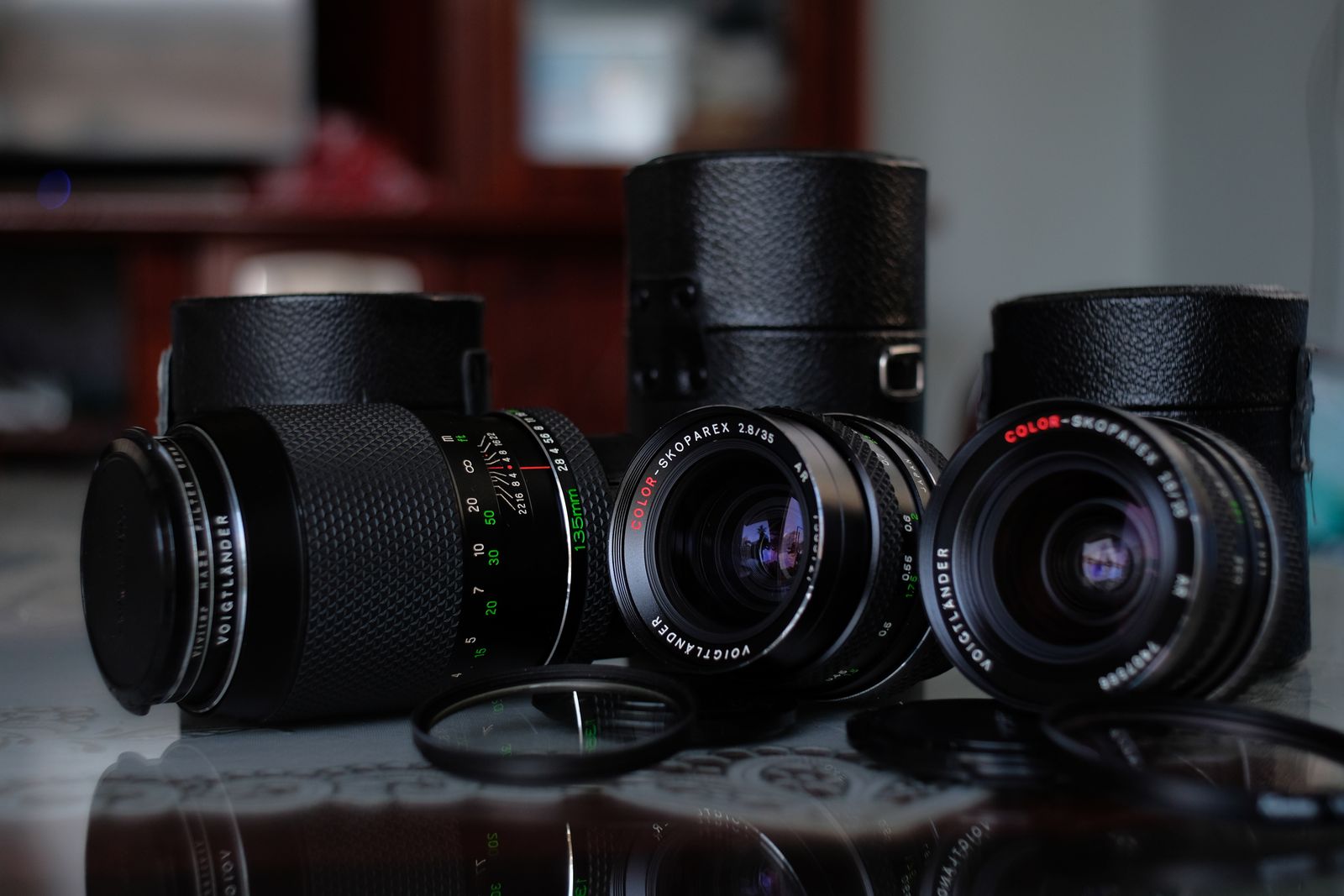
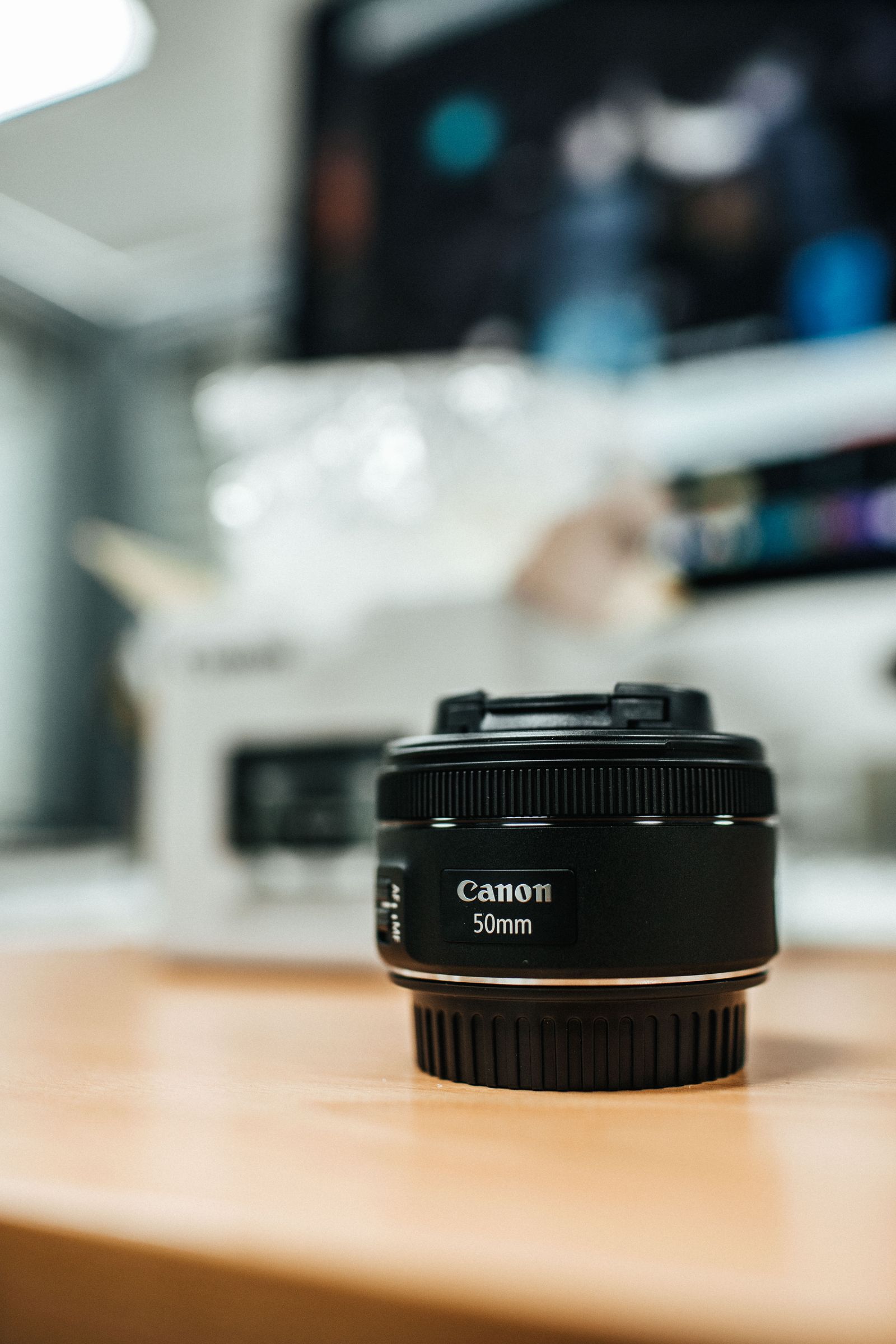
Photographs: camera lenses on a glass table — photo by Nguyen Huy, https://www.pexels.com/photo/black-camera-lenses-on-glass-table-19079982/ ; Canon 50mm lens on a table — photo by Luis Quintero, https://www.pexels.com/photo/black-canon-50mm-camera-lens-on-table-1738645/ ; assorted cameras — photo by Alex Andrews, https://www.pexels.com/photo/assorted-black-and-gray-cameras-1983038/
More guides
- How to Find a Wedding Photographer: The Complete, Honest GuidePhotographers › Wedding Photographers
- How Much Does a Wedding Photographer Cost? Packages DecodedPhotographers › Wedding Photographers
- 10 Questions to Ask a Wedding Photographer Before You BookPhotographers › Wedding Photographers
- Wedding Photography Styles Explained: Documentary, Editorial, Traditional, Fine ArtPhotographers › Wedding Photographers
- Hiring a Wedding Photographer in California: Venue Light, Permits, and Price LevelsPhotographers › Wedding Photographers
- All Guides & ArticlesBrowse the full guides library