Photographers › Photographic Equipment Service & Repair
Camera and Equipment Repair Emergencies: What to Do in the First 24 Hours
It happens in one of two ways. The camera goes into the water, or onto the concrete, with a sound nobody forgets. Or it simply stops — mid-session, mid-ceremony, mid-sentence — with an error code where the picture used to be. In my studio years, equipment emergencies were never really about equipment. They were about the people standing in front of the lens: the family dressed and gathered, the couple who cannot redo the day, the client who booked you — or booked a photographer — for an hour that will not come again.
So this playbook has two tracks, and the order matters. Track one is the event: how the shoot still happens, because a wedding does not wait for a repair estimate. Track two is the gear: what to do, and what never to do, in the first 24 hours so that a repairable accident does not become a total loss. If you have booked a photographer and their gear has just failed, this also tells you what a professional response looks like — so you can tell the difference between bad luck and bad planning.
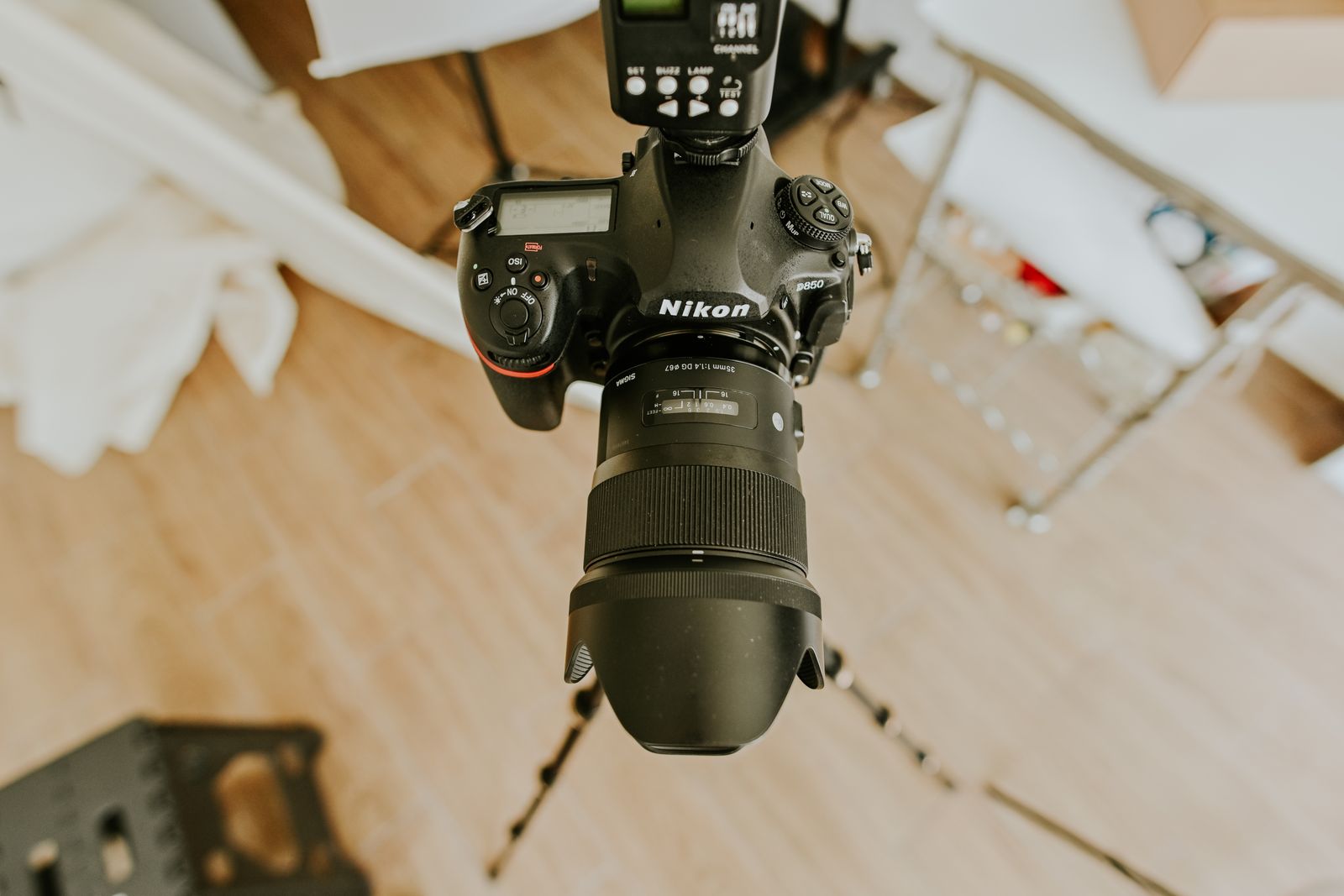
The first ten minutes: power, water, and restraint
Whatever happened, the first moves are the same, and most of them are about not doing things.
If the camera got wet: turn it off immediately and do not turn it back on to check. Water plus live electronics is what converts a soaking into a short circuit; the minerals in the water begin corroding contacts at once, and corrosion continues until the camera is properly cleaned. Remove the battery and the memory card — cards are far more water-tolerant than cameras, and your pictures are often recoverable even when the body is not. Detach the lens, wipe the exterior with a soft, lint-free cloth, open every door and flap — battery, card slot, ports — and let gravity and air work, body openings down. Silica gel packs in a sealed container absorb moisture more effectively than the folk remedy of rice. Then wait: at least 48 hours before any test, and understand that a saltwater dunking is a professional-cleaning case, not a home-drying case — salt is both more corrosive and more conductive, and repair technicians consistently advise getting a saltwater camera to a service experienced in water damage sooner rather than later, because the cleaning clock is running.
What never to do with a wet camera: do not plug in a charger, do not press buttons to "see if it works," and do not use a hairdryer — heat can warp seals and drive moisture deeper. Do not blow compressed air into the body, which pushes water further in. Every one of these is a way people turn a survivable accident into scrap while trying to help.
If the camera was dropped: resist the test shot. A dropped body or lens can have a bent mount, a displaced element or a cracked internal part that a power-up or zoom cycle grinds further. Remove the battery, inspect without forcing anything — a lens that will not detach should never be made to detach — and note exactly what is visibly wrong: cracked glass, a dented filter ring, a mount that no longer sits flush. Photograph the damage with your phone, from several angles, before anything is cleaned or packed. Those photographs are your insurance record, your repair estimate's evidence, and, if the gear belongs to a photographer working your event, the start of a paper trail everyone will be glad exists.
If it just stopped: swap the simple things first, in order — a known-good battery, a different memory card, the lens reseated once, gently. A large share of "dead" cameras are a failed card, an exhausted battery or a dirty contact. If an error code persists through those swaps, stop. Repeated power cycles into a mechanical fault — a shutter or mirror problem — do not fix it and can finish it.
Hours one to four: save the event first
With the gear safe from further harm, turn to the people. If you are the photographer, your client should hear three things from you quickly and in this order: what happened, what you are doing about it, and that the session is covered. If you are the client, that is exactly the sequence to expect — a professional carries backup or has a rental plan, and the honest ones say so before you have to ask.
The realistic backup ladder, fastest first:
- The second body. Working event photographers shoot with two bodies for precisely this reason; the "backup" may be older, and that is fine. Judge the recovery, not the spec sheet.
- A local rental, same day. Camera shops rent bodies and lenses by the day — published rate cards put a professional mirrorless body at roughly $40–$150 for a day depending on the model, and a workhorse 24–70mm lens at prices like $58 for a full week from national rental houses. Local pickup beats shipping in an emergency; national services like LensRentals and BorrowLenses are the answer when the event is days, not hours, away.
- The second photographer or a colleague. Studios and wedding photographers maintain call lists. A substitute of equal competence, briefed by your photographer, is a far better outcome than a heroic attempt with broken gear.
- The phone, honestly framed. For a family session — not a wedding — a modern phone in good light, offered with a re-shoot of the formal portraits, is a legitimate rescue. What is not legitimate is quietly delivering phone pictures as if they were the contracted work.
Clients booking for the first time should take one lesson from this section and apply it at booking, not at the emergency: ask the photographer, in the consultation, "What happens if your camera dies on the day?" The answer belongs in the contract, next to the clause about what happens if the photographer themselves is ill.
Hours four to twenty-four: document, then decide where it goes
Once the event is saved, the paperwork hour arrives — and it is worth an hour, because repair and insurance outcomes are decided by documentation made on day one.
Write down the incident while it is fresh: date, time, place, what happened, in plain sequence. Save the phone photographs of the damage, the error code if one appeared (photograph the screen), and the serial numbers — which you should be able to produce from your purchase records or the photographer's equipment list; if you cannot, photograph the serial plate now. Check three coverages before paying anyone: the manufacturer's warranty (water and impact damage are usually excluded, but ask), any accidental-damage or equipment insurance (photographers' business policies and some household policies cover gear — with deductibles that make small repairs self-pay), and the credit-card benefits attached to the purchase, which sometimes include accidental-damage windows on newer equipment.
Then choose the repair route with clear eyes:
| Route | Typical cost signals | Typical turnaround | Best for |
|---|---|---|---|
| Manufacturer factory service | Estimate first; you approve or decline before work; ~6-month warranty on the repair (Canon) | Often under a week once received, longer at holidays (Canon) | Current models, warranty-adjacent faults, calibration to factory spec |
| Independent repair shop | Sensor cleaning from ~$50; lens work commonly ~$128–$229 plus parts; bench/estimate fees ~$25–$50, usually applied to the repair | Minor in-stock repairs 2–3 business days; parts orders 2–3 weeks; factory referral 4–6 weeks | Out-of-warranty gear, older models, honest "not worth repairing" advice |
| Replace or rent meanwhile | Day rental ~$40–$150 for a pro body | Immediate | Any deadline the repair cannot meet |
Two decision rules from the studio desk. First, get the estimate before authorizing anything — reputable services, factory and independent alike, work estimate-first: they evaluate, quote, and you approve or decline and get the gear back. A shop that requires open-ended authorization is not a shop. Second, run the replacement comparison honestly: when a repair estimate approaches half the current used value of the body — common with water damage, where cleaning, boards and corrosion risk stack up — replacement plus a rental bridge is often the cheaper professional answer, and a good technician will tell you so. This site's directory lists 571 businesses under Photographic Equipment Service & Repair, alongside the manufacturers' own service networks, so a second estimate is almost always obtainable.

Sending it in without making things worse
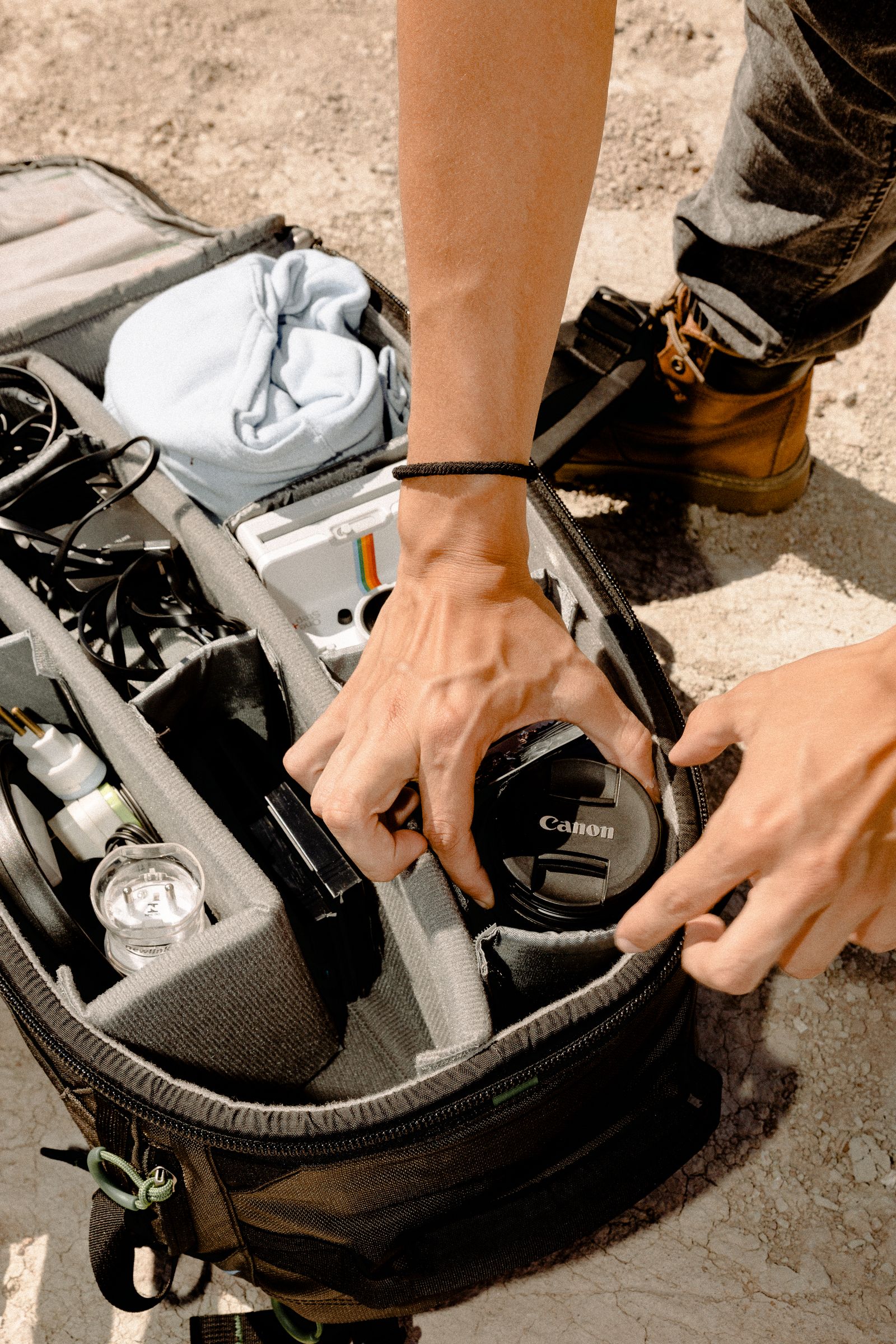
Pack the body with its cap on, the lens capped at both ends, battery and card removed and kept at home unless the service asks for them. Include a written fault description — what happened, what it does now, the error code — inside the box; technicians consistently say a clear note shortens diagnosis. Ship tracked and insured for replacement value, keep the tracking number with your incident notes, and photograph the packed box. If the camera is wet, do not seal it in plastic for a long journey; tell the service it is a water case so it goes to the front of the right queue, because corrosion does not pause for shipping.
What a client should expect — and what to put in the contract next time
If you booked the photographer, the emergency entitles you to: immediate honesty, a competent backup plan executed at the photographer's cost, and no change to your fee because their equipment failed. It does not entitle the photographer to cancel a wedding for a single broken body, and a contract that allows it is a contract to renegotiate before signing. The clauses worth having, learned from every studio's worst Saturday: backup equipment carried or guaranteed; a substitute-photographer provision; delivery timelines that survive a re-shoot of formal portraits if the worst happens; and the photographer's insurance confirmed, not assumed.
And if the gear was yours — the family camera, dropped the morning of the reunion — the same playbook scales down: power off, card out, photographs of the damage, one estimate from a reputable shop, and a rental or a borrowed body for the day itself. The reunion is the emergency. The camera is just the thing you fix on Monday.
Sources
- iFixit, "Camera dropped in water, can it be fixed?" — do not power on, remove the battery immediately, corrosion begins at once and continues until cleaned — https://www.ifixit.com/Answers/View/382472/camera+dropped+in+water+can+it+be+fix
- Eversure, "Dropped Your Camera in Water? Here's What to Do Next" — power off, battery and cards out, doors open, no hairdryer, at least 48 hours' drying, saltwater corrosion — https://www.eversure.com/adventure-blog/save-water-damaged-camera/
- Action Camera Nerd, "Action Camera Water Damage: First 60 Seconds Matter" — pull the battery, never charge a wet camera, silica/desiccant over rice — https://actioncameranerd.com/action-camera-water-damage-recovery/
- Canon Community (Canon support response) — factory service estimate-and-approve process, turnaround usually under a week, 6-month repair warranty — https://community.usa.canon.com/s/question/0D5Pg00002zJBhBKAW/camera-repair-broke-lens-release-button-on-canon-90d-also-stuck-lens
- Precision Camera & Video, In-House Repairs — lens repair price points, minor repairs 2–3 business days, parts-order repairs 2–3 weeks, factory repair 4–6 weeks — https://www.precision-camera.com/in-house-camera-repairs/
- PROCAM, Camera Repair & Sensor Cleaning — sensor cleaning $50, same/next-day cleaning turnaround, free estimates — https://procam.com/pages/repairs
- Unique Photo, Rental rate card — professional bodies roughly $40–$150 for one day by model — https://www.uniquephoto.com/products/rentals
- FixThePhoto, "7 Best Places to Rent Camera Lenses in 2026" — national rental houses; a Canon 24–70mm f/2.8L II at $58 for one week from BorrowLenses — https://fixthephoto.com/best-place-to-rent-camera-lenses.html
- Camera on tripod — photo by Amar Preciado, https://www.pexels.com/photo/8389706/
- Studio shoot — photo by Amar Preciado, https://www.pexels.com/photo/17094508/
- Camera bag with gear — photo by Wendy Wei, https://www.pexels.com/photo/person-holding-camera-lens-in-camera-bag-2994110/
More guides
- How to Find a Wedding Photographer: The Complete, Honest GuidePhotographers › Wedding Photographers
- How Much Does a Wedding Photographer Cost? Packages DecodedPhotographers › Wedding Photographers
- 10 Questions to Ask a Wedding Photographer Before You BookPhotographers › Wedding Photographers
- Wedding Photography Styles Explained: Documentary, Editorial, Traditional, Fine ArtPhotographers › Wedding Photographers
- Hiring a Wedding Photographer in California: Venue Light, Permits, and Price LevelsPhotographers › Wedding Photographers
- All Guides & ArticlesBrowse the full guides library