Photographers › Photographic Equipment Service & Repair
Camera Repair: When It's Worth It and When to Replace
Every repair decision is an arithmetic problem wearing an emotional costume. The camera on the bench is not just a body; it is the one that shot a decade of your work, that your hands know in the dark. But the bench does not care, and neither does the estimate. The honest question is narrower and colder: what does this repair buy, in years of reliable service, compared with what the same money buys on the used market today? This guide gives you the numbers — shutter, sensor, screen and lens repair costs, shutter-life ratings by class, and the replacement values that should anchor the decision — and then the framework professionals use to weigh them.
Start with the only ratio that matters
Repair guides converge on the same threshold, and working photographers use it too: when a repair estimate exceeds roughly 40–50 percent of the camera's current market value, replacement usually wins. Below that line, repair usually wins — provided the rest of the camera is sound and parts exist. The ratio needs the right denominator, which is not what you paid, not what a new one costs, but what your body, in its current model and condition, actually sells for used today. Check completed listings, not asking prices. A camera you bought for $1,800 that now trades at $600 is a $600 camera, and a $350 repair on it is not a bargain — it is 58 percent of replacement, for a body whose other components have also aged.
Three adjustments bend the rule. System lock-in bends it up: if you own a shelf of lenses, flashes and muscle memory in one mount, keeping a familiar body running has value beyond its resale price. Professional downtime bends it sideways: a working photographer compares the repair not to the body's value but to the cost of not shooting — rental weeks at $40–$150 a day for a body can make a fast, premium repair cheap. Sentiment bends it honestly: a camera with genuine personal meaning may be worth repairing at 80 percent of value; just say that is what you are doing, rather than dressing it up as economics.
The repair menu, priced
Costs vary by brand, model and region, but published price points cluster tightly enough to plan around. Diagnostics typically run $30–$75, often credited toward the repair. Sensor cleaning is $50–$150. A replacement LCD runs $100–$300 fitted. Shutter replacement — the classic big-ticket mechanical job — is most often quoted between about $200 and $500, with entry bodies at the low end and professional bodies reaching $500 and beyond at some services. Lens work spans the widest range: autofocus repair around $100–$250, element replacement $150–$400. Sensor replacement and main-board work are the deep end, commonly $400–$800 and up, which is why they so often end the conversation. Water damage is the wild card, quoted anywhere from $100 to $500-plus depending on severity, with the unspoken rider that corrosion can return.
| Repair | Typical cost | Usually worth it when |
|---|---|---|
| Sensor cleaning | $50–$150 | Almost always — it is maintenance, not repair |
| LCD / screen replacement | $100–$300 | The body is mid-range or better and otherwise sound |
| Shutter replacement | $200–$500 | Body value comfortably exceeds ~$600 and the sensor is current |
| Lens autofocus / element work | $100–$400 | The lens is a professional f/2.8 or prime worth $700+ used |
| Sensor or main-board replacement | $400–$800+ | Rarely, except on current flagship bodies under deadline |
| Film body overhaul (CLA and seals) | $130–$380 plus parts | Collectible and professional film bodies, routinely |
Shutters: the odometer, and what its reading really means
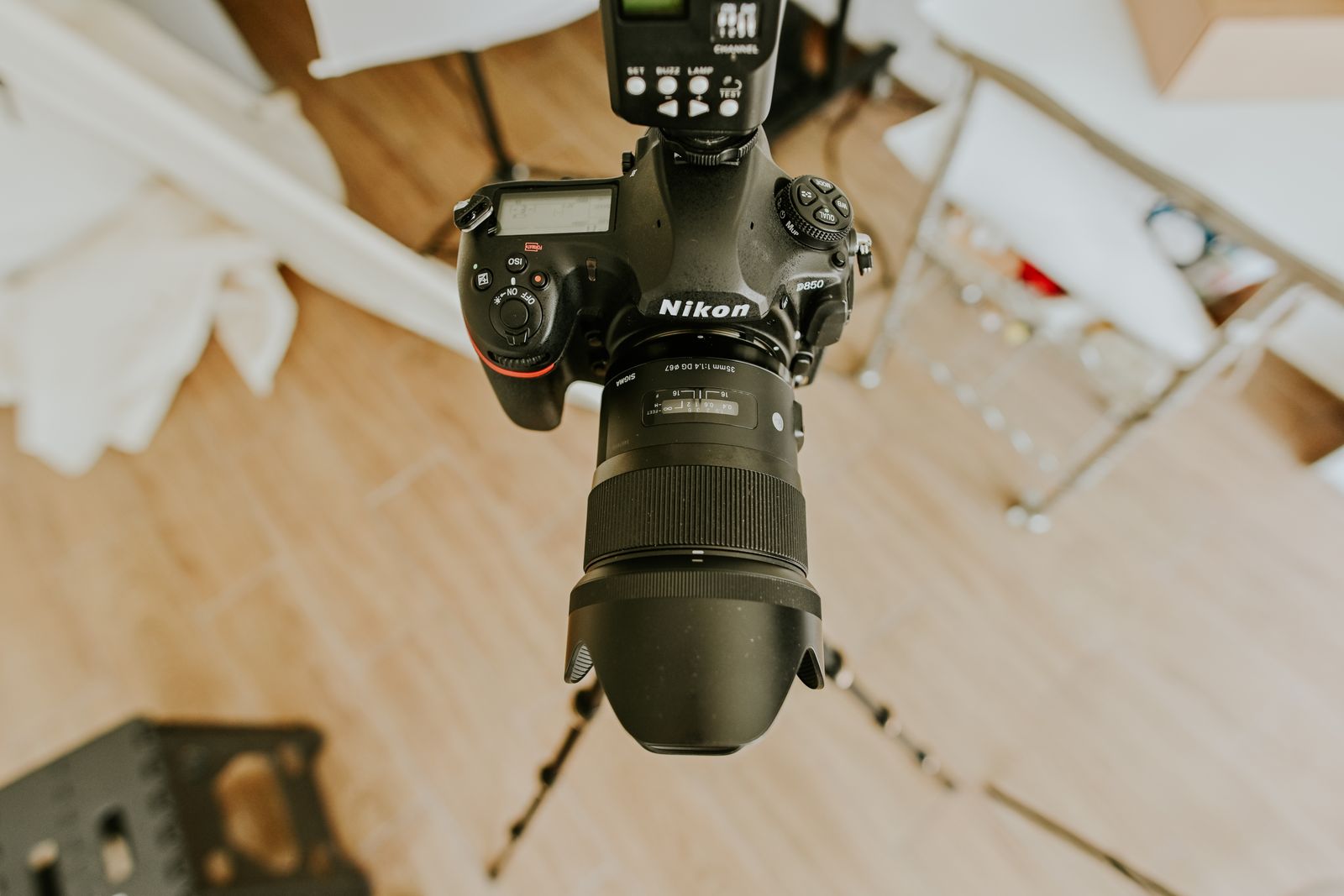
The shutter is the one component with a published life expectancy, which makes it the most misread number in photography. Manufacturers rate shutters as a minimum the mechanism is expected to survive — not an expiry date — and real-world shutters routinely run to two or three times their rating. Ratings scale steeply by class: entry-level bodies around 100,000 actuations; enthusiast bodies 120,000–200,000; full-frame workhorses like the Nikon D850 at 200,000; professional flagships at 400,000–500,000, with some mirrorless flagships (the Nikon Z9 and Z8, Sony's a9 III) eliminating the mechanical shutter entirely.
So the repair question is never "has it passed its rating?" but "what is the shutter's remaining expected life worth in this body?" A $280 shutter replacement that returns a D850 — still a $1,000-class used body with a superb sensor — to service is excellent economics. The same money into an entry body worth $250 used is buying a new shutter for a camera whose screen, mount and resale are all tired. Judge the count as a percentage of rating when you assess a body, and remember a worn shutter is a repairable part, not a totaled camera — which cuts both ways: it also means a high-count used body at a steep discount can be a rational purchase with the replacement cost priced in.
Sensors and boards: where repair economics go to die
A scratched or failing sensor feels like it should be a component swap. In practice the sensor is the camera's most expensive integrated assembly, replacement frequently requires board-level work and factory calibration, and quotes land in the $400–$800-plus band for bodies whose used values are often lower. The exceptions are narrow: a current professional body still selling used at $2,500 or more, where a $600 sensor job restores full value; or a body under an accidental-damage policy, where the insurer's money changes the arithmetic entirely. For everyone else, sensor death on an aging body is the market's way of telling you the camera has become a parts donor and a paperweight with a good strap. Sell it honestly described as such — repairers and tinkerers buy them — and put the proceeds toward the replacement.
Lenses are a different calculation
Lenses hold value as bodies never do: a professional 70–200mm f/2.8 remains a professional lens across three generations of bodies, and its used price falls slowly. That inverts the ratio — autofocus repairs at $100–$250 and element work at $150–$400 against used values of $900–$1,600 are routinely worth it, and even mount replacement and full recalibration usually clear the bar. The exceptions are consumer kit zooms and older third-party lenses whose used prices have fallen below the bench fee; for those, the repair quote is a diagnosis you decline. One lens-specific warning: impact damage that has decentered elements may be "repaired" to working order without returning to its original optical quality. Ask the shop directly whether they can restore factory specification or merely function, and get the answer on the estimate.
Class by class: the short answers
Entry-level DSLRs and mirrorless (Rebel/D3xxx/a6xxx class, ~100,000-actuation shutters): repair only the cheap things — cleaning, a battery door, a card slot. Shutter, screen or board failures at $200-plus against used values of $200–$400 mean replace, and replacement usually means a genuine upgrade, because this class improves fast.
Enthusiast and full-frame workhorses (90D, D750, D850, a7 III class): the repair sweet spot. These bodies are durable, their sensors remain excellent, parts are plentiful, and used values ($600–$1,400) comfortably carry shutter and screen repairs. This is the class where a $300 repair buys three more professional years.
Professional flagships (1D/D6/R3/a9 class, 400,000–500,000 ratings): repair almost everything, quickly, at factory service if necessary. Downtime is the dominant cost, resale values stay high, and manufacturer professional services exist precisely for this arithmetic.
Compacts and point-and-shoots: replacement, nearly always. Average repairs of $50–$120 collide with low resale values and rapid obsolescence; repair only under warranty or for irreplaceable sentimental reasons.
Professional film bodies (Leica, Hasselblad, Nikon F class): repair, at prices that would be absurd for digital — overhauls in the $280–$380 range plus parts, against values that hold or rise. Their constraint is different: parts availability, which specialist shops will state honestly. A body that cannot be repaired for want of parts is a shelf piece, and knowing that before you buy matters more than the price.
Parts, age, and the support cliff
One variable outranks price for older bodies: whether the manufacturer still supports the model at all. Makers eventually end factory service for discontinued cameras — parts production stops, service manuals age out of the system, and the factory door closes, typically years after a model leaves the catalog. Independent shops extend that horizon considerably, because they accumulate salvaged boards, donor bodies and old stock, and the best of them will tell you plainly which of your model's failures they can still fix and which they cannot. That conversation should happen before the failure, ideally at the annual clean-and-check: ask what the shop would do about a shutter, a board and a mount on your specific body, and write the answers down. A camera whose three likeliest failures are all repairable is a camera with years left; a camera whose board is already unobtainable is living on borrowed time regardless of its shutter count, and its owner should be quietly budgeting for the replacement while it still works — and while it still has trade-in value, which a dead body largely does not.
Age also changes the used replacement side of the equation. For bodies five to eight years old, the used market is deep and prices are honest, which is exactly why the repair ratio so often fails them. For very recent bodies, used prices sit close to new, which pushes the same ratio back toward repair. Run both numbers fresh at decision time; last year's values are a story, not a price.
The decision, in five steps
Get a written estimate with parts and labor separated — and decline any service that will not provide one. Find the body's real used value from completed sales. Apply the ratio: under ~40 percent, repair; over ~50 percent, replace; between them, let system lock-in, downtime cost and parts availability decide. Ask the one question that reveals a shop's honesty — "What would you do if it were yours, and what is it worth fixed?" — because the good ones, in a trade this site lists 571 businesses deep under Photographic Equipment Service & Repair, answer it straight. And if you replace, replace with the repair in mind: buy the class whose shutter rating, parts support and resale curve mean that in six years, on some other bench, the arithmetic will be kinder.
Sources
- PhotoWorkout, "Does a High Shutter Count Really Kill a Used Camera Deal?" — ratings by tier (entry ~100,000; flagships 400,000–500,000), ratings as minimums, shutter replacement about $200–$400 — https://www.photoworkout.com/shutter-count-used-camera/
- UtilHQ, "How to Check Camera Shutter Count" — consumer ratings 100,000–150,000, professional 200,000–500,000, replacement $200–$500 — https://www.utilhq.com/articles/check-camera-shutter-count/
- Click and Learn Photography, "How to Check Your Camera's Shutter Count" — tier ratings and shutter replacement $150–$500 by class — https://www.clickandlearnphotography.com/how-to-check-your-cameras-shutter-count/
- GB Times, "How Much Does It Really Cost to Fix a Digital Camera?" — diagnostics $30–$75, LCD $100–$300, sensor cleaning $50–$150, the 50%-of-value rule — https://gbtimes.com/how-much-does-it-cost-to-fix-a-digital-camera/
- DPSaver, "Best Camera Repair Services 2026" — minor repairs $50–$150, moderate $150–$400, major $400–$800+; repair viable below 40–50% of market value — https://www.dpsaver.com/blog/best-camera-repair-services-2026-complete-buyers-guide/
- Alibaba Product Insights, "An Overview of Camera Repair Cost" — DSLR average repair $100–$400, mirrorless $150–$500+, compact $50–$120 with repair often exceeding viability — https://www.alibaba.com/product-insights/camera-repair-cost.html
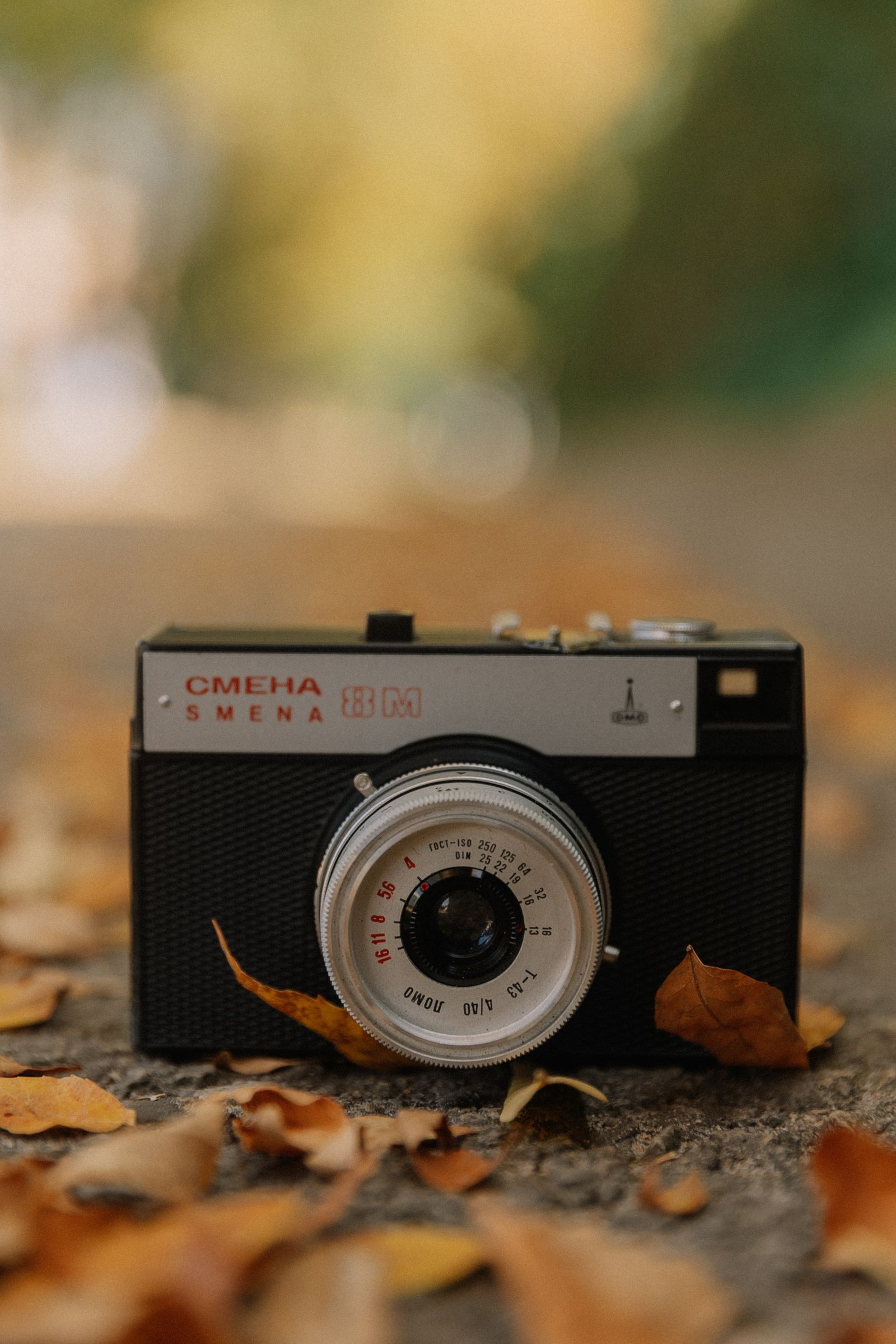
- Vintage camera — photo by Elina Volkova, https://www.pexels.com/photo/vintage-analog-camera-18332726/
- Camera on tripod — photo by Amar Preciado, https://www.pexels.com/photo/8389706/
- Camera bag with gear — photo by Wendy Wei, https://www.pexels.com/photo/person-holding-camera-lens-in-camera-bag-2994110/
More guides
- How to Find a Wedding Photographer: The Complete, Honest GuidePhotographers › Wedding Photographers
- How Much Does a Wedding Photographer Cost? Packages DecodedPhotographers › Wedding Photographers
- 10 Questions to Ask a Wedding Photographer Before You BookPhotographers › Wedding Photographers
- Wedding Photography Styles Explained: Documentary, Editorial, Traditional, Fine ArtPhotographers › Wedding Photographers
- Hiring a Wedding Photographer in California: Venue Light, Permits, and Price LevelsPhotographers › Wedding Photographers
- All Guides & ArticlesBrowse the full guides library