Photographers › Cameras & Camera Supplies
Cameras and Camera Supplies at Three Budgets: What Budget, Mid-Range and Premium Really Buy
The camera market's favorite trick is the body price. A camera advertised at $800 arrives as a $975 purchase once it can actually be used — card, spare battery, bag — and the same arithmetic, scaled up, waits at every tier above it. I book photographers for events, and the parallel is exact: the fee is never the budget. So this guide prices cameras the way an honest quote prices a shoot — as working kits, at three budgets — and then answers the only question that matters at each step: what does the extra money actually buy, in photographs, and what does it pointedly not buy?
Prices below were checked in late November 2026, in the middle of the holiday rebate season, so treat them as the market's current shape rather than eternal truth — several of these bodies are carrying instant rebates of $300 to $1,100 right now, and the regular prices are noted where they change the story.
The three tiers at a glance
| Budget: under ~$1,000 all-in | Mid-range: ~$2,000–$3,000 all-in | Premium: ~$4,000 and up | |
|---|---|---|---|
| The bodies | Canon EOS R100 (kit ~$500), Canon EOS R50 (kit ~$800) | Sony a7 IV, Canon EOS R6 Mark II, Nikon Z6 III (bodies ~$2,000 on current rebates) | Nikon Z8 (~$3,200–$3,300), Sony a7R V (~$3,500), Canon EOS R5 Mark II (~$4,000) |
| The sensor | APS-C, 24 megapixels | Full-frame, 24–33 megapixels | Full-frame, 45–61 megapixels, stacked sensors at the top |
| The kit total, honestly | ~$675 (R100) to ~$975 (R50) with card, battery and bag | Body plus a standard zoom, two fast cards, spare battery: plan on $2,800–$3,500 | Body plus one professional zoom already passes $5,000; a working two-lens kit runs far beyond |
| Buys you | Real interchangeable-lens photography, modern autofocus, 4K video | Low-light headroom, in-body stabilization, dual card slots, weather sealing | Resolution, burst speed and build that survive professional workloads |
Budget: the $500–$1,000 kit, and the most honest tier in photography
The budget tier is built on APS-C mirrorless cameras, and its headline fact is how little it gives up. The Canon EOS R50 — the consensus beginner pick across current buying guides — sells as a kit at about $800 on sale ($679 body-only), with a 24.2-megapixel sensor, subject-detecting autofocus, a proper viewfinder, a flip-out touchscreen and uncropped 4K video. Below it, the EOS R100 kit at about $500 is the cheapest credible way into interchangeable lenses, trading away the flexible screen and the smarter subject detection. Nikon's Z50 II, at about $1,100 as a kit, is the tier's stretch option: it runs the same EXPEED 7 processor family as Nikon's flagship bodies, which is a sentence that would have been absurd at this price five years ago.
What the budget tier buys: photographs indistinguishable from the tier above in daylight, autofocus that finds eyes — human and animal — without being asked, and a lens mount you can grow into. What it does not buy: in-body image stabilization (none of these bodies has it, so shaky hands and slow shutter speeds are managed with technique and faster lenses), low-light forgiveness (the smaller sensor gathers less light; high-ISO files get noisy sooner), and weather sealing worth trusting in rain.
Now the supplies, because this is where budget buyers get ambushed. One camera guide worked the R50's real total honestly: the $800 sale kit plus a genuine spare battery, a $25 64GB SD card and a $59.95 bag lands at about $975 — and the R100's equivalent total is about $675. That is the correct way to budget this tier: the kit price plus roughly $175 of unglamorous necessities. Skip the necessities and the camera still works — until the single battery dies at the family reunion, which is when the lesson gets learned at retail prices in an airport.
The smartest budget move in the whole market is also the oldest: once the kit is running, the next $200 belongs to a bright prime lens — a fast 50mm-equivalent that transforms low-light portraits — not to a body upgrade. Every experienced reviewer says a version of this, because it is true at all three tiers and most ignored at the first.
Mid-range: ~$2,000 buys the professional toolkit
The step to mid-range is really a step to full-frame, and this season's rebates have compressed it: the Sony a7 IV is selling at $1,998 (regularly $2,498), the Canon EOS R6 Mark II at $1,999 (regularly $2,299) and the Nikon Z6 III at about $1,997 (regularly $2,697). Three competing bodies, one price, and a feature set that was professional-only not long ago.
Itemize what the extra roughly $1,200 over a budget kit actually buys, because it is a specific list:
In-body stabilization — five-axis systems that steady every lens you mount, worth several stops of shutter speed for stills and visibly smoother handheld video. Dual card slots — the camera writes every frame to two cards at once, which is the difference between a card failure being an anecdote and a catastrophe; working event photographers treat this as non-negotiable, and it simply does not exist in the budget tier. Low-light headroom — the full-frame sensor's files stay clean at sensitivities where APS-C files fall apart, which in practice means receptions, restaurants and evening streets without a flash. Build and sealing — magnesium bodies, weather gaskets, shutters and dials rated for daily use. Autofocus depth — the a7 IV's 759-point system and its rivals track subjects through a crowd, not just in a portrait sitting.
What mid-range does not buy: the extreme resolution of the premium tier, the fastest stacked-sensor burst rates, or lenses — and lenses are where this tier's budget quietly doubles. A mid-range body with its kit zoom is a $2,500 proposition; the fast f/2.8 zoom and bright primes that unlock what the body can do cost as much again over a couple of years. Honest mid-range budgeting is therefore $2,800 to $3,500 for a working first-year kit: body, one good standard zoom, two fast memory cards, a spare battery, a real bag. Anyone who tells you the body price was the budget is selling you the body.
Premium: $3,200 and up buys speed, resolution and insurance against failure
The premium tier's current shape: Nikon's Z8 at about $3,197 to $3,297 body-only (regularly $4,297), Sony's 61-megapixel a7R V at $3,498 (regularly $3,798), Canon's EOS R5 Mark II at $3,999 (regularly $4,399) — with true flagships above them, Nikon's Z9 around $4,800 and Sony's a1 II near $6,800.
What the money buys is narrower and more specific than the marketing suggests. Resolution: 45 to 61 megapixels means cropping a horizontal frame to vertical and still printing it large, or delivering billboard-grade files — decisive for landscape, studio and commercial work, invisible for family albums. Speed: stacked sensors read out fast enough for silent electronic shutter at high burst rates with minimal distortion — decisive for sports and wildlife, irrelevant for portraits. Video ceilings: 8K recording and high-frame-rate 4K that the mid tier cannot match. Build as insurance: these bodies are rated for the daily punishment of professional life, and their owners are buying uptime as much as images.
And the supplies scale brutally. Premium bodies drink from CFexpress cards that cost many times an SD card's $25, eat batteries faster at full burst, and are usually bought as one of a pair — professionals carry a backup body, which doubles the largest line in the budget. A realistic premium working kit, two bodies and two or three professional lenses, is a five-figure commitment wearing a $3,500 headline.
Here is the tier's honest secret, and every working photographer knows it: for the photographs most people take — family, travel, portraits, events in decent light — a premium body produces files a viewer cannot distinguish from the mid-range tier's. You are buying capability at the edges: the crop, the burst, the downpour, the deadline. If your photography lives at the edges, the tier earns its price. If it does not, premium money spent on lenses, light and travel produces visibly better photographs than premium money spent on a body.
The fourth budget nobody lists: last year's camera, used
There is a shadow tier underneath all three, and experienced buyers shop it first: the previous generation, bought used from a reputable dealer with a warranty. The mechanics are simple. When a new body launches, its predecessor — often separated from it by one processor generation and very little image quality — floods the used market at 40 to 60 percent of its launch price. This season's mid-range rebate prices make the point from the other direction: the Sony a7 III, two generations old, is selling new at $1,398, and the Nikon Z7 II at about $1,757 — full-frame, high-resolution bodies at prices that embarrass the new budget tier on everything except autofocus vintage and warranty length.
Used buying has its own supplies list, and it is short: buy from a dealer who grades honestly, tests the shutter and offers a return window, rather than from a stranger's listing; check the shutter count against the ratings (roughly 100,000 actuations on entry bodies, 150,000 to 200,000 in the mid-range, 300,000 and up for professional bodies) the way you would check a car's mileage; and budget for a new battery, because the one in the box has lived a life. Done that way, the used route is how a $1,400 budget ends up holding a camera that was $2,500 three years ago — the single largest quality-per-dollar move available at any tier, and the reason the tiers in the table should be read as ceilings, not assignments.
How to choose, in one pass
Buy the budget tier if you are learning, if the camera is for family and travel, or if you are not yet sure photography is your hobby — its ceiling is years away for most people, and its resale penalty is the smallest. Buy mid-range if you shoot in bad light, shoot for money even occasionally, or have already hit the budget tier's walls — no stabilization, single card slot, noisy shadows — and can name the wall you hit. Buy premium if a specific number in your work demands it: the print size, the burst rate, the client contract that requires a backup body. "It is the best" is not a requirement; it is a donation.
Whichever tier you choose, spend in the order the photographs notice: body, then a bright lens, then light, then the second bright lens. This site lists 465 cameras and camera supplies retailers — the choice is wide enough that no tier requires settling for the first shop's bundle. Compare the working-kit total, never the body price, and the three budgets stop being a ladder of temptation and become what they should be: three honest answers to three different questions.
Sources
- The Camera School, "Best Camera for Beginners in 2026" — establishes Canon EOS R50 kit pricing at $799.99 on sale, the worked real-total of about $975 including a $25 SD card and $59.95 bag, EOS R100 kit at $499.99 and a real total of about $675, and Nikon Z50 II kit pricing.
- TechWench, "10 Best Mirrorless Cameras for Beginners 2026" — establishes body prices (R50 $679, Z50 II $909, ZV-E10 II $999) and the Z50 II's flagship-family EXPEED 7 autofocus.
- Daily Camera News and DIYPhotography, Black Friday 2026 camera deal roundups — establish current rebate pricing: Sony a7 IV at $1,998, Canon EOS R6 Mark II at $1,999, Nikon Z6 III at $1,996.95, Nikon Z8 at $3,196.95, Sony a7R V at $3,498 and Canon EOS R5 Mark II at $3,999, with regular prices.
- Aperture Authority, "Best Full-Frame Cameras in 2026" — establishes the a7 IV's 33 megapixels and 759-point autofocus, the a7R V's 61 megapixels, and full-frame price bands.
- PetaPixel, "15 Great Cameras at Least $300 Off" — establishes the Z8's 45.7 megapixels, Z9 pricing around $4,797, and the Z8/Z9 shared imaging pipeline.
- Loiter Point, "Best Mirrorless Cameras for Beginners (2026)" — establishes the absence of in-body stabilization across the budget tier and the advice to spend the next $200 on a bright prime lens.
-
Repair cost compilations from this programme's repair research — establish shutter-life ratings of roughly 100,000 actuations for entry bodies, 150,000–200,000 mid-range and 300,000–500,000 for professional bodies, used here as the used-buying mileage check.
-
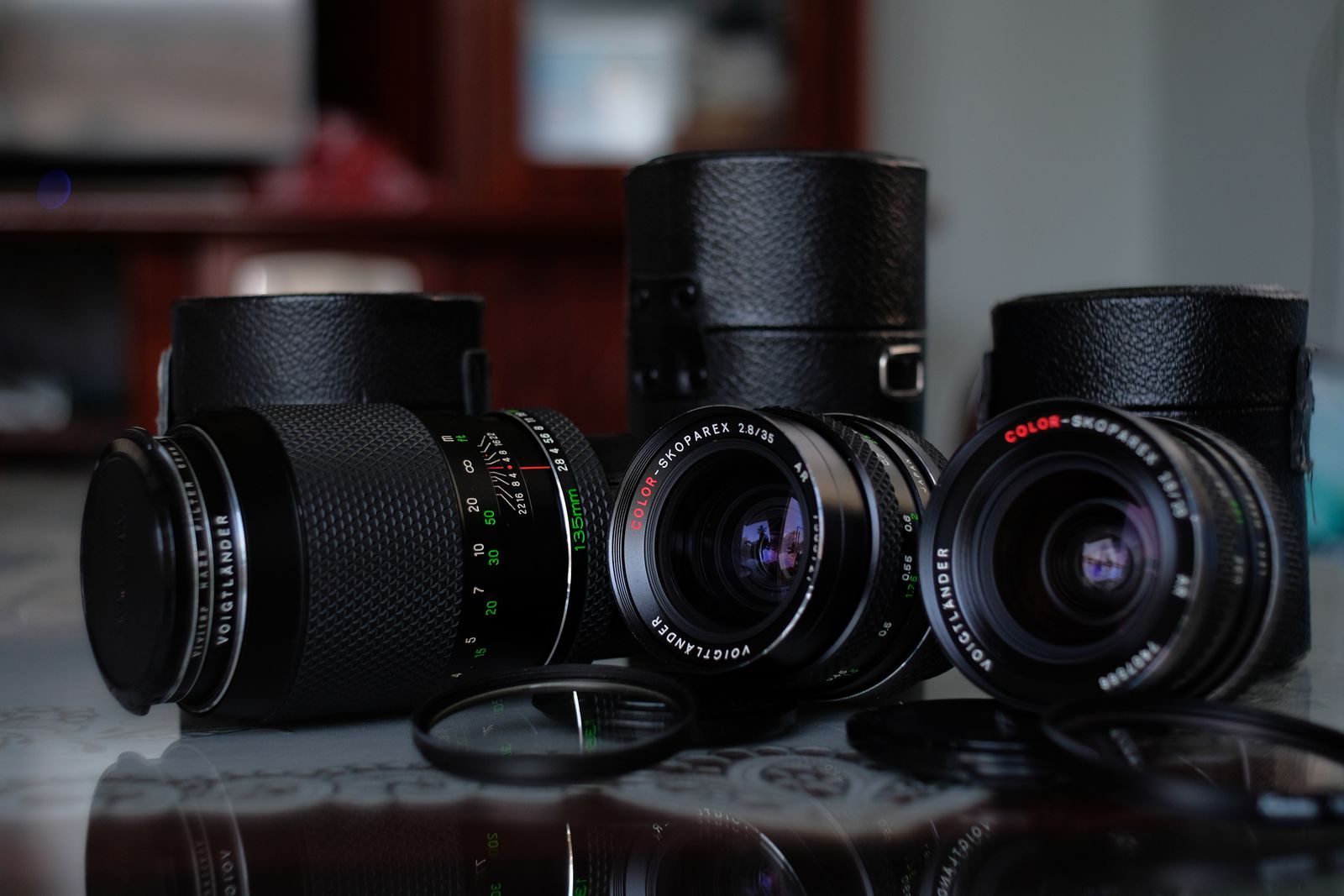
Camera lenses on a glass table — photo by Nguyen Huy, https://www.pexels.com/photo/black-camera-lenses-on-glass-table-19079982/
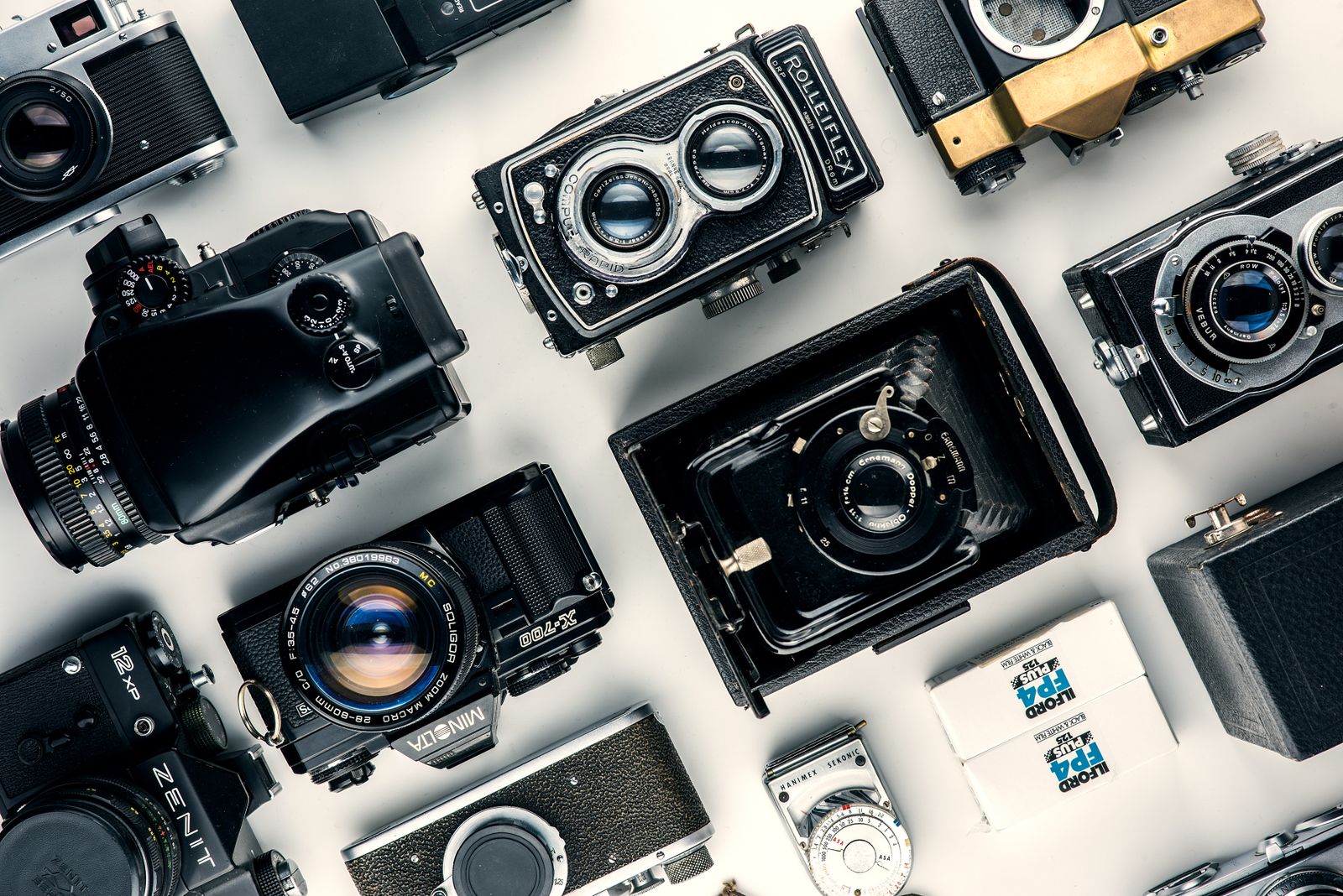
- Assorted cameras — photo by Alex Andrews, https://www.pexels.com/photo/assorted-black-and-gray-cameras-1983038/
More guides
- How to Find a Wedding Photographer: The Complete, Honest GuidePhotographers › Wedding Photographers
- How Much Does a Wedding Photographer Cost? Packages DecodedPhotographers › Wedding Photographers
- 10 Questions to Ask a Wedding Photographer Before You BookPhotographers › Wedding Photographers
- Wedding Photography Styles Explained: Documentary, Editorial, Traditional, Fine ArtPhotographers › Wedding Photographers
- Hiring a Wedding Photographer in California: Venue Light, Permits, and Price LevelsPhotographers › Wedding Photographers
- All Guides & ArticlesBrowse the full guides library