Photographers › Cameras & Camera Supplies
Cameras and Camera Supplies for Beginners: The Mistakes First-Timers Make, and How to Dodge Them
Assisting a working photographer is an education in other people's purchasing mistakes. Again and again, a new creator or seller would show me their first camera bag — bought with real money and real hope — and inside would be a flagship body paired with the slowest kit lens made, one battery, one slow memory card, no way to light anything, and a tripod that wobbled in a light breeze. They had not bought badly because they were careless. They had bought in the order the marketing presented things, which is almost exactly the reverse of the order that matters.
If you are facing cameras and camera supplies for the first time — to make content, to photograph what you sell, to build a body of work — this guide is the reordering. It names the predictable beginner mistakes, explains why each one happens, and gives you the cheap dodge for each. This site lists 465 businesses under Cameras & Camera Supplies, so supply is not your problem. Sequence is.
Mistake 1: Buying the body with your whole budget
The camera body is the most marketed, most reviewed, most argued-about item in the bag, and the least permanent. Bodies are replaced on a cycle of a few years; lenses follow you from body to body. Yet beginners routinely spend everything on the body and accept whatever lens came in the box. The result is backwards: the lens has a bigger impact on image quality than the body does, and a modest body behind a good lens will out-photograph an expensive body behind a kit lens — the standard illustration in every honest buying guide is that a $500 camera with a great lens beats a $2,000 camera with the kit lens it shipped with.
The dodge: decide the split before you shop. Hold back enough for at least one fast prime lens — the inexpensive 50mm or equivalent that every system offers — or a better standard zoom, and buy the body that leaves that money unspent. If the choice is between the newer body with the kit lens and the previous body with a real lens, take the previous body. Nobody viewing your work will ever know. Everybody will see the lens.
Mistake 2: Shopping by megapixels and headline specs
Megapixels are the number beginners can compare, so they compare it — and it is close to the least useful number on the box. Megapixels mostly determine how large you can print. For creators and sellers shooting for screens, listings, and social platforms, 20 to 24 megapixels is more than enough; a 12-megapixel photograph from a good sensor will routinely look better than a 45-megapixel one from a poor one. The same trap repeats across the spec sheet: autofocus point counts matter less than autofocus reliability and subject tracking; burst rate matters only if you shoot action; video resolutions matter only if you shoot video, and then autofocus, a flip screen, stabilization, and a microphone input matter more than the resolution headline — a sharp 4K file is worthless if your face is soft in half of it, as every beginner-vlogging guide now warns.
Underneath the numbers sits the one that does deserve attention: sensor size, because it drives low-light performance, depth of field, and dynamic range. But even that cuts both ways — you do not need full frame to start, and many professionals never switch. APS-C and Micro Four Thirds systems are lighter, cheaper, and backed by deep lens ranges. Buy the sensor you can afford to feed with lenses, and upgrade only when you can name the specific limitation a bigger sensor would remove.
The dodge: write down what you will actually shoot — products on a table, yourself on camera, people in rooms, things outdoors — and score every candidate camera against that list and nothing else. A camera is a sensor, an autofocus system, an ergonomic fit in your hands, and a lens mount that commits you to an ecosystem for years. Buy it as those four things, not as a spec-sheet league table.
Mistake 3: Buying a dying system, or the wrong mount, by accident
In 2026 the industry's direction is settled: mirrorless is the standard, and the major makers have all but stopped releasing new consumer DSLRs. A beginner who buys a new DSLR kit today because it was discounted is buying into a mount whose new-lens future is behind it. The mirror-image mistake is buying a mirrorless body without checking the lens ecosystem around it: are there affordable wide lenses for your mount, a fast prime you can afford this year, and a used market with depth? The mount is the marriage; the body is a date.
The dodge: for a first interchangeable-lens camera, the well-supported starting point most current guides converge on is an entry mirrorless body in roughly the $400 to $900 range, in a system with lenses you can grow into. DSLRs are not forbidden — as used bargains they can be excellent value — but buy one knowingly, for the price, not by default.
Mistake 4: Forgetting that the camera is not the purchase
The sticker price is the beginning of the spend, and the accessories are not optional garnish — they are the difference between a camera that works on your first real shoot and one that fails during it. Every beginner list worth reading names the same kit: at least two memory cards, so a failure or a full card never ends a session; extra batteries, because camera batteries drain faster than phone habits lead you to expect, especially shooting video; a bag that actually protects the gear; and a tripod if you shoot products, interiors, night work, or yourself. One widely repeated budgeting rule says to expect the basics to add a substantial share on top of the camera — some guides say budget roughly as much again. That overstates it for most people, but the direction is right, and the failure mode is always the same: the beginner who spent the whole budget on the body meets the missing battery or the single corrupted card at the worst possible moment. For sellers there is one more unglamorous essential that outranks most lenses: light. A cheap, controllable light and a plain backdrop will improve product photographs more than any body upgrade on the market.
| Supply | The beginner mistake | The cheap dodge |
|---|---|---|
| Memory cards | One slow card, bought by capacity alone | Two faster cards from a real brand, bought from a reputable seller — counterfeit cards are a genuine market |
| Batteries | The one in the box | One or two spares, charged, in the bag |
| Lens | Kit lens forever, or a bag of cheap zooms | One fast prime first; add lenses when a job demands one |
| Tripod | The lightest, cheapest one | Buy for stiffness, not weight; a wobbling tripod is a shelf ornament |
| Light | None — "the camera is good in low light" | One affordable LED or flash and something to soften it |
| Bag | Whatever it fits in | A padded bag sized to the kit you actually carry |
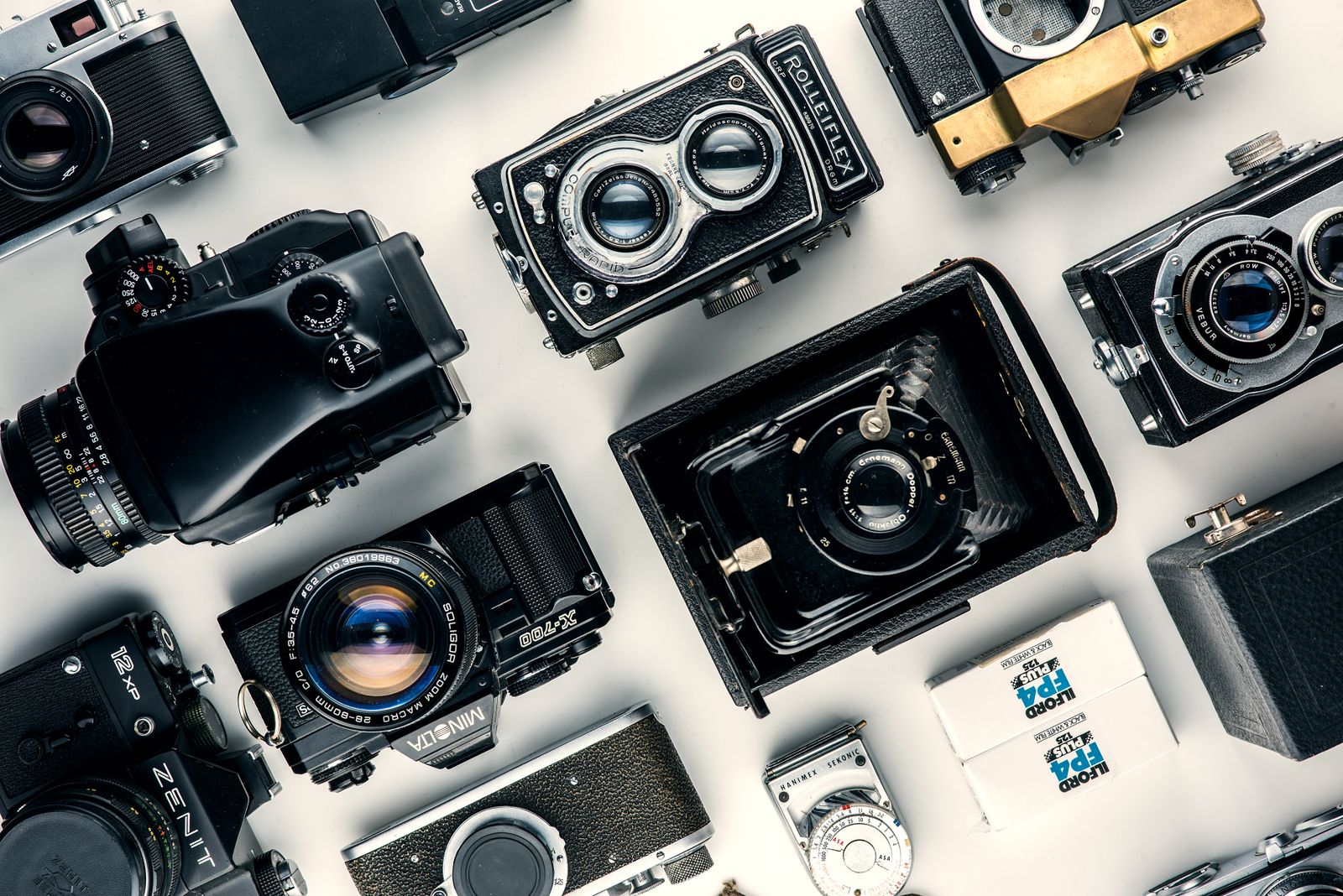
Mistake 5: Refusing to buy used — or buying used carelessly
New-everything is the most expensive way to learn, because beginners sell their first mistakes, and the used market is where those mistakes become your bargains: capable recent bodies commonly change hands at around half their original price. But used buying has its own discipline, and skipping it is the mirror-image mistake.
The camera's odometer is its shutter count. Bodies are rated for a finite number of actuations — roughly 100,000 on entry-level bodies and up to 400,000 or more on professional ones, with enthusiast models commonly around 150,000 to 200,000. A body rated at 200,000 with 30,000 taken is barely run in; the same body at 160,000 is a discounted price or a future repair bill, and a shutter replacement can run around $350. Sellers on reputable platforms list the count; a seller who will not tell you is telling you. The sensor is the second check: dust is a cleaning bill, but scratches are permanent, and the standard test is a photograph of plain sky or a white wall at a small aperture like f/16 — spots are dust, straight lines are damage.
Where you buy used matters as much as what. The established used dealers — MPB and KEH are the two that dominate the US conversation — inspect and grade gear and attach warranties: MPB photographs the actual item, lists shutter counts on bodies, grades across five cosmetic levels, and includes a free six-month warranty on most used gear with 14-day returns; KEH grades more finely, across eight levels from Like New down to As Is, guarantees equipment to work as intended unless stated otherwise, and warranties grades from Like New through Bargain for 180 days. Auction sites can be cheaper and are where rare lenses live, but condition there is whatever the seller says it is, backstopped only by the platform's money-back guarantee. For a first camera, the warranty-backed dealer premium is usually the cheapest insurance a beginner can buy.
Mistake 6: Buying for the photographer you imagine, not the work you have
The last mistake is the quietest. Beginners buy for an imagined future — the wildlife trip, the wedding business, the studio — and the camera that serves the fantasy is heavy, complex, or specialized enough to stay home while the real work, the product shots and the weekly content, gets done on a phone. The camera that helps you publish consistently beats the more impressive camera that lives in a closet because it is heavy or frustrating, and in 2026 almost every modern camera produces good image quality in daylight. What separates a beginner-friendly one is how fast it gets you a usable result: autofocus you can trust, framing you can see, files your computer and software handle without a fight.
The dodge, and the whole guide in one line: buy the smaller, simpler system you will carry everywhere, one good lens, two cards, spare batteries, and one light — then spend the money you saved on the only upgrade that compounds, which is using it until you can name, precisely, what it cannot do. That named limitation, when it finally arrives, is your second purchase order. Everything before it is shopping.
Sources
- PhotoWhoa, Best Camera for Beginners 2026 — do not buy by megapixels (20 to 24 megapixels is enough for online work; sensor size, low-light performance, dynamic range and autofocus matter more), mirrorless as the current standard, lenses mattering more than bodies (a $500 camera with a great lens over a $2,000 camera with a kit lens), and budgeting for memory cards, extra batteries, a bag and a tripod.
- Fstoppers, 9 Things Before Buying Your First Serious Camera — a camera as sensor, autofocus system, ergonomics and lens mount; the body is temporary and the lenses follow you; full frame is not required to start, with APS-C and Micro Four Thirds producing professional results; upgrade only on hitting a specific, articulable limitation.
- Active Vlogger, Best Vlogging Camera for Beginners (2026) — beginners shop by hype and specs instead of workflow; autofocus reliability over maximum resolution; a good audio path, a flip screen and stabilization as the practical priorities; the camera that helps you publish consistently beats the expensive one that stays in a closet.
- Kayit Camera, Before You Buy Used — shutter count as the camera's odometer (entry bodies rated around 100,000 actuations, professional bodies 400,000 or more; a 200,000-rated body at 30,000 is barely broken in and at 160,000 is near its rated life); sensor checks including the plain-sky test at f/16; MPB's actual-item photographs and six-month warranty and KEH's conservative grading.
- Aesthetics of Photography, Second-Hand Photo Gear: Grades, Guarantees, Checks — MPB's five grades with 14-day returns and a free six-month warranty on most used gear; KEH's eight grades with a 180-day warranty from Like New through Bargain and none on Ugly or As Is; grades describe cosmetic condition while warranties decide what happens on failure.
- RentoVault, The Used Camera Buying Guide — professional bodies typically rated around 300,000 shots and enthusiast models around 150,000; a shutter replacement costing around $350; the white-wall or sky test at f/11 to f/16 distinguishing cleanable dust from permanent scratches.
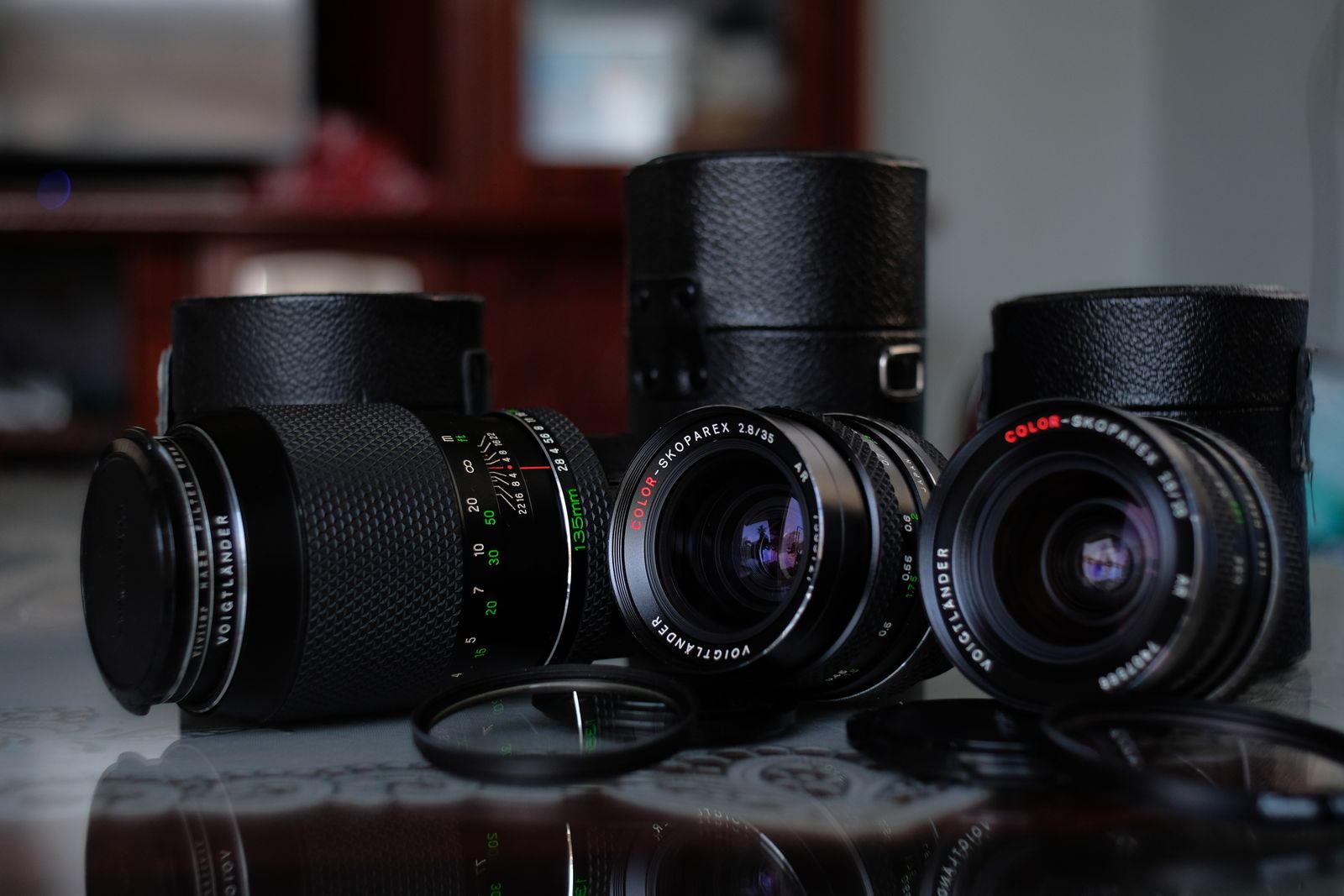
Photographs: assorted cameras, photo by Alex Andrews, https://www.pexels.com/photo/1983038/ ; camera lenses on a table, photo by Nguyen Huy, https://www.pexels.com/photo/19079982/
More guides
- How to Find a Wedding Photographer: The Complete, Honest GuidePhotographers › Wedding Photographers
- How Much Does a Wedding Photographer Cost? Packages DecodedPhotographers › Wedding Photographers
- 10 Questions to Ask a Wedding Photographer Before You BookPhotographers › Wedding Photographers
- Wedding Photography Styles Explained: Documentary, Editorial, Traditional, Fine ArtPhotographers › Wedding Photographers
- Hiring a Wedding Photographer in California: Venue Light, Permits, and Price LevelsPhotographers › Wedding Photographers
- All Guides & ArticlesBrowse the full guides library