Photographers › Cameras & Camera Supplies
Cameras and Camera Supplies Jargon, Translated: The Terms Providers Use and What They Mean for Your Bill
Camera retail runs on compressed language. A listing that says "import model, body only, kit glass, 180k on the shutter" contains four separate financial facts, and a first-time buyer who reads it as decoration will pay for the misunderstanding later — at the service counter, usually, where the lessons are itemized. I spent my assisting years placing the gear orders and taking the repair calls, and the pattern never changed: nobody was cheated by arithmetic. They were cheated, or cheated themselves, by terms they nodded at without translating. This guide translates the vocabulary of cameras and camera supplies into plain language, term by term, with the part that matters spelled out for each one: what it does to your bill, now or later.
The terms that decide what you actually bought
Grey market (also sold as "import model" or "international version"). The camera is genuine — same factory, same components — but it was first sold in another region and imported outside the manufacturer's official channel for your country. What it means for your bill: the price is lower because the manufacturer's local warranty is not in it. In the United States, grey-market gear carries no US factory warranty and no support from the official importer. The sharper edge is service: Nikon USA will not service grey-market gear at all — not under warranty, and not even as a paid repair — while Canon and Sony have historically been more willing to accept grey-market items for paid repair, at their discretion. Some sellers substitute their own store warranty, which is worth exactly the store standing behind it. Grey-market status also tends to depress resale value. Translation: the discount is not a discount; it is the warranty, sold separately back to you as risk. On a simple manual lens, that trade can be sensible. On a modern digital body full of specialized parts and firmware, it is how a saving becomes a paperweight.
Body only. The price buys the camera body — no lens. First-time buyers regularly compare a body-only price against a rival's kit price and conclude the first shop is cheaper. It is, in the same way a car without wheels is cheaper. Budget the lens before you celebrate the body price.
Kit lens / kit glass. The lens bundled with the body, typically a general-purpose zoom sold at a heavy bundle discount. Kits are genuinely good value as a starting point — the same lens bought separately costs noticeably more — and genuinely limited: kit zooms are usually slow (see below) and are the first thing a growing photographer replaces. Read a kit price as "body plus a starter lens at a discount," not as "body plus the lens you will keep."
Shutter count (actuations). The odometer of a camera with a mechanical shutter: the number of times the shutter has opened and closed, recorded in the camera's own data and readable from an unedited photo's EXIF information with free tools. Manufacturers rate shutters by class — roughly 50,000 to 100,000 actuations for entry-level bodies, 150,000 to 200,000 for mid-range, and 300,000 to 500,000 for professional flagships. What it means for your bill: a used body's price should track the share of rated life already spent. Under about 10 percent is barely broken in; past half the rating, the price should carry a real discount; past 80 percent, assume a shutter replacement — typically $200 to $500 at a service center — is in the camera's future and price it in. Ratings are test averages, not expiry dates: shutters run past them and, occasionally, fail before them. One modern wrinkle: shots taken with a fully electronic shutter do not wear the mechanical one, and some flagship mirrorless bodies have no mechanical shutter at all, which makes the count a smaller part of their story.
| Term on the listing | Plain meaning | What it does to your bill |
|---|---|---|
| Grey market / import model | Genuine gear first sold in another region, imported unofficially | Lower price, no local factory warranty; Nikon USA refuses even paid service; resale value drops |
| Body only | Camera without a lens | Add a lens budget before comparing against kit prices |
| Kit lens | Bundled starter zoom at a bundle discount | Good value to start; a future replacement cost if you outgrow it |
| Shutter count 180k | 180,000 shutter actuations already used | On a mid-range body rated ~200k, price in a $200–$500 shutter replacement |
| Factory refurbished | Rebuilt and certified by the manufacturer, with a manufacturer warranty | Costs more than seller-refurbished; the warranty is the difference |
| Seller refurbished | Checked or repaired by the shop selling it | Warranty is the shop's promise only — value it accordingly |
The terms that describe the machine
Full-frame vs. crop sensor (APS-C, Micro Four Thirds). The sensor's physical size. Full-frame is the largest mainstream format and the professional default: better low-light performance and shallower depth of field, at higher prices for both bodies and the lenses built for them. Crop formats are smaller, cheaper, and lighter, and their lenses can be smaller and cheaper too. The bill implication is systemic, not per-item: you are not buying a camera, you are buying into a lens ecosystem, and full-frame glass costs more at every step for as long as you own the system. A crop system is not a failed full-frame system; for most first-time buyers it is the financially literate one.
Fast glass. A lens with a wide maximum aperture — f/2.8, f/1.8, f/1.4 — that lets in more light. "Fast" has nothing to do with focusing speed in this usage. Wide apertures are where lens prices climb steeply: the jump from a kit zoom to its fast counterpart is routinely the largest single price step in a growing kit, and it buys real capability — handheld low-light shooting and blurred backgrounds — rather than a marginal improvement. When a quote or a recommendation says you "need faster glass," translate it as "this line item is about to triple," and ask what light you will actually be shooting in.
Prime vs. zoom. A prime lens has one fixed focal length; a zoom covers a range. Primes are typically faster, sharper, and cheaper per unit of image quality; zooms are flexible. The cost translation: one good zoom can cost less than the three primes it replaces, and three primes can cost less than the one professional zoom that matches them. Neither is the expensive option in the abstract — your subject decides.
Mount. The physical and electronic interface between body and lens — each manufacturer's system (and sometimes each generation) uses its own. A lens that does not match your body's mount does not fit, full stop, and adapters are a partial, sometimes compromised bridge. For your bill: every lens you will ever buy is constrained by this word, which is why used-gear bargains in the wrong mount are not bargains.
IBIS (in-body image stabilization). The sensor itself shifts to counteract your hand's movement, stabilizing any lens attached. Its bill implication hides in the lens column: on a body with IBIS, unstabilized lenses — often cheaper, especially used primes — perform like stabilized ones. On a body without it, stabilization is something you buy again inside every lens that has it.
Weather sealing. Gaskets and seals that resist dust and moisture. It is resistance, not waterproofing, and it only works as a system: a sealed body with an unsealed lens is an unsealed camera. The term justifies a real price premium on professional gear; on a listing, it should prompt the question "sealed at the lens too?" before it justifies paying one.
The terms that describe the deal
Factory refurbished vs. seller refurbished. Factory refurbished means the manufacturer rebuilt and certified the unit and stands behind it with a manufacturer warranty, typically shorter than a new one. Seller refurbished means the shop checked it, or repaired it, and the warranty is the shop's. The price gap between the two is the price of whose promise you hold. A related grading vocabulary — "mint," "excellent," "bargain" — is defined by each seller for itself; reputable used dealers publish their grading standards, and a grade without a published standard is an adjective, not a fact.
OEM vs. third-party (compatible). OEM is the camera maker's own brand; third-party means another manufacturer built the item for your mount — lenses from the big independent makers, and, at the riskier end, batteries, chargers, and grips from names you have never heard. Independent lenses are a mature, respectable market and often the value choice. Batteries and chargers are where cheap third-party goods earn their reputation: an off-brand battery that swells inside a body converts a $15 saving into a repair bill. Spend third-party money where the failure mode is inconvenience, not where it is damage.
Firmware. The camera's internal software, updated by the manufacturer to fix faults and add features. On a listing it matters twice: a body several versions behind is a small chore, and grey-market bodies can sit outside the official update and support channel entirely — one more way the import discount presents its invoice later.
"Pro" and "professional." In camera marketing these words describe a price tier, not a regulator's category: there is no licensing body certifying a camera — or, in most places, a photographer — as professional. What the tier actually encodes is build, sealing, shutter rating, and service support. Translate "pro body" as "rated for 300,000+ actuations, sealed, and expensive to repair," and the word stops doing any mysterious work in the price.
How to use the translation
Read every listing twice: once for the camera, once for the deal. The camera is sensor size, mount, shutter count against its rating, and the lens situation — included, kit, or absent. The deal is origin (official or grey), warranty (manufacturer's, shop's, or none), condition (graded against a published standard, or against nothing), and what the price quietly excludes. This site lists 465 cameras and camera supplies businesses, and the honest sellers among them write listings that survive this reading without flinching — the terms are all there, translated by nothing but your own attention. That is the whole skill. Jargon in this trade is not a conspiracy; it is compression. But compression always favors the person who can decompress it, and now the bill for learning it has been itemized for you, term by term, before it could be itemized on an invoice.
Sources
- Focal Point Photo, "What is Grey Market Camera Gear?" — establishes that grey-market gear is genuine equipment first sold in another region, that US manufacturer warranties do not apply, that Nikon will not service grey-market gear even for pay, and that Canon and Sony are generally more flexible on paid repairs.
- Ken Rockwell, "The Gray Market" — establishes that grey-market goods receive no customer support from the legitimate importer and may be unserviceable regardless of willingness to pay.
- Swappa, "How to Check Shutter Count on a Used Camera" — establishes shutter ratings by class (entry-level 50,000–100,000; mid-range 150,000–200,000; professional 300,000–500,000) and reading the count from a photo's EXIF data.
- PixelPeeper, "What Is a Good Shutter Count?" — establishes count-versus-rating thresholds and shutter replacement costs of $200–$500.
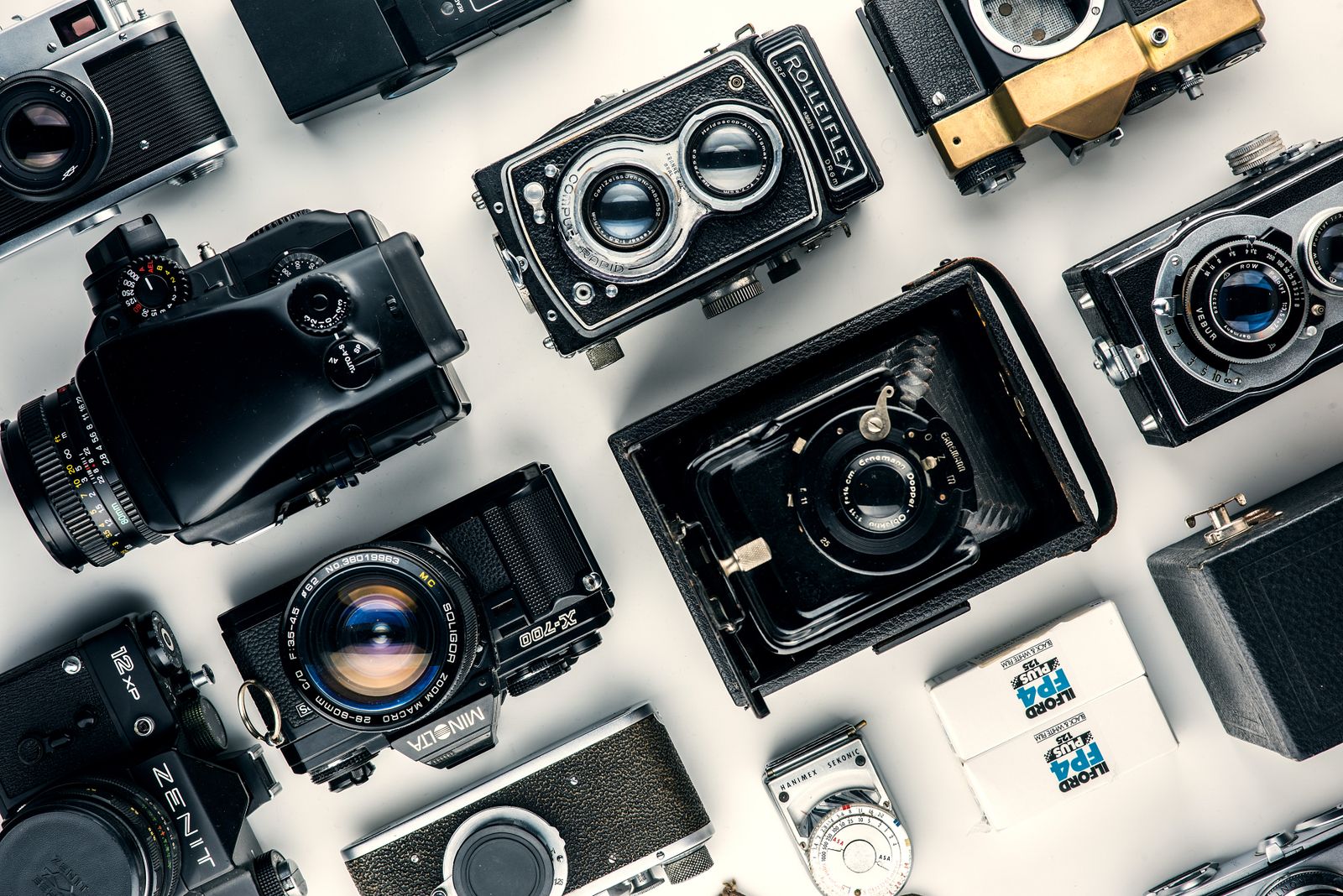
- Assorted cameras photograph: photo by Alex Andrews, https://www.pexels.com/photo/1983038/
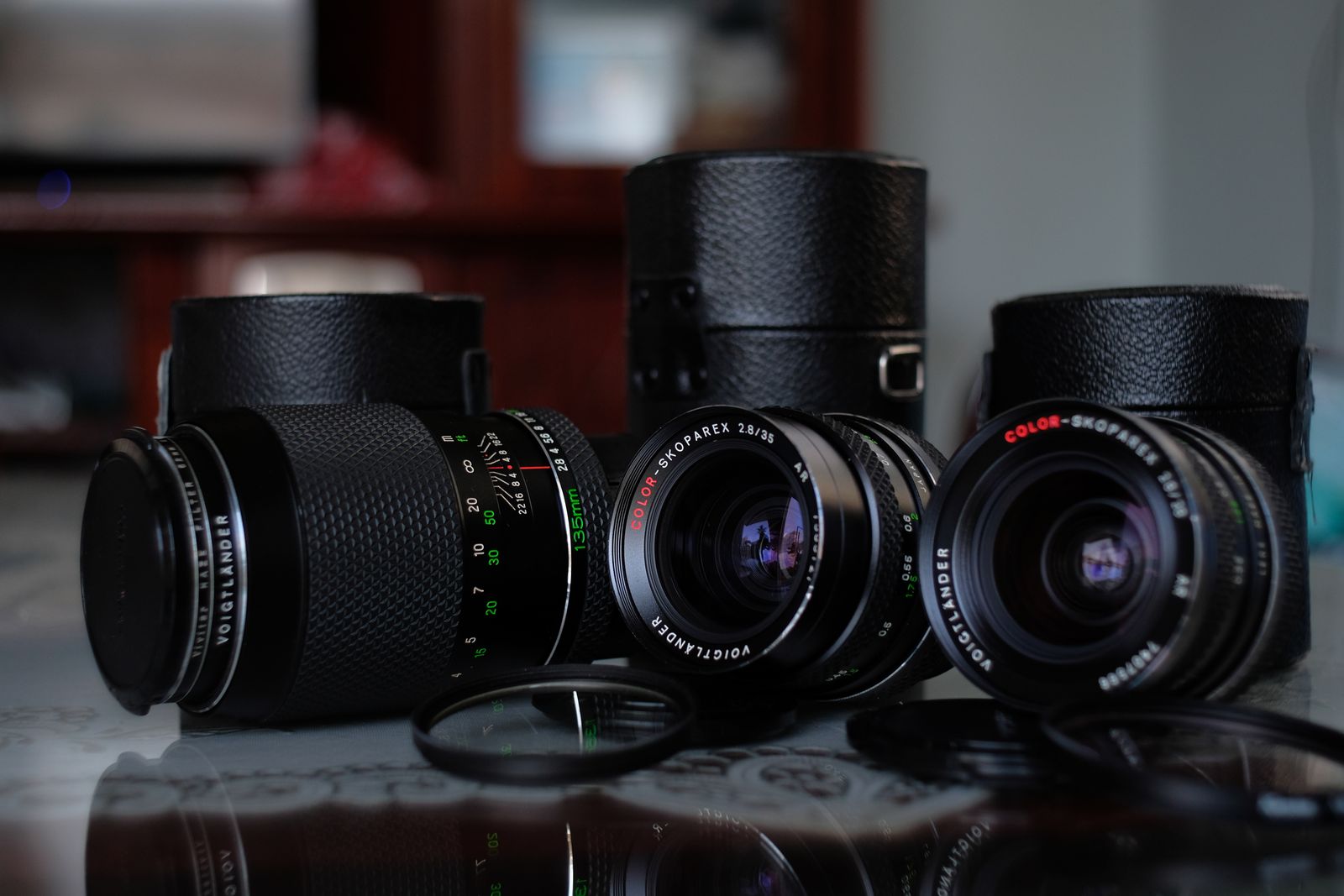
- Camera lenses photograph: photo by Nguyen Huy, https://www.pexels.com/photo/19079982/
More guides
- How to Find a Wedding Photographer: The Complete, Honest GuidePhotographers › Wedding Photographers
- How Much Does a Wedding Photographer Cost? Packages DecodedPhotographers › Wedding Photographers
- 10 Questions to Ask a Wedding Photographer Before You BookPhotographers › Wedding Photographers
- Wedding Photography Styles Explained: Documentary, Editorial, Traditional, Fine ArtPhotographers › Wedding Photographers
- Hiring a Wedding Photographer in California: Venue Light, Permits, and Price LevelsPhotographers › Wedding Photographers
- All Guides & ArticlesBrowse the full guides library