Photographers › Children Photographers
Children Photographers: The Complete Checklist Before You Commit
Booking a photographer for children looks like the softest purchase in photography. It is not. The subject cannot consent for themselves, cannot sit still on request, and — in the case of a newborn — cannot hold up their own head. The money side is softer-edged too: a small session fee at booking can be the front door to a four-figure print order you never agreed to. And the decisions you make before you commit — about safety, about who may use your child's face, about what files you will actually own — are the ones that cannot be renegotiated after the session, when the photographs exist and the leverage has moved.
I book photographers for a living, and the bookings that go well share one feature: everything important was settled in writing before anyone picked up a camera. This is that settlement, as a checklist. Work it in order. Every item is a decision, a document or a question, and for each one I will tell you what "settled" looks like — because "we discussed it" is not settled.
Part one: the photographer
☐ A portfolio of children, at your child's age. Photographing a cooperative seven-year-old and posing a nine-day-old are different trades that happen to share equipment. Ask for a full session gallery — not a highlights reel — of children the age yours will be on the day. For newborns, the window matters as much as the work: posed newborn sessions are built around the first 5 to 14 days, when babies sleep deeply and curl naturally, so a photographer whose newborn book is strong but whose diary cannot fit that window is the wrong photographer for this baby.
☐ Safety practice, described unprompted. This is the item that separates professionals from people with a camera and a Pinterest board, and it is most acute for newborns. Safety guidance across the trade is consistent: a baby is never left unsupported or unattended, even briefly; a spotter's hands stay within reach in any posed or elevated set-up; poses that look unsupported — the famous chin-on-hands "froggy" pose among them — are composites, made from frames in which the baby was held throughout, with the supporting hands edited out; the room is kept warm, around 75 to 80 degrees for an unclothed newborn; and no pose is ever forced on a baby who resists it. Ask your candidate how they handle posing safety and listen for those specifics. A professional answers the way a pilot answers questions about checklists: with slight boredom, because it is routine. Hesitation, or "we're careful, don't worry," is your answer too.
☐ Insurance, and an honest answer about checks. Ask whether the photographer carries liability insurance; studios and established independents do, and it is a fair proxy for a business run as a business. If the session involves your child being cared for out of your sight — rare in family work, common in some commercial and school settings — ask what background checks and safeguarding policies apply, and expect documents, not reassurance. For a standard family session you will be present throughout, and you should confirm that expectation explicitly: a session model in which a parent is always in the room is the norm you are entitled to assume only once you have said it out loud.
☐ A named photographer. Studios book the job; a person shoots it. Confirm who, and what happens — associate, reschedule or refund — if that person is ill on the day. Children get ill too, which takes us to the contract items below.

Part two: the money, all of it
Children's and family photography is sold in three structures, and the checklist item is not which one you choose but whether you know which one you are in.
| Structure | How it reads | The real total is |
|---|---|---|
| All-inclusive package | One price: session plus a stated number of edited digital files | The package price — confirm the file count and resolution |
| Session fee plus products | A modest fee to shoot; images bought afterwards as prints, files or packages | The fee plus your realistic print and file order — the number nobody quotes first |
| Mini session | A short slot on a set date at a set location, a small file bundle included | The mini price, plus any extra files at their per-file rate |
The market's published numbers show the spread you are navigating. Thumbtack's national data, summarised in current pricing guides, puts family and children portraits at an average of about $269 a session and newborn portraits at about $266, with portrait sessions overall averaging about $277. Working studios' published tiers run wider: one 2026 family pricing guide puts mini sessions at $125 to $300 for 15 to 25 minutes with 5 to 15 edited images, standard hour sessions at $350 to $550 with about 25 edited images, and premium tiers at $500 to $800 and beyond with print or album credits. A real children's session on a published studio card — up to 30 minutes, 10 digital downloads, up to four children with a per-child charge beyond that — sits at $200. And the cautionary structure is the studio-chain model described by working photographers: a session fee under $50, sometimes free, with the money made afterwards in a sales appointment where print packages run from a few hundred dollars into four figures.
So the money checklist is four numbers, in writing, before you book:
☐ The session or package price, and exactly what it includes — minutes, locations, outfit changes, children included, and the per-child or per-person charge beyond them.
☐ The file settlement — how many edited images, at what resolution, delivered how, and whether a print release is included. Full-resolution files with a print release mean you can print forever without returning with a credit card; low-resolution or watermarked files, or files sold per image afterwards, mean the session price was a deposit on the real one.
☐ The product price list, now, not at the viewing — prints, canvases, albums, extra files, priced. If a photographer will not share it before booking, assume the sales appointment is the business model.
☐ The payment schedule — deposit or retainer amount, when the balance falls due, and what each payment is refundable against. A deposit of around $50 is a published norm at the marketplace end; larger retainers are normal for premium studios. Neither is a red flag. An unexplained one is.
Part three: the paper
☐ A contract, signed, that names the deliverables. Date, time window, location, photographer, package contents, file count, delivery deadline, and the reshoot and cancellation terms — including the clause that matters most with children: what happens if your child is ill, or simply done, twenty minutes in. Sessions with young children are short for physiological reasons; published guidance for family sessions with small children runs to about an hour before energy and patience go, and minis are built at 15 to 25 minutes for the same reason. A contract that assumes a toddler will perform for two hours was written by someone who has not met one.
☐ The model release — read it, and know you can negotiate it. Photographers commonly ask for permission to use session images in their portfolio, website and marketing. For adult subjects this is a shrug. For your child it is a decision, and it is yours: reputable photographers will accept a signed release, a modified release (website yes, advertising no, for example), or a decline, and the time to exercise the choice is before the session, not after your child's face appears in an advertisement. If any commercial use is involved — a business booking child models or a brand session — the release, the guardian's signature and the permitted uses and term belong in the centre of the paperwork, not its small print.
☐ The copyright and print-release position, in plain words. The photographer owns the copyright; what you receive is files plus whatever licence or print release the package grants. Confirm it covers what you will actually do: print at a lab of your choice, share with family, post online. Labs may ask to see the print release for professional-looking work, so get it as a document, not a verbal yes.
☐ The retention promise. How long does the photographer keep your files, and what does re-delivery cost after the gallery expires? Galleries expire; hard drives fail — yours, mostly. A stated archive period turns a future panic into a known fee.
Part four: the session itself, settled in advance
☐ Timing fitted to the child, not the studio. Nap and feeding schedules are production constraints. Newborn sessions are booked loosely around a due date and firmed up after the birth, inside that 5-to-14-day window, and can run two to four hours with feeding breaks built in — a published norm, not an indulgence. For toddlers, a morning slot after breakfast beats a discounted late-afternoon one at almost any price difference.
☐ The location and its permissions. Studio, home or outdoors each carry a settlement: a park or commercial location may need a permit, and whose job it is to hold it should be named. At home, agree the rooms, the light and the tidying reality — a lifestyle session needs one good window more than it needs a show home.
☐ Props, outfits and who supplies them. Newborn props and wraps are usually the studio's, and their cleaning and safety are the studio's to describe. For older children, agree outfits in advance — coordinated rather than matching is the standing professional advice — and bring the spare outfit, because the first one has an appointment with juice.
☐ The delivery timeline, dated. Sneak peeks, proof gallery, final edited files, and prints each have a date or a window in the agreement. "A few weeks" is not a timeline. If the photographs are for a deadline — a holiday card, a birthday, a campaign — the deadline is a contract term, and a rush fee agreed now beats a disappointment itemised later.
The one-page version
Before money or signatures move, you should be holding: a full gallery you have actually viewed, of children your child's age; a safety answer with specifics in it; an insurance answer; a total price built from the session, the files and the products you will really buy; a signed contract naming deliverables, delivery dates and the sick-child clause; a model release you chose rather than inherited; a print release as a document; and a session plan built around your child's rhythms. Eight items. None of them takes more than an email.
This site lists 375 children photographers. The checklist is how you turn 375 names into one signature you do not regret: ask every serious candidate the same questions, compare the written answers, and commit to the photographer whose paper is as good as their pictures. With children, that is not bureaucracy. It is the job.
Sources
- Thumbtack national pricing data, via Piclink's pricing guide — family and children portraits averaging about $269, newborn portraits about $266, and portrait sessions about $277.
- 12img, Family Photography Pricing 2026 — mini sessions at $125–$300 for 15–25 minutes with 5–15 edited images, standard sessions at $350–$550, premium tiers at $500–$800 and above.
- Hilary LaCombe Photography, Session Pricing Guide 2025 — a published children's session at $200 for up to 30 minutes with 10 digital downloads, for up to four children with $25 per additional child.
- SDub Media, How Much Should Family Photos Cost? — the three price structures, the under-$50 studio session fee with print packages from a few hundred dollars into four figures, and full-resolution files as the biggest price swing.
- ViewBug, Newborn Photography Safety Tips — unsupported head and neck risk, composite construction of poses such as froggy, spotters within reach, and never leaving a newborn unsupported or unattended.
- PhotographyIcon, How to Photograph Newborns — the 5-to-14-day session window, a spotter's hands beside the baby at all times, head support, airway awareness, and a room at about 75–80°F.
- Willow & Roots, Newborn Photography Safety Guide — postponing when anyone is unwell, supported posing, weighted and padded props, and never balancing a baby in a container.
- HSM University, PHOT-220 Families, Children and Pets — sessions of about an hour for families with young children, coordinated rather than matching clothing, and the challenges of photographing children at each age.
Photo credits
- Children playing in autumn leaves — photo by Michael Morse, https://www.pexels.com/photo/1582736/
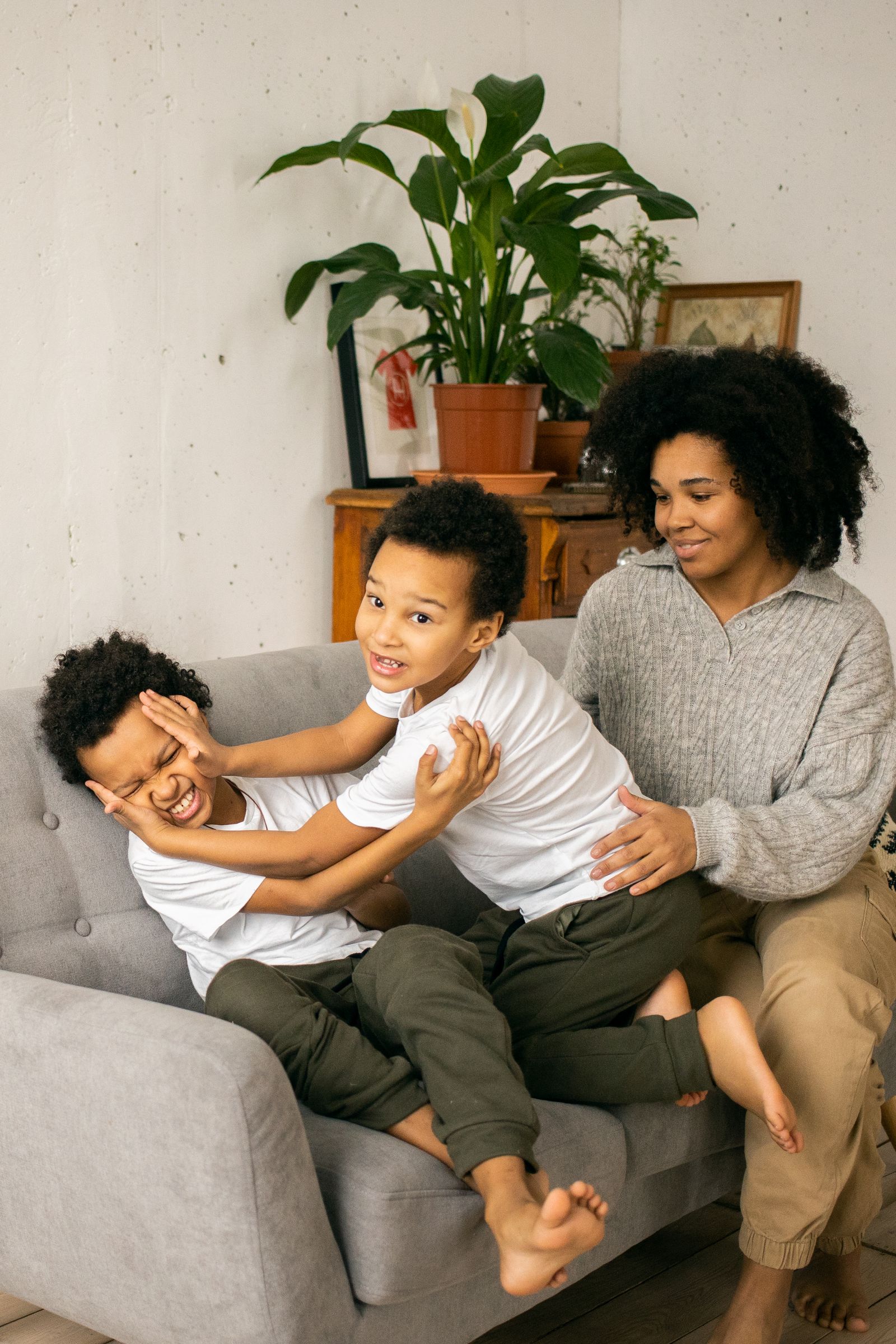
- Mother and sons at home — photo by Monstera Production, https://www.pexels.com/photo/7114368/
More guides
- How to Find a Wedding Photographer: The Complete, Honest GuidePhotographers › Wedding Photographers
- How Much Does a Wedding Photographer Cost? Packages DecodedPhotographers › Wedding Photographers
- 10 Questions to Ask a Wedding Photographer Before You BookPhotographers › Wedding Photographers
- Wedding Photography Styles Explained: Documentary, Editorial, Traditional, Fine ArtPhotographers › Wedding Photographers
- Hiring a Wedding Photographer in California: Venue Light, Permits, and Price LevelsPhotographers › Wedding Photographers
- All Guides & ArticlesBrowse the full guides library