Photographers › Children Photographers
Children's Photography Scams and Pressure Tactics: How to Spot Them Before You Pay
Nobody is easier to sell a photograph to than a parent looking at a beautiful picture of their own child. Every honest photographer knows this, and the honest ones build their pricing so you can decide with a clear head: the full cost in writing, before the session, with time to think. The dishonest end of children's photography is built on the opposite principle — get the parent emotional, get the clock running, and get money to move before either fades. I assisted on commercial shoots for years. The camera work was the easy part to learn. The sales floor was the education.
This guide names the tactics as they actually appear — in mall studios, at baby fairs, in school-photo envelopes, in your messages — and gives you the checks to run before money moves. It also draws the line carefully: some of what follows is fraud, some is legal-but-loaded pricing, and some is simply how legitimate studios charge. Knowing which is which is the whole skill.
Scam one: your child has been "selected"
The approach is flattering and unsolicited: a scout in a mall, a message saying your child has the look, a letter announcing your baby has been chosen. The Federal Trade Commission's consumer guidance on modeling scams describes the shape precisely — what sounds like a job interview becomes a high-pressure sales pitch for classes, screen tests, or photo shoots costing from several hundred to several thousand dollars, after which most families receive no work, no leads, and in numerous cases not even the photographs they paid for, because the company has packed up and left town.
The mechanics to recognize: legitimate modeling agencies earn commissions from work their models book; the FTC notes the exception is narrow — a fair share of the printing cost of an agency book is legitimate, and little else is. A legitimate agency does not demand upfront fees for portfolios, registration, or casting, does not guarantee work or income, and — for very young children — does not insist on professional photographs at all; consumer guidance from Virginia Cooperative Extension puts it bluntly that a couple of color snapshots are enough for a baby, and that a legitimate agency invests first and takes its photos after signing. Guarantees are the tell: "selected," "guaranteed refund if not accepted," "high-paying jobs you can work the fees off with" — the FTC's translation of that last one is that everyone is accepted, the refund never materializes, and payment is demanded whether or not work appears.
At the extreme end, this stops being a sales tactic and becomes a crime. In a Michigan case reported in September 2026, a photographer was sentenced to five years in federal prison after pleading guilty to wire fraud, having taken more than $4.6 million from one family for supposed modeling events for their young daughter — complete with fabricated texts, emails, and invoices — and was ordered to pay the money back in restitution. The scale is extraordinary; the ingredients are the ordinary ones above: upfront fees, repeated new expenses for travel, clothing, and portfolios, and brand names that were never independently verified with the brands themselves.
Scam two: the free session that costs $600
This one is usually legal, which is why it works. The session is free, or under $50, sometimes with a small print included. The business model is the viewing appointment afterward, where your child's photographs are projected large, your favorites are bundled into packages priced to make the biggest bundle look sensible, individual digital files cost hundreds, and the images you do not buy are — depending on the studio — scheduled for deletion. Family-photography pricing guides describe the model openly: session fee plus per-image pricing means a low upfront number, then every edited photograph costs extra; it is fine if you truly want three photographs and expensive if you fall in love with thirty, which is the whole business model. One guide notes a studio chain can advertise a session under $50 and a family can still leave the viewing appointment having spent $600 on prints it did not plan to buy.
None of that is fraud if the prices were available before you booked. It becomes a pressure tactic when they were not: when the per-image price is revealed only at the viewing, when "today only" pricing expires while your toddler is still on the screen, when payment plans are offered before totals are. The check is a single question, asked before the session and answered in writing: what does it cost, in total, to walk away with the photographs I will want — and what does one digital file cost? A legitimate studio answers it. For calibration, typical US family session fees in 2026 run roughly $145 to $550 depending on the guide, with a finished total — prints and products included — commonly landing between about $300 and $1,500 at full-service studios. A "free" session whose realistic exit price is $900 is not cheaper than a $400 all-inclusive session. It is just priced in a different order.
Pressure tactics that are not scams — and still deserve a no
The expiring child. "This price is only good today" aimed at a parent works because it borrows urgency from the child: they will never be this age again. True, and irrelevant to the discount. Any offer that cannot survive a night of sleep is priced to prevent comparison, not to reward speed.
The deleted gallery. Some studios genuinely cannot archive every session indefinitely; storage is a real cost. The tactic version announces deletion dates during the sales appointment that the contract never mentioned. Your contract should state the gallery period before you book.
The school and nursery envelope. School photography runs on volume and deadlines, and most of it is straightforward. The loaded version front-loads the largest package as the default, prices the single small print to look absurd, and sets a retake or order deadline days away. You are allowed to buy the small package. You are also allowed to skip a year.
The contest. "Cutest baby" contests that end with every entrant winning a free session and a required package purchase are lead generation, not honors. Enter them with that understanding and they are harmless marketing; the prize is a sales appointment.
Cash, gift cards, and payment apps. The FTC's modeling guidance flags operations that only accept cash or money orders as interested in your money rather than your child's career. The modern version is a deposit by payment app to a personal account, with no contract, no business name, and no receipt. A legitimate photographer — including the many sole traders in this field — can produce a contract, an invoice, and a traceable payment trail without being asked twice.
The checks to run before money moves
- Verify independently. Search the business name, the photographer's name, the phone number, and the words "scam" and "complaint" — yourself, not via links they sent you. If a brand, agency, or event is named, confirm it with that organization directly.
- Get the total in writing. Session, files, prints, retainer, reshoot and cancellation terms, gallery period. Verbal totals are marketing.
- Ask what the business earns from. Commission on booked work is an agency. Fees from parents, charged before any work exists, are a school or a sales operation — price them as one.
- Never pay for a guarantee. Work, income, selection, and refunds-if-not-selected are not things an honest operator can promise.
- Keep the payment traceable and the images protected. Contract first, card or traceable payment second, cash never. And treat your child's photographs and personal details with the same care as the money: do not hand over more images, data, or access than the job requires.
- Use the cooling-off window where it exists. Under the FTC's Cooling-Off Rule, certain sales made away from the seller's usual place of business — at your home, a fair, a convention or similar temporary location — can be cancelled until midnight of the third business day, with thresholds of $25 for sales at home and $130 elsewhere, and the seller must give you written notice of that right and cancellation forms. A package signed at a baby fair may carry this right; the same package signed at the studio generally does not. Either way, a contract you were not allowed to take home and read was the first red flag.
What honest looks like
It is not mysterious, and this site's directory — which lists 375 children photographers among its photography listings — is full of it: published packages or a rate card on request, a contract before a retainer, snapshots accepted for a baby's first agency submission, a viewing process whose prices were in the email you got before the session, and a photographer who would rather reschedule a sick toddler than shoot through it for the fee. Children's photography is a real craft and, at honest prices, a fair buy. The scams survive by making parents feel that love is measured in packages. It is measured in showing up. The photographs are just the proof — buy them from someone who tells you what they cost.
Sources
- Federal Trade Commission, Avoiding Modeling Scams (consumer fact sheet) — the interview-to-sales-pitch pattern, photo shoots at several hundred to several thousand dollars, refund and selection language decoded, cash-or-money-order warning. https://permanent.fdlp.gov/websites/www.ftc.gov/bcp/conline/pubs/services/model.pdf
- Bitdefender, What Parents Need to Know About Child Modeling Scams — the Michigan case: a photographer sentenced to five years in federal prison in September 2026, more than $4.6 million taken and ordered repaid in restitution, fabricated messages and invoices. https://www.bitdefender.com/en-us/blog/hotforsecurity/child-modeling-scams
- Virginia Cooperative Extension, Planning for Baby — Scams — legitimate agencies do not charge upfront fees, snapshots suffice for very young children, guarantees of work are a red flag. https://vtechworks.lib.vt.edu/server/api/core/bitstreams/f804637e-493e-49c7-9cc2-19222c89c3a6/content
- Federal Trade Commission, Cooling-Off Rule (16 CFR Part 429) — three-business-day cancellation for covered sales away from the seller's place of business, $25 at-home and $130 other-location thresholds, written notice and cancellation forms required. https://www.ftc.gov/legal-library/browse/rules/cooling-period-sales-made-home-or-other-locations
- Amy Marlan Photography, How Much Does a Family Photographer Cost? (2026 guide) — session fees of roughly $145–$550 across three cost guides and finished totals commonly between about $300 and $1,500. https://www.amymarlan.com/blog/photography-investment-guide
- Bay Area Family Photography, How Much Does Family Photography Cost? — the three pricing models, including session-fee-plus-per-image pricing and how a low session fee becomes a large viewing-appointment total. https://bayareafamily.photography/family-photography-cost
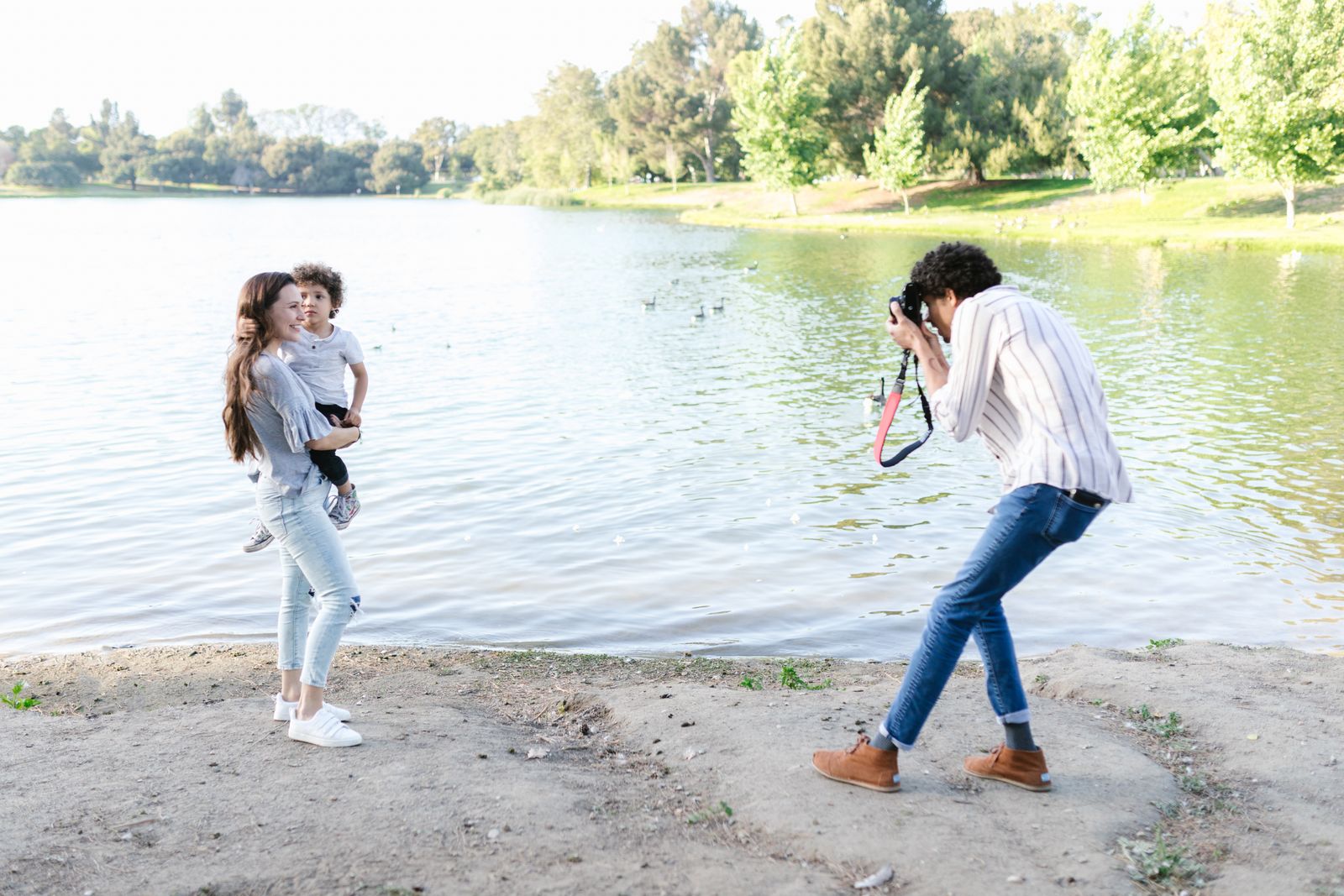
Photos: Family session by a lake — photo by RDNE Stock project, https://www.pexels.com/photo/8208275/ ; Hands examining a family photo album — photo by cottonbro studio, https://www.pexels.com/photo/8848784/
More guides
- How to Find a Wedding Photographer: The Complete, Honest GuidePhotographers › Wedding Photographers
- How Much Does a Wedding Photographer Cost? Packages DecodedPhotographers › Wedding Photographers
- 10 Questions to Ask a Wedding Photographer Before You BookPhotographers › Wedding Photographers
- Wedding Photography Styles Explained: Documentary, Editorial, Traditional, Fine ArtPhotographers › Wedding Photographers
- Hiring a Wedding Photographer in California: Venue Light, Permits, and Price LevelsPhotographers › Wedding Photographers
- All Guides & ArticlesBrowse the full guides library