Photographers › Wedding Photographers
Dallas Wedding Photography: Prices, Providers and Practicalities
Dallas does weddings at scale. The metroplex is one of the largest wedding markets in the country, which means two things for a couple hiring a photographer: genuine depth — hundreds of working wedding photographers across every style and price tier, from Highland Park luxury studios to talented newcomers in Denton — and genuine sprawl, in which your ceremony, your portraits, and your reception can sit in three different cities connected by toll roads. Add Texas heat, a Texas tax rule that surprises almost everyone, and venue policies with clocks attached, and Dallas becomes a market where the practical questions matter as much as the portfolio.
This guide is the ground-level version: what Dallas couples actually pay, how the provider market is shaped, and the practicalities — tax, permits, heat, distance, and the bridal-portrait tradition — that residents run into and visitors never see coming.
What Dallas couples pay
Pull the numbers from several directions and they agree. Cost surveys of Dallas weddings put the wedding photographer line between roughly $2,600 and $4,700 depending on guest count and season — about $3,800 to $4,700 for smaller spring weddings, $3,400 to $4,200 at larger fall weddings — with photography and video together commonly landing between $3,900 and $5,700. Working photographers describe the same market in tiers: beginners and part-timers at $500 to $1,500; emerging professionals at $1,500 to $3,000; experienced professionals at $3,000 to $5,500; and the luxury tier from $5,500 upward. A DFW-wide pricing guide aimed at couples puts most full-day investments at $3,500 to $6,000, with a Texas average for established professionals of $3,000 to $7,000 and luxury work at $7,000 and up.
Translated: a realistic Dallas budget for a strong, experienced professional is $3,000 to $5,500, and couples who anchor on the metroplex's overall wedding spend — commonly $32,000 to $55,000 in the survey data — find photography taking its usual tenth or so. Quotes far below $2,000 for full-day coverage exist in Dallas because the market is deep enough to contain many beginners; that is a legitimate choice for a small wedding, made with open eyes about backup gear, insurance, and what happens if the photographer is ill. The depth that makes Dallas cheap at the bottom is the same depth that makes its top tier genuinely competitive — the luxury studios here shoot for publication and price like it.
| Tier in Dallas | Typical range | What it usually means |
|---|---|---|
| Beginner / part-time | $500–$1,500 | Building a portfolio; shorter coverage; ask hard questions about backup equipment and delivery |
| Emerging professional | $1,500–$3,000 | Real weddings shot, thinner bench; often excellent value in a deep market |
| Experienced professional | $3,000–$5,500 | Where most Dallas couples land; full-day coverage, second shooter commonly available |
| Luxury / editorial | $5,500–$7,000+ | Established names, teams, albums and film; Park Cities and destination work |
The tax line: Texas taxes the whole invoice
Here is the practicality that catches Dallas couples — and out-of-state photographers flying in — most reliably. Texas treats photographs as tangible personal property, and the Texas Comptroller's guidance for photographers is unusually blunt: sales of photographs are taxable however they are delivered — prints, disc, digital download, any medium — and all expenses directly related to producing and selling the photographs and billed to the customer are taxable with them, whether the bill is lump-sum or itemized. The sitting fee is taxed as part of the sale when photographs are purchased. Travel, editing time, and production expenses billed to you ride along. There is no structuring trick in which the package becomes "mostly service": the state taxes the total charge for finished photographs, shipping and handling included.
The rate is the state's 6.25 percent plus local taxes up to a combined ceiling of 8.25 percent — and Dallas sits at that ceiling. On a $4,500 package, that is up to about $370 of tax. Reputable Dallas photographers collect it openly as a line item, because the Comptroller's rule (Rule 3.312, Publication 94-176) leaves them no choice. When comparing quotes, establish whether each price is tax-inclusive or tax-additional before ranking them; a $4,100 quote plus tax and a $4,400 quote including it are nearly the same quote wearing different clothes, and the one who "doesn't charge tax" on a taxable sale is not offering a discount — they are describing a liability that exists anyway.
One legitimate nuance: if no photographs are purchased in any form, the tax collected on a pure sitting can be refunded — the tax follows the photographs, not the hour in the studio. It rarely matters for weddings, where photographs are rather the point, but it explains bridal and engagement session invoices that look different from the wedding invoice.
The bridal portrait: a Texas institution with logistics attached
Out-of-state couples are routinely startled by this: in Texas, the bridal portrait session — the bride, in full dress, hair, and makeup, photographed weeks before the wedding, with a large print displayed at the reception — is a standard line item, not an upsell. Dallas photographers build it into packages (a typical standalone session runs around $800 for 90 minutes at published Dallas rates, often included from mid-tier packages up). It is also a scheduling instrument: it is a full dress rehearsal that reveals fit, bouquet, and timing problems while they can still be fixed, and it produces the reception display print without spending wedding-day minutes on it.
It has its own practicalities. The dress leaves the salon early and must be protected and re-steamed; the session needs a location with a private place to dress (one popular garden rents a VIP room for exactly this, at $350 for two hours, because changing in public restrooms is not allowed); and the display print's production time belongs in the calendar, not the week of the wedding.
Locations and their clocks
Dallas portrait locations run on rules, and the rules have hours.
The Dallas Arboretum is the city's portrait garden, on White Rock Lake, and its published policy is a study in specifics: everyone entering to shoot — photographer included — pays admission (adults $21.95 Monday to Thursday, $25.95 Friday to Sunday, plus $15 parking); there is no separate portrait permit fee for ordinary sessions under the garden's current policy, but professional photography is not allowed before 9 a.m., tripods, reflectors, and lighting are permitted only from 3 to 5 p.m. in the Main Garden, nothing is allowed in the Children's Adventure Garden, drones are never permitted, and a separate commercial fee applies to shoots that promote or sell a product or service. The garden closes at 5 p.m. — which means a summer session there is shot in bright afternoon light or in the single golden-ish hour before closing, and a winter session gets the soft light but none of the summer garden. Plan the session type around the clock, not around the brochure.
City parks and public space. Dallas refers professional filming and photography on public property to the City's Office of Special Events; the Dallas Film Commission lists the standard commercial filming permit application at $50 per location with at least three business days for review, and the permit covers still photography. A couple with a handheld photographer in a park is a different case from a crew with lighting — but a wedding party with a professional, a tripod, and an hour of posed portraits is exactly the use to confirm in advance, particularly at marquee spots like Klyde Warren Park (which requires a permit for commercial photography or more than a single tripod) and the Margaret Hunt Hill Bridge overlooks.
Fort Worth is a separate trip. DFW is one market on paper and two cities in the car: Dallas to Fort Worth is 30-plus miles, and the Fort Worth Botanic Garden, the Water Gardens, and the Stockyards each run their own photography policies and passes. A photographer who "covers DFW" should be asked which side's locations they actually know — the permit desk, the parking, and the light differ, and the drive between a Fort Worth ceremony and a Dallas reception in rush hour is a timeline item, not a detail.
Heat, sprawl, and the Dallas timeline
Two forces shape every Dallas wedding day. The first is heat: June through September weddings run in 95-to-105-degree afternoons, which moves outdoor portraits to the morning or the last hour of light, punishes midday ceremonies on exposed lawns, and makes shade, water, and an indoor portrait backup part of the photographer's job description. Ask Dallas photographers for a full gallery from a July wedding. You are not testing their art; you are testing their survival systems — for the couple, the party, and the equipment.
The second is sprawl. A getting-ready hotel in Uptown, a ceremony in Highland Park, portraits at the Arboretum, and a reception in Las Colinas is a normal Dallas day and roughly 40 miles of driving inside it. Photographers price and plan for this differently: some include travel across greater DFW in the package (published Dallas session rates commonly state no travel fee inside the metroplex), others charge beyond a radius. Either is fine. What is not fine is discovering the radius on the invoice — or discovering that nobody padded the timeline for the Dallas North Tollway at 5 p.m. on a Friday. The experienced Dallas hand builds the day around the highways the way a coastal photographer builds around tides.
Choosing, in a market with everything
Depth changes the vetting problem: in Dallas you will not run out of photographers, so the work is filtering. Compare full packages at the same tax treatment; confirm the second shooter is a photographer and not an assistant with a camera; ask who edits (in-house or outsourced changes both style consistency and turnaround); and weight local knowledge — Arboretum clocks, permit desks, July heat galleries, tollway timelines — at least as heavily as Instagram highlights. This site lists 564 wedding photographers nationally, and the Dallas–Fort Worth share of that bench is one of the deepest in the South: the couple who defines their tier honestly and asks the practical questions in this guide will have real choice at every price. In Dallas, that is the whole game — the market has already done the hard part.
Sources
- Wedding Report, Dallas TX wedding cost estimates (2025 data) — establishes Dallas photographer spending of roughly $2,600–$4,700 across guest counts and seasons, photography-and-video totals of $3,900–$5,700, and overall Dallas wedding budgets commonly between $32,000 and $55,000.
- Bushel + Peck, Texas wedding photographer pricing guide — establishes a Texas average of $3,000–$7,000 for established professionals, most DFW couples investing $3,500–$6,000 for full-day coverage, and luxury work at $7,000 and up.
- Hillery's Photography, Dallas pricing guide — establishes Dallas tiers of $500–$1,500 (beginner), $1,500–$3,000 (emerging), $3,000–$5,500 (experienced), and $5,500 or more (luxury).
- Texas Comptroller of Public Accounts, Publication 94-176, "Photographers and Texas Sales Tax," and Rule 3.312 — establishes that sales of photographs are taxable in any delivery medium including digital, that all billed production expenses and sitting fees are taxed as part of the sale, that tax is refundable on a sitting where no photographs are purchased, and that photographers collect the 6.25 percent state tax plus local taxes.
- Dallas Arboretum photography guidelines, as verified and quoted by Dallas photographers against the garden's own pages — establishes admission of $21.95–$25.95 per adult plus $15 parking for everyone shooting, no photography before 9 a.m., tripods and lighting only 3–5 p.m. in the Main Garden, a 5 p.m. closing, no drones, and a separate commercial fee for product-promoting shoots.
- Small Hour Wedding Photography, Dallas–Fort Worth elopement permit guide (rules checked against official sources, September 2026) — establishes that Dallas refers professional photography on public property to the Office of Special Events, with the Dallas Film Commission's standard application at $50 per location and at least three business days for review, and Klyde Warren Park's permit trigger for commercial photography.
Photographs
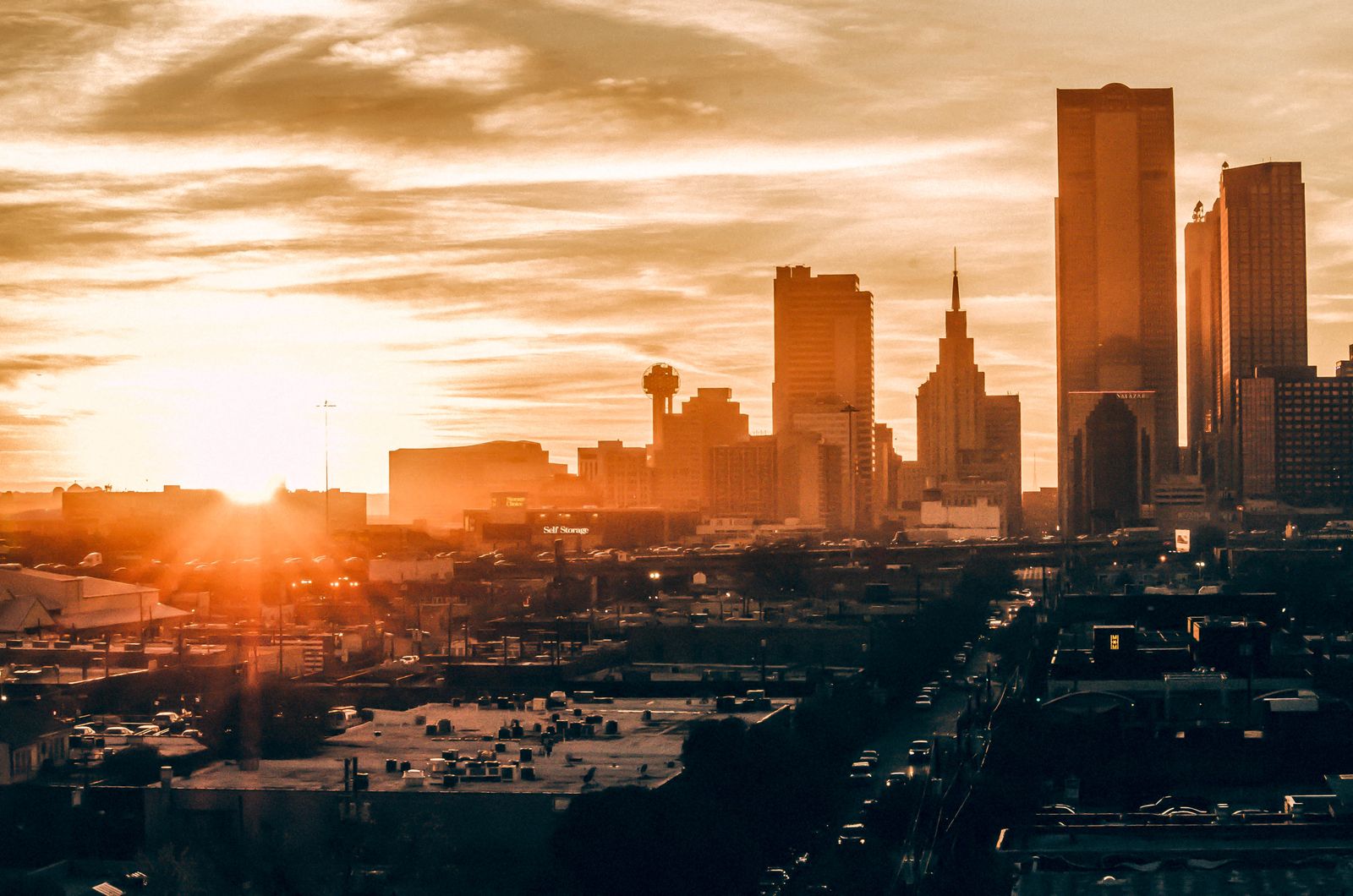
- Dallas skyline at sunset — photo by Orlando Vera, https://www.pexels.com/photo/822321/
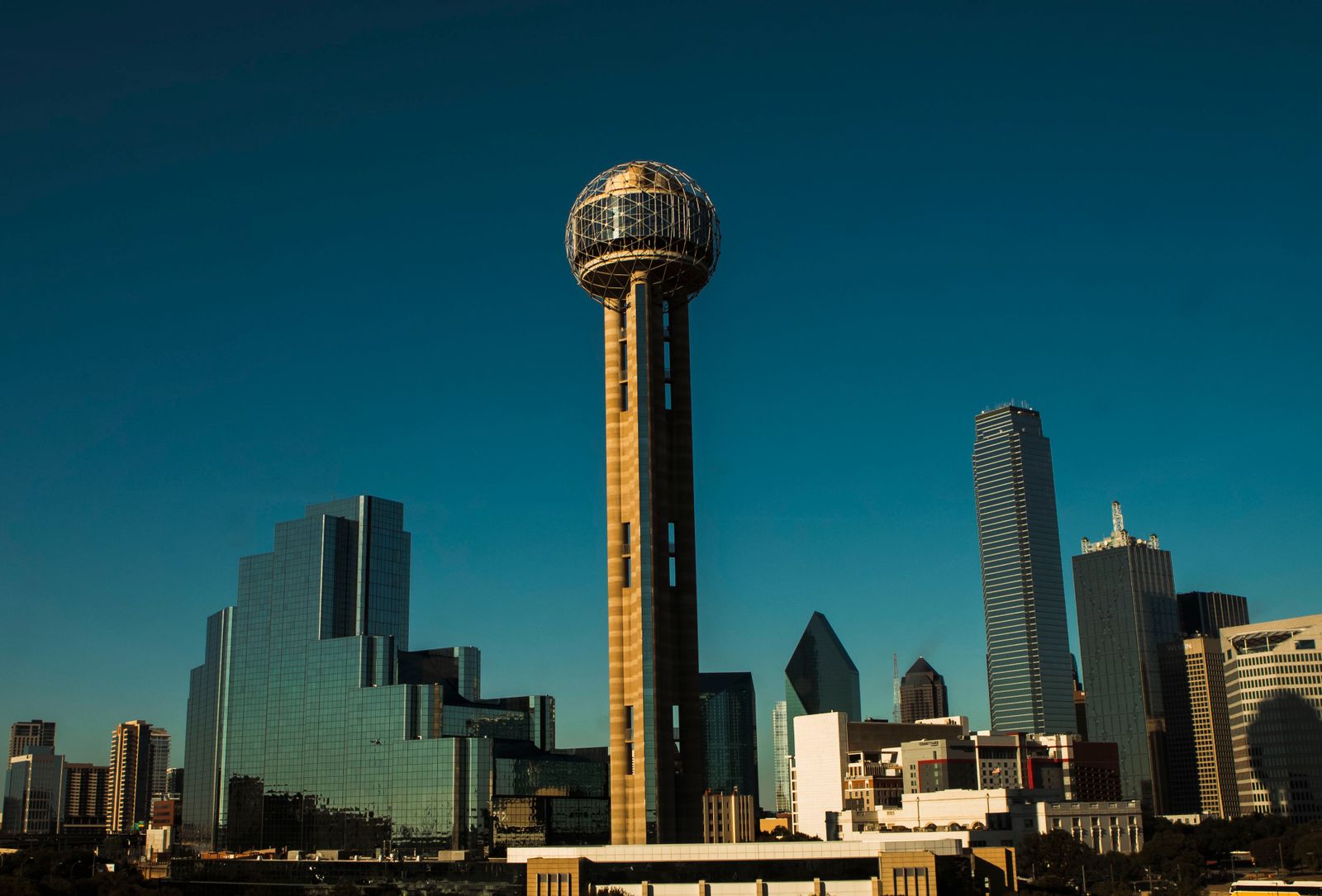
- Reunion Tower and Dallas skyline — photo by Talena Reese, https://www.pexels.com/photo/10482416/
More guides
- How to Find a Wedding Photographer: The Complete, Honest GuidePhotographers › Wedding Photographers
- How Much Does a Wedding Photographer Cost? Packages DecodedPhotographers › Wedding Photographers
- 10 Questions to Ask a Wedding Photographer Before You BookPhotographers › Wedding Photographers
- Wedding Photography Styles Explained: Documentary, Editorial, Traditional, Fine ArtPhotographers › Wedding Photographers
- Hiring a Wedding Photographer in California: Venue Light, Permits, and Price LevelsPhotographers › Wedding Photographers
- All Guides & ArticlesBrowse the full guides library