Photographers › Digital Imaging Photographers
Digital Imaging Photographers for Small Businesses: What Changes When It Is Not Personal
When you hire a photographer for your family, you are buying memories, and the transaction is mercifully simple: a session, a gallery, some prints. When your business hires one — for product shots, a menu, headshots, a launch campaign — almost every term of that simple transaction changes shape. The unit of pricing stops being the hour and becomes the image and the license. The photographer keeps the copyright, by law, unless a contract says otherwise. Your bookkeeper gets involved, because the IRS treats a business paying a photographer differently from a parent paying one. And the failure mode changes too: a disappointing family session costs you a wall portrait, while a disappointing product shoot costs you a launch date. This guide walks through what actually changes, line by line, so a first-time business buyer can read a commercial estimate the way a repeat buyer does.
Change one: you are buying deliverables and rights, not time
Consumer photography is priced by the sitting. Commercial and digital imaging work is priced by what you receive and what you may do with it. Three models dominate, and a good estimate often blends them:
Per image. Built for catalogs and e-commerce, where every product gets the same treatment. Published pricing guides put simple white-background product shots at roughly $25 to $175 an image depending on volume and complexity — one working product photographer's rate card sits at $90 a packshot with a ten-image minimum — while styled or lifestyle images with props, models, or sets run far higher, around $400 a final image on that same card, because the setup is the cost. Volume is your leverage: guides describe discounts stepping up from ten to fifteen images onward, reaching 25 to 40 percent off at fifty-plus images.
Day rate plus licensing. Built for campaigns and brand work. Commercial day rates commonly run $800 to $5,000 and up, and on top of the creative fee sits the license — priced by where the images run, for how long, and in how many markets. A few hundred dollars might license local web use; a national paid campaign can carry licensing of $10,000 or more for the same photographs. One pricing guide's worked example makes the gap concrete: a single product image with basic web and social use at $350 to $600 becomes $1,500 to $3,000 with national advertising rights.
Packages. Built for repeat small-business work — a launch package of ten products at three angles each plus two lifestyle scenes, delivered in web and marketplace-ready sizes. Packages are often the best value for a small business precisely because they pre-bundle the things first-timers forget to ask about: retouching, file variants, and usage.
| Line on the estimate | What it means | Typical range from published guides |
|---|---|---|
| Creative fee / day rate | The photographer's time and expertise on shoot days | $800–$5,000+ per day for commercial work |
| Per-image fee | Each final, retouched image delivered | $25–$175 white-background; ~$400 styled/lifestyle |
| Licensing / usage fee | The right to use images in specified media, territory, and period | A few hundred (local web) to $10,000+ (national paid campaign) |
| Retouching beyond standard | Post-production past the level defined in the quote | $50–$150 per image |
| Rush fee | Delivery inside 24–72 hours | +25–50% |
| Production expenses | Studio, props, styling, assistants, rentals — at cost or with a markup | Styling/art direction alone $300–$800 per day |
Read the estimate the way its writer built it: fees for the work, expenses for the stuff, licensing for the rights. If any of the three is missing, it is not free — it is unnegotiated, and it will surface later at the worst moment.

Change two: the copyright stays with the photographer
This is the clause that surprises every first-time business buyer. Under U.S. copyright law, the photographer owns the images from the moment of creation. What your business receives is a license — permission to use specified images, in specified ways, for a specified time. "Work made for hire," the doctrine that makes an employer the author, generally does not rescue a business hiring an independent photographer: for non-employees it applies only to a few narrow categories of commissioned work and only with a signed written agreement, which is why contractor agreements use an explicit assignment or a broad license instead.
Practically, three questions belong in every small-business photography contract:
- What exactly may we do with these images? Website, organic social, paid ads, packaging, trade shows, press — each is a use, and uses not named are not granted. If your launch plan includes packaging or paid media next year, license it now; extending a license mid-campaign costs more than buying it at the estimate stage, and using images beyond the license is infringement even though you "paid for the shoot."
- For how long, and where? One year of web use and perpetual use are different products with different prices. So are local and national.
- What do we receive, in what form? Final retouched files in the sizes your channels need (web, marketplace, print), the file format, and whether unedited or raw files are included — usually they are not, and asking is cheaper than assuming.
None of this is adversarial. Professional photographers expect these questions; the estimate format taught in commercial photography courses separates the creative fee from the usage fee precisely so both sides can see what is being bought. The red flag is the opposite: a photographer who says "you can just use them for whatever, forever" with nothing in writing. Verbal generosity evaporates when the business is sold, the photographer is acquired, or an image turns up in a competitor's lawsuit.
Change three: your bookkeeper joins the project
A family paying a photographer writes a check. A business paying one starts a paper trail:
- Collect a W-9 before work begins — not in January, when you are reconstructing the year. The photographer's W-9 tells you their legal name and entity type, which determines your reporting duties.
- Expect a 1099-NEC. Businesses that pay an unincorporated photographer $600 or more in a year for services generally must report it on Form 1099-NEC, furnished by January 31; one tax-filing guide puts IRS penalties for missing 1099s at $60 to $660 per form depending on lateness. Payments to corporations are generally excepted, which is why the W-9 comes first. Thresholds and rules change, so confirm the current year's requirement with your accountant — but build the habit now: every photographer your business pays gets a W-9 on file before the first invoice is paid.
- The expense is a business expense. Photography bought to sell products or promote the business is an ordinary marketing cost of the business, tracked like any other vendor spend — another reason the itemized estimate matters. Keep the contract, the estimate, and the license together in the vendor file; the license is a business asset with an expiry date, and someone should know when it lapses.
- Sales tax varies by state and by what is delivered — services, digital files, and physical products are treated differently in different states, as the state guides in this series detail. Read the tax line on the estimate rather than assuming it is an error, and ask if it looks wrong.

Change four: the service level is a production, and you are part of the crew
A consumer session needs a photographer and a subject. A business shoot needs a small production, and the estimate's expense lines — studio, styling, assistants, rentals, catering for a full-day crew — are not padding. What changes for you, the client:
The brief becomes a document. Shot list by product, angles per product, brand references, the exact file specifications your store or marketplace requires, and who approves images on the day. Businesses that skip the brief pay for it in reshoots.
Volume changes the failure math. A family session that goes wrong loses a dozen frames. A 200-product catalog shoot with a lighting inconsistency loses consistency across your whole store — which is why commercial photographers shoot tethered, reviewing images on a monitor as they go, and why your contract should specify a test batch or first-product approval before the full run.
Turnaround is a priced term, not a hope. Standard delivery for edited commercial work runs in days to weeks depending on volume; rush inside 72 hours legitimately carries a 25 to 50 percent premium in published guides. If the images feed a launch, the delivery date belongs in the contract with the same precision as the price.
Reshoots and revisions get defined. How many retouching rounds are included, what counts as a reshoot versus a new brief, and what a change order costs — commercial estimates commonly allow small overages within an agreed percentage (often around 10 percent) and require written approval beyond it. Agreeing to that machinery in advance is what makes a disagreement a paperwork event instead of a relationship event.
Choosing the photographer, as a business
This site lists 354 digital imaging photographers and more than 5,700 commercial and industrial photographers — the bench is deep, so buy like a business. Ask for work in your exact category (packshots are a different discipline from lifestyle, and both differ from headshots). Ask what their standard license includes and what your launch plan would cost on top of it. Ask for the estimate in the three-part form — fees, expenses, licensing — and be politely suspicious of any quote that is a single round number with no structure behind it. Then do the unglamorous business things: W-9, contract, delivery date, license in the file.
Do that, and the difference between personal and business photography stops being a source of expensive surprises and becomes what it should be: a set of professional terms that protect the launch you are paying to create.
Sources
- Lars Miller Media, product photography pricing guides — establishes per-image pricing ($90 packshots with a 10-image minimum, ~$400 styled images), day rates of $1,200–$3,500, retouching at $50–$150 per image, rush premiums of 25–50%, volume discounts reaching 25–40% at 50+ images, and the $350–$600 vs. $1,500–$3,000 effect of national advertising rights.
- Aftershoot, 2026 photography pricing guide — establishes commercial day rates of $800–$5,000+ plus licensing, with licensing from a few hundred dollars for local web use to $10,000+ for national paid campaigns.
- HSM University, PHOT-310 commercial photography lesson on estimates and usage licensing — establishes the three-part estimate structure (creative fee, usage/license fee, expenses), estimate-vs-quote practice, and change-order conventions.
- BoomTax, "Do I Need to File 1099s for Photographers?" — establishes the 1099-NEC reporting rule for businesses paying photographers, the $600 threshold, and penalties of $60–$660 per form.
- LegalClarity, guides to hiring independent contractors — establishes that contractor work is not automatically the hirer's property under copyright law, the narrow scope of work-made-for-hire for non-employees, and W-9 collection before work begins.
Photographs
- Business owner at a laptop — photo by Andrea Piacquadio, https://www.pexels.com/photo/3769021/
- Styled gift-box flat-lay — photo by George Dolgikh, https://www.pexels.com/photo/1666065/
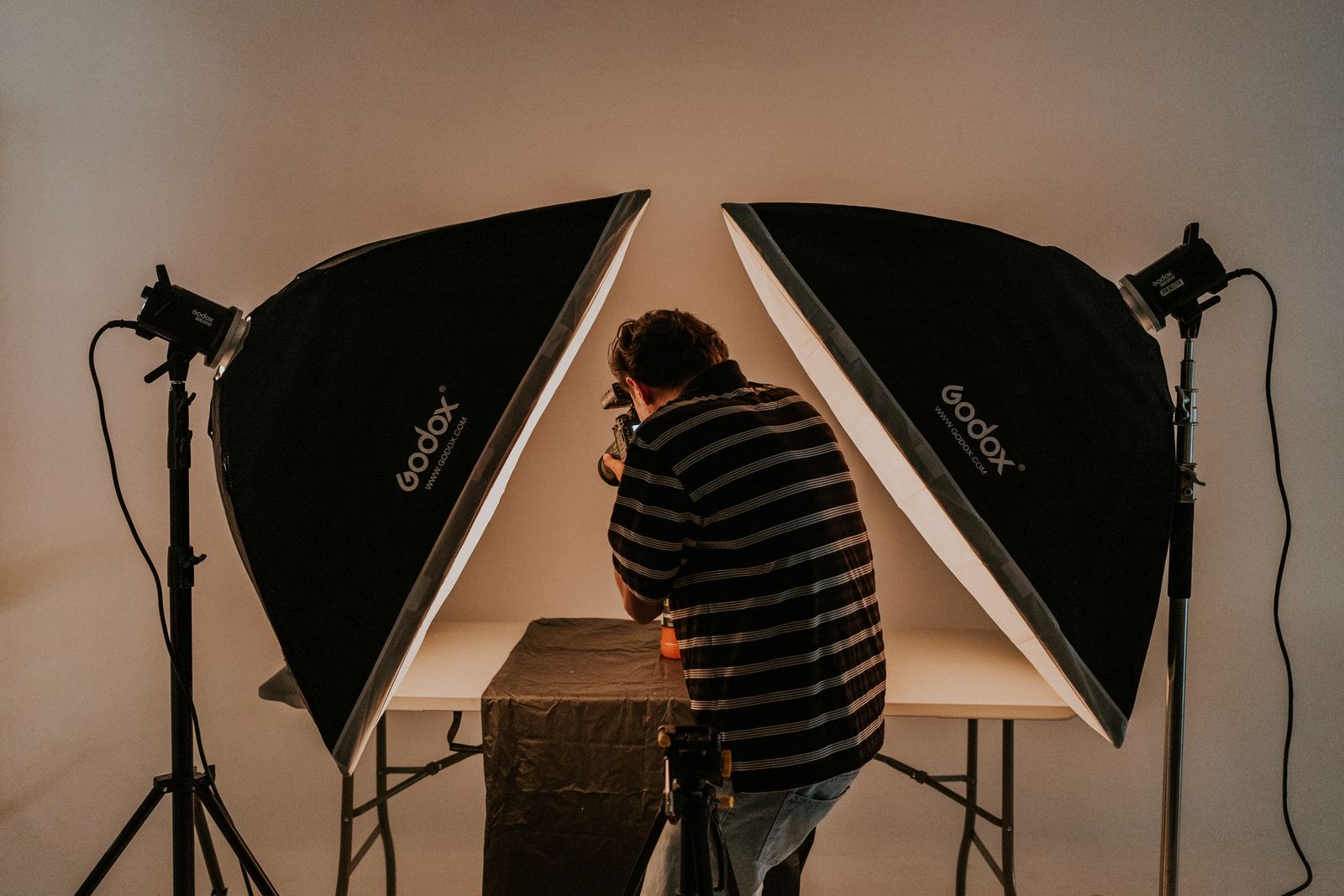
- Photographer working in a studio — photo by Amar Preciado, https://www.pexels.com/photo/17094508/
More guides
- How to Find a Wedding Photographer: The Complete, Honest GuidePhotographers › Wedding Photographers
- How Much Does a Wedding Photographer Cost? Packages DecodedPhotographers › Wedding Photographers
- 10 Questions to Ask a Wedding Photographer Before You BookPhotographers › Wedding Photographers
- Wedding Photography Styles Explained: Documentary, Editorial, Traditional, Fine ArtPhotographers › Wedding Photographers
- Hiring a Wedding Photographer in California: Venue Light, Permits, and Price LevelsPhotographers › Wedding Photographers
- All Guides & ArticlesBrowse the full guides library