Photographers › Aerial Photographers
Drone Photography for Real Estate: What Sells a Listing and What's a Gimmick
Every listing presentation now includes the drone pitch, and it usually arrives with a number: homes with aerial photography sell 68 percent faster. That figure — drawn from MLS statistics and repeated by the National Association of Realtors' summaries, marketing firms, and roughly every drone operator with a website — has done more to sell drone packages than any photograph ever taken. It may even be broadly true. What it does not tell you is the only thing an agent or a seller actually needs to know: whether a drone will help this listing, on this lot, in this neighbourhood — or whether you are about to pay $300 for a flattering photograph of your own roof shingles.
I spent years selling photography packages in another genre, and the structure of the pitch is identical. A real benefit, measured on average across thousands of listings, is used to sell a specific product on a specific property where the average may not apply. Aerials genuinely sell some listings. On others they are decoration, and on a few they are actively harmful, showing buyers the motorway, the water tower, and the neighbour's unpermitted extension in glorious context. This guide separates the three.
What a drone can show that the ground cannot
A camera at head height answers one question well: what does this house look like? A camera at 100 feet answers the questions buyers actually lose sleep over. How big is the lot, really — where does it end, and what shape is the usable part? What is behind the fence? How close is the water, the park, the school, the beach access? How does the house sit among its neighbours — overlooked, or private? Where do the driveway, the outbuildings, the pool, and the garden fall in relation to each other?
That is information, not ornament, and it is why aerials earn their fee on a recognisable class of property: land, first of all — acreage, lots, farms, and any listing where the parcel is a substantial part of the value. Waterfront and view properties, where the selling point literally cannot be photographed from inside the fence. Large or irregular lots whose shape a ground photograph misrepresents. Properties with outbuildings, pools, courts, or guest houses that need a map more than a portrait. And neighbourhood listings — a house whose premium is its street, its cul-de-sac, its walk to the shore — where context is the product.
Eye-tracking research on listing pages underlines the stakes: buyers spend the majority of their time on photographs rather than descriptions, and the first exterior image gets the most attention of all. An aerial that answers the lot-and-location questions in one frame is doing selling work no interior photograph can do.
The evidence, with its limits stated
The 68-percent-faster figure traces to MLS-based comparisons repeated across industry sources for years, and companion figures travel with it: listings with aerial imagery drawing substantially more online views — figures around 94 percent more are commonly cited — and buyers around 65 percent more likely to book an in-person showing. Treat these the way you would treat any statistic supplied by the people selling the service. The comparisons are not randomised: houses that get drone photography are disproportionately larger, pricier, better prepared, and handled by agents who invest in marketing generally. Some of the effect is the drone. Some of it is everything else those listings had going for them.
But the honest conclusion is not that the numbers are invented — it is that the mechanism is plausible and visible. Portals rank by engagement, buyers shortlist from thumbnails, and a listing that shows the lot clearly gets clicked, saved, and shown. The pragmatic question was never "do aerials work on average?" It is "does my listing have an aerial story?" If the answer is land, water, view, privacy, or context — yes, and the fee is trivial against the price of the asset. If the answer is "the roof, from above, at noon" — the average was never about you.
The shots that sell, ranked
The high establishing shot. One frame, house centred, lot boundaries legible, surroundings in view. This is the workhorse — the image that goes first or second in the gallery and does the orienting for everything after it. If you buy only one aerial, buy this one.
The low oblique. Taken at perhaps 30 to 50 feet, angled rather than straight down, this is the aerial version of a portrait: the house still has a face, but the grounds and setting show around it. It flatters houses and reads instantly in a thumbnail feed.
The boundary and context pass. For land and large lots: shots that show the parcel's extent, access, and neighbours, sometimes with boundary lines drawn in editing. Unspectacular, decisive. Buyers of land buy information.
The approach video. A slow push-in from the street or a gentle orbit, cut to 60 to 90 seconds for the listing page and 15 to 30 seconds for social. Video earns its premium when the approach is genuinely an experience — a tree-lined drive, a shoreline, a valley opening up. It earns nothing on a suburban close where the approach is eleven seconds of other people's driveways.
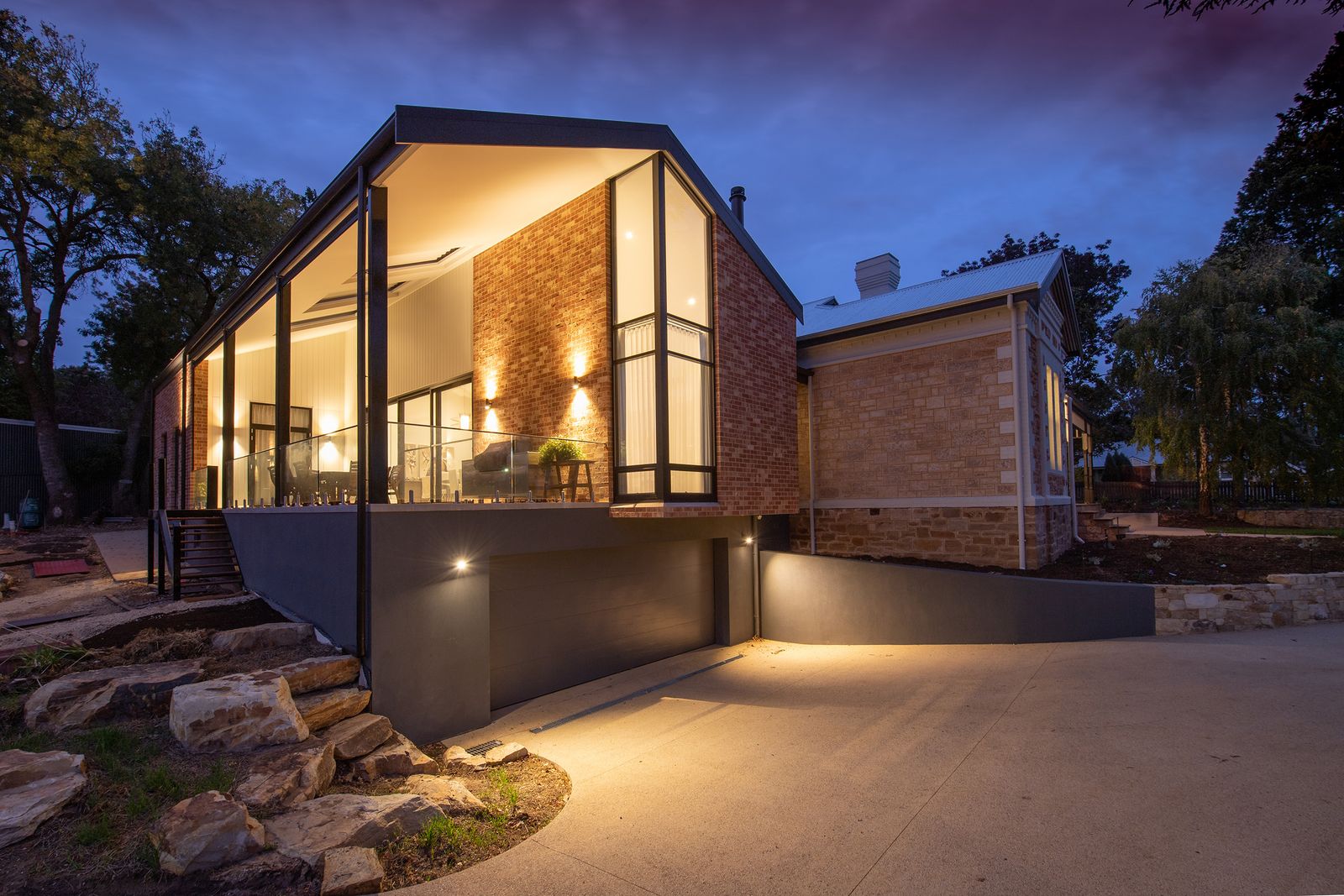
Twilight from the air. The strongest single upgrade in the catalogue when it works: deep blue sky, every window lit, pool glowing. It works on houses whose evenings are the selling point, and it costs a second visit or a long wait on site, which is why it is priced as one.
The gimmicks, named
The straight-down roof shot of an ordinary house on an ordinary lot. It documents the shingles, the gutters, and the exact shape of a roof the buyer will never see again. Included in packages because drones can take it in four seconds, not because buyers ask for it.
The stratospheric neighbourhood shot from maximum altitude, in which the listing is one roof among four hundred. Context is valuable at 100 feet; at 400 it is a screensaver.
Aerials on a small interior lot with nothing to contextualise. A tight urban lot, neighbours on both sides, no view, no water, no land. The drone will faithfully reveal all of that, plus the adjacent roofs. You have paid to advertise the listing's weakest feature.
Drone video of an empty interior fly-through on a modest listing — a different product, usually shot on a small indoor drone, and occasionally lovely, but on most homes it duplicates what a walkthrough video and a floor plan do more clearly, at more cost.
Aerials ordered before the ground photography is competent. This is the most expensive gimmick of all, and it is about sequencing. Listings live or die on the interior stills and the lead exterior. A seller who spends on aerials while the interiors are shot on a phone has bought the garnish and skipped the meal.
What it costs
Published 2026 pricing is consistent enough to budget against. A standard residential aerial shoot runs about $150 to $350 for 10 to 15 edited stills; add-on pricing bundled with a ground shoot is lower — published state-by-state figures put drone add-ons roughly between $50 and $250 depending on the market, with California and New York at the top of that range. Photos-plus-video packages run about $350 to $600, and full packages adding floor plans or tours reach $450 to $800. Standalone aerial sessions for lots and land are commonly listed around $199 for a set of about a dozen images. Commercial properties sit higher, $500 to $1,500 and up.
| Package | Typical price | Worth it when |
|---|---|---|
| Aerial stills add-on | $50–$250 | Bundled with a ground shoot; the lot or setting carries information |
| Standalone aerial session | $150–$350 | Land, waterfront, or a relisting that needs a new lead image |
| Stills + aerial video | $350–$600 | The approach or setting is an experience, not just a location |
| Twilight aerials | Premium / second visit | Evening light, lit windows, and a pool or view are the selling point |
The legal part, which is not optional
Flying a drone to photograph a property for sale is commercial work under federal law, full stop. The FAA's own examples of flights requiring its Part 107 rules begin with taking photos to help sell a property or service. The pilot must hold an FAA Remote Pilot Certificate, the drone must be registered — $5 per drone for three years on the commercial register — and the flight must obey airspace rules, which near airports can mean advance authorisation, altitude limits, or no flight at all. None of this depends on whether the aerials were paid for, discounted, or thrown in free; the rule follows the purpose of the flight.
For an agent, the practical duties are simple. Ask to see the certificate before the shoot, not after an incident. Ask about liability insurance. And treat a pilot who shrugs at either question as disqualified, however good the portfolio is — the market is deep enough that you never need the unlicensed option. This site alone lists 877 aerial photographers, within more than 32,000 photography listings and 5,719 commercial and industrial photographers, so a certified pilot is a search, not a favour.
A decision rule you can use in the listing appointment
Ask three questions. Does the lot, land, water, view, or setting carry part of the price? Will an aerial frame answer a question a buyer would otherwise have to drive out to resolve? Is the ground photography already as good as it can be? Two yeses: book the drone, and brief the pilot on the establishing shot and the boundary pass before the orbit video. One yes: book stills only, as an add-on. None: spend the money on the interiors, a floor plan, or a real twilight session — the parts of the package that sell every listing, not just the ones with something worth seeing from the sky.
Sources
- HomeTrack, "How Drones are Changing Aerial Photography in Real Estate" — MLS statistic that homes with aerial images sold 68 percent faster; eye-tracking findings on buyer attention to listing photographs. https://www.hometrack.net/blog/drones-changing-aerial-photography-real-estate
- Valley View Photo, "Drone Photography for Real Estate" (Phoenix) — the 68 percent figure's provenance, 94 percent more views and 65 percent more showings (HomeJab listing metrics), and the case that the effect varies by property. https://www.valleyviewphoto.com/blog/drone-photography-real-estate-phoenix-arizona
- AeriusView, "Drone Real Estate Photography: Costs & ROI" (2026) — standard residential aerial pricing of $150–$350 and package construction. https://aeriusview.com/blog/drone-real-estate-photography-deals/
- Vantage Aerial Works, "How Much Does Real Estate Drone Photography Cost?" — package ranges from basic stills to full packages, and Part 107 requirements. https://vantageaerialworks.com/blog/real-estate-drone-photography-pricing
- US Realty Training, "Real estate drone photography: a guide for new agents" — Part 107 certification for listing work, $150–$500 package range, DIY versus hiring costs. https://www.usrealtytraining.com/blogs/real-estate-drone-photography-guide
- October, "Drone Real Estate Photography: FAA Rules, Cost and When It Pays" — add-on pricing by state and the FAA's listing-photography example. https://www.october-ai.com/guides/drone-real-estate-photography
Photos: House at twilight — photo by Littlehampton Bricks, https://www.pexels.com/photo/modern-house-facade-with-glowing-lights-at-dusk-4626268/ ; Living room — photo by Max Vakhtbovych, https://www.pexels.com/photo/sofa-with-cushions-in-living-room-5998023/ ; Kitchen — photo by Saviesa Home, https://www.pexels.com/photo/kitchen-island-2089698/
More guides
- How to Find a Wedding Photographer: The Complete, Honest GuidePhotographers › Wedding Photographers
- How Much Does a Wedding Photographer Cost? Packages DecodedPhotographers › Wedding Photographers
- 10 Questions to Ask a Wedding Photographer Before You BookPhotographers › Wedding Photographers
- Wedding Photography Styles Explained: Documentary, Editorial, Traditional, Fine ArtPhotographers › Wedding Photographers
- Hiring a Wedding Photographer in California: Venue Light, Permits, and Price LevelsPhotographers › Wedding Photographers
- All Guides & ArticlesBrowse the full guides library