Photographers › Events Photographers
Event Photography in Colorado: Costs, Rules and Local Reality
National advice about event photography assumes a national event: a room, a schedule, a photographer, a price per hour. Colorado keeps the room and the schedule and changes almost everything else. Your outdoor reception sits a mile closer to the sun than the same reception in Chicago. Your summer afternoon has a standing appointment with a thunderstorm that builds over the foothills and arrives, sometimes, in half an hour. Your park ceremony may need a city permit because your photographer's second tripod crossed a legal line you have never heard of. And your venue might be ninety minutes of mountain road from the photographer's front door, which is why the travel line on a Colorado quote is not padding.
This is a Colorado guide, written from Colorado sources: what event coverage costs along the Front Range, which Denver rules actually bite, and how altitude and weather should change the way you book, schedule, and brief the person with the camera.
What event photography costs in Colorado
Colorado corporate event coverage — conferences, trade shows, company celebrations — runs about $200 to $350 per hour in 2026 market guides, with entry-level photographers around $275 an hour and established corporate specialists at $400 to $500 or more. Most photographers set a two-hour minimum, so the realistic floor for professional coverage is $400 to $700 before travel. Published Denver package rates tell the same story from the other direction: one Denver event photographer lists $450 for a single hour, $795 for two hours, $1,495 for a four-hour half day, and $2,595 for a full eight-hour day including priority turnaround. At the published-price end of the market, a national service booking Denver festivals and ceremonies charges $250 for the first hour and $100 for each additional hour — five hours of festival coverage for $650 — with every photo edited and a gallery in about a week.
The structure matters more than the headline. Multi-day work discounts: a worked example in the Colorado pricing guide prices a two-day conference at $225 an hour against a $250 single-day rate. Add-ons are where budgets leak — rush editing around $300, a same-day social-media gallery around $300, an executive headshot station around $200, a photo booth around $800 on a trade-show package. And then there is the line item that is genuinely Coloradan:
Travel. Standard Denver-area practice is about $1 per mile plus tolls and parking. In a state where a Boulder photographer shoots in Colorado Springs, a Denver photographer covers a Breckenridge wedding, and "metro area" can mean a two-hour round trip on I-25, travel is not a footnote — on mountain work it can rival an hour of coverage. Get it quoted as a number, not discovered as one.
| Coverage | Typical Colorado price | Notes |
|---|---|---|
| Corporate / conference, per hour | $200–$350 | Specialists $400–$500+; 2-hour minimums common |
| Single hour (package rate) | ~$450 | Denver package example; editing and gallery included |
| Half day (4 hours) | ~$1,495 | Denver package example |
| Full day (8 hours) | ~$2,595 | Includes priority turnaround in the example |
| Festival / community event, 5 hours | ~$650 | Published-rate service: $250 first hour + $100/hr |
| Travel | ~$1 per mile | Plus tolls and parking; mountain distances add up |
For scale: this site lists 721 event photographers nationally in its directory, and Colorado buyers from Denver to the ski towns are drawing on the Front Range's share of them — deep enough that a good brief sent three weeks out should return real choices, thin enough in peak season (June through September, plus December's holiday-party crush) that the best corporate shooters book out.
Denver's permit rules, in plain English
If your event touches Denver public property — a park ceremony, a festival in a city park, portraits on a city sidewalk — the City and County of Denver's Public Event & Film Permitting office may want a Film Operational Permit (FOP) for the photography. The triggers, under the city's current film rules, are specific and worth knowing exactly:
- People: 25 or more cast and crew in a Denver park, or 10 or more on a city sidewalk.
- Equipment: anything beyond handheld gear and a single tripod. The city's own list of examples includes drones, tables and tents, C-stands, multiple tripods, props, and generators of 5 kW or more. Read that again if your photographer works with an off-camera flash on a stand in a park: the stand is the permit trigger, not the camera.
- Impact: blocking a sidewalk so a continuous five-foot ADA-accessible path can't be maintained, closing streets, using public parking, or asking for exclusive use of park space.
- Exemptions: shooting outside normal park hours or otherwise asking the city to bend its own rules.
Just as useful is what usually does not need a permit: filming entirely on private property, same-day news coverage, casual group photography, and — importantly for most event buyers — photography at an already-permitted event, unless drones are involved. If your festival or wedding already holds an event permit, your photographer's stills coverage generally rides on it; the drone add-on does not. Filming hours in Denver parks are limited, starting at 6:00 a.m., and applications involving drones, closures, police support, or exclusive park use need lead time — plan on at least ten business days, and two weeks is the safer habit.
Three Colorado complications sit on top of Denver's rules. First, jurisdiction fragments fast: Red Rocks Amphitheatre runs its own application through Denver Arts & Venues, state parks such as Chatfield answer to Colorado Parks and Wildlife, and Aurora, Lakewood, Boulder, and Colorado Springs each set their own rules — a multi-stop event day can need more than one conversation. Second, Denver International Airport and Centennial Airport put much of the metro under controlled airspace, so any drone work layers FAA authorization on top of local permission. Third, permitted shoots commonly need proof of liability insurance — around $1 million per occurrence is the usual ask — which your photographer, not you, should be able to produce on request.
Altitude is a lighting condition
Denver sits at 5,280 feet, and Colorado event venues climb from there — 6,000 feet in Colorado Springs, 8,000 to 10,000 at the mountain resorts. Thinner air means stronger ultraviolet and a midday sun that is harder and more contrasty than the same hour at sea level: shadows go darker, highlights blow out faster, and skin tones take on a glare that no amount of editing fully forgives. Local production crews schedule around it as a matter of routine — exteriors in the morning and late afternoon, faces indoors or in open shade at midday — and you should judge a Colorado photographer's portfolio partly on whether they already work this way. A portfolio full of noon ceremonies with squinting guests and black-shadow eye sockets is a photographer fighting the altitude and losing.
Altitude also works on people. Guests who flew in that morning from sea level feel it — fatigue, headaches, and alcohol hitting harder at elevation are staples of Colorado event planning for a reason. For photography the practical consequences are scheduling ones: build slack into a mountain timeline, expect the portrait session to move slower than it would at home, and do not schedule the one unrepeatable group photograph for the last ten minutes of cocktail hour at 9,000 feet.
The afternoon storm is a scheduling rule, not a risk
Colorado's famous "300 days of sunshine" is a slogan, not a forecast. The Front Range pattern from June through August — sharpening in July as the North American Monsoon feeds moisture over the state — is convective: storms build over the mountains late morning, roll east onto the I-25 corridor in the afternoon, and can go from clear sky to hail in about thirty minutes. Hail season runs roughly mid-April to mid-September, and the Front Range sits in what insurers call Hail Alley; National Weather Service briefings in June 2026 warned of hail two to three inches across in strong storms. Spring adds its own trap — a single April day can start at 28 degrees and reach 65 by afternoon, and snow can cancel an outdoor plan well into May. Chinook winds off the foothills can gust past 40 mph, which topples unweighted light stands and ruins outdoor audio. Winter, by contrast, is cold but often bright, with snow bouncing light beautifully — and batteries draining fast below freezing.
What this means for booking:
- Put the unrepeatable outdoor moments in the morning. Local crews treat 6 to 11 a.m. as the reliable summer window. If the ceremony must be late, front-load the portraits and the big group shot before the storm window, not after.
- Contract a weather plan, not a weather hope. A covered backup location, a postponement clause, and a photographer who has shot the plan-B room before. Ask what happens to the fee if lightning ends the outdoor portion — in writing.
- Sandbags are a Colorado tell. A photographer who works outdoors here weights every stand. Ask. The answer separates locals from visitors faster than any portfolio.
- Fall is the professional's season. September and October bring clear skies, calm winds, and aspen gold in the high country peaking in late September — which is why fall dates, paradoxically, book as hard as June.
Briefing a Colorado photographer
Everything above compresses into a better brief. Give the venue's exact address and elevation if it's a mountain property. Give the run-of-show with the outdoor items flagged and a named indoor fallback for each. State the permit situation honestly — is this a permitted event, a private venue, or a park, and who holds the paperwork? Ask for the photographer's insurance certificate if the venue or city requires one. Agree the travel fee as a number. And agree turnaround with the season in mind: a week for a standard edited gallery is a normal published promise in this market, and same-day social selects are a paid add-on, not a favor.
Questions to ask before you book
- Have you shot at this venue — or at this elevation — before, and may I see that gallery?
- What is your weather plan for an outdoor event, and what happens to our fee if storms cut it short?
- Do we need a Denver Film Operational Permit for what you're bringing — stands, a second tripod, a drone — and who files it?
- Can you provide a certificate of liability insurance if the venue or city asks?
- What is the travel charge to our venue, as a fixed number?
- How many edited images per hour do you typically deliver, and what do rush or same-day galleries cost?
- Do you weight your stands and carry backup bodies and cards?
The short version
Colorado event photography costs what it costs elsewhere — $200 to $350 an hour for solid corporate work — plus the three local taxes nobody can negotiate away: distance, altitude, and weather. Book a photographer who prices travel honestly, works the morning for outdoor moments, treats a second light stand in a Denver park as the permit question it is, and has a plan B they've actually shot in. Do that, and the state's famous light will do what it does on the good days: make an ordinary event look like it was staged in the mountains on purpose.
Sources
- Monarch Event Photography, "Corporate Event Photography Pricing in Colorado: 2026 Rates & Budget Guide" — $200–$350/hr standard range, minimums, $1/mile travel practice, worked conference budgets, add-on prices. https://www.monarcheventphotography.com/corporate-event-photography-pricing-colorado/
- Alyson McClaran Photography, Denver — published packages: $450 / 1 hr, $795 / 2 hrs, $1,495 / 4 hrs, $2,595 / 8 hrs. https://alysonmcclaran.com/
- MacroSnaps, Festival Photographer in Denver, CO — published $250 first hour + $100 per additional hour; 5-hour festival coverage $650. https://www.macrosnaps.com/festival-community-event-photography/denver-co
- City and County of Denver, Public Event & Film Permitting, "Film and Photography" — Film Operational Permit criteria (25 in a park / 10 on a sidewalk, equipment beyond a single tripod, ADA path, exemptions) and what typically needs no permit. https://www.denvergov.org/Government/Agencies-Departments-Offices/Agencies-Departments-Offices-Directory/Public-Event-Film-Permitting/Film?OC_EA_EmergencyAnnouncementList_Dismiss=8a0ae93e-ef96-4ecb-b685-0ac8ac83a5a7&lang_update=638482213840856575
- Expo Productions, "How to Secure Permits for Filming in Denver's Public Spaces" and "Weather Considerations for Outdoor Video Shoots in Colorado" — permit jurisdictions (Red Rocks, state parks), $1M insurance norm, altitude light, storm, wind, and seasonal patterns. https://expoproductions.com/how-to-secure-permits-for-filming-in-denvers-public-spaces/
- Big Wave, "Best Video Production Company in Denver: How to Choose" — Front Range distances, altitude light, and the August 2025 Denver film-rule thresholds. https://meetbigwave.com/blog/best-video-production-company-denver
- First In Denver, "Denver at 25 to 35: Planning Outdoor Nights Around Weather Whiplash" — NWS Boulder storm and hail briefings, hail-season dates. https://www.firstindenver.com/guides/denver-at-25-to-35-hail-and-weather-2026-11-20
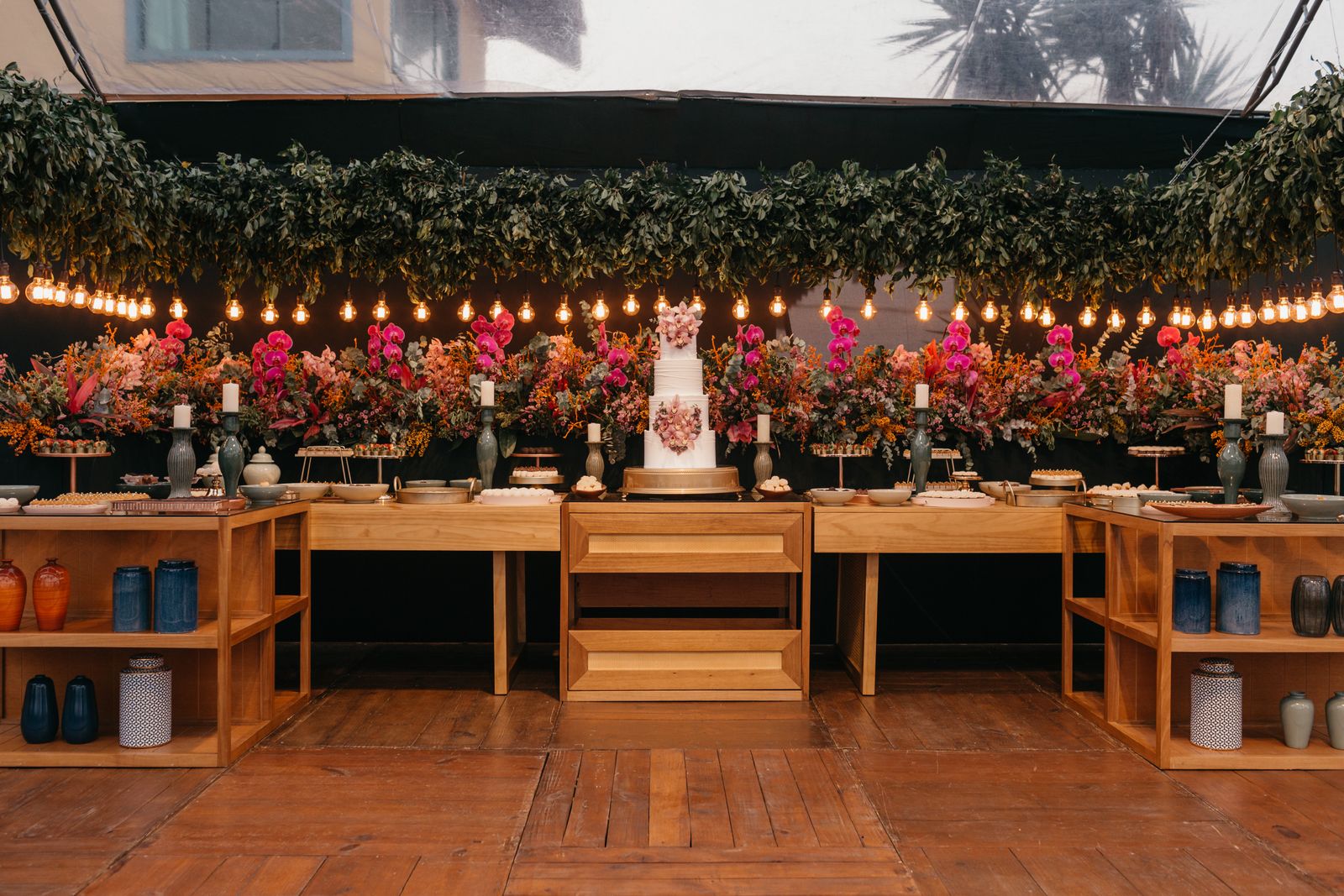
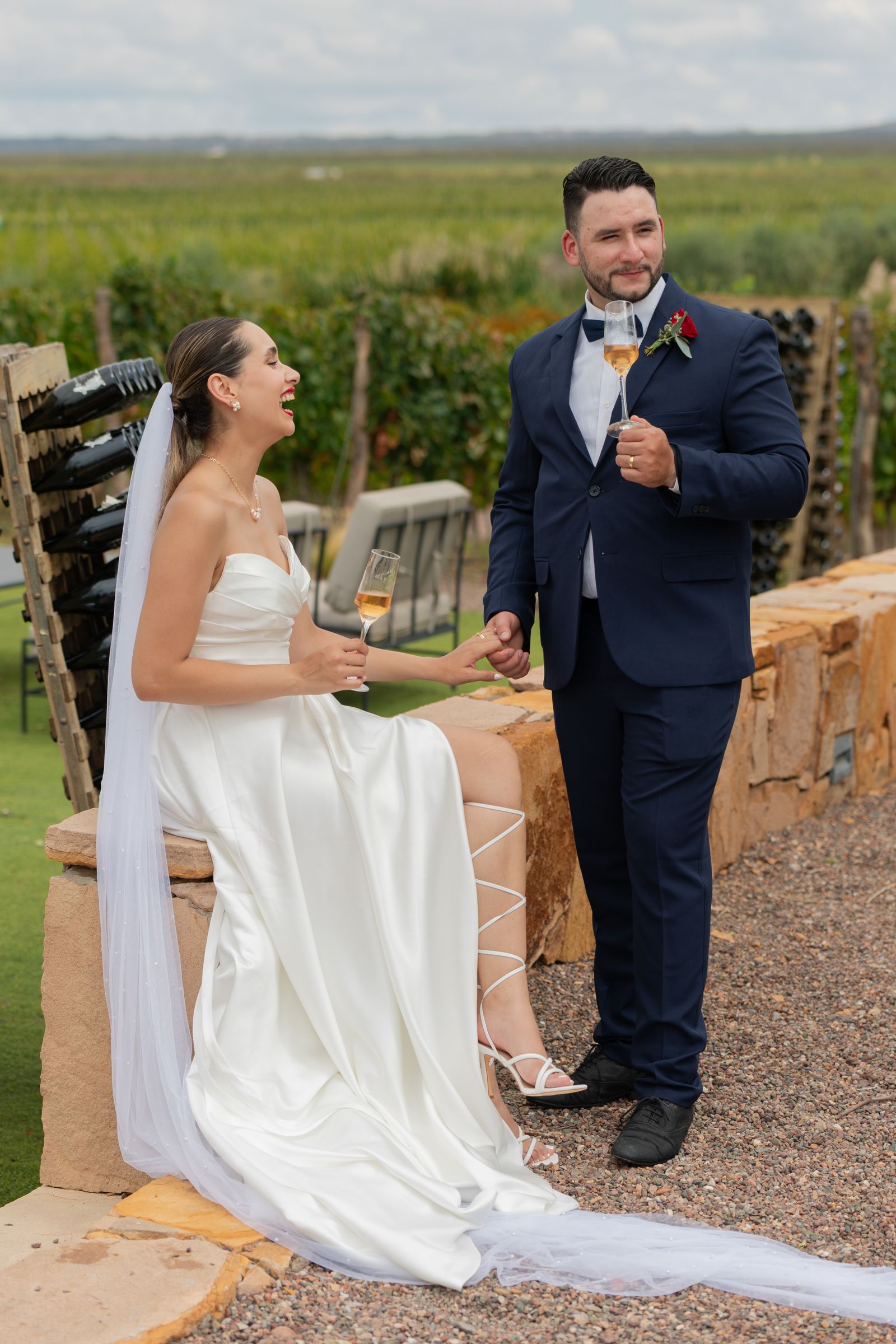
- Photographs: reception tables — photo by Jonathan Borba, https://www.pexels.com/photo/9714791/ ; outdoor celebration — photo by Lilen Diaz, https://www.pexels.com/photo/joyful-wedding-couple-toasting-in-mendoza-vineyard-31531920/
More guides
- How to Find a Wedding Photographer: The Complete, Honest GuidePhotographers › Wedding Photographers
- How Much Does a Wedding Photographer Cost? Packages DecodedPhotographers › Wedding Photographers
- 10 Questions to Ask a Wedding Photographer Before You BookPhotographers › Wedding Photographers
- Wedding Photography Styles Explained: Documentary, Editorial, Traditional, Fine ArtPhotographers › Wedding Photographers
- Hiring a Wedding Photographer in California: Venue Light, Permits, and Price LevelsPhotographers › Wedding Photographers
- All Guides & ArticlesBrowse the full guides library