Photographers › Events Photographers
Event Photography in Iowa: Permits, Prices and Local Know-How
Iowa's event calendar looks gentle from a distance: weddings in barns and ballrooms, reunions, graduations, county fairs, corporate gatherings in Des Moines. Look closer and it has a spine of very large, very specific occasions — above all the Iowa State Fair, eleven days in August that drew a record 1,218,834 people in 2026 — plus a tax rule that makes Iowa one of the clearest states in the country about photography, and weather that includes a word, derecho, most states never have to plan around. If you are a couple or a family planning an event in Iowa, this guide covers what event photography costs here, when the state's calendar will compete with you for photographers, what permits and venue rules actually apply, and the Iowa sales-tax treatment that should appear, correctly, on your invoice.
On licensing: Iowa does not license event photographers. The state's licensing boards cover professions from cosmetology to engineering; photography is not a licensed trade in Iowa. Your protection is the standard one — contract, insurance, references, and a full event gallery — plus one Iowa-specific check below: whether your photographer understands the state's tax rule, because in Iowa the tax is not optional and it is not delivery-dependent.
What event photography costs in Iowa
Iowa pricing sits below the coastal metros and, usefully, some of it is published down to the hour. One photography company working statewide in Iowa publishes a single rate card for events of every kind: photography at $250 for the first hour and $100 for each additional hour, with a two-hour minimum, every photo edited and retouched, delivered in an online gallery in about a week. On that card, the typical bookings price themselves: a two-hour rehearsal dinner is $350, a five-hour festival or community event is $650, a six-hour wedding is $750. Videography from the same company runs $300 for the first hour and $200 for each additional hour.
Wedding-and-event packages from Des Moines' larger bundled providers sit higher, as packages do: one Des Moines company lists six hours of photography with up to 600 gallery images at $1,995, eight hours with up to 800 images at $2,195, and ten hours with a second photographer for six of them and up to 1,200 images at $3,195 — each including free downloads and a print release. Between the hourly card and the package card, you have the honest shape of the Iowa market: straightforward event coverage is genuinely affordable here, and full wedding days from established Des Moines, Cedar Rapids, and Quad Cities studios price in the low thousands, not the coastal five figures.
| Event | Typical Iowa cost | Basis |
|---|---|---|
| Rehearsal dinner or welcome party (2 hours) | ~$350 | Published statewide hourly card: $250 first hour + $100 each additional |
| Festival or community event (5 hours) | ~$650 | Same hourly card; typical festival booking length |
| Wedding, hourly model (6 hours) | ~$750 | Same hourly card, one photographer, all images edited |
| Wedding package, Des Moines (6–8 hours) | $1,995–$2,195 | Published packages: 600–800 gallery images, downloads and print release included |
| Wedding package with second photographer (10 hours) | ~$3,195 | Published premium package, up to 1,200 images |
Two Iowa pricing habits to know. First, travel: Iowa events are spread across a big, rural state, and photographers price distance honestly — some fold travel into the first hour and charge one rate statewide, while others add mileage beyond a home radius. A Des Moines photographer shooting your reception in Decorah or Storm Lake is driving hours, and the quote should say what that costs. Second, harvest and fair season: late summer and early autumn are when Iowa's event demand, farm schedules, and wedding season collide, and the photographers everyone wants are booked accordingly.
The State Fair effect, and the rest of Iowa's calendar
Every Iowa event planner works around one immovable object: the Iowa State Fair, held at the fairgrounds in Des Moines each August — August 13 to 23 in 2026, with future dates following the same mid-August pattern (August 12–22 in 2027). The 2026 fair set all-time records: 1,218,834 total attendance, a single-day record of 130,654, and a sold-out Grandstand show of 17,360. For photography, the fair matters three ways. It absorbs the state's event workforce — photographers, videographers, and crew take fair work, media work, and exhibitor work for those eleven days. It fills Des Moines' hotels and venues, which pushes wedding and reunion logistics in the capital into competition with a million visitors. And it anchors a season: county fairs run across Iowa through the summer, each with its own photography demand from organizers, exhibitors, and families.
The practical advice is simple. If your event is in the Des Moines area in mid-to-late August, book your photographer early and expect fair-season pricing and fair-season traffic. If your event is elsewhere in Iowa in August, ask your photographer directly whether they take fair work — many do, and their August availability is built around it. Beyond the fair, Iowa's calendar has two more local rhythms: graduation season in May, when university and high-school celebrations in Iowa City, Ames, Cedar Falls, and Des Moines compete for the same photographers in the same three weekends; and autumn, when harvest schedules shape rural event timing in a way no national guide will ever mention — an Iowa farm-family wedding in October is planned around the combine as much as around the venue.
Weather with names: derecho, flood, and winter
Iowa weather planning starts with a vocabulary lesson. A derecho — a widespread, long-lived wind storm — is an Iowa event risk in a way it simply is not in most states; the August 2020 derecho that tore across Iowa is the reference point every local vendor carries, and it is why Iowa event contracts deserve a serious severe-weather clause rather than a boilerplate one. Summer brings the broader pattern behind it: severe thunderstorms, tornado risk in spring and early summer, and heat and humidity that bear down on outdoor events in July and August. River flooding is the state's other recurring disruption, in spring and after heavy rain, and it affects venues and roads rather than ceremonies directly — which is to say it affects whether your photographer, and your guests, can get there.
What to do with this as a buyer: choose a photographer who has shot through Iowa weather, not around it, and ask for the storm gallery, not just the sunset one. Put the weather decisions in the contract — who calls a move indoors, by when, and what happens to the timeline and the fee if an event is postponed by a storm. For outdoor events from May through September, build the plan around a same-day indoor or covered fallback and tell your photographer where it is before the day, not during the warning. Iowa photographers who work fairs and farm events are, by necessity, among the most weather-practiced in the country. Hire that experience deliberately.
Permits and venue rules: mostly private, occasionally public
Iowa's permit landscape is lighter than the coastal states', and mostly runs through venues rather than governments. Private venues — barns, ballrooms, wineries, museums, university spaces — set their own photography rules in their rental contracts: load-in times, restricted areas, insurance certificates, and departure deadlines. One published Iowa provider notes that if a venue needs a certificate of insurance, it sends one before the event, showing coverage of $1 million per occurrence and $2 million aggregate — a useful benchmark for what to ask any Iowa event photographer to produce. Public-space events are the exception that needs homework: events in city parks, on public streets, or at publicly owned facilities in Des Moines and other Iowa cities run through those cities' event-permit processes, and the organizer — usually you, not the photographer — holds the permit. The working rule: if your event occupies public space, ask the city early; if it is in a private venue, ask the venue what it requires of vendors, and make sure your photographer's contract promises to meet it, insurance certificate included.
Iowa's tax rule: photography is taxable, full stop
Iowa is one of the states that taxes photography as an enumerated service, and since a 2018 tax reform modernized the rules, the treatment has been admirably blunt. The Iowa Department of Revenue's rule (Iowa Administrative Code 701—211.7) states it directly: the sales price of photography and retouching services is taxable regardless of whether the service produces tangible property or digital products. Sitting and photoshoot fees are taxable. Editing is taxable. Since January 1, 2019, digital photographs and other electronically delivered products are taxable too. The state's own example is the one to remember: a customer who pays $50 for a photoshoot and then decides not to buy a single photograph still owes tax on the $50 service — and a customer who buys ten $10 photographs owes tax on the full $150. No deduction is allowed for the photographer's expenses, such as equipment rental or assistants' wages, whether or not they are itemized on your bill. The state sales tax rate is 6 percent, with local option taxes on top in most places.
For an Iowa family, this means the tax line on your event photography invoice is not negotiable, not a mistake, and not a sign of padding — it is Iowa law applied exactly as the Department of Revenue describes it, and it applies to the whole price, service and images alike, however the images reach you. Budget for it: on a $2,195 Des Moines package, tax adds a noticeable three-figure sum. And use it as a competence check in reverse — an Iowa photographer whose invoice shows no tax on a taxable service is telling you something about how carefully they run the business side of the business.

Booking well in Iowa
Book around the fair, not against it: mid-August in Des Moines is the state's hardest photography window, May belongs to graduations, and autumn Saturdays carry harvest-season demand. Compare quotes on the same basis — hours, photographers, edited image counts, delivery time — using the published Iowa benchmarks above, and get travel charges in writing for anywhere beyond your photographer's home city. Put the severe-weather clause in the contract; Iowa is the state where that clause earns its place. Confirm the insurance certificate if your venue wants one. And expect tax on the full price, because Iowa law expects it too. This site lists 721 event photographers. Filter for Iowa, ask each finalist how they handle fair week, storm calls, and the tax line, and you will find the state's professionals quickly — they are the ones who answer all three without pausing.
Sources
- MacroSnaps, Iowa event, wedding, festival and rehearsal-dinner photography pricing — published statewide rate card of $250 for the first hour and $100 for each additional hour of photography (two hours $350, five hours $650, six hours $750), videography at $300 for the first hour and $200 for each additional, all photos edited with an online gallery in about a week, and insurance of $1 million per occurrence and $2 million aggregate with certificates sent to venues on request.
- Complete Weddings + Events Des Moines, via The Knot — Signature Photography at $1,995 for six hours with up to 600 gallery images, Signature PLUS at $2,195 for eight hours with up to 800 images, and Premium at $3,195 for ten hours with a second photographer and up to 1,200 images, each with free downloads and a print release.
- Iowa State Fair, 2026 fair report and fair trivia — the 2026 fair ran August 13–23 with record total attendance of 1,218,834, a single-day record of 130,654, and a Grandstand record of 17,360; future dates include August 12–22, 2027.
- Iowa Department of Revenue, Photography and Retouching Services guidance — since July 1, 2018, photography and retouching services are taxable regardless of whether the final product is physical or electronic; since January 1, 2019, digital photographs and products delivered electronically are taxable.
- Iowa Administrative Code 701—211.7, Photography and Retouching — the sales price of photography and retouching services is taxable whether or not the service results in tangible property or specified digital products; sitting fees are taxable even when no photographs are purchased; no deduction is allowed for the photographer's expenses such as equipment rental or assistants' wages.
- Iowa Code section 423.2 — a state sales tax rate of 6 percent on the sales price of enumerated services, including photography and retouching services, with local option taxes in addition.
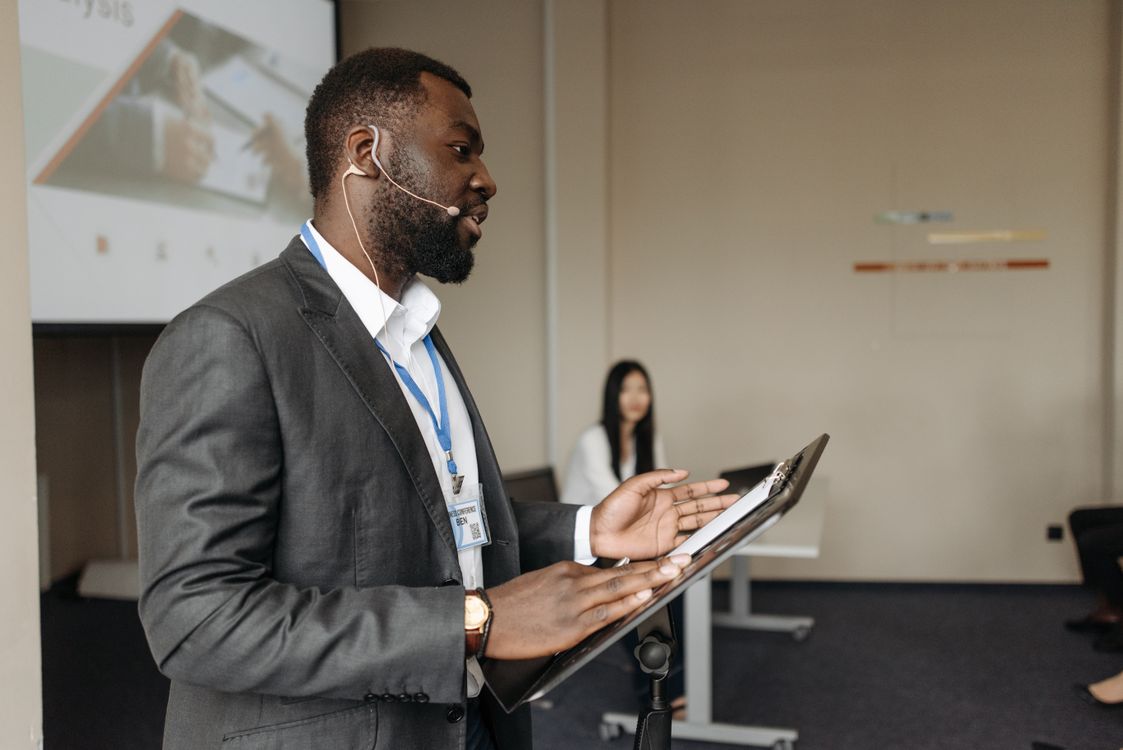
Photographs: conference speaker, photo by Pavel Danilyuk, https://www.pexels.com/photo/8761319/ ; party celebration, photo by Pavel Danilyuk, https://www.pexels.com/photo/6405773/
More guides
- How to Find a Wedding Photographer: The Complete, Honest GuidePhotographers › Wedding Photographers
- How Much Does a Wedding Photographer Cost? Packages DecodedPhotographers › Wedding Photographers
- 10 Questions to Ask a Wedding Photographer Before You BookPhotographers › Wedding Photographers
- Wedding Photography Styles Explained: Documentary, Editorial, Traditional, Fine ArtPhotographers › Wedding Photographers
- Hiring a Wedding Photographer in California: Venue Light, Permits, and Price LevelsPhotographers › Wedding Photographers
- All Guides & ArticlesBrowse the full guides library