Photographers › Events Photographers
Event Photography in Tennessee: A Resident's Guide to Costs and Rules
Tennessee is a business-events state now in a way it was not a generation ago. Nashville's convention and corporate calendar runs year-round and pulls national meetings into Davidson County. Knoxville, Chattanooga and Memphis each run their own circuits of conferences, festivals, university and company events. And across the state, small businesses — restaurants, retailers, clinics, makers, venues — have learned that an opening, a launch or a company celebration photographed well is marketing inventory for a year, while one photographed badly is a sunk cost.
I book photographers for events for a living, and Tennessee has its own arithmetic: hourly rates that look simple until licensing and delivery enter the quote, a sales-tax rule on photography that turns on how the files are delivered — the opposite of what most states do — and a storm season that belongs in every outdoor contract. This guide is written for Tennessee residents and the small businesses here that need images: what event photography costs, which state rules apply, and where national advice misleads.
What event photography costs in Tennessee
Event photography in Tennessee is sold by the hour more honestly than in most markets, because the product is coverage. Published Nashville pricing shows the structure clearly. One national event company working Nashville publishes a single rate card: $250 for the first hour and $100 for each additional hour, with a two-hour minimum — so two hours costs $350, four hours $550, and a five-hour festival day $650, with every image edited and delivered in an online gallery in about a week. A Nashville independent charges a flat $200 per hour for corporate events, parties and charity events, editing and a full release of the images included, and $250 per hour for wedding days. A Nashville pricing guide for event photographers puts the market in tiers: about $150 per hour at the entry level, $250 at the experienced mid-range, $400 for established premium professionals, and $900 or more for elite commercial specialists.
| Your event | Realistic Tennessee budget | What that buys |
|---|---|---|
| Small business opening or launch, 2 hours | $350–$500 | One photographer, edited gallery, release for your own marketing |
| Company party or charity event, 3–4 hours | $450–$800 | Full coverage of arrivals, speeches, groups and candids; $200/hr independents are the benchmark |
| Conference day, 6–8 hours | $750–$2,000 | Keynotes, breakouts, networking and sponsor shots; premium pros at $400/hr reach the top |
| Festival or multi-space event | $650 for 5 hours at published rates, more for a second photographer | Coverage across stages and crowds — one photographer cannot be in two places |
| High-visibility commercial work | $400–$900+ per hour | Editorial-level photographers, usage licensing negotiated separately |
Three quote details decide whether the hourly rate is the real price. Delivery time: a week is standard at published rates; 24–72 hours is a premium service — if your event is a launch and the images are the press release, pay for speed and get it in writing. The release: the Nashville independent's model — a full release included — is what a small business actually needs; a gallery you may look at but not use in advertising is not a business asset. Usage and licensing: for ordinary business marketing, a broad release is normal; for paid advertising campaigns, expect licensing to be discussed separately, especially at the premium tiers. Ask before the event, when the answer is a line in a contract, not after, when it is an invoice dispute.

The Tennessee tax rule: delivery method decides
Tennessee's treatment of photography surprises everyone who learned the rules in another state, so read this section twice if you sell — or buy — photography here.
The Tennessee Department of Revenue's guidance (SUT-67) treats photography services — sitting fees and the like — as services necessary to complete the sale of the resulting photographs. The tax then follows the photographs, and specifically how they are transferred:
- If the photographs are delivered on a tangible medium — printed photographs, or a disc or drive containing them — the whole charge is taxable, including the photography services. Separating the service charge from the product charge on the invoice does not remove the tax on the service.
- If the photographs are transferred without a tangible medium — downloaded via the internet, as most event galleries now are — the entire sales price, services included, is not subject to sales tax.
- If the customer never buys the photographs, the photography services alone are not taxable.
- One exception with teeth: photographs sold as "final artwork," as Tennessee law defines it, are taxable whether delivered electronically or on a tangible medium. Enlargements and reprints, meanwhile, are taxable as tangible personal property in their own right.
For a Tennessee small business buying event photography, the practical effect is benign and worth knowing: a download-delivered event gallery from your photographer will commonly carry no sales tax, while the same job delivered with prints or on a drive does — at Tennessee's combined rates, which start from a 7 percent state rate and reach 9.75 percent in Nashville, among the highest in the nation. For Tennessee photographers and creators selling their work, the rule cuts the other way: delivery method is a tax decision, the final-artwork exception is a trap for the unwary, and the state's separate business tax also applies — the Department of Revenue classifies photographers under business tax Classification 3, treating the photographer as primarily offering a service. Tennessee does not issue a state professional license for photographers — there is no licensing board for this trade, and the state's Board for Licensing Contractors, which residents sometimes ask about, licenses construction trades, not cameras. The registrations that matter are the sales-tax and business-tax accounts, plus insurance your venue may require.
None of this is a reason to choose delivery by tax alone — prints and drives have their uses — but a Tennessee quote that does not state its tax treatment has skipped a genuinely local question.
Nashville's gravity, and the rest of the state
Nashville prices are Tennessee's ceiling for a reason: convention volume, corporate headquarters growth, and a music industry that keeps a deep bench of event professionals busy. The mid-range $250-an-hour tier is thick with experienced photographers, and availability — not price — is the constraint during big convention weeks and festival season. Book conference coverage in Nashville the way you booked the venue: early.
Outside Nashville, the same hour costs less and the bench is thinner. Memphis runs a strong festival and music-event market with its own professionals; Knoxville's calendar orbits the university and the Smokies gateway; Chattanooga's corporate and outdoor-industry events have built a smaller, capable pool. In smaller markets the honest trade is this: a local photographer at a lower hourly rate who knows the venues, or a Nashville photographer plus travel time — one Nashville independent prices travel at $30 per hour behind the wheel, which is the transparent way to do it. Either can be right. A quote that hides travel inside a padded hourly rate is the wrong one.
Storm season belongs in the contract
Tennessee's severe-weather season — spring especially, with a secondary fall season — produces the tornado warnings and flash flooding that cancel outdoor events across the state, and the summer brings the pop-up thunderstorms that drench festivals from Memphis to the Tri-Cities. For event photography, weather is not small talk; it is three contract clauses:
- Rescheduling terms. If the event moves for weather, does the photographer's fee move with it, and within what window? Get the answer before the season, not during the warning.
- The photographer's own limits. A professional will not shoot from an exposed position in lightning, and should say so. Agree the pause-and-resume understanding in advance so nobody negotiates it in a downpour.
- Backup and file safety. Storm season is when cards corrupt and power fails. Ask how images are backed up on the day — dual-card recording and same-night backup are the professional standard — because an unrecoverable gallery from a one-time event is the one failure no refund fixes.
Indoor Tennessee venues have their own demand: ballrooms and conference spaces with mixed lighting and dark ceilings are where event photographers earn their rate, and a portfolio shot entirely outdoors in daylight tells you nothing about it. Ask for a full gallery from an indoor corporate event.

What a small business should actually book
For most Tennessee small businesses, the right purchase is modest and specific: two to four hours of coverage at a $200–$250 hourly tier, a shot list agreed in advance (the room, the team, the product, the principals, the crowd, the details), delivery within a week by download, and a written release covering your website, social channels and local advertising. That package — roughly $450–$800 all in — outperforms both the uncle-with-a-camera option and the premium commercial day rate for nearly every opening, anniversary, customer event and holiday party in the state.
Reserve the premium tiers for what they are for: events where the images themselves carry revenue — a conference whose sponsors expect professional coverage, a launch feeding a paid campaign, a festival selling next year's tickets. There, the $400-an-hour photographer's consistency and the negotiated licensing are the product.
A final Tennessee habit worth copying from experienced event organizers: put the photographer on the run-of-show document, with the venue's load-in rules and the event manager's mobile number, and introduce them to the venue contact on arrival. Half the failures in event coverage are logistics, not photography — a locked service entrance in Nashville or a stage manager in Memphis who did not know a photographer was coming. The five-minute introduction is the cheapest insurance in the whole booking.
Finding yours
This site lists 721 events photographers — narrow by your Tennessee market first, then verify the local things: a quote that states its tax treatment for your delivery method, a weather clause you can live with, a release that makes the images a business asset, and one full indoor gallery. Tennessee rewards buyers who ask Tennessee questions. The photographers who answer them fluently are the ones who work here — and they are the ones to book.
Sources
- MacroSnaps, Nashville photography pricing — a published rate of $250 for the first hour and $100 per additional hour with a two-hour minimum; two hours at $350, four at $550, five at $650, with edited images and an online gallery in about a week.
- Brody Hall Photography, Nashville pricing — corporate events, parties and charity events at $200 per hour including editing and a full release of the images; wedding days at $250 per hour; travel charged at $30 per hour of driving.
- ProShoot, Nashville event photographer pricing guide — market tiers of about $150 per hour at entry level, $250 mid-range, $400 premium and $900 or more for elite commercial work, with typical delivery of 24–72 hours.
- Tennessee Department of Revenue, SUT-67, "Photography – Photography Services" — photography services are taxable as part of the sale when photographs are transferred by a tangible medium; the entire price is not subject to sales tax when photographs are downloaded via the internet; services alone are not taxable if no photographs are purchased; final artwork is taxable in either medium.
- Tennessee Department of Revenue, BUS-72, "Photographers" — photographers are subject to business tax under Classification 3 and are treated as primarily offering a service.
- Tennessee Department of Revenue, SUT-69 — charges for enlargements and reprints of photographs are subject to sales and use tax as tangible personal property.
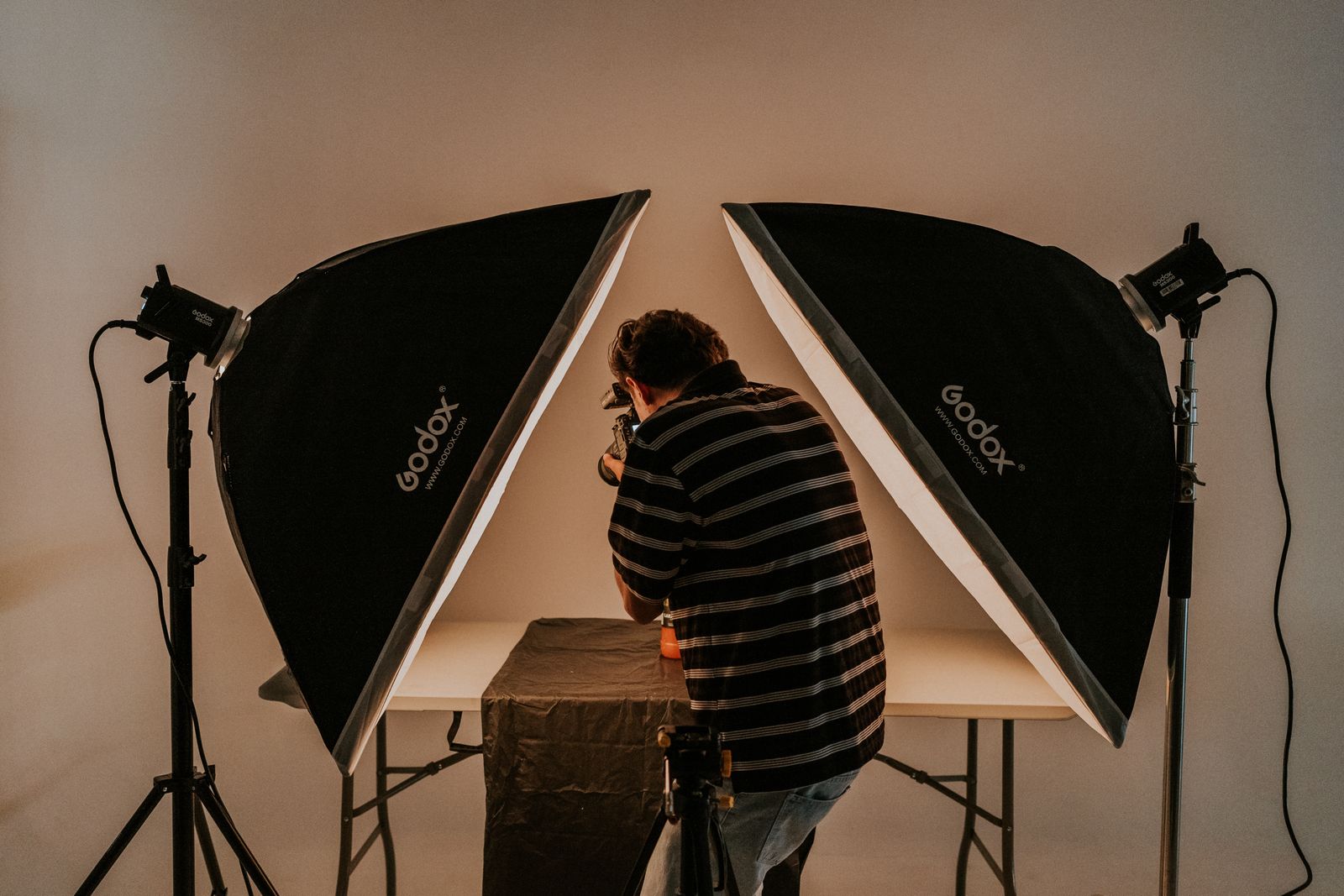
Photographs: conference speaker — photo by Pavel Danilyuk, https://www.pexels.com/photo/8761319/ ; celebration — photo by Pavel Danilyuk, https://www.pexels.com/photo/6405773/ ; photographer with lighting — photo by Amar Preciado, https://www.pexels.com/photo/17094508/
More guides
- How to Find a Wedding Photographer: The Complete, Honest GuidePhotographers › Wedding Photographers
- How Much Does a Wedding Photographer Cost? Packages DecodedPhotographers › Wedding Photographers
- 10 Questions to Ask a Wedding Photographer Before You BookPhotographers › Wedding Photographers
- Wedding Photography Styles Explained: Documentary, Editorial, Traditional, Fine ArtPhotographers › Wedding Photographers
- Hiring a Wedding Photographer in California: Venue Light, Permits, and Price LevelsPhotographers › Wedding Photographers
- All Guides & ArticlesBrowse the full guides library