Photographers › Events Photographers
Events Photographers Jargon, Translated: The Terms Providers Use and What They Mean for Your Bill
Event photographers are not trying to confuse you. The trade's vocabulary is genuinely precise — each term below exists because it draws a line that matters on the day. The problem is that every one of those lines is also a billing line, and nobody hands you the translation before you sign. I spent three seasons assisting at events, watching the gap between what clients thought a word meant and what the contract meant by it. This is that gap, closed term by term, with the cost implication of each spelled out.
The time words
Coverage. The hours the photographer is working — and the most misread word in the business. Coverage is defined by a start time and an end time in the contract, and the traps are in what counts: travel between locations almost always counts as coverage, a gap between ceremony and reception is usually being paid for, and a dinner break may or may not pause the clock. For your bill: an "eight-hour package" is eight hours from the stated start, not eight hours of moments you care about. Buy coverage around the moments you cannot reschedule.
Overtime. Coverage past the contracted end time, billed at a stated hourly rate. For your bill: the rate matters less than the authorization. Decide, before the day, who is allowed to commit you to extra hours — you, your planner, a parent with the photographer's ear at 10:40 p.m. — because the invoice will follow whoever said yes.
Call time / load-in. When the photographer must arrive to set up, scout light, and test — before the first scheduled moment. For your bill: usually inside coverage, which means a 6 p.m. event with a 5 p.m. call time is consuming your hours before a single guest arrives. Worth it for staged work; worth knowing either way.
Turnaround. The period between the event and delivery of the finished images. For your bill: standard event turnaround runs days to a couple of weeks; anything faster — next-day selects for press or social — is a rush service with a price, not a favor to assume.
Sneak peek. A small set of finished images delivered early, ahead of the full gallery. For your bill: sometimes included as goodwill, sometimes a defined deliverable. If your event has a publicity clock, get the peek — its size and timing — in writing.
The people words
Lead photographer. The person you hired, who directs the coverage and whose portfolio you reviewed. Second shooter (or second photographer) is the additional camera working under the lead's direction — covering the other partner getting ready, the opposite angle at the ceremony, the guests while the lead shoots the principals. For your bill: a second shooter is a priced line, not a courtesy — published add-on prices run from about $300 flat at some studios to $350–$800 as a package add-on. Worth it above roughly a hundred guests, or whenever two things you care about happen at once in two places.
Assistant. Not a photographer — the person who carries, sets lights, holds reflectors, and wrangles gear. For your bill: an assistant's presence in a package signals a lighting-heavy style; their absence in a quote for a dark venue is a question to ask.
Shot list. The predetermined list of specific photographs to be captured — the groups, the honorees, the sponsor moments, the table visits. For your bill: the shot list is the contract's quiet twin. What is on it gets shot; what is not on it gets shot only if time and luck allow. Writing yours costs an hour and is the cheapest insurance in the entire booking.
Run of show. The event's minute-by-minute program, owned by the planner or organizer. For your bill: your photographer prices and plans from this document. If the run of show changes and the coverage doesn't, the gap is yours, not theirs.

The picture words
Candids. Unposed photographs of people who mostly don't know they're being photographed. Photojournalistic or documentary coverage is the style built from them: the event as it happened, directed as little as possible. For your bill: candid coverage is not cheaper coverage — it is a different allocation of the same hours, and it produces few of the posed group portraits families often expect. If you want both, say so; the hybrid is called traditional or mixed coverage, and it needs time built into the day.
Grip-and-grin. The trade's affectionate name for the posed handshake-and-smile photograph — award presented, hands shaken, both faces to camera. Step-and-repeat is its glamorous cousin: guests posed in front of a branded backdrop, named for the repeating logos behind them. For your bill: both are staffing and setup decisions. A step-and-repeat is effectively a small studio at your event — backdrop, lights, a photographer stationed there — and is priced like one.
Ambient light. The light that exists in the room, as opposed to light the photographer brings. For your bill: "I shoot ambient" can mean artistry or a limitation. In a dark hall it decides whether your photos are moody or murky, and whether the quote quietly includes an assistant and lighting gear or not.
Culling. The selection pass after the event, in which the photographer removes duplicates, blinkers, and misfires and keeps the deliverable set. Post-production is everything after: correction, retouching, and export. For your bill: you are paying for both, inside the package, which is why a photographer's day rate covers a day you never see. It is also why "just give us all the photos" is not the discount clients expect — the unedited remainder is the part the process exists to remove.
RAW. The camera's unprocessed file format — maximum data, unfinished look, specialist software required. For your bill: standard contracts deliver edited JPEGs and keep RAW files with the photographer; template contracts commonly retain RAWs for a limited period (90 days is a typical clause) after delivery. If you think you will ever want the RAWs, that negotiation happens before signing, and it usually has a price.
The paper words — where the money actually lives
Copyright. The photographer's legal ownership of the images, which vests in the creator at the moment of creation under U.S. law. You do not buy it when you buy coverage, and standard contracts state plainly that no transfer of copyright occurs. License (or usage rights) is what you actually receive: permission to use the images for stated purposes, in stated media, sometimes for a stated term and territory. Print release is the consumer version — permission to print the photos for personal use. For your bill: the differences are not pedantry. A sponsor logo wall photo licensed for your annual report may not be licensed for your advertising; a wedding gallery with a print release may not cover the venue's marketing. Uses beyond the license are a second purchase, priced by how wide the use is.
Buyout. The purchase of broad, often unlimited usage — the word clients use when they mean "we never want to discuss rights again." For your bill: a true buyout, approaching a transfer of rights, is the most expensive line a photographer sells, and most events do not need one. A wide license usually does the same job for less.
Retainer. The payment that reserves your date — commonly 40 to 50 percent of the package in published event and wedding terms, and almost always non-refundable, because the photographer has turned away other work for your date. Contracts increasingly prefer "retainer" to "deposit" precisely because deposit implies refundable. For your bill: read the reschedule clause attached to it; that clause, not the percentage, is where the money is protected or lost.
COI (certificate of insurance). Proof of the photographer's liability insurance, which many venues require by name before load-in. For your bill: no direct cost — but its absence can cost you the venue's cooperation on the day, and a photographer who can produce one instantly is telling you they work venues like yours for a living.
Deliverables. The exact output you receive: how many edited images, in what formats and sizes, delivered how, and when. For your bill: this is the section to read twice. "Full gallery" has no standard meaning; "400+ edited images, high-resolution JPEG, online gallery, four weeks" does.
| Term | One-line translation | The bill implication |
|---|---|---|
| Coverage | Clock hours from a stated start time | Travel and gaps usually count; buy around unrepeatable moments |
| Overtime | Hours past the contract's end | Set who may authorize it before the day |
| Second shooter | A second working camera | A priced line: ~$300 flat to $350–$800 as an add-on |
| Retainer | The date-reservation payment | Commonly 40–50%, non-refundable; read the reschedule clause |
| License / usage | What you may do with the images | Wider use is a second purchase; a buyout is the priciest version |
| Turnaround | Time from event to finished gallery | Faster is a rush service, not a default |
| RAW files | The unedited originals | Stay with the photographer unless negotiated, at a price, up front |

How to use this at the booking table
You do not need to speak the jargon back. You need to make the photographer translate it, once, in writing, before you sign: coverage defined by clock times, overtime with a named authorizer, deliverables with numbers, a license that names your actual uses, a retainer tied to a reschedule clause you have read. Five sentences in a contract do all of that. The photographers who write them without being asked are the ones whose invoices never surprise anyone.
This site lists 721 events photographers. Interview yours with this page open if you like — a professional will not mind. The terms are not a barrier between you and the trade. They are the trade, written down; and now they are priced, in plain language, where you can see them.
Sources
- Honey Deww Photography, "Reading a Wedding Photography Contract" — coverage defined by start and end times, travel between locations counting as coverage, overtime authorization, and the Professional Photographers of America's contract guidance on payment terms and scope.
- ContractMaker, event photography contract template — copyright vesting in the photographer under 17 U.S.C. § 201(a), no transfer of copyright without a separate signed instrument, license-only grants, and RAW-file retention clauses (90 days after delivery in the template).
- Skip Rowland Photography, event photography glossary — definitions of grip-and-grin photography, step-up-and-repeat photography, shot list, turnaround time, licensing, and multi-shooter coverage.
- Vestifina, second shooter agreement guide — the second shooter's role under the lead's direction, with fee, overtime, and file-handoff terms.
- Poetic Crow Photography, West Virginia pricing guide, and Frame & Flask, Morgantown — second-photographer add-on pricing ($350–$800 range; $300 flat at one studio) grounding the second-shooter cost line.
- Milestone KC, 2026 pricing guide — the 40 percent non-refundable retainer grounding the retainer range.
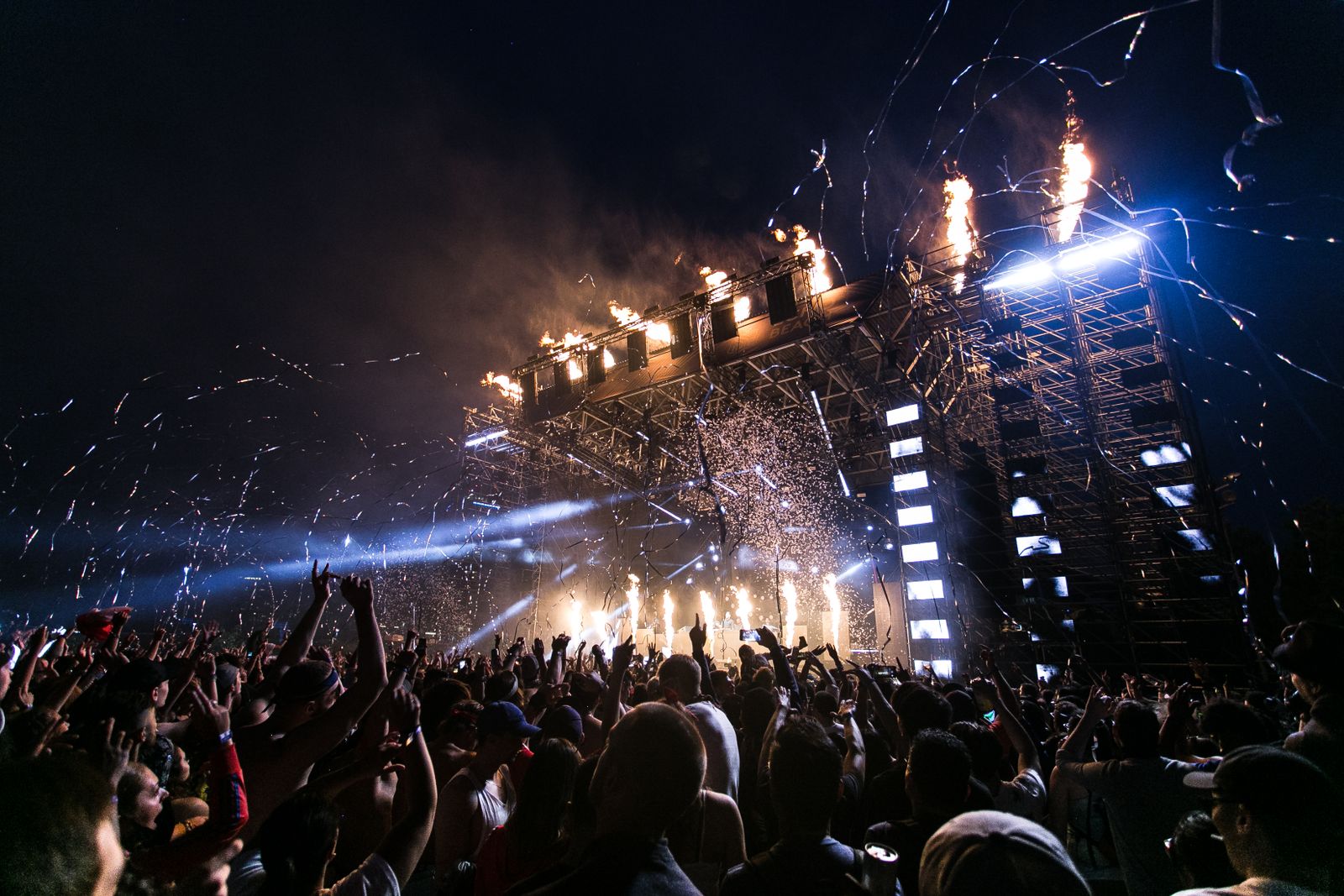
Photos: Conference group — photo by Christina Morillo, https://www.pexels.com/photo/1181622/ · Event crowd — photo by Ivan Samkov, https://www.pexels.com/photo/8104206/ · Festival night — Pexels photo 1190297, https://www.pexels.com/photo/1190297/
More guides
- How to Find a Wedding Photographer: The Complete, Honest GuidePhotographers › Wedding Photographers
- How Much Does a Wedding Photographer Cost? Packages DecodedPhotographers › Wedding Photographers
- 10 Questions to Ask a Wedding Photographer Before You BookPhotographers › Wedding Photographers
- Wedding Photography Styles Explained: Documentary, Editorial, Traditional, Fine ArtPhotographers › Wedding Photographers
- Hiring a Wedding Photographer in California: Venue Light, Permits, and Price LevelsPhotographers › Wedding Photographers
- All Guides & ArticlesBrowse the full guides library