Photographers › Events Photographers
Events Photographers Red Flags: The Warning Signs Most People Walk Straight Past
An event cannot be re-shot. That single fact is what makes hiring an events photographer different from hiring almost anyone else, and it is why the warning signs matter more than the portfolio. A caterer who underperforms ruins a course; a photographer who fails ruins the only record of the day, permanently. And here is the uncomfortable pattern that everyone who books photographers for a living eventually learns: most bad hires were warning you in advance. The signs were present in the first gallery they would not show, the contract that never arrived, the backup question answered with a shrug. First-time buyers walk straight past them because nobody has ever pointed at them and given them names. This guide names them — the red flags experienced buyers watch for with events photographers specifically — and tells you what to do the moment one appears. This site lists 721 event photographers, and the honest majority make the checks below easy. That is precisely how the checks work: the good ones pass them without noticing they were tests.
Red flag 1: Highlights only — no full event gallery
This is the single most important test, and the most commonly failed. Anyone can curate thirty stunning images from a ten-hour event. The question is what the other several hundred look like: the dim room, the fast-moving toast, the group photograph at noon, the candid that was not staged. A photographer who shows only Instagram highlights and a reel — and will not share a complete gallery from one real event, start to finish — is hiding something, and the candidates are always the same: inconsistency, missed moments, weak low-light work, or sloppy candids. Ask directly: "Can I see a full gallery from an event like mine?" A professional sends a link. An evasion is an answer.
The modern version of this flag deserves its own sentence. Portfolios can now be stolen or generated wholesale — the Better Business Bureau's scam reporting is full of "photographers" whose beautiful portfolios belonged to someone else, or to no one, the weddings in them never having happened at all. A full gallery is hard to fake convincingly: hundreds of frames, one event, consistent people, consistent light, an arc to the day. It is not just a quality check anymore. It is an authenticity check. A reverse image search on a few portfolio frames costs you two minutes and is worth doing on any photographer you cannot verify another way.
Red flag 2: No written contract — or pressure to pay before you read it
A contract protects both sides: deliverables, delivery dates, payment schedule, cancellation terms, what happens if the photographer is ill. Any photographer who does not use one is either inexperienced or avoiding accountability, and for your purposes the distinction does not matter. The specific warning shapes: the handshake booking ("we don't need paperwork between us"); the contract that exists but somehow cannot be sent until after the deposit; the deposit demanded in full, up front, through a payment app with no buyer protection. On that last point, the BBB's reported cases are instructive — the fake-photographer pattern runs on deposits paid through apps like Venmo or Zelle precisely because those payments cannot be recovered, and victims report losses from $1,700 to $5,300. Pay the retainer by credit card, after reading a contract, to a business you can find again. None of that is paranoia; it is the ordinary hygiene the professionals on the other side of the transaction already expect.
Retainers themselves are not a flag — a non-refundable retainer is standard, because the photographer turns away other work for your date. The flag is the retainer's context: full payment demanded before the event, refund terms missing, or cancellation language that runs in only one direction.
Red flag 3: Vague answers about backup — gear, files, and the photographer themselves
Events fail in predictable ways, and professionals plan for each of them. There are three backup questions, and you should ask all three, in these words:
- Backup gear. "What happens if your camera breaks during the event?" The only acceptable answer involves a second camera body, already there, plus spare lenses, batteries, cards, and flash. Cameras fail as a matter of when, not if, and a photographer with one body is gambling with your event as the stake.
- Backup files. "Do you record to two cards simultaneously, and what happens to the files that night?" Two card slots alone prove nothing — cameras can be set to fill one card, then the other. You want simultaneous recording, so one card's failure cannot take the images with it, followed by backup to a second drive the same night and cloud backup shortly after. The most common cause of lost event photographs is a single hard drive with no redundancy, and it is entirely preventable — by the photographer, in advance, which is the point of asking.
- Backup human. "What happens if you are sick or injured?" You want a named plan — a trusted associate, a studio partner, a professional network — not "we'll figure it out." Vague backup answers across all three questions are among the clearest red flags in the business, because they reveal a photographer who has never stress-tested their own operation. Your event will do it for them.
Red flag 4: No insurance — discovered three weeks before the event
Many venues require the photographer to carry liability insurance and to produce a certificate; some require being named on the policy for the day. A photographer without insurance is therefore not just a risk in the abstract — they can become a logistics emergency when the venue asks for paperwork the photographer cannot supply, weeks before your event, when replacing them is hardest. Ask at booking: "Are you insured, and can you send our venue a certificate if they ask?" Professionals answer this the way they answer the weather — it comes up constantly, and they have it ready.
Red flag 5: A price too low to contain the work
A very low price with no explanation usually has one, and it is itemized in what is missing: no second photographer, no backup gear, no insurance, minimal editing time, or a beginner building a portfolio — which can be a legitimate bargain if it is disclosed and priced as such. What you are checking is not cheapness but coherence. A full day of event coverage, edited gallery included, at a price that cannot pay one professional for the day plus the days of editing after it, is not a business model. It is either a hobby, a loss-leader with upsells waiting downstream, or a deposit-collection exercise. Ask what the price includes and listen for the missing pieces from the flags above; they travel together.
Red flag 6: Communication that is slow or sloppy before you have paid
This is the flag first-time buyers excuse most and regret most. Slow, sloppy communication before the deposit almost never improves after it — the incentive gradient runs the other way. The photographer who takes a week to answer a sales email will take longer to answer a delivery question, when you have no leverage left. Related tells: answers that dodge the question asked, quotes that shift between messages, and delivery dates that will not be put in writing. Delivery deserves emphasis: an events gallery has a date, and the date belongs in the contract. Reviews are where this flag leaves its fossil record — one complaint about late delivery or missing photographs can be a fluke, but several reviews telling the same story is a pattern, and patterns are what you are paying attention to. A working photographer in 2026 should have reviews somewhere findable; none at all is its own quiet flag.
Red flag 7: The person you met is not the person who will shoot
Studios and agencies sometimes book the job and dispatch whoever is free. That model can work — good companies train and audit their shooters — but the flag is the undisclosed version: you reviewed one photographer's galleries, built your plans around their eye, and a stranger arrives. Ask who exactly will photograph your event, ask to see that person's full gallery, and get the name into the contract, along with the agreed substitute arrangement if they cannot come. If the answer is that the studio "can't say yet," you are buying a lottery ticket at a professional price.

What to do the moment a sign appears
The sequence is the same one professionals use, and it is deliberately boring. Slow down rather than walk away on a single flag — one vague answer deserves one direct question. Ask the direct questions in writing: full gallery, contract before payment, the three backup questions, insurance, delivery date in the contract, the named photographer's name in the contract. Treat the answers as the product sample they are: a photographer who handles scrutiny well before booking will handle your event the same way. Two or more flags, or any evasion on contract, backup files, or insurance, ends the conversation — there are 721 event photographers listed on this site alone, and your date deserves one of the honest ones.
And if the worst happens anyway — silence as the date approaches — act in hours, not days: confirm the no-show in writing across every channel, check the contract for a named backup, work your other vendors' networks for a replacement (they all know photographers), and document everything, because the paper trail is what refunds, chargebacks, and complaints are built from. State attorneys general do act on patterns of exactly this conduct — in June 2026, Pennsylvania's Attorney General sued a Philadelphia wedding photography company alleged to have taken couples' money and then failed to appear or failed to deliver — but an attorney general is a remedy for a pattern, months later. The checks in this guide are how you avoid becoming part of one.
One more flag, specific to events: no plan for the event itself
Portraits can be rescheduled around a photographer's disorganization. Events cannot, and an events photographer who shows no curiosity about yours is a flag in themselves. A professional asks, before the day: for the run sheet or timeline, the venue's rules and load-in arrangements, the names of the moments that cannot be missed, the other vendors they will be working around, and where they are expected to be at the three or four moments the whole event turns on. A photographer who asks none of this — who plans to arrive, wander, and see what happens — will produce exactly the gallery that approach produces: strong on atmosphere, missing the announcement, the award, the one embrace the event existed for. Event photography is logistics wearing a camera. Hire the logistics.
Sources
- Leo Operations, Questions to Ask a Wedding Photographer Before Booking — the risk-first questions: who exactly will show up, what happens if the photographer is sick or a card fails; simultaneous recording to two cards explained; red flags including no full galleries, no written contract, vague backup answers, no insurance, unexplained low prices, slow communication before payment, and reviews mentioning missing photos or lost files.
- The Pixel Perfection, Wedding Photographer Red Flags — refusal to show full galleries, no contract, no insurance, extremely low prices, slow communication, pressure to book immediately, no backup equipment (minimum two camera bodies and dual card slots), and no online reviews or references.
- Small Hour Wedding Photography, 15 Wedding Photographer Red Flags — the full-gallery test as the single most important check, contract contents to look for, and backup equipment redundancy for bodies, lenses, flashes, batteries and cards.
- Nash Creative House, Event Photography Company: The Ultimate 2026 Checklist — reliability checklist including proof of insurance and a written contract, a real backup plan, and clear usage rights; red flags including vague or shifting pricing and only a handful of curated photos anywhere.
- B. Jones Photography, Your Wedding Photographer Lost Your Photos — the common causes of lost photographs, led by hard-drive failure with no backup system; the professional standard of dual memory cards in camera, same-night backup to a second drive, and cloud backup shortly after.
- Woman Getting Married, Wedding Scams: 10 Actually Happening Right Now — the Better Business Bureau's fake-photographer pattern: polished portfolio, deposit taken through Venmo or Zelle, then disappearance or withheld photos; reported losses of $1,700 and $5,300; advice to reverse-image-search portfolio images and pay by credit card.
- Utica Phoenix, Pennsylvania AG Sues Philadelphia Wedding Photographer — Attorney General Dave Sunday's June 26, 2026 civil lawsuit against a Philadelphia wedding photography company alleged to have accepted payment and then failed to appear, failed to deliver photos or video, or significantly delayed delivery.
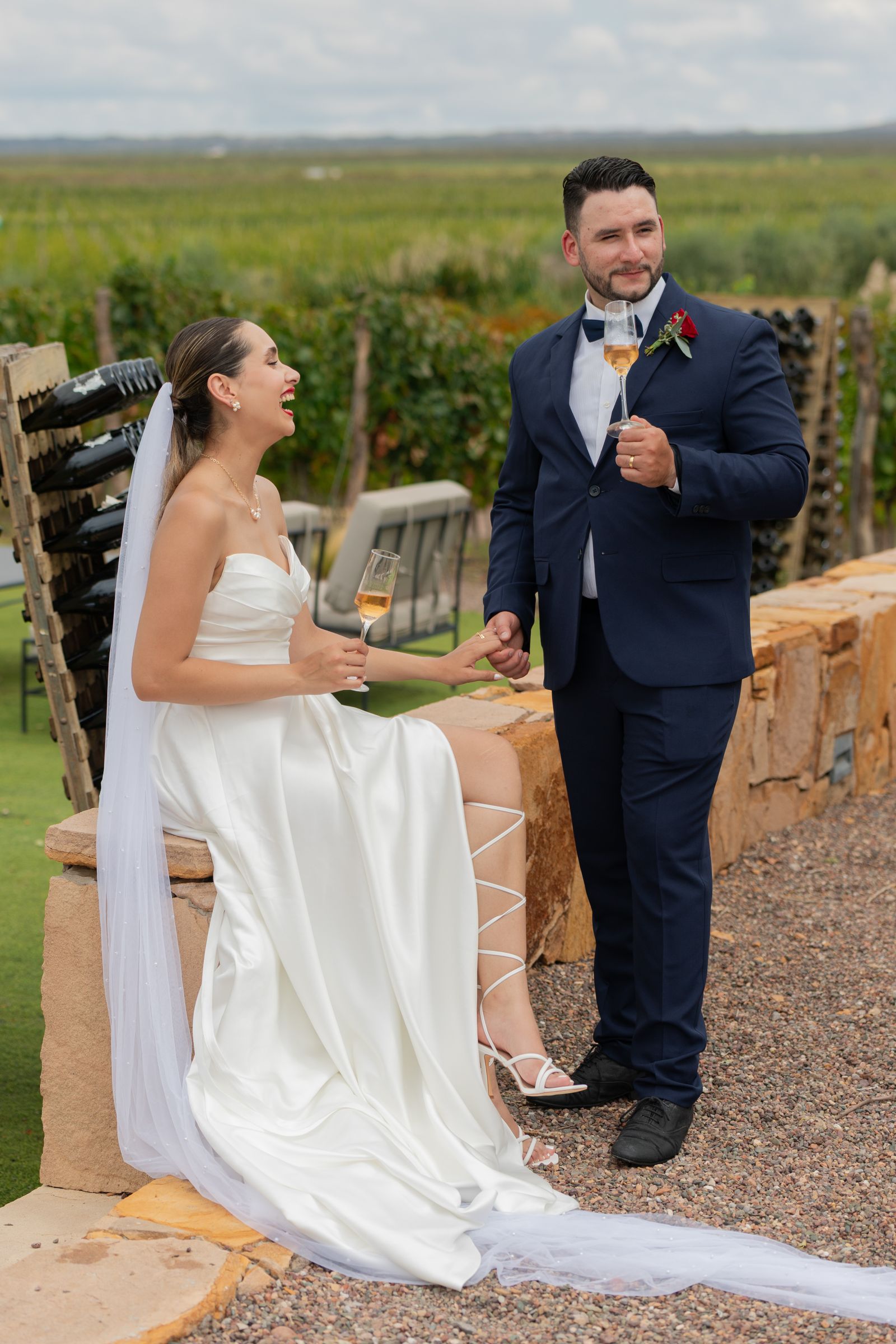
Photographs: outdoor celebration, photo by Lilen Diaz, https://www.pexels.com/photo/31531920/ (photographed in Mendoza, Argentina; used as a celebration illustration) ; reception tables with lights, photo by Jonathan Borba, https://www.pexels.com/photo/9714791/
More guides
- How to Find a Wedding Photographer: The Complete, Honest GuidePhotographers › Wedding Photographers
- How Much Does a Wedding Photographer Cost? Packages DecodedPhotographers › Wedding Photographers
- 10 Questions to Ask a Wedding Photographer Before You BookPhotographers › Wedding Photographers
- Wedding Photography Styles Explained: Documentary, Editorial, Traditional, Fine ArtPhotographers › Wedding Photographers
- Hiring a Wedding Photographer in California: Venue Light, Permits, and Price LevelsPhotographers › Wedding Photographers
- All Guides & ArticlesBrowse the full guides library