Photographers › Graduation Photographers
Graduation Photography Scams and Pressure Tactics: How to Spot Them Before You Pay
Graduation photography has a structural secret that makes it unlike any other kind of photography you buy: at the ceremony itself, being photographed is free, and nobody can make you pay for it. Everything else in this market — the senior portrait studio with the school contract, the proof emails that arrive while the emotion is still fresh, the "credit" that only unlocks after a four-figure spend — is built on top of that free foundation, and the pressure tactics work by blurring the line between what the school arranged, what you owe, and what is merely for sale. This guide names the tactics, one by one, with the checks that neutralize each. Most graduation photography businesses are legitimate. The ones that aren't share a playbook, and it is a short one.
The baseline: what legitimate commencement photography looks like
Know the honest model first, because every scam is a distortion of it. Universities contract an official photographer — GradImages is the largest, alongside firms like Flash Photography, Pro Pics, and Island Photography — to photograph every graduate crossing the stage. The published terms at university after university are identical in substance:
- There is no fee to be photographed and no obligation to purchase. Graduates are photographed whether or not they ever order; schools say so explicitly, because the photographer needs the whole class, not just the buyers.
- Proofs are free. They arrive by email within roughly 24–72 hours (and by mail) after you fill in the name/photo card at the ceremony, or pre-register.
- You order after you see the pictures, online with a PIN, from a menu of prints, plaques, and digital downloads, and orders ship in about a week.
So if anyone at or around a commencement implies that you must pay to be photographed, pay before seeing proofs, or pay to "release" your graduate's stage photos, you are not dealing with the school's photographer acting normally. You are dealing with the first tactic.
Tactic 1: The impostor and the "official" lookalike
Graduation season attracts sellers who dress as the official channel: emails and social ads using the school's colors, the class year, and words like "official photos" that link to an unrelated seller — or worse, to a payment page harvesting card details and personal data from proud families. The checks are boring and total: find the photographer's name on the school's own commencement page (every school publishes it), navigate to the company from there or by typing its name yourself, and never pay through a link that arrived by text or social message. Proofs from the real photographer reference your ceremony and arrive through the channel the school described. An impostor's page asks for money before it shows you a single image of your graduate — the legitimate model never does.
A quieter cousin: the data harvest. The Better Business Bureau has warned graduates that posting senior portraits publicly with the school name and class year hands scammers the raw material for security-question answers and identity theft, and that "post your list of favorites" graduation contests are engineered to extract exactly that information. Share the photos — privately, with friends, and without the favorites list.
Tactic 2: The captive studio — the school contract as a sales funnel
High school senior portraits are where graduation photography's real pressure lives, because the structure is a monopoly. Many schools contract a single studio for yearbook portraits, and families discover that the "required" sitting is the top of a funnel:
- Pricing revealed after the photographs exist. A recurring pattern in Better Business Bureau complaints against a large senior-portrait company: families report receiving no prices until after the photos were taken, a non-refundable deposit (in one complaint, $50) demanded before pricing was shown, and a product credit — $200 in that complaint — that only became available once $2,000 had been spent. A purchase just under $1,000 followed, from a customer who described feeling she had "no other choice" after money was already sunk.
- Per-image fees that multiply silently. Parent reviews of school-contract studios describe the arithmetic ambush in detail: a quoted per-sheet price that turns out to exclude a retouching charge added to every image ($15 per image in one detailed account), a sitting fee near $100, and a family leaving with only the yearbook photo and a bill over $100 for the privilege. Another describes an $85 "credit" that could only be used by buying three digital photos for $250 or four prints for $193.
- The sales presentation as pressure chamber. A BBB review of one portrait studio describes a representative standing over a parent's phone, selecting the payment method and financing plan on the parent's own device, during the appointment. The studio's response — refund issued, session redo offered, policy restated — confirms the shape of the event while disputing its intent. When a seller reaches for financing apps on your phone, the sale has left the rails: that is the moment to stand up, literally, and reschedule the decision for home.
None of this requires the studio to be a scam. It requires only that you be captive, emotional, and deciding in the room. The defenses are procedural:
- Ask the school, in writing, what is actually required. In most arrangements, only the yearbook sitting is mandatory — and frequently a basic yearbook session is available at low or no cost. Everything beyond it is retail.
- Demand the full price list before the session, including sitting fee, per-image retouching, digital file pricing, and shipping. A studio that will not publish prices before photographing your child has told you its business model.
- Separate the sitting from the sale. Take the photos. View proofs at home. Decide with the price list open and the graduate not performing disappointment beside you.
- Never let anyone operate your phone or choose your financing. Financing a portrait package at checkout converts an overpriced want into a loan. If you would not borrow for it, do not buy it.
- Remember you can buy portraits elsewhere. The school contract controls the yearbook photo, not your family's portraits. Independent photographers — including the graduation specialists in directories like this one — will shoot cap-and-gown and family sessions at published prices, and many families use the contract studio for the yearbook image only.
Tactic 3: Proof-stage pressure — expiring galleries, countdowns, and watermark games
The commencement proof email is a legitimate sales channel that borrows urgency it has not earned. Stage photos do not evaporate: official photographers keep ceremony archives searchable for years, because late orders from grandparents are part of the business. Against that reality, treat these as tactics, not facts:
- "Your gallery expires" countdowns on proofs that will, in reality, remain orderable — ask the company directly how long the images are kept before believing a deadline.
- Discount ladders that punish waiting ("order in 48 hours for 20% off") — the discount is the price; the deadline is the pressure. Compare the discounted total against the value of the prints before the clock does your thinking.
- Packages anchored to the most expensive option, with the single digital image priced to make the bundle look sane. Price the one or two images you actually want, in the size you will actually use, and let the bundle justify itself against that number — not the reverse.
Tactic 4: The deposit that buys nothing
Watch for money taken before value exists: non-refundable "reservation" or "presentation" deposits disclosed only at the appointment; sitting fees quoted as one number and invoiced as another; and "credits" whose terms (minimum spend, expiry, eligible products) are revealed after payment. The check is universal: any fee should be named, priced, and explained in writing before the session is booked, and a credit is worth only what its terms say — a $200 credit that requires a $2,000 spend is a 10% discount wearing a costume.
If you've already paid
Work the channels in order: the company's own customer service with your order number and the written terms in hand; the school, whose contract gives it leverage no individual family has (schools do drop portrait vendors over complaint patterns, and your complaint is data); a BBB complaint, which the larger companies demonstrably answer — refunds and free redos appear in their published responses; and your card issuer's dispute process for goods not as described, with the listing, price list, or advertisement you relied on attached. Keep everything: the flyer the school sent, the booking page, the receipt. In this market, the families who get refunds are the ones who can show what was promised.
The pre-payment checklist
- Confirm the official commencement photographer on the school's own website; buy only through that channel.
- Remember the baseline: being photographed at commencement is free; proofs are free; there is no obligation to purchase.
- Ask the school what is required (usually only the yearbook sitting) versus what is retail.
- Get the full price list — sitting, retouching, digitals, shipping — in writing, before any session.
- Treat every deposit and "credit" as suspect until its amount, refundability, and terms are in writing.
- View proofs and decide at home, never in a sales presentation; never let a seller touch your phone or pick your financing.
- Discount any deadline you have not verified with the company directly.
- Keep the flyer, the booking page, and every receipt — they are your refund evidence.
This site's directory lists more than 130 graduation photographers — independent options for the portraits your family actually gets to choose. Graduation is a genuinely emotional purchase, which is precisely why the tactics cluster here. The emotion is yours. The money decisions can still be made slowly, in writing, at the kitchen table — where every one of these tactics loses its power.
Sources
- University of West Georgia, "Commencement Flowers and Photography" — official photographer GradImages photographs each graduate on stage; "no fees for this service and no obligation to purchase"; free proofs by mail and email about a week after the ceremony: https://www2.westga.edu/commencement/flowers-photography.php
- University of Miami, Commencement "Photo and Video" — Flash Photography photographs every graduate; complimentary proofs emailed and mailed; "no obligation to purchase and no advanced registration requirement or fee": https://commencement.miami.edu/graduation-products/photo-and-video/index.html
- UCLA Engineering (HSSEAS), "Commencement Photos" — Grad Images hired for ceremony day; proofs within 7 days; "absolutely no obligation" to purchase; photos taken of all students regardless of intent to order: https://www.seasoasa.ucla.edu/photos/
- San Diego State University, Commencement — GradImages photographs each graduate on stage; no-obligation proofs via email, text, and mail; pre-registration available: https://commencement.sdsu.edu/graduates
- GradImages FAQ via George Mason University — proofs emailed within 24–48 hours when the graduate's card is received; "no obligation to order"; orders by web, phone, fax, or mail; delivery 5–7 days after ordering: https://computing.gmu.edu/news/2015-05/information-our-newest-alumni
- University of Utah, College of Social Work graduation page — Island Photography authorized for diploma photos; graduates under no obligation to purchase; proofs emailed 48–72 hours after the ceremony: https://socwk.utah.edu/graduation/index.php
- Better Business Bureau, complaints record for Cady (senior portraits) — complaint alleging hidden pricing before booking, a $50 non-refundable deposit, and a $200 product credit available only after $2,000 spent; package purchase of $950.59; company's response and complainant's rebuttal: http://bbb.org/us/ga/dacula/profile/photographer/cady-0443-27496894/complaints
- Better Business Bureau, customer reviews for Davy Knapp Photography — review describing high-pressure in-appointment sales, including a representative selecting the payment method and financing plan on the customer's phone; company response issuing a 100% refund and free session redo: https://www.bbb.org/us/tx/amarillo/profile/portrait-photographers/davy-knapp-photography-inc-0815-99122577/customer-reviews
- Yelp reviews, South Coast Photographic (school-contract senior portraits) — parent accounts of per-image retouching charges ($15 per image, not removable), a ~$97 sitting fee, and an $85 credit usable only toward 3 digital photos at $250 or 4 prints at $193; reviewers describe the structure as bait and switch: https://m.yelp.com/biz/south-coast-photographic-anaheim
- Better Business Bureau grad-photo warning, via Pinal County Federal Credit Union — BBB warns graduates that posting senior portraits publicly with school name and class year enables security-question/identity-theft scams, and that "list of favorites" contests extract the same data: https://www.pinalcountyfcu.com/about-us/blogs/dont-share-your-grad-photo-online
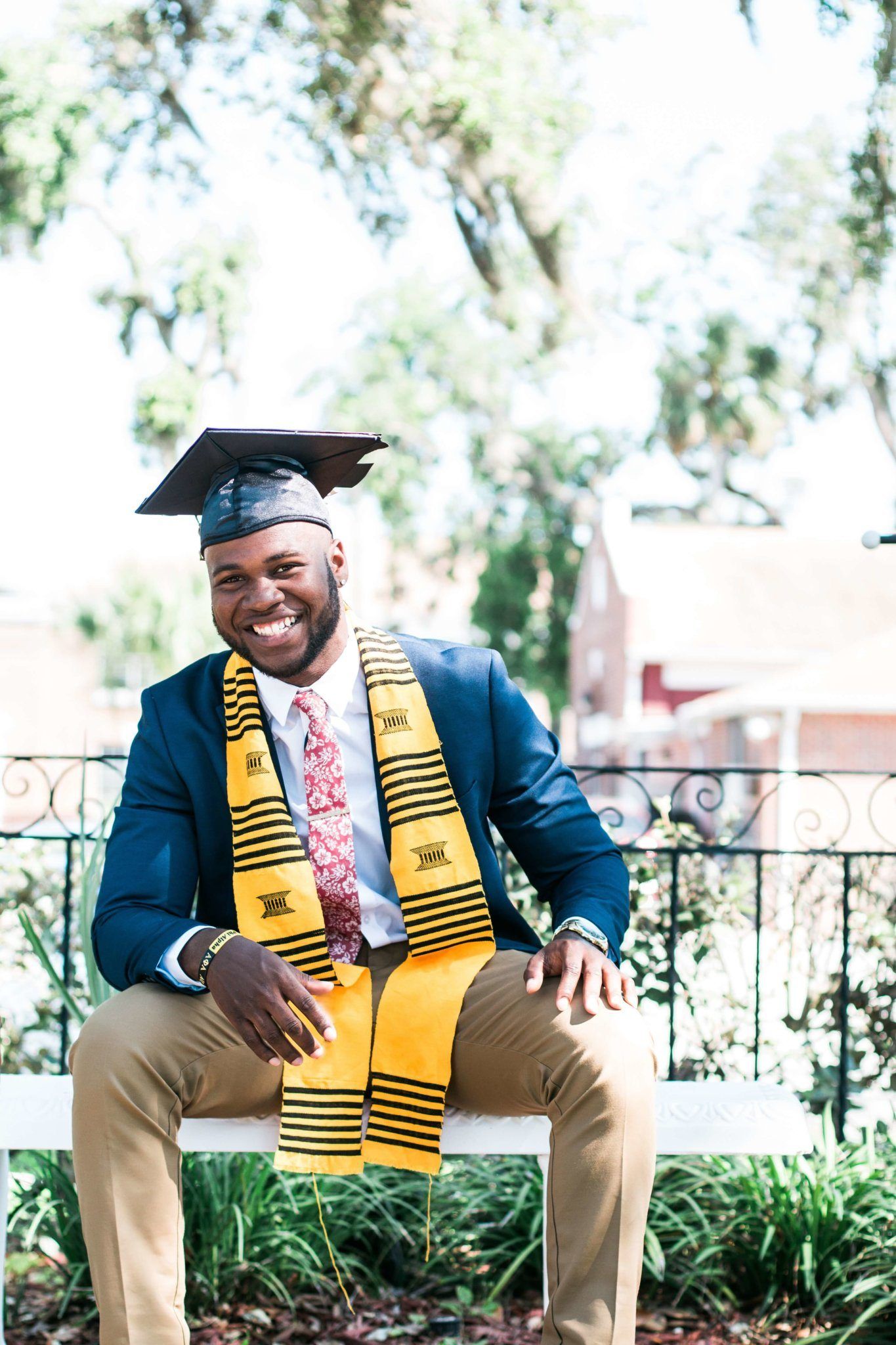
Photographs: graduate in cap and gown — photo by nappy, https://www.pexels.com/photo/photo-of-man-wearing-graduation-cap-935948/ ; graduate in a black gown — photo by Ron Lach, https://www.pexels.com/photo/a-woman-in-black-graduation-gown-9829309/
More guides
- How to Find a Wedding Photographer: The Complete, Honest GuidePhotographers › Wedding Photographers
- How Much Does a Wedding Photographer Cost? Packages DecodedPhotographers › Wedding Photographers
- 10 Questions to Ask a Wedding Photographer Before You BookPhotographers › Wedding Photographers
- Wedding Photography Styles Explained: Documentary, Editorial, Traditional, Fine ArtPhotographers › Wedding Photographers
- Hiring a Wedding Photographer in California: Venue Light, Permits, and Price LevelsPhotographers › Wedding Photographers
- All Guides & ArticlesBrowse the full guides library