Photographers › Events Photographers
Hiring an Event Photographer in Florida: Outdoor Events, Weather Plans, and Seasonal Pricing
Florida is the easiest state in the country in which to plan an outdoor event and the easiest state in which to lose one. The same coastline that gives you a golden-hour gala in February gives you a sideways thunderstorm in August, and the photographer you hire has to be good at both days — not just the pretty one. I shot events and weddings in this state for years. This guide is what I tell Florida hosts and planners now: what event photography actually costs here, how the calendar quietly sets your price, and the weather clauses that matter more than the lens list.
What you're actually hiring
An event photographer is not a wedding photographer working a smaller room, and the distinction matters when you compare quotes. Event work — corporate receptions, fundraisers, milestone birthdays, reunions, festivals, holiday parties — is mostly documentary coverage: arrivals, speakers, candid groups, posed groups on request, detail shots of the room and the food, and a fast gallery afterward that a company or a family can actually use.
Ask every candidate the same four questions so the quotes line up. How many hours of coverage, and is there a minimum? (Two hours is the common floor — a one-hour toast still pays for two.) How many edited images, delivered how, and how fast? Who owns the usage rights — for a business event, can the company put the photos in next year's marketing, or only in an internal recap? And who is physically coming: the person whose portfolio you reviewed, or an associate you've never seen?
That last question decides more Florida events than any other. Summer heat and sudden rain punish a photographer who is learning a venue in real time. A local who has shot your venue before knows where the shade lands at 5 p.m., which lawn floods first, and where the indoor fallback room actually is. That knowledge is worth paying for, and it rarely appears on a price sheet.
What it costs
Event photographers in the US mostly publish rates between $150 and $500 an hour, with half-day and full-day packages common for longer events. Published price lists surveyed in 2025 cluster around $250 to $375 an hour for experienced professionals, usually with a two-hour minimum, and South Florida corporate work is quoted at the upper end of that band — one South Florida corporate price list runs $250 to $500 an hour, with half days at $1,000 to $2,000 and full days at $2,000 to $4,000. Private parties sit lower: roughly $500 to $2,000 for two to four hours of coverage is the commonly published range.
| Type of event | Typical Florida cost | Notes |
|---|---|---|
| Private party (birthday, reunion, anniversary) | $500–$2,000 for 2–4 hours | The most accessible tier; shorter coverage, lighter edit |
| Corporate reception or holiday party | $250–$500 per hour | South Florida tracks the top of the national range; 2-hour minimums are standard |
| Fundraiser or gala | $300–$500 per hour | Fast turnaround for press and donor follow-up is part of the price |
| Full-day conference or festival | $2,000–$4,000 per day | Second photographer and same-week delivery push it up |
| Concert or live performance | $300–$1,000 | Depends on access, set length, and how fast images must move |
Read every quote for what is not in it. Rush delivery, a second shooter, travel beyond the photographer's home county, and commercial usage rights for a business are the four lines that most often appear later as add-ons. None of them is a scam; all of them should be priced before you sign, not after the event.
Florida's calendar sets your price
Florida does not have one peak season. It has two, and they belong to different regions — which means the month you pick matters as much as the city.
Winter is South Florida's peak. Snowbird season runs roughly November through April, with peak demand from January through March. Seasonal visitors swell winter populations across the Gulf and Atlantic coasts — Tampa Bay alone sees a winter population increase estimated at 15 to 20 percent — and event vendors price accordingly. Prime dates in Miami, Fort Lauderdale, Palm Beach, Naples, and the Keys book months ahead in season, and photographers can hold their top rates because someone else is always asking about the same Saturday. If your event must land in February, book the photographer when you book the venue, not after.
Summer is Central and North Florida's peak. Orlando's theme-park calendar, spring break in late March and early April, and beach season in the Panhandle push demand — and prices — up just as the weather risk arrives. The practical consequence: the cheapest Florida quotes cluster in the late-summer and early-fall weeks when demand dips, and those are precisely the weeks that demand the strongest weather plan. The discount and the risk are the same product. Take the discount if your event can flex; don't take it if the date cannot move.
The shoulder windows are the insider's answer. Late April into May, and November outside the holiday weeks, often combine workable weather with photographers who still have Saturdays open. November in particular is underrated statewide: the rains have eased, hurricane season is winding down, and snowbird pricing has not yet fully arrived.
The weather plan is the contract
Here is the Florida section that outranks everything above it. The Atlantic hurricane season runs June 1 through November 30, with most activity between mid-August and mid-October and a statistical peak around September 10, according to the National Hurricane Center. You do not need a landfall to lose an outdoor event — a storm a few hundred miles offshore can still bring days of rain and wind enough to make tents and stages unsafe.
But the hurricane is not the everyday risk. The everyday risk is the summer thunderstorm. South Florida's wet season runs roughly mid-May to mid-October and delivers about 60 to 70 percent of the year's rain, with storms forming almost daily — often building through the afternoon and arriving right when an outdoor reception starts. And Florida has more lightning casualties than any other state, per the National Weather Service, whose guidance is blunt: there is no safe place outside when thunderstorms are in the area. A professional event plan names, in advance, the person who makes the call to move indoors, and the covered space everyone moves to.
So the weather questions belong in the photography contract, in writing:
- Postponement terms. If the event moves to a backup date, does the retainer transfer? Once, or any number of times? Within how many months?
- The decision deadline. Who decides, and by what hour, that the outdoor plan is off? Photographers who shoot Florida summers build their day around that call; make sure yours is the same call the venue is making.
- Rain coverage, literally. Ask whether the photographer will keep shooting through light rain under cover — most will — and what happens to group portraits if the lawn is soaked. A good Florida photographer arrives with an indoor portrait plan already sketched: a lobby, a covered terrace, a stairwell with decent light.
- Force majeure language. For events between August and October, the agreement should say plainly what happens if a named storm, an evacuation order, or a venue closure cancels the event outright — refund, credit, or reschedule — rather than leaving it to goodwill in a stressful week.
None of this is pessimism. It is the difference between a weather story you tell at next year's party and a deposit you argue about.
Light: the other Florida problem
Florida sunshine is a marketing phrase and a photographic hazard. Midday sun at a beach or poolside event is hard, overhead, and unflattering — deep shadows in eye sockets, blown-out white clothing, guests squinting in every frame. Photographers who work here plan around it: ceremonies and group portraits pushed toward the last ninety minutes of daylight, shaded positions scouted in advance, and flash used confidently at noon to fill the shadows rather than pretending the sun is a softbox.
On the coasts, the sunset is the asset — the Gulf side especially, where an event can be timed to end facing the light. Ask to see a candidate's work from the same kind of setting as yours: beach, garden, rooftop, ballroom. A portfolio of beautiful ballroom work tells you little about a photographer at a windswept beach reception, where sand, salt air, and gusts that rearrange hair and décor every half minute are the actual job. And if your event runs past dark on a beach, ask about lighting restrictions: during sea turtle nesting season, which runs through October 31 on many Florida beaches, decorative lighting near the sand can be limited — one more local rule a local photographer already knows.
Vetting, Florida edition
- Ask for one complete gallery from an event like yours — same setting, same season — and scroll all of it, not the highlight reel. Consistency in the last hour, when everyone is tired and the light is gone, is the professional tell.
- Ask the rain question directly: "Tell me about an event where the weather turned." Every experienced Florida photographer has the story. A blank look is an answer too.
- Check the backup kit. Two camera bodies, lenses that handle low light, and a plan for files backed up the same night. Humidity and a single dropped camera end more Florida shoots than storms do.
- Confirm insurance and venue rules. Many Florida venues require vendors to carry liability insurance and to follow load-in and noise rules; a working local will produce the certificate without blinking.
- Pin the delivery date. A week is a normal promise for an event gallery; corporate clients who need images for press the next morning should say so before signing, because rush delivery is a priced service, not a favor.
Finding one
Start local and start by specialty. This site's directory lists 721 events photographers among its Florida-relevant specialties — alongside 877 aerial photographers and hundreds of portrait and wedding specialists — and the honest way to use any directory is as a map, not a verdict: shortlist photographers based in your part of the state, compare one full gallery each, and then have the two conversations that decide it — the calendar conversation (your month, their price, how far ahead they book) and the weather conversation (their postponement terms, their rain plan, their indoor fallback). In Florida, the best event photographer is rarely the one with the prettiest sunshine portfolio. It is the one who is still calm, insured, and shooting beautifully when the radar turns green at 4 p.m. Book that one, and the weather becomes a story instead of a loss.
Sources
- Eventbrite, "Event Photography Pricing: 2025 Rates for Buyers or Sellers" — event photographers generally charge $150–$400+ per hour; published averages by event type. https://www.eventbrite.com/blog/photography-pricing-guide/
- TheCamera.School, "Event Photography Pricing: How to Price Every Type of Event" — survey of published US price lists: $150–$500 per hour; South Florida corporate list (Lars Miller Media) at $250–$500 per hour, half days $1,000–$2,000, full days $2,000–$4,000; private parties $500–$2,000 for 2–4 hours. https://thecamera.school/learn/hubs/business/event-photography-pricing
- National Hurricane Center data via VendorAisle, "Florida Wedding Weather and Hurricane Season Planning" — Atlantic hurricane season June 1–November 30, statistical peak September 10, most activity mid-August to mid-October; South Florida wet season delivering about 69% of annual rain; National Weather Service lightning guidance for Florida. https://vendoraisle.com/guides/florida-wedding-weather-hurricane-season
- National Weather Service Miami climate normals via Fort Lauderdale Search, "Best time to visit Fort Lauderdale" — South Florida wet season May 15–October 15 bringing 60–70% of annual rainfall. https://fortlauderdalesearch.com/guides/best-time-to-visit-fort-lauderdale
- Airbnbrent, "Snowbird Season in Tampa Bay" (November 2026), citing AirDNA and Visit Tampa Bay figures — snowbird season November–April, peak January–March, winter population increase of roughly 15–20% in Tampa Bay counties. https://www.airbnbrent.com/guide/snowbird-season-tampa-bay-monthly-stays/
- Jetsetter Alerts, "Cheapest and Most Expensive Times to Visit Florida" — South Florida priciest in winter; Central and North Florida priciest in summer and spring break. https://www.jetsetteralerts.com/cheapest-and-most-expensive-times-to-visit-florida/
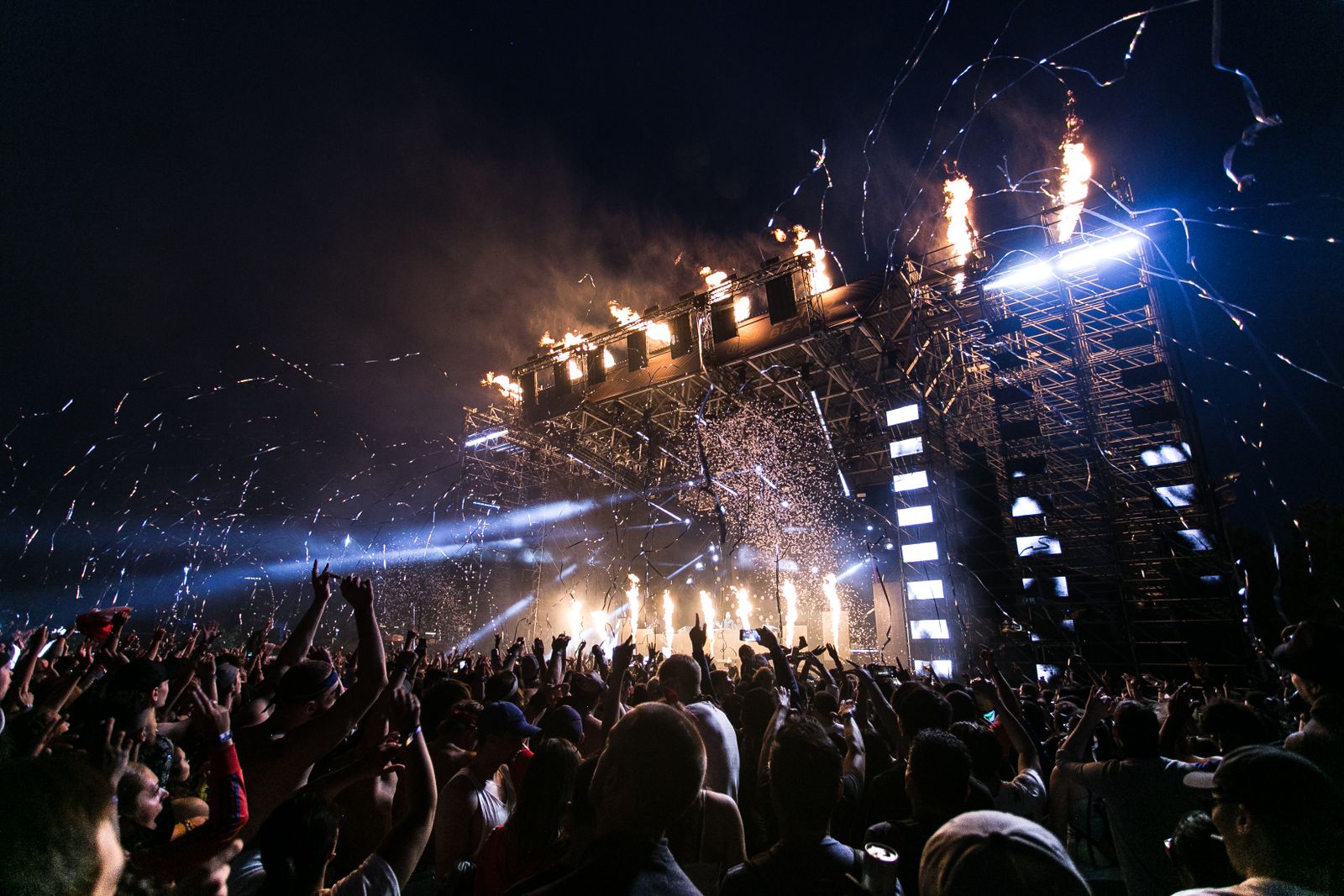
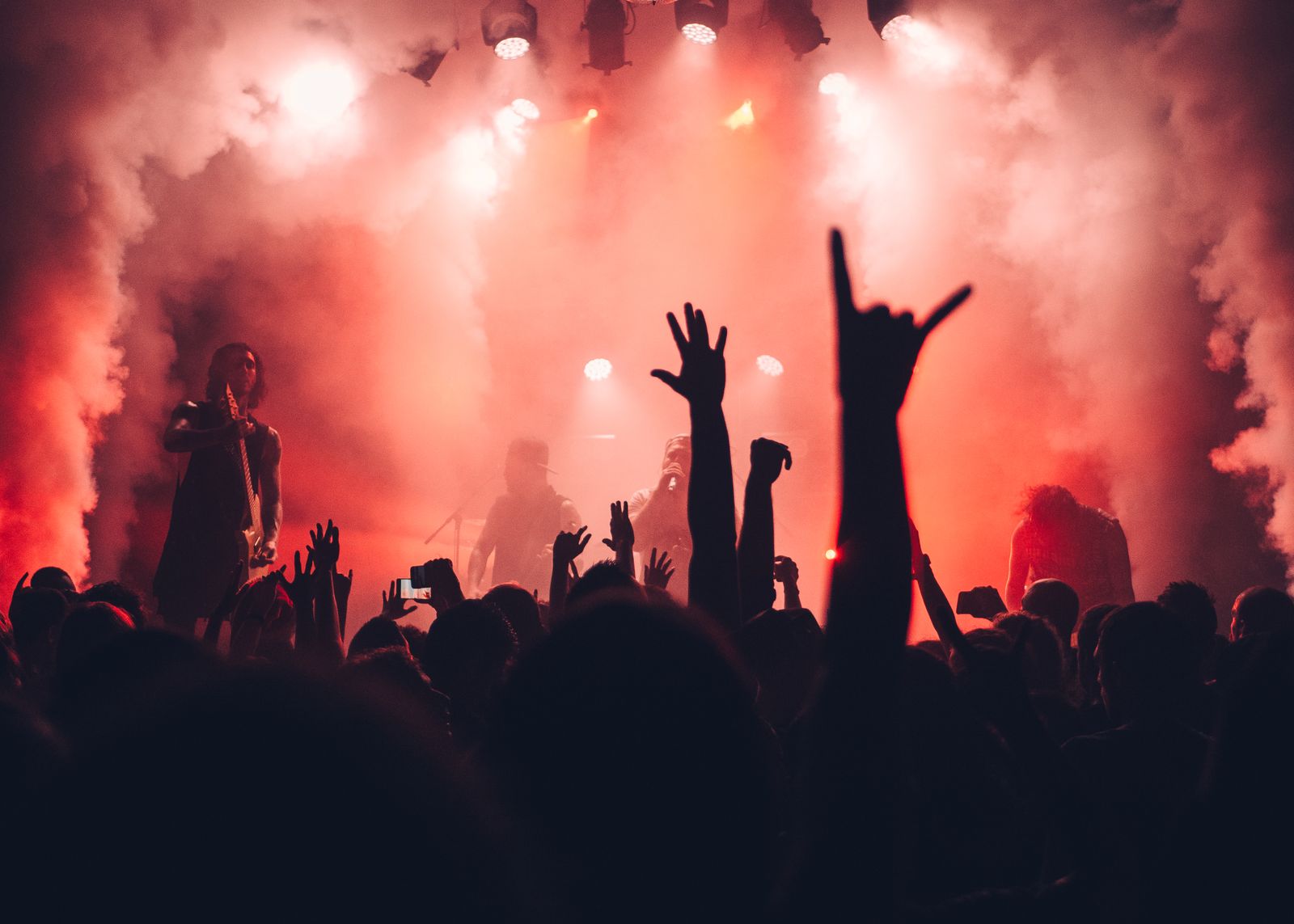
- Photographs: outdoor festival at night — photo via Pexels, https://www.pexels.com/photo/1190297/ ; concert crowd at a red-lit stage — photo via Pexels, https://www.pexels.com/photo/1763075/
More guides
- How to Find a Wedding Photographer: The Complete, Honest GuidePhotographers › Wedding Photographers
- How Much Does a Wedding Photographer Cost? Packages DecodedPhotographers › Wedding Photographers
- 10 Questions to Ask a Wedding Photographer Before You BookPhotographers › Wedding Photographers
- Wedding Photography Styles Explained: Documentary, Editorial, Traditional, Fine ArtPhotographers › Wedding Photographers
- Hiring a Wedding Photographer in California: Venue Light, Permits, and Price LevelsPhotographers › Wedding Photographers
- All Guides & ArticlesBrowse the full guides library