Photographers › Photography
How Much Does a Photographer Cost? Rates by Type, City, and Experience
Every photography quote looks arbitrary until you have seen a few hundred of them. Then a pattern emerges, and it is a fairly honest one: you are never paying for the hour someone holds a camera. You are paying for three separate things that happen to arrive on one invoice — the shoot itself, the work around the shoot, and the right to use the pictures afterwards. Clients who understand that split can read any estimate in the country. Clients who don't will compare a $400 quote and a $4,000 quote for "the same job" and learn the difference on delivery day.
This guide lays out what photographers actually charge in the United States right now, by type of work, by experience, and by the size of the market you are hiring in — and then explains the line most people miss entirely, the licensing fee, which on commercial work can cost more than the photography.
The short answer, by the hour
Start with the broadest benchmark available. Thumbtack, which collects the quotes its customers actually receive from local professionals, puts the national average hourly rate for a photographer at $164 an hour, with low-end quotes averaging $122 and high-end quotes $364. Published pricing guides for 2026 cluster around the same shape: beginners commonly charge $50 to $150 an hour, working professionals $100 to $300 or more, and top commercial photographers $250 to $500 an hour — or they stop quoting hours altogether and quote a day rate instead.
| Experience level | Typical hourly rate | What you are actually buying |
|---|---|---|
| Beginner / portfolio-building | $50–$150 | Enthusiasm and a decent camera; direction, backup gear, and delivery discipline are the gamble |
| Working professional | $100–$300+ | A business: insurance, backup bodies, a tested workflow, and pictures that arrive edited and on time |
| Top professional / commercial specialist | $250–$500+, or a day rate | A name clients book on purpose, a crew, and the ability to land a difficult brief in one day |
Treat the hourly figure as a translation device, not a shopping method. Almost nobody should buy photography by the hour except for events, where hourly coverage with a minimum — commonly two hours, at roughly $150 to $500 an hour depending on the photographer — is the standard structure. Everything else is packaged, per-image, or per-day, and the sections below follow those real structures.
What each kind of shoot actually costs
Weddings are the most researched number in photography, and the two big wedding platforms still disagree with each other in an instructive way. The Knot's 2026 Real Weddings Study, covering couples married in 2025, put the average spend on a wedding photographer at $3,000. Zola's Wedding Cost Index puts the average at $4,400, with a typical range of $3,500 to $5,300. Both can be true: they survey different couples. The working range for established wedding photographers is $2,000 to $5,000 and up for full-day coverage, with limited-coverage packages from $500 to $1,500 at the low end and premium packages at $5,000 to $10,000 and beyond. The extras are their own economy: a second photographer commonly adds $300 to $700, an engagement session $400 to $800, and a finished album $500 to $2,000.
Portraits and family sessions are package work. A mini-session runs $100 to $250, a standard session $250 to $750, and a premium or personal-branding session $750 to $2,000 and up. The package, not the hour, is where the value hides: ask how many edited images are included, because a cheap session that includes five finished pictures and charges per additional image can cost more than the expensive session that includes forty.
Headshots price per person. Established corporate headshot photographers commonly charge $150 to $350 per person, newer photographers $75 to $150, and executive-level work $350 to $800 and up. Team work flips to a half-day or day rate plus a per-person fee, which is why a ten-person office shoot is never ten times a single headshot.
Events — corporate functions, parties, conferences — are the true hourly market: roughly $150 to $500 an hour, usually with a minimum, and delivery that is fast and lightly edited compared with portrait work.
Real estate is priced per property: roughly $120 to $300 for a standard listing and $300 to $800 and up for larger or luxury homes, with drone work, twilight shoots, and video as add-ons.
Product and e-commerce work prices per image — commonly $25 to $175 per finished image — or converts to a day rate once the shot list gets long. Per-image pricing sounds cheap until you multiply it by a 200-product catalog, which is exactly the conversation a good product photographer will start with you.
Commercial and advertising work is a different economy altogether, covered in its own section below: day rates commonly $800 to $5,000 and up, plus licensing.
The commercial structure: creative fee, production, licensing
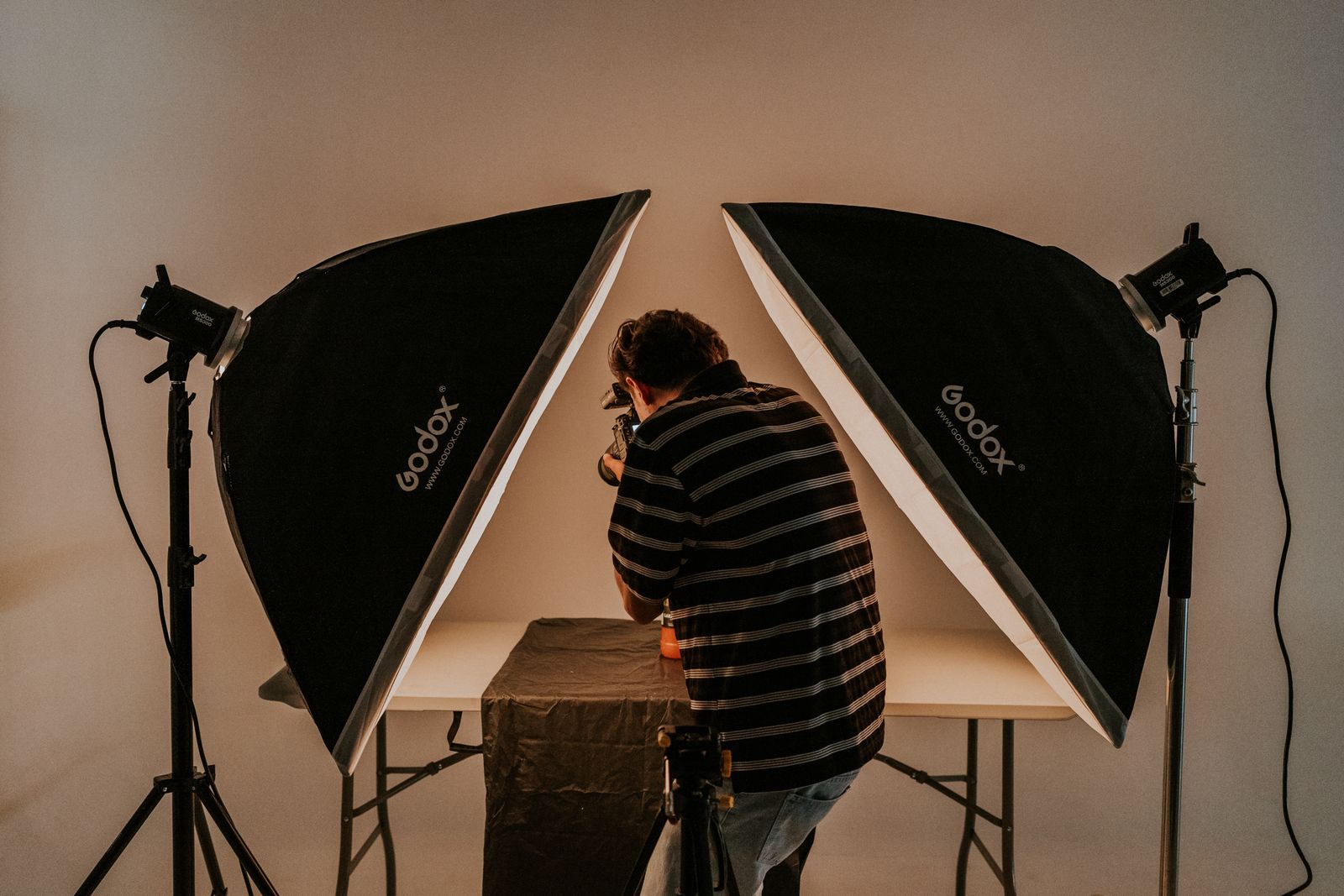
On the editorial and advertising side of the business — the side I worked on — a quote is built in layers, and comparing two quotes by their bottom line is the classic beginner's mistake. Compare them line by line.
The creative fee (often just the day rate) pays for the photographer's time, eye, and experience on the shoot day. Production costs are everything needed to make the day happen: assistants, a digital technician, stylists, hair and makeup, studio or location rental, props, wardrobe, travel, and catering. On a campaign day, production routinely equals or exceeds the photographer's own fee. Post-production — retouching, color work, compositing — is billed per image or per hour on top.
Then comes the usage or license fee, the line clients forget. In the United States, the photographer owns the copyright in the photographs unless a written work-for-hire agreement says otherwise. What a client buys is a license: permission to use the images in specified media, in a specified territory, for a specified period, sometimes exclusively. The fee scales with all four variables. Recent industry guidance puts a web-and-organic-social license for a set of images at roughly $500 to $2,000 on top of the shoot fee, a full commercial license covering web, print, and paid social for a one-to-two-year term at $2,000 to $10,000 and up, and a full buyout — perpetual, all channels, exclusive — at $5,000 to $25,000 and up.
That is why the same day of shooting can legitimately cost one client $1,500 and another $15,000. The photography is identical. The use is not. A local bakery posting pictures to its own Instagram account and a national brand putting the same frame on packaging and paid advertising are buying different products, and honest photographers price them differently. The practical move is to define your maximum realistic use before you ask for quotes — where the images will run, for how long, and whether paid media is involved — and to get the license written into the estimate, so that extending it later is a priced conversation rather than a dispute.
City and market: why the same shoot costs more in some places
Photography is a local service with local costs, and rates follow the cost of running a business where the photographer lives. The national averages above are midpoints of a wide spread. In the largest metros — New York, Los Angeles, San Francisco — expect established professionals to sit at or above the top of every range in this guide: studio rent, crew day rates, and the simple cost of staying in business are all higher, and so is the density of clients willing to pay for the top tier. In mid-sized and smaller markets, the same experience level commonly prices a third to a half lower, and the floor is set by competent part-timers whose overhead is a home office.
Two cautions follow. First, importing a photographer does not import their home-market price for long: travel, lodging, and a lost day on either side of your shoot are real costs, and good photographers bill for them. Second, a big-city price is not proof of big-city quality, and a small-market price is not proof of a bargain. In every market, the portfolio and the delivery record are the evidence; the price is mostly the rent.
What moves a quote up or down
Across every genre, the same levers appear. Experience and demand are the big ones — a photographer booked out three months ahead has no reason to discount, and their rate says so. Deliverables come next: twenty retouched images and two hundred lightly edited ones are different amounts of work, priced accordingly. Turnaround costs money; same-week delivery of work that normally takes three weeks is a rush service and is priced like one. Crew and production — a second photographer, an assistant, a stylist — each add a day rate. Travel and logistics add mileage, flights, or lodging. And on commercial work, usage towers over the rest: widening a license from one year of organic social to two years of paid national media can multiply the fee side of a quote several times over without a single extra photograph being taken.
The levers that move a quote down are less glamorous but real: booking off-peak dates, narrowing the license to the use you genuinely need, reducing the retouched-image count, and giving a photographer a brief so clear that they do not have to price in uncertainty. Vague briefs get padded quotes. That is not dishonesty; it is insurance.
How to budget, and how to compare quotes
Work backwards from the deliverable. Decide what you need to walk away with — how many finished images, in what form, usable where and for how long — and put that in writing before you contact anyone. Then collect quotes against the same brief, and compare them on the same lines: hours or days of coverage, number of edited images, turnaround, travel, and, for business work, the exact license. A quote that looks cheap usually is — on one of those lines. Find which one before you sign, not after delivery.
Finally, use directories the way editors do: as a map of who exists, not a verdict on who is good. This site's directory is a useful scale check — it counts more than 18,000 listings under Professional Photographers alone, alongside some 5,700 commercial and industrial photographers, 672 portrait photographers, 564 wedding photographers, and 177 headshot and portfolio specialists. Nobody's budget survives contacting all of them, and it doesn't need to. Shortlist by specialty and city, check full bodies of work rather than highlight reels, and get the whole price — shoot, production, and license — in writing. The photographer who itemizes without being asked is telling you something about how the job will go. In my experience, it is usually true.
Sources
- Thumbtack photographer pricing data (national average $164/hour), summarized in PHLEARN, "How Much to Charge for Photography in 2026" — https://phlearn.com/magazine/definitive-guide-pricing-your-photography-design-work/
- Aftershoot, "The Beginner's Photography Pricing Guide" (2026) — https://aftershoot.com/blog/photography-pricing-guide/
- Bark, "Photographer Prices 2026: Wedding, Portrait & Events" — https://www.bark.com/en/us/photographer/photography-pricing/
- Zarla, "How Much Do Photographers Charge in 2026? Rates + Calculator" — https://www.zarla.com/guides/how-much-do-photographers-charge
- Raised Media Co., "What Commercial Licensing Fees Cover in Photo and Video" — https://www.raisedmediaco.com/the-dailies/what-are-commercial-licensing-fees-photo-video
- HSM University, PHOT-310, "Estimates, usage licensing and production" — https://www.hsmuniversity.org/us/course/phot-310-commercial-and-product-photography/lesson-11-estimates-usage-licensing-and-production
- Minim, "Commercial Photography Pricing: What US Campaign Budgets Cover" — https://blog.weareminim.com/blog/commercial-photography-pricing
- Photography pricing in this guide also draws on The Knot 2026 Real Weddings Study and Zola's Wedding Cost Index figures as reported in the sources above.
- Photos: photo by Amar Preciado, https://www.pexels.com/photo/17094508/ ; photo by Kunno Jayson, https://www.pexels.com/photo/6989087/ ; photo by Amar Preciado, https://www.pexels.com/photo/8389706/
More guides
- How to Find a Wedding Photographer: The Complete, Honest GuidePhotographers › Wedding Photographers
- How Much Does a Wedding Photographer Cost? Packages DecodedPhotographers › Wedding Photographers
- 10 Questions to Ask a Wedding Photographer Before You BookPhotographers › Wedding Photographers
- Wedding Photography Styles Explained: Documentary, Editorial, Traditional, Fine ArtPhotographers › Wedding Photographers
- Hiring a Wedding Photographer in California: Venue Light, Permits, and Price LevelsPhotographers › Wedding Photographers
- All Guides & ArticlesBrowse the full guides library