Photographers › Aerial Photographers
How to Hire a Drone Photographer: Licensing, Insurance, and Airspace Rules
Every drone photograph you have ever admired on a listing, a brochure, or a construction report was taken inside the most heavily regulated few hundred feet of sky in America. That is not a complaint; it is the reason the work is hireable at all. A drone shoot is two products sold as one — pictures, and a small aviation operation conducted over somebody else's property, roof, guests, or building site. Buyers who understand the second product get the first one on time, legally, and without the particular silence that follows asking a pilot, on site, whether he is actually allowed to be up there.
This guide is for realtors, builders, and event organizers commissioning aerial work: what the law requires of the pilot you hire, how to verify it in five minutes, what airspace does to your schedule, what insurance should look like, and what the whole thing should cost.
The one credential that is not negotiable
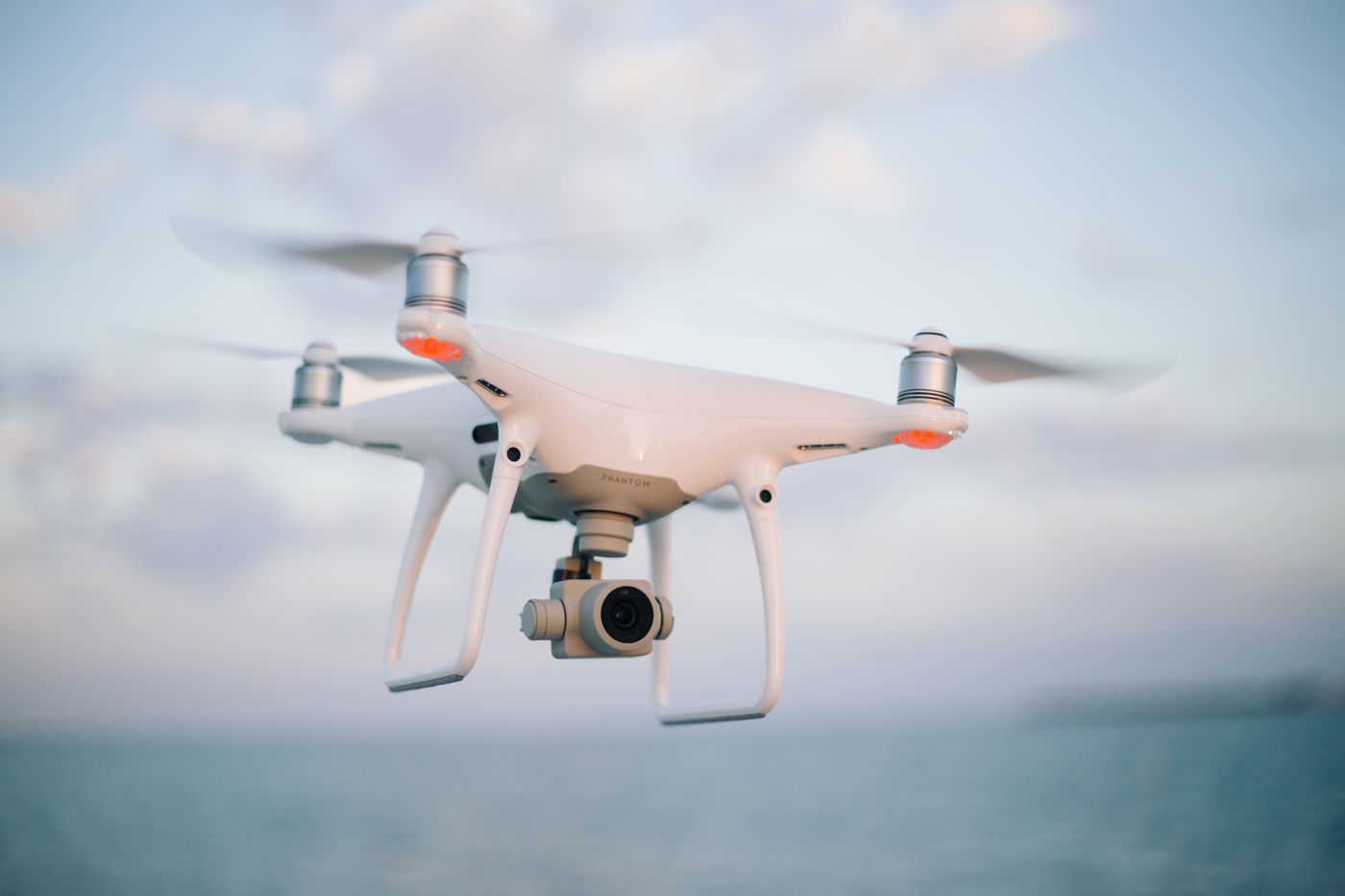
Flying a drone for any business purpose in the United States — photographing a property for sale is the Federal Aviation Administration's own first example — is commercial work governed by the FAA's Part 107 rule for small unmanned aircraft. The pilot in command must hold an FAA Remote Pilot Certificate. There is no de minimis exception for small jobs, friendly favors, or free shoots: if the flight furthers a business, including a portfolio-building shoot done for exposure, Part 107 applies.
The certificate is earned, not bought. A pilot must be at least 16, be able to read, speak, write, and understand English, pass TSA vetting, and pass a 60-question aeronautical knowledge test at an FAA-approved testing center — covering airspace classification, weather, airport operations, loading and performance, and emergency procedures — for a testing fee of about $175. The certificate stays current through free online recurrent training every 24 months. Pilots must carry the certificate when they fly; a legitimate one will show it the way a legitimate electrician shows a license, without being asked twice.
How to verify. Ask for a photograph or scan of the certificate before you sign anything, and check the name matches the person who will actually fly — certificates are not transferable to a substitute pilot, though an uncertificated operator may fly under the direct supervision of a certificate holder. You can cross-check a pilot in the FAA's public airmen registry. Also confirm the aircraft: under Part 107 every drone used commercially must be registered with the FAA — $5 per aircraft, valid three years — and must comply with Remote ID, broadcasting identification information in flight, with enforcement in full effect since March 2024.
Why should a buyer care, beyond tidiness? Because liability follows the operation. Guidance aimed at businesses puts civil penalties for uncertified commercial flying as high as $32,666 per violation, and if an uninsured, uncertified flight damages a roof, a car, or a guest, the argument about whose problem it is will include the person who commissioned the flight and never asked. The certificate is five minutes of diligence that moves you from participant to customer.
The rules your shoot will actually meet
Part 107's operating limits shape what a pilot can promise you:
- Altitude: no more than 400 feet above ground level — or, near a structure, within 400 feet of it and no more than 400 feet above its top. Plenty for photography; a hard ceiling nonetheless.
- Line of sight: the pilot must keep the aircraft in visual line of sight at all times. Flights beyond visual line of sight need a waiver most photography pilots do not hold.
- Speed and visibility: maximum 100 mph, at least three miles of visibility from the control station.
- People and vehicles: flying over people and moving vehicles is allowed only within defined categories of aircraft and conditions — which is why a wedding pilot may refuse the dramatic shot directly over your guests, and why that refusal is a credential, not an attitude.
- Night and twilight: night flying is permitted when the pilot's training is current and the aircraft carries anti-collision lighting visible for at least three statute miles. Twilight — the half hour around sunrise and sunset that produces the glowing-window shots — sits inside the same framework, which is one reason real twilight sessions are scheduled so precisely.
Airspace: the invisible scheduling problem
The rule that delays more shoots than weather is airspace authorization. In uncontrolled (Class G) airspace, a certificated pilot can generally launch on arrival. In controlled airspace around airports — Class B, C, or D, or the surface area of Class E at an airport — the pilot needs prior authorization from air traffic control before takeoff. Most authorizations are obtained through LAANC, the FAA's automated approval system available at more than 700 airports, and many are granted near-instantly up to the altitude ceiling shown on the FAA's facility maps for that grid. Some are not: low ceilings near busy airports can mean zero altitude in the grid — no authorization at any height — or a request that needs manual review and days, not minutes.
The buyer's takeaways are practical. First, give the pilot the exact address at quote stage, not the morning of the shoot; checking the airspace is part of quoting, and a pro does it before promising aerials. Second, build a weather-and-airspace day into any deadline that matters — a listing launch, a pour schedule, an event date that cannot move. Third, know that local rules layer on top of federal ones: some cities require a permit simply to take off or land within their limits — New York City's application, for example, carries a $150 fee and a review that begins 30 days out — and film offices in places like Los Angeles require permits for commercial drone filming on public property. Private venues, campuses, and critical-infrastructure sites add their own permissions. None of this is the pilot being difficult. All of it is discoverable in advance, and discovering it late is what "difficult" actually looks like.

Insurance: not required by the FAA, required by you
Here is the gap most buyers miss: as of 2026, the FAA does not require insurance for Part 107 operations. Your contract is therefore the only enforcement mechanism, and if you do not ask, you may be hiring an uninsured aviation operation over your client's property.
Ask for a certificate of insurance, current for the shoot date, showing commercial liability coverage — $1 million is the common benchmark for aerial photography work, with $1–2 million typical for commercial and industrial sites — and, for larger clients and venues, ask to be named as additional insured for the day. Per-flight and per-project policies exist in this market (one operator in this run's research insures each documentation site individually and names the client on the certificate), so "my policy doesn't cover that address" is a solvable problem, not an excuse. Hull coverage for the aircraft is the pilot's concern; liability for what the aircraft might meet on the way down is yours.
What it costs
Published 2026 pricing puts simple listing aerials at roughly $150–$400 as a package or add-on, with hourly rates for aerial photography commonly $150–$400 and day rates for commercial sessions between $1,000 and $3,000 depending on deliverables and site complexity. One Pennsylvania operator's current rate card is a useful concrete example: $275 for a one-hour residential session with ten edited stills, $375 for larger properties with eighteen, $850 for a luxury and commercial package with 15–20 stills and a 2–4 minute edited 4K video, and construction progression documentation sold as monthly subscriptions across the build. Harris County, Texas guidance puts real-estate sessions at $150–$350, commercial real estate and corporate work at $300–$800 and up, and industrial work higher still, with day rates starting around $500.
| Job | Typical 2026 range | Notes |
|---|---|---|
| Listing aerials (stills) | $150–$400 | Often an add-on to a ground shoot |
| Aerial stills + short video | $249–$525 | Edited video is the price step |
| Commercial / luxury package | $400–$1,200 | More stills, graded 4K video, longer on site |
| Full-day commercial session | $1,000–$3,000 | Multi-location, complex sites |
| Construction progression | ~$1,475–$2,050 per month | Recurring visits across a build |
Quotes far below these bands usually resolve, on inspection, into an uncertificated pilot, no insurance, or both — which is to say the discount is the risk, transferred to you.
Questions to ask before you book
- May I see your Remote Pilot Certificate, and will you be the pilot in command on the day?
- Is the aircraft registered, and does it broadcast Remote ID?
- Have you checked the airspace at this address — is LAANC authorization needed, and have you obtained it?
- Do we need any local takeoff, landing, venue, or film permits, and who secures them?
- May I see a certificate of insurance for the shoot date, and can we be named as additional insured?
- What is your weather postponement policy, and what happens to the fee?
- What exactly is delivered — how many stills, what video, edited how, and when?
The short version
Verify the certificate. Confirm the registration and Remote ID. Give the address early so airspace can be checked before promises are made. Put the insurance requirement in the contract, because the FAA won't do it for you. Pay the market rate, which is a few hundred dollars for the aerials that sell a property, document a build, or show an event at its true scale. This site lists 877 aerial photographers, so the choice is wide — but the filter is narrow, and it fits on one line: certificated, insured, and able to show you both before the props start turning.
Sources
- DFI Rentals, "Drone Filming in Los Angeles: FAA Rules, FilmLA Permits, Airspace, and Best Gear (2026)" — Part 107 requirements, the knowledge test, penalties, and local permit layering. https://www.dfirentals.com/news/how-to-shoot-drone-video-los-angeles-rules-permits-gear
- Ideastream Marketing, "FAA Drone Regulations for Businesses: 2026 Guide" — Part 107 limits, registration, Remote ID, and city permit examples. https://ideastreammarketing.com/faa-drone-rules/
- Image Media Lab, "Commercial Drone Laws 2026: Part 107, Remote ID, Waivers" — LAANC at 700+ airports, night and over-people rules. https://www.imagemedialab.com/video-blog/commercial-drone-laws-us-2026-guide
- Windhorse Aero, "Real Estate Drone Photography: Rules and Drones" — the FAA's "taking photos to help sell a property" example, 14 CFR citations, LAANC and twilight rules. https://windhorse.aero/work/real-estate-drone-photography/
- ZigZag Aerial, "Drone Photography Pricing 2026" — published package rates and per-site insurance practice. https://www.zigzagaerial.us/pricing
- Finaax, "How to Hire a Commercial Drone Photographer in the U.S." — 2026 price bands and the point that the FAA does not require insurance, so contracts must. https://www.finaax.com/dsr?q=commercial%20drone%20photography&locale=en_US
- Astral Pic, "Drone Photography Pricing: Hourly vs Package" — hourly, package, and day-rate models with published sources. https://astralpic.com/guides/drone-photography-pricing
- Photographs: quadcopter in flight — photo by Josh Sorenson, https://www.pexels.com/photo/1034812/ ; house, aerial-shoot subject — photo by Binyamin Mellish, https://www.pexels.com/photo/106399/ ; house at twilight — photo by Littlehampton Bricks, https://www.pexels.com/photo/modern-house-facade-with-glowing-lights-at-dusk-4626268/
More guides
- How to Find a Wedding Photographer: The Complete, Honest GuidePhotographers › Wedding Photographers
- How Much Does a Wedding Photographer Cost? Packages DecodedPhotographers › Wedding Photographers
- 10 Questions to Ask a Wedding Photographer Before You BookPhotographers › Wedding Photographers
- Wedding Photography Styles Explained: Documentary, Editorial, Traditional, Fine ArtPhotographers › Wedding Photographers
- Hiring a Wedding Photographer in California: Venue Light, Permits, and Price LevelsPhotographers › Wedding Photographers
- All Guides & ArticlesBrowse the full guides library