Photographers › Photography
How to Hire a Photographer: The Complete Guide for People Who Don't Know Where to Start
Most people hire a photographer the way they hire a plumber in a flood: quickly, under pressure, and with no real way to judge the work until it is done. The difference is that a bad plumbing job can be redone. A wedding, a newborn's first week, a house going on the market, a parent's eightieth birthday — these do not reschedule. The photographs are either made well on the day or they are not made at all.
That asymmetry is why this guide exists. Hiring a photographer is not mysterious, but it is a skill, and almost nobody is taught it. What follows is the whole process, from defining the job before you search, to the contract clause most first-time clients never think to ask about until it is too late.
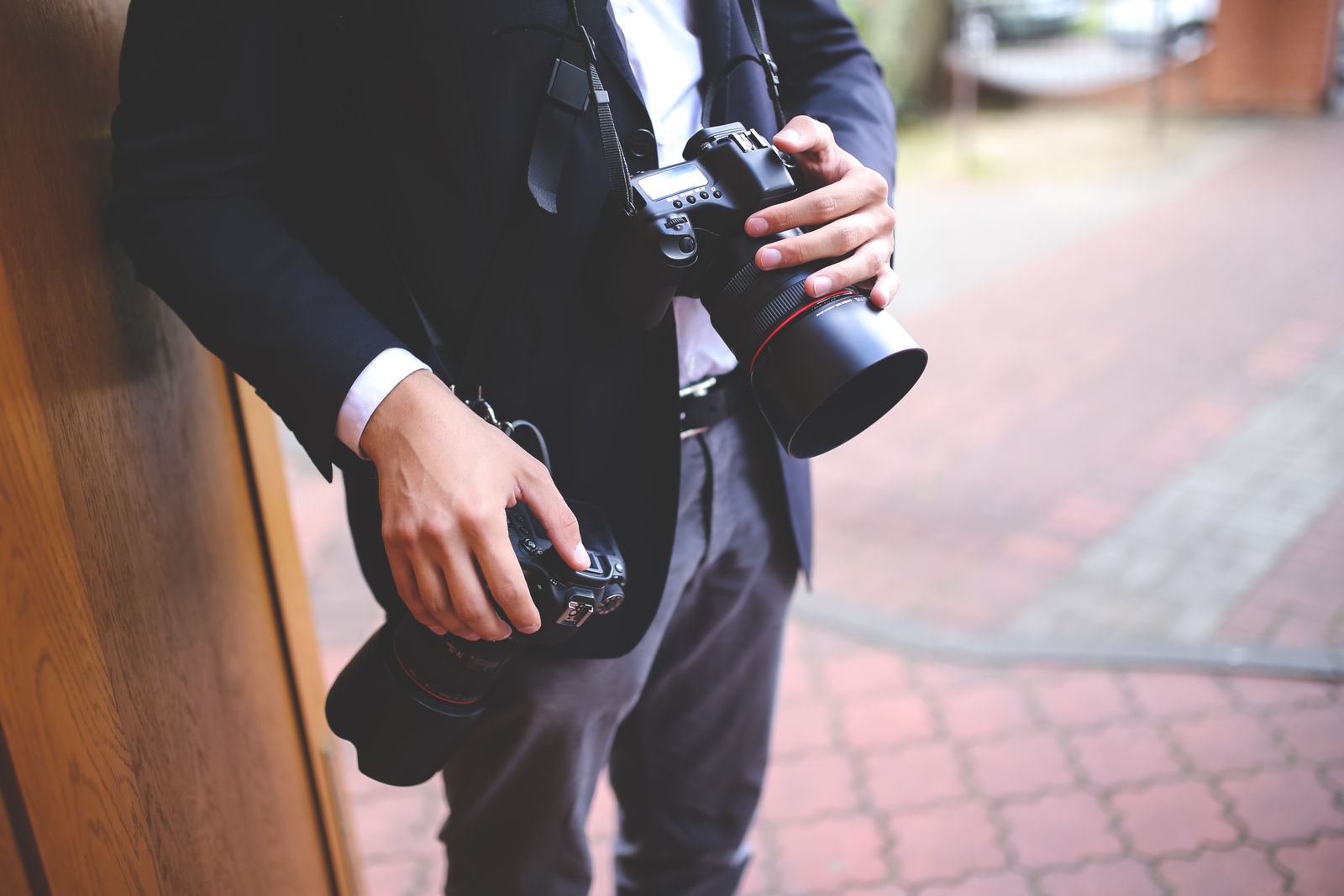
Start with the job, not the search
The single most common hiring mistake happens before anyone opens a browser: searching for "a photographer" as if photography were one trade. It is dozens. This site's directory alone lists more than 32,000 photography listings, and inside that total sit specialists who barely overlap — 564 wedding photographers, 672 portrait photographers, 877 aerial photographers, 241 animal and pet photographers, 177 headshot and portfolio photographers, and 5,719 commercial and industrial photographers. A brilliant pet photographer may be helpless at a corporate event. A superb commercial shooter may have no idea how to pose a nervous teenager for senior portraits.
So write the job down first, in plain language. What is being photographed, where, for how long, and — the question people skip — what will the pictures be for? A LinkedIn headshot, a listing that has to sell a house, and a billboard campaign are three different products with three different price structures, because the use is part of the product. Photographers price partly on time and partly on what the images will do for you.
A useful brief fits in five lines: the occasion, the date and location, roughly how many finished images you need, where they will appear, and your budget range. Every conversation after that gets shorter and more honest, because photographers can tell you immediately whether they are the right shape for the job.
What it costs, in real numbers
Photography pricing confuses first-timers because three different markets hide inside one word. Marketplace data from Thumbtack puts the national average cost of hiring a photographer at roughly $233 to $486 for a typical job, with an average hourly rate around $164 — low-end quotes averaging about $122 an hour and high-end quotes around $364. Bark's 2026 pricing data lands in a similar place for ordinary sessions, averaging around $200, with hourly rates for working professionals commonly between $100 and $300.
By specialty, Thumbtack's averages give a fair map of the middle of the market:
| Type of shoot | Typical average cost | Notes |
|---|---|---|
| Portrait session | About $277 | Usually one to two hours, a set of edited images |
| Headshots | About $304 | Corporate work with retouching sits at the top of the range |
| Engagement session | About $319 | Often discounted when bundled with a wedding package |
| Commercial shoot | About $440 | Before licensing — usage rights are priced separately |
| Aerial photography | About $333 | Drone work; certification is legally required for paid jobs |
| Wedding and events | Well above the marketplace average | The Knot put the average couples spent on a wedding photographer in 2025 at $3,000 |
Two cautions about every number above. First, averages blend students charging $50 an hour with veterans charging $500, so treat them as a sanity check, not a quote. If a full wedding package is offered to you for $400, the question is not whether you found a bargain but what is missing — experience, backup equipment, insurance, editing time, or all four. Second, the Bureau of Labor Statistics put the median annual wage for photographers at $44,660 in May 2025. Photography is, for most of its practitioners, a modestly paid skilled trade with heavy equipment and software costs. Prices that look high for "a few hours of work" are carrying the editing days, the insurance, the second camera body, and the years it took to make the few hours look easy.
Set your budget before you fall in love with a portfolio. A sensible rule for events is that photography deserves roughly a tenth of the total budget — it is, after all, the only purchase that outlives the day itself.
Reading a portfolio like a buyer, not a fan
Every photographer's website is a highlight reel. Your job is to get past it.
Ask for one complete job. Not the twenty best frames from twenty different days — one full gallery from a single assignment similar to yours. Consistency across two hundred ordinary frames tells you what you will actually receive. The highlight reel tells you what the photographer can do on their best day, with their best client, in their best light.
Look at the hard pictures, not the pretty ones. Anyone can make a sunset portrait. Look for the dim reception hall, the midday group shot, the cramped getting-ready room. Skill shows where the light is bad.
Check that the style is a style, not a filter. Editing fashions cycle fast — the washed-out look of one decade embarrasses the next. Ask yourself whether you will like these images in twenty years, because that is the term you are buying them for.
Match specialty to job, again. This site lists 141 architectural photographers and 18,399 professional photographers under its broadest category; the breadth is exactly why the specialty filter matters more than the star rating. A portfolio full of landscapes, however gorgeous, is not evidence about weddings.
Watch for the borrowed portfolio. It happens: a new business built on stock images or another photographer's work. A reverse image search on two or three portfolio standouts takes five minutes and settles the question. A legitimate photographer will also happily connect you with a past client.
The shortlist conversation
Talk to two or three finalists. You are listening for how they work, not just how they shoot. Do they ask about your timeline, your venue, your family politics, your shot list? Good photographers interrogate the job because they are already planning it. Vague enthusiasm — "we'll just capture the day as it happens" — is fine for a documentary specialist and a warning sign from everyone else.
Ask, plainly: Who exactly will photograph us? Studios book the job and send an associate; that can be perfectly good, but you should know before the contract, not at the door. Ask what happens if they are ill on the day — the honest answer names a specific backup or a network, not a shrug. Ask how many jobs they take in a weekend. Ask about backup equipment and backup files: professional practice is two camera bodies, multiple cards, and the images copied to at least two places before the photographer sleeps. Card failure is rare and real, and "rare" is no comfort when the card held your wedding.
The contract: the part that actually protects you
Everything before this section is taste. This section is law, and it is where first-time clients lose money and pictures.
Copyright is not what you think. Under U.S. copyright law, the photographer owns the images from the moment the shutter fires — paying for the session does not transfer ownership. What you receive is a license: permission to use the images in specified ways. For personal work — weddings, family portraits — that license normally covers printing and sharing for personal use. For business work, the license is the product: it should name the media (website, social, print, advertising), the territory, and the term. A use that is not named is, as licensing guides for brands put it, a use that is not granted. If your company might put the photos in an ad campaign next year, buy that right now, while it is cheap, rather than renegotiating when the photographer knows you need it.
RAW files are usually off the table. Photographers almost universally deliver edited JPEGs and keep the unprocessed RAW files, which are the equivalent of undeveloped negatives. If you genuinely need RAW — some commercial clients do — it must be in the contract, and it will cost more.
Delivery time, in writing. A portrait gallery in one to two weeks and a wedding gallery in six to twelve weeks in peak season are honest ranges. Get the number of days into the contract, along with what counts as delivery.
Money terms. Expect a retainer — commonly a third to a half of the fee — to reserve the date, usually non-refundable, with the balance due before or on the day. Non-refundable is standard, not sinister: the photographer turned away other work for your date. What should be spelled out is the other direction: what happens if the photographer cancels, and what the reschedule terms are if you must move the date.
The photographer's own use. Most contracts reserve the photographer's right to show the work in their portfolio and on social media. If your event is private — a celebrity, a minor, a corporate launch under embargo — negotiate that clause before signing, not after the images are posted.
Insurance and permits. A working professional carries liability insurance and can produce a certificate; many venues require it. Paid drone work requires an FAA Part 107 Remote Pilot Certificate, full stop — if aerials are in your package, ask to see it. And if your session is on public land, a paid shoot often counts as commercial photography requiring a permit; ask whose job the permit is, in writing.

Red flags and green flags
Red flags are remarkably consistent across every specialty. No contract, or resistance to one. Prices far below the local market with no explanation. A portfolio that is all styled shoots and no real clients. Payment demanded entirely in advance, in cash, through an app with no invoice. No backup plan, no insurance, no second camera. Communication that is sloppy before the sale, when the photographer is on their best behavior.
Green flags are quieter. A contract offered before you ask. Questions about your day that you had not thought of. A full gallery shared without hesitation. Clear delivery dates. A price that is itemized — coverage, editing, album, licensing — so you can see what you are buying and adjust the parts, rather than haggling over a single opaque number.
On the day, and after
Your remaining job is logistics. Confirm the timeline, the address, the parking, and a phone number that will be answered on the day, a week out and again the day before. Feed event photographers if the coverage runs through a meal — a fed photographer is a present photographer, and the contract may require it anyway. Then let them work. The clients who get the best galleries are the ones who hired carefully and then trusted the hire.
When the gallery arrives, download the full-resolution files and store them in two places of your own. Photographers archive client work for a while, not forever, and studios close. The license you bought is only useful if you still have the files it covers.
A short script for the first email
If you do not know where to start, start here: "We're getting married on [date] at [venue] in [city], expecting about [number] guests. We need coverage from [start] to [end], and we'd like [any specific products: an album, prints, files for social]. Our photography budget is around [amount]. Could you send your full pricing, a complete gallery from a similar wedding, and your contract terms?" Replace the wedding details with your own job — the shape holds for headshots, listings, products, and parties. A photographer who answers that email completely and promptly has already passed the first test.
Hiring a photographer is, in the end, buying judgment under time pressure: judgment about light, about people, about the moment two seconds before it happens. You cannot test that judgment directly. But you can do everything in this guide — define the job, check the specialty, read a whole gallery, price against the real market, and sign a contract that says what happens with the pictures, the money, and the day itself. Do those things, and the odds move decisively in your favor.
Sources
- Thumbtack, "2026 Photographer Prices" — national average cost ranges, hourly rates, and per-specialty averages. https://www.Thumbtack.com/p/photographer-prices?browse_view=0
- Bark, "Photographer Prices 2026: Wedding, Portrait & Events" — session and hourly pricing data. https://www.bark.com/en/us/photographer/photography-pricing/
- Phlearn, "How Much to Charge for Photography in 2026" — The Knot's $3,000 average wedding-photographer spend for 2025 and Bureau of Labor Statistics figures. https://phlearn.com/magazine/definitive-guide-pricing-your-photography-design-work/
- U.S. Bureau of Labor Statistics, Occupational Employment and Wage Statistics, Photographers (27-4021) — median annual wage $44,660, May 2025. https://www.bls.gov/oes/2023/May/oes274021.htm
- LegalClarity, "When You Hire a Photographer, Who Owns the Pictures?" — copyright ownership and licensing for hired photography. https://legalclarity.org/who-owns-the-pictures-when-you-hire-a-photographer/
- VSCO, "Photo Licensing Guide for Brands and Businesses" — license terms, media, term, and exclusivity. https://www.vsco.co/learn/photo-licensing-guide
- Photograph: photo by Karolina Grabowska, https://www.pexels.com/photo/6182/
- Photograph: photo by Saviesa Home, https://www.pexels.com/photo/kitchen-island-2089698/
More guides
- How to Find a Wedding Photographer: The Complete, Honest GuidePhotographers › Wedding Photographers
- How Much Does a Wedding Photographer Cost? Packages DecodedPhotographers › Wedding Photographers
- 10 Questions to Ask a Wedding Photographer Before You BookPhotographers › Wedding Photographers
- Wedding Photography Styles Explained: Documentary, Editorial, Traditional, Fine ArtPhotographers › Wedding Photographers
- Hiring a Wedding Photographer in California: Venue Light, Permits, and Price LevelsPhotographers › Wedding Photographers
- All Guides & ArticlesBrowse the full guides library