Photographers › Photographic Equipment Service & Repair
How to Negotiate Camera and Equipment Repair Quotes Without Burning the Relationship
A camera fails the way event problems always happen: not in a quiet week, but ten days before a season of weddings, conferences and family celebrations, when every photographer you know is booked and every rental house is busy. Then the repair quote arrives, and it is larger, vaguer and slower than you hoped. The instinct is to haggle. Resist the crude version of that instinct. Repair shops are small, skilled and remember their customers — and the person holding your shutter mechanism also holds your deadline.
I book photographers for events for a living, which means I also live downstream of their repair bills, their loaner arrangements and their bench timelines. This guide is how to negotiate a camera or lens repair quote properly: where a provider genuinely has room to move, what you can trade instead of money, and what you should never squeeze, because it costs more than it saves.
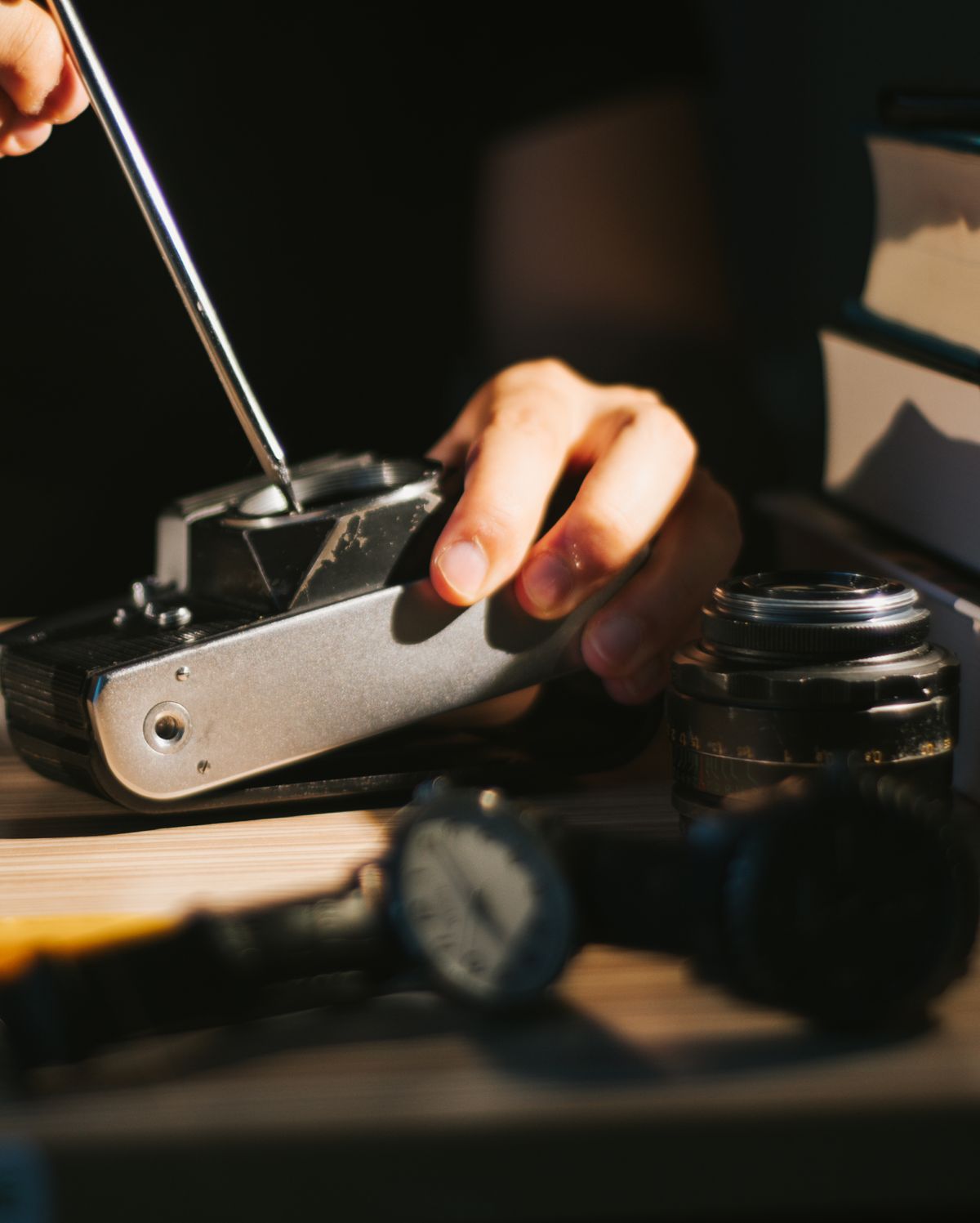
First, understand what a quote is made of
A repair estimate is not one number. It is at least four, and each has a different amount of flexibility in it:
The bench or diagnostic fee. Nearly every shop charges to diagnose, because finding a fault inside a sealed lens or body takes a technician's time before any fix can be priced. Published bench fees at independent shops run roughly $24 to $85 depending on the equipment — one long-running shop lists $25 for film cameras and lenses, $35 for digital point-and-shoots and $50 for DSLRs — and the common, customer-friendly practice is for that fee to be applied to the repair cost if you approve the estimate. Whether it is credited, and whether it is refundable if you decline, are the first two questions to ask. Canon's own service, by contrast, has historically offered a free inspection with an estimate to follow, and charges separately for maintenance service. Different models, both legitimate — what matters is knowing which one you are in before the equipment leaves your hands.
Parts. Proprietary, priced by the manufacturer, and the least negotiable line in the building. Canon, Nikon, Sony and Sigma parts reach their own service centres and authorised shops first; an independent may not be able to obtain a given focus motor or board at any price. When a quote is parts-heavy, there is usually little margin to discuss — the shop did not set the price of the part.
Labour. Skilled bench time, and the line where service model matters most. Independent shops typically run 20 to 40 percent cheaper than manufacturer service centres for the same job, and are generally faster. Flat-rate menus exist too: KEH, the large US used-equipment dealer with a repair service, has published flat prices by lens type — around $180 for a non-professional fixed lens, $320 for professional and zoom lenses, $115 for teleconverters, with medium-format prices in between. A flat rate is itself a negotiation outcome: certainty, in exchange for no itemised argument.
Shipping, insurance and time. Mail-in repair adds insured shipping both ways — owners report three-figure shipping-and-insurance costs on high-value bodies and lenses sent to a manufacturer — and time out of service, which for a working photographer is a real cost even when no invoice shows it. A cheaper quote that takes six weeks can be more expensive than a dearer one that takes two.
| Quote element | Typical scale | Room to negotiate |
|---|---|---|
| Bench / diagnostic fee | About $24–$85 at independents; sometimes free at manufacturers | Ask whether it is credited toward an approved repair |
| Common lens repairs | Roughly $100–$300 for many fixes; major damage $400–$800+ | Compare flat-rate vs itemised; ask what is included |
| Manufacturer flat-rate example | About $459 reported for a Canon EF 70-200mm f/2.8L IS II focus fault | Little on price; membership discounts may apply |
| Independent vs manufacturer labour | Independents often 20–40% cheaper | This is the comparison to make, politely, with a real quote |
| Turnaround | Independents often 2–4 weeks, backlog-dependent; send-outs add weeks | Trade flexibility on timing — see below |
Know which shop you are actually talking to
There are three kinds of provider, and the right negotiation is different with each:
The manufacturer service centre offers genuine parts, factory-trained technicians, calibration with factory equipment and a repair record tied to your serial number. It is the correct route for in-warranty work, very new bodies with restricted parts, and jobs needing factory alignment. Its prices are the least flexible — but membership changes the maths. Canon Professional Services is the clearest example: its Gold membership, at a $100 annual fee, includes a 20 percent discount on up to ten repairs per term, expedited three-business-day turnaround on eligible products, repair coverage loans if Canon cannot meet that turnaround, free return shipping and complimentary maintenance services. Higher tiers raise the discount and shorten the turnaround. If you or your photographer shoots one system professionally, the membership — not haggling — is the discount.
Authorised repair centres are independent businesses authorised by a manufacturer to perform repairs, using genuine parts and manufacturer procedures, sometimes faster than the factory queue. Verify the authorisation if warranty coverage matters to you.
Independent shops are the relationship businesses of this trade: often cheaper, often faster, frequently staffed by technicians who trained at the manufacturers, and — critically — often the only option for equipment the manufacturer no longer services, including most film cameras and older lenses. Their constraint is parts access and scale. Their asset is goodwill. Negotiate accordingly.
One question cuts through all three: is the work done in-house, or sent out? A shop that repairs on its own bench quotes you directly and controls its queue. A shop that sends work out adds its markup and, typically, four to six weeks on top of the actual repair time. Asking is not an insult; not asking is how deadlines die.
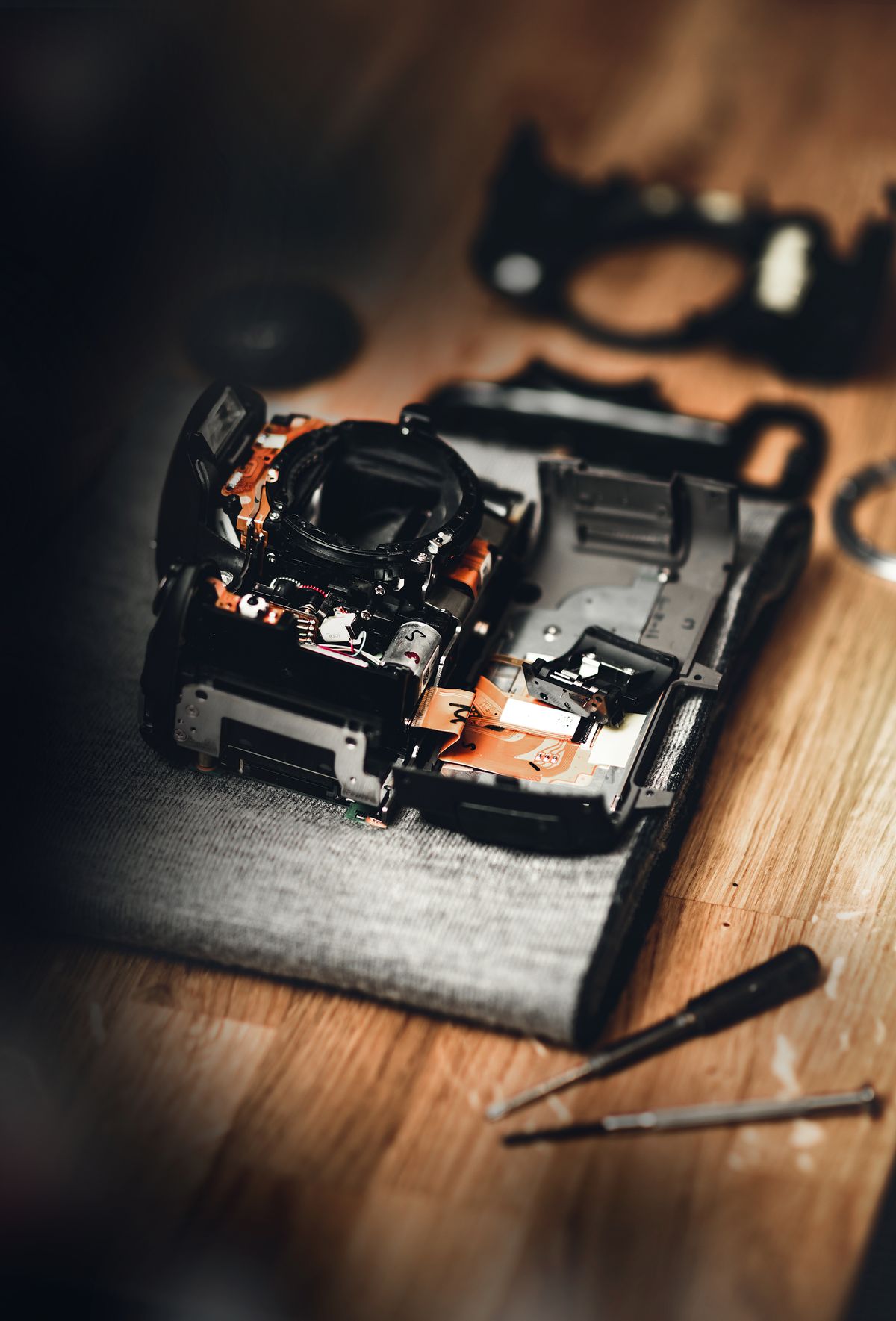
Where the real negotiating room is
Timing is currency. A shop's scarcest resource is bench slots in peak season. If your repair is not urgent, say so and mean it: offering to be the flexible job — the one that fills gaps between rush work — is worth real goodwill and sometimes real money. Conversely, if you need a rush, ask for it as a priced service rather than demanding it as a favour. You are buying queue position, and queue position has a price everywhere in the events business too.
Bundle honestly. Sending a body and two lenses for service, cleaning and calibration in one shipment saves the shop handling and saves you duplicate shipping and bench administration. Ask what a combined visit does to the total. This is legitimate volume logic, not a squeeze.
Ask what the quote assumes. Estimates are written against a diagnosis, and diagnoses change when a unit is opened. Agree the approval threshold in advance: proceed up to a stated amount, call before exceeding it, and call if the fault turns out to be something else entirely. Most repair disputes are not about price; they are about work done past a number the customer never agreed to. A clear threshold protects the shop as much as you, which is why good shops welcome it.
Trade scope, not rate. If the total is beyond the budget, do not ask the technician to work cheaper. Ask what can be separated: the essential repair now, the cosmetic work never, the full calibration and clean as a priced option. Removing scope is honest negotiation; discounting skill is how you become the customer whose calls get returned slowly.
Use the membership and warranty routes first. Before negotiating any manufacturer quote, check warranty status, any accidental-damage cover, and professional-programme membership. A 20 percent CPS-style discount obtained by entitlement beats a 10 percent discount obtained by friction, and it leaves the relationship intact.
Get a second quote — and say so plainly. Comparing a manufacturer estimate with an independent's is normal market behaviour, and reputable shops expect it. What burns relationships is theatre: invented competing quotes, or shopping a detailed diagnosis — paid for with one shop's bench fee — around town as a free specification for others. If you use a shop's diagnosis to get a second price, be honest that the first shop did the diagnostic work, and consider that the bench fee you paid them was the price of that knowledge.
What never to squeeze
- The repair warranty. Shops commonly warrant their work for a period — six months on services performed is a published example. Asking for a cheaper job with no warranty is asking for a worse repair, and a quote comparison that ignores warranty length is not a comparison.
- Parts quality. Pressing an independent to use the cheapest available part in a professional body or lens converts a repair into a future failure, usually at an event, which is the most expensive place a camera can fail.
- The "while you're in there" freebie. Small additions are still bench time. List what you want, let them price it, and pay for what is done.
- A quote above the equipment's value. This one cuts the other way: sometimes the correct negotiation is no repair at all. The working rule is blunt — if the fix costs more than a clean used copy sells for, you are paying a premium to own a repaired one. Point-and-shoot cameras are the extreme case, where parts scarcity and labour alone usually exceed the camera's worth. A good shop will tell you this themselves; telling it unprompted is one of the strongest trust signals in the trade, and it is worth rewarding with your next, worthwhile repair.
A script that works
Open with the facts, not a grievance: what the equipment is, what failed, when you need it, and what you have been quoted. Then ask four questions — is the bench fee credited if I approve; is the work done in-house; what warranty does the repair carry; and where is there flexibility if I can be flexible on timing or scope? Close by agreeing the approval threshold and getting the agreement in writing, with the turnaround stated as an estimate tied to parts availability, which is the honest form of any repair promise.
This site's directory lists 571 businesses under Photographic Equipment Service & Repair — a reminder that this is a real, varied trade, not a single counter. In a trade that size, reputation travels between photographers faster than any quote. Negotiate like someone who will need the bench again next season, because if you work around events, you will. The cheapest repair is the one that is done properly, once, by people who are glad to see your name on the next job ticket.
Sources
- CameraStores.net, "Camera Repair Near You — Real Prices, Bench Fees & What Is Worth Fixing" — bench and estimate fees of $24–$85, in-house versus send-out timelines, independents running 20–40% cheaper, and the repair-versus-replace value rule. https://www.camerastores.net/camera-repair/
- Camera Corral, "Camera Repairs" — published bench fees of $25 (film), $35 (point-and-shoot) and $50 (DSLR) applied to approved repairs, 2–4 week service times, and a six-month warranty on services performed. https://www.cameracorral.com/camera-repairs
- Shotkit, "Camera Lens Repair Guide" — KEH flat-rate repair prices by lens type, Canon's free inspection and $59 maintenance service, and manufacturer versus third-party routes. https://shotkit.com/camera-lens-repair/
- Photography.org, "Why Lens Repair Costs So Much" — proprietary parts access, a reported $459 Canon flat fee for an EF 70-200mm f/2.8L IS II focus fault, and shipping-and-insurance costs on manufacturer repairs. https://pho.tography.org/why-lens-repair-costs-so-much/
- Canon U.S.A., "Canon Gold Membership" (Canon Professional Services) — $100 annual Gold membership with a 20% discount on up to ten repairs, three-business-day expedited turnaround, repair coverage loans and free return shipping. https://www.usa.canon.com/pro/canon-professional-services/cps-gold-membership
- Clean Camera, "Where to Send My Camera for Repair Nationwide" — when manufacturer service is the right route and when an independent shop is, including discontinued and vintage equipment. https://www.cleancamera.com/post/where-to-send-my-camera-for-repair-nationwide
- Photograph: photo by Ahmet Polat, https://www.pexels.com/photo/5587333/
- Photograph: photo by Alex Andrews, https://www.pexels.com/photo/821642/
More guides
- How to Find a Wedding Photographer: The Complete, Honest GuidePhotographers › Wedding Photographers
- How Much Does a Wedding Photographer Cost? Packages DecodedPhotographers › Wedding Photographers
- 10 Questions to Ask a Wedding Photographer Before You BookPhotographers › Wedding Photographers
- Wedding Photography Styles Explained: Documentary, Editorial, Traditional, Fine ArtPhotographers › Wedding Photographers
- Hiring a Wedding Photographer in California: Venue Light, Permits, and Price LevelsPhotographers › Wedding Photographers
- All Guides & ArticlesBrowse the full guides library