Photographers › Portrait Studios
How to Negotiate Portrait Studio Session Quotes Without Burning the Relationship
There is a particular silence that falls when a family asks a portrait studio, "Is there anything you can do on the price?" The photographer hears a question about their worth. The family is usually asking a different question entirely: we love this work, we did not expect the total to be this, help us find the version of this we can afford. Both things can be true, and the negotiation goes well exactly when both sides keep them separate. A portrait session is not a car. The person whose price you are negotiating is the person who will coax your toddler through minute forty, notice your father's collar, and retouch the portrait your family keeps for thirty years. You want that person glad you booked. You also have a budget, and pretending otherwise helps nobody.
I book photographers for events for a living, and the deals that work — lower total, relationship intact, better pictures — share a pattern. They never start with a percentage off. They start with the structure of the quote, because a portrait quote is not one price. It is five or six prices wearing a trench coat, and some of them have genuine margin while others are the photographer's rent. This guide shows you which is which, what to trade instead of squeeze, and what never to ask for.
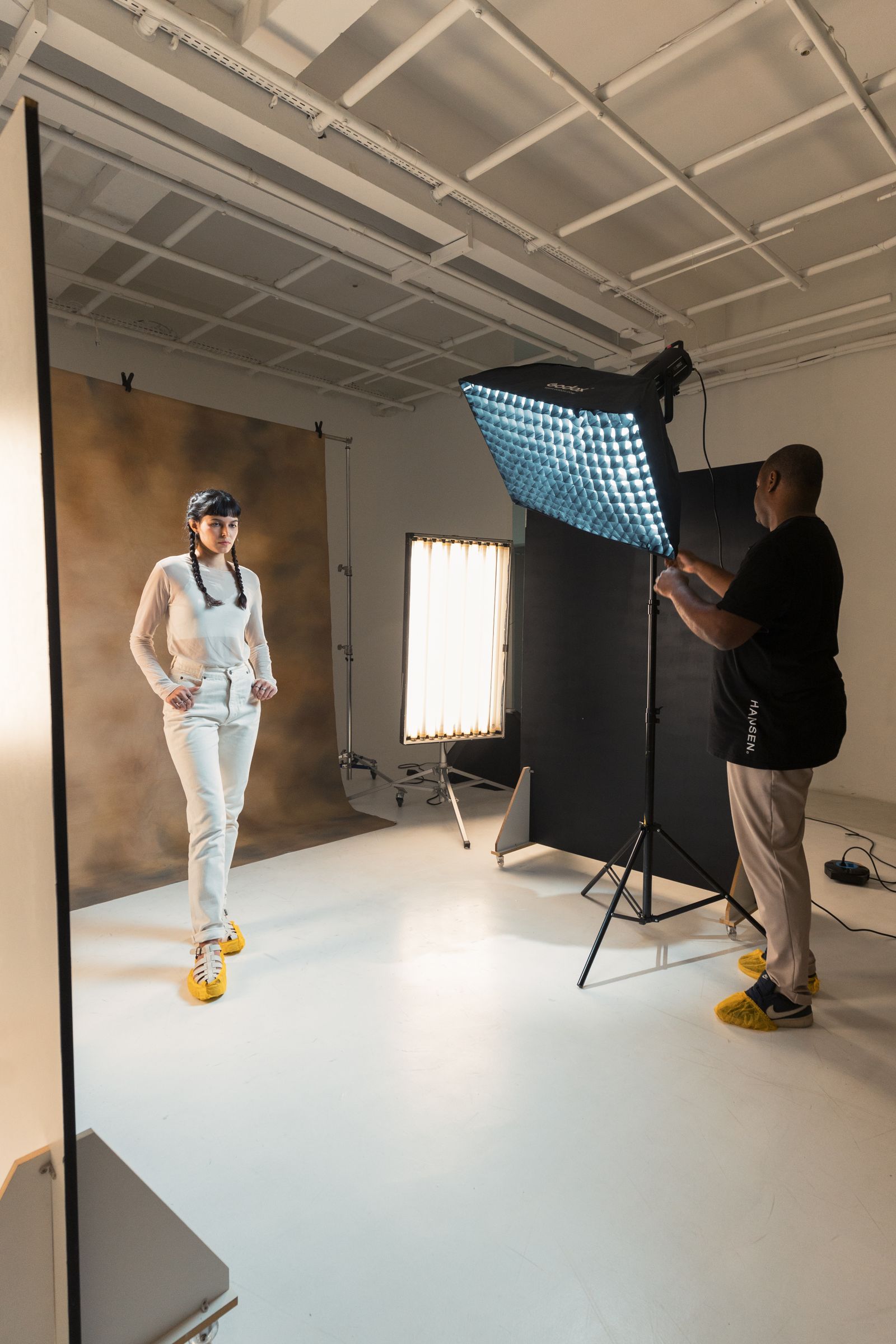
First, learn which business you are actually negotiating with
Portrait studios run two fundamentally different models, and the same sentence means opposite things in each.
In the all-inclusive model, the session fee carries the business: you pay one price for the sitting and a set of digital files, and the photographer must cover equipment, insurance, editing time and profit out of that single number. Session fees here are higher because they have to be. Published 2026 pricing puts mid-range family sessions at $250–$450 with 20–40 edited digitals, premium at $500–$800, and mini sessions — 15 to 25 minutes, a handful of images — at $125–$300.
In the boutique or full-service model, the session fee is deliberately small — it covers planning, the sitting and basic retouching — because the business is the artwork sold afterwards: prints, wall art, albums. One widely cited comparison makes the economics blunt: a photographer running three sessions a week at a $150 session fee grosses a fraction of what the same hours earn once finished artwork is sold, which is why full-service studios report average product orders around $500 on top of the fee, and why the typical finished family total, prints included, lands near $670 in one national guide and between $300 and $1,500 all-in across the market.
The negotiating consequence is simple. At an all-inclusive studio, asking for money off the session fee is asking for money off everything — expect resistance, and trade scope instead. At a boutique studio, the session fee is the worst place to push and the product order is where the conversation belongs — but push clumsily there and you will spend the viewing appointment in an atmosphere. Know the model before you open your mouth. If you cannot tell from the quote, ask: "After the session fee, what do most families here actually spend in total?" A straight studio will tell you. That number, not the fee, is your negotiation.
Read the quote like an itemised bill, because it is one
Before negotiating anything, get the quote broken into its real components and price each against the market:
| Component | Typical published range | Negotiation character |
|---|---|---|
| Session / creative fee | $145–$550 for family sessions (median ~$350) | Hard cost for the studio; trade scope, not price |
| Additional people | $15–$30 per person in cost guides; $50–$100 flat at some studios | Often waivable for one grandparent; rarely for twelve |
| Extra edited images | ~$60–$75 per additional retouched image | Real labour; bundle rather than discount |
| Albums | $445–$630 in published package guides | Product margin exists; timing and size are flexible |
| Wall art / large prints | 16×20 at ~$120 in one studio's list; framed from ~$149 | Product margin exists; this is the boutique model's centre |
| Mini session alternative | $125–$300 | The studio's own built-in "discount" — use it |
Two things jump out of any honest quote once it is itemised. The first is that the per-image retouching charge, which feels like the rip-off line, is usually the most defensible number on the page: an additional fully retouched image at $60–$75 is an hour-scale piece of skilled work, and photographers guard it because discounting it teaches every client to under-order and top up cheaply. The second is that product lines carry the margin in a boutique studio — which is precisely why a good negotiator asks for value there (a larger print at the smaller print's price, an album size upgrade) rather than a percentage off the whole bill. Upgrades cost the studio less than they are worth to you. That gap is where deals live.
The trades that work, in the order studios prefer them
Trade time, not money. A weekday morning sitting, an off-peak month, or the studio's last slot on a day they are already set up is worth real money to a photographer whose Saturdays sell out and whose Tuesdays do not. "We are flexible — is there a time that suits you better and changes the price?" is the single most welcome sentence in this entire negotiation. You are offering something (a filled dead slot) instead of asking for something.
Trade scope for price, explicitly. Fewer groupings, one backdrop instead of three, one outfit instead of two, ten finished images instead of twenty-five. Every reduction is time the photographer genuinely does not spend, so the discount is honest rather than extracted. Come with your priority straight: most families need one great whole-family portrait, a few of the children, and one of the grandparents — not forty variations. A smaller, named shot list is a price cut you design together.
Trade commitment for price. Booking two sessions at once (this year's family portrait and next year's), prepaying the product order at booking — one studio's published list, for example, discounts image collections by 40 percent when bought at booking rather than after the session — or agreeing to a set collection before the viewing appointment all give the studio certainty, and certainty is worth a discount because it removes selling effort and risk. If a studio offers a booking-time collection price, that is already the negotiation, pre-packaged. Take it seriously before asking for more.
Trade reach for price — carefully. A genuine offer to allow portfolio use, to tag and credit the studio, or to host a session that becomes content has value to some studios, especially newer ones building a book. Offer it as an addition, never as a presumption ("we'll pay you in exposure" is the fastest way to burn the relationship this guide's title promises to protect), and accept a no without cooling.
Ask for the mini. If the full session is simply beyond the budget, the mini session — $125–$300, 15–25 minutes, a small set of edited images — is the studio's own answer, designed for exactly you. Booking the mini cheerfully and coming back next year for the full session builds the relationship. Haggling the full session down to mini money while keeping full-session scope destroys it, and the photographer will remember which family you were.
What never to squeeze
Some lines are not margin; they are the business's skeleton, and pressing them buys a worse session at a slightly lower price.
Do not squeeze the retouching count after the fact. Agree the number of finished images in advance. Asking for "just a few more, unedited is fine" asks the photographer to release work below their standard with their name on it — most will refuse, and the refusal will colour the delivery.
Do not squeeze on the deposit or the contract. A studio that will waive its retainer and paperwork for you is a studio whose other protections are equally negotiable, including the ones that protect you. Pay the deposit. Sign the boring document.
Do not use another studio's lower quote as a weapon unless you would genuinely book them. Photographers can tell. A real alternative, mentioned once and factually — "Studio X quoted us $X for a similar collection; we'd rather work with you; is there a version near that?" — is legitimate market information. A fabricated or cherry-picked quote, brandished, ends trust, and trust is the currency the session itself runs on.
Do not renegotiate at the viewing. The viewing appointment is where boutique studios earn their year, and arriving with a surprise demand to discount the order you are looking at converts a celebration into a dispute. If the product total is your concern, raise it before the session, when collections, sizes and payment plans can still be arranged calmly. Many studios will spread a product order over payments; that, too, is a negotiation — about timing, not worth — and it is almost always available to families who ask early and politely.
A script that keeps the relationship
Put together, the conversation sounds like this: "We love your work and we want to book with you — that's not a line, it's why we're asking you rather than just booking someone cheaper. Our total budget, including prints, is $X, and your quote comes to $Y. We're flexible on timing, including weekdays, and we can commit to a collection now if that helps. Is there a version of this — fewer groupings, a collection at booking, a different day — that lands near our budget without cutting into what makes your work yours?" Every element does a job: loyalty stated and evidenced, a real number instead of a vague plea, flexibility offered before discount is requested, and the photographer's craft explicitly fenced off from the bargaining.
This site lists 375 portrait studios and 672 portrait photographers among its photography listings, so you have alternatives — the photographer knows that, and you do not need to say it. The families who get the best portraits at the best prices are not the ones who negotiate hardest. They are the ones who negotiate earliest, trade things that cost them little and save the studio much, and leave the photographer looking forward to their session. In a business where the product is how your family looks when everyone is relaxed, that last part is not soft. It is the whole deal.
Sources
- Amy Marlan Photography, "How Much Does a Family Photographer Cost? A 2026 Guide" — session fees $145–$550 (Airtasker median $350; Thumbtack typical $200–$250); finished total with prints typically ~$670 (HireRush); full-service product orders averaging ~$500; all-in totals $300–$1,500, https://www.amymarlan.com/blog/photography-investment-guide
- 12img, "Family Photography Pricing — What to Charge in 2026" — tier table (budget $100–$200, mid-range $250–$450, premium $500–$800, luxury $800–$2,000+); mini sessions $125–$300; package structures including print-credit and all-inclusive collections, https://www.12img.com/blog/family-photography-pricing
- Idaho Photography Studios, family portrait pricing — session fees $495–$795 with artwork credit; extra people $50 each; additional retouched images $75; print packages $235–$450, https://idahophotostudios.com/family-portrait-pricing
- Unique Footprints Co, pricing (St. Louis) — mini $225; family collections $520–$970; image collections discounted 40% when bought at booking; additional image $60; 16×20 print $120, https://uniquefootprintco.com/pricing/
- Studio session — photo by Matheus Bertelli, https://www.pexels.com/photo/30697991/
- Studio lighting — photo by Amar Preciado, https://www.pexels.com/photo/17094508/
More guides
- How to Find a Wedding Photographer: The Complete, Honest GuidePhotographers › Wedding Photographers
- How Much Does a Wedding Photographer Cost? Packages DecodedPhotographers › Wedding Photographers
- 10 Questions to Ask a Wedding Photographer Before You BookPhotographers › Wedding Photographers
- Wedding Photography Styles Explained: Documentary, Editorial, Traditional, Fine ArtPhotographers › Wedding Photographers
- Hiring a Wedding Photographer in California: Venue Light, Permits, and Price LevelsPhotographers › Wedding Photographers
- All Guides & ArticlesBrowse the full guides library