Photographers › Photographers Commercial & Industrial
How to Prepare for Photographers Commercial and Industrial: The Week Before, the Day Itself, and After
A commercial and industrial shoot looks, from the outside, like the simplest kind of photography to commission. No wedding timeline, no newborn, no weather-dependent ceremony. Just your building, your machines, your people, doing what they do every day — photographed properly.
That apparent simplicity is the trap. A portrait studio runs on the photographer's rules. A plant, a warehouse, a fabrication shop or a distribution floor runs on yours: shift patterns, safety rules, restricted areas, and production that does not stop because a camera crew has arrived. I managed a studio long enough to watch good photographers lose half a paid day to a locked gate, an unbriefed night shift, and a machine that had been sent out for repair that morning. None of those failures was about photography. All of them were preparation.
This guide is the preparation, in the order it actually has to happen: the week before, the day itself, and the part most clients forget entirely — what to check after the files arrive. This site lists 5,719 commercial and industrial photographers, so finding names is not the hard part. Arriving ready for the one you hired is.
The week before: start with where the pictures will live
Do not start with a shot list that begins "some nice photos of the factory." Start with the destinations. Open the pages, proposals and documents the images have to fill: the website's services pages, the capabilities deck you send to procurement, the recruiting page, the trade-show banner, next quarter's catalogue. Every slot gets a sentence — subject, framing, orientation. A homepage hero needs a wide landscape frame with breathing room for text. A capabilities PDF needs tight, legible detail: hands on a control panel, a weld mid-bead, a part coming off the line finished and clean.
That exercise does three things. It tells the photographer how many setups the day really contains, which is what you are actually paying for. It exposes the gaps — most companies discover they have forty photographs of products and none of the people or the process that justify the price. And it produces the document that runs the whole shoot: a numbered shot list, grouped by location, with the five must-have frames marked and shot first. If the day collapses — a line goes down, a manager is called away — the five frames that matter already exist.
Price follows that list, so settle it before the day, not after. Published commercial rates vary by market and production size, but the shape is consistent: one photographer's photography-only full day commonly runs $2,500 to $5,000 or more, industrial specialists quote half days around $1,800 to $3,000 and full days at $3,500 to $6,000 or more, and hair and makeup, where people are being featured, can add $750 to $1,000 a day. A 50 percent deposit to secure the date is standard practice. None of that is unreasonable, and none of it should be discovered in an invoice argument in week three.
The week before: walk the site with the photographer
The single highest-value hour in the whole commission is a pre-shoot walkthrough — in person if the site is local, by video call with a phone in hand if it is not. You are checking four things a floor plan will never tell you.
Light and timing. Which bays are bright at 9 a.m. and dark by 2? Where does sun blast through a loading door and ruin a frame for an hour? Which processes only run on certain shifts? Industrial photographers plan a running order around production, not against it: the line that runs until lunch gets shot in the morning, the quiet assembly bench gets the afternoon.
Access. Gate paperwork, visitor sign-in, parking for a vehicle full of lighting cases, a secure room to leave gear in, and who escorts the crew and where. On secure or regulated sites this can involve credentials arranged days ahead — some port and energy facilities require a TWIC card for unescorted access, and many large plants vet contractors through systems such as ISNetworld, Veriforce or Avetta before anyone is approved to enter. Ask your photographer, a week out, a blunt question: "Is there any credential this site might ask for that you do not hold?" Day-of discovery is how shoots die at the gatehouse.
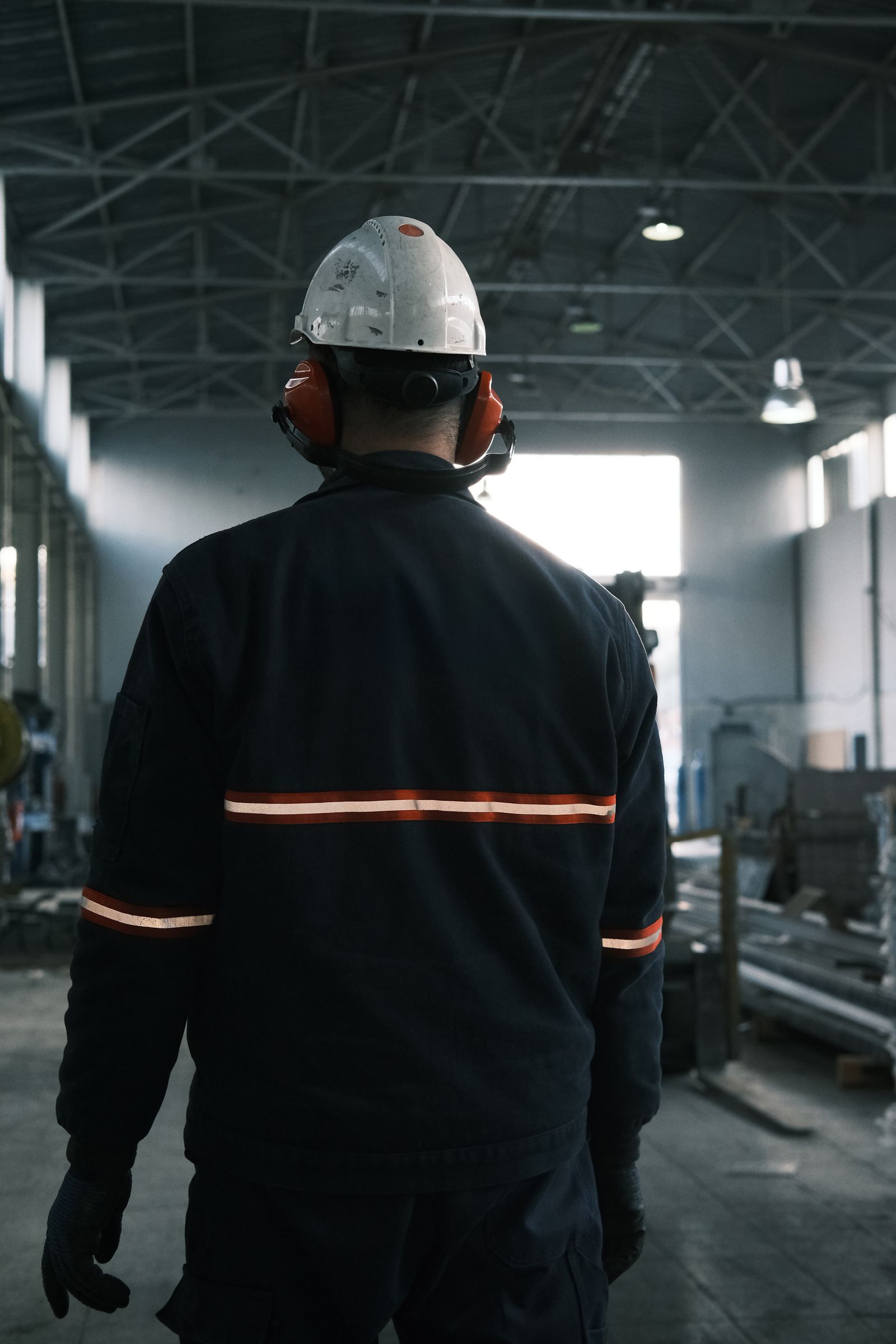
Safety, in writing. Personal protective equipment on industrial sites is set by the site's own hazard assessment, not by the photographer's habits — under OSHA's general PPE standard, the employer must assess the workplace for hazards and select the equipment accordingly. So tell the crew exactly what your assessment requires: hard hat, safety glasses, steel toes and high-visibility clothing are the usual baseline; flame-resistant clothing, hearing protection, gas monitors or respiratory protection are site calls. Confirm who provides what, what visitor orientation the crew must sit through and how long it takes, and build that time into the call sheet. It is not dead time. It is the price of being allowed to work.
The no-photograph list. Every industrial site has one, whether it has been written down or not: a proprietary process, a customer's product on the line, a screen showing live pricing, a classified area where ordinary electrical equipment — cameras, strobes, LED panels, drones included — is not permitted at all. Walk the boundary with your safety or operations lead and mark it on the shot list itself. A photographer who asks about this unprompted is telling you something good about their experience. One who has to be stopped mid-setup is telling you something else.
The week before: people, machines and paperwork
People. Decide who appears, ask them — do not volunteer them — and get model releases signed before the day, not chased after it. Brief everyone on clothing: solid colours, no large logos that are not yours, company workwear clean and consistent. If a featured employee works nights, their shoot slot is a scheduling conversation to have this week, while swaps are still possible.
Machines and product. The camera is merciless about grime that the eye edits out. Schedule the clean for the day before, not the morning of: housings wiped, floors swept in the shooting bays, pallets and clutter cleared from backgrounds, the hero product pulled, inspected and set aside in its best example — not the one with the dented corner that happens to be nearest. If a process needs to be running for the camera, confirm it actually runs that day. Photographers can fake many things. An idle line photographed to look busy fools nobody who buys from you.
Paperwork. Three documents should exist before the shoot day. The call sheet: date, arrival time, site contact's mobile number, escort's name, running order, meal break. The insurance certificate: a working commercial photographer carries liability insurance and can produce a certificate naming your company if your site requires it — many do. And the licence, agreed in principle: where the finished images may be used, for how long, and in what territory. Licensing is a real, separate cost in commercial work — structured as a creative fee plus usage — and internal-only use costs far less than advertising use. Agreeing the use before the shoot is not pedantry; it is what stops a website photograph from becoming an unlicensed billboard photograph by accident.
| When | What must be settled |
|---|---|
| A week out | Shot list grouped by location, five must-haves marked; deposit paid; date locked |
| A week out | Walkthrough done: light, access, escort, restricted areas and no-photograph list marked |
| 3–5 days out | PPE and orientation requirements confirmed to crew in writing; any site credentials checked |
| 2–3 days out | People confirmed and releases signed; featured machines and product cleaned and set aside |
| The day before | Call sheet circulated; site contact and escort numbers confirmed; weather check if exteriors or aerials are planned |
The day itself: run it like a visit, not an event
Arrive at the gate with the photographer, not after them. The first thirty minutes belong to orientation, sign-in and a five-minute huddle over the running order — what has changed overnight, which line is down, who has been called away. Every industrial day has one surprise; the huddle is where it costs five minutes instead of fifty.
Then work the list in location order, must-haves first, and tick shots off visibly. Your job on the day is not art direction by committee. It is three specific things. First, be the escort with authority: the person who can say "yes, you may photograph that" without a phone call. Second, check the back of the camera at each setup for the errors only you can see — the wrong product variant, the outdated safety notice in the background, the employee whose release never came back, the competitor's calendar on the wall. A photographer cannot spot your mistakes; they do not know what your mistakes look like. Third, protect the schedule from helpful additions. Every "while you're here, could you just…" costs a setup somewhere else. Keep a parking list; if time survives at the end, spend it there.
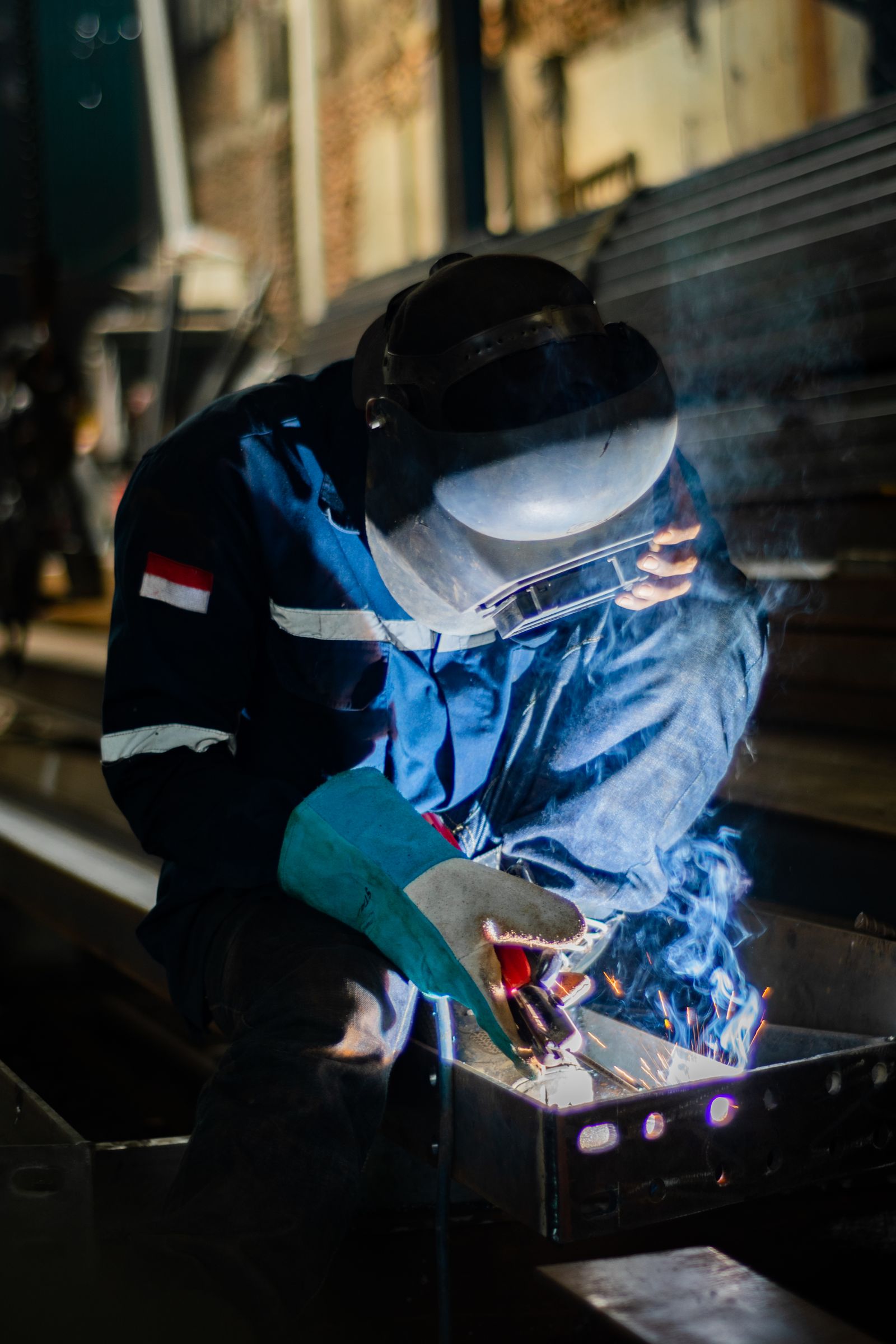
Two day-of rules that separate smooth industrial shoots from miserable ones. Keep the crew inside the permitted zones the walkthrough established, with a spotter or escort near moving plant, forklifts and overhead loads — nobody steps backwards off a kerb into a forklift route while looking through a viewfinder on a shoot you commissioned. And photograph people as they work, briefly directed — hands reset on the controls, the same motion repeated twice — rather than posed grinning at the camera beside a machine. Buyers in industrial markets are engineers and procurement managers. They read a photograph the way they read a specification, and they can tell.
After: the week nobody plans for
Delivery is not the finish line; it is the start of the part where value leaks away. Expect a proofing gallery first, then finished files — many commercial projects turn around in one to three weeks depending on retouching load, and that range should have been in your agreement, not discovered by email.
Check the delivery like an inspector, because that is now your job:
- Against the list. Every numbered shot accounted for, every must-have present, in the orientations you specified — wide for heroes, vertical variants for social where you asked for them.
- Against the licence. The files delivered match the use you bought. If the campaign team now wants the hero frame on a trade-show wall and your licence says web and internal, that is a conversation — and usually a modest fee — not an assumption.
- For the errors only you can see, again. At full size this time: badges, screens, whiteboards, a customer's name on a crate in the background of frame twelve. Retouchers can fix a remarkable amount in week one and charge a remarkable amount in month three.
- File discipline. Download the full-resolution masters to company storage, name them by subject and date, and keep the photographer's delivery link as a backup, not the archive. Links expire; staff leave; the master file is the asset you paid for.
Finally, close the loop while memory is fresh. Note which setups produced the frames you actually used, which locations fought back, and what the next shoot — there is usually a next shoot, at the next product launch or site opening — should do differently. File it with the call sheet. The companies that get steadily better industrial photography are not the ones with the biggest budgets. They are the ones whose second shoot starts from the first shoot's notes instead of from a blank page and a locked gate.
This site lists 5,719 commercial and industrial photographers and 877 aerial photographers. Shortlist by industrial experience specifically — a plant floor is not a wedding with louder music — walk your own site with the two finalists, and choose the one who asked you the hardest questions about access, safety and use. Then do the week's work in this guide. The camera day will feel almost easy, which is exactly what good preparation is supposed to feel like.
Sources
- Jason Risner Photography, FAQs — a typical full-day commercial shoot, photography only, ranges from $2,500 to $5,000 or more; 50% deposit to secure the date; hair and makeup $750–1,000 per day; many projects complete in 1–3 weeks.
- Blowers Creative, "What a commercial photo shoot actually costs" — commercial pricing structured around planning, the photographer's fee, production expenses, editing and a licence; planning bands from $750–$1,500 for a focused session to $10,000 and up for multi-day productions.
- Marmalade Media, Industrial & Manufacturing Photography, Houston — site orientation, escorts, gate paperwork and PPE are settled before the shoot date; PPE is governed by the site's hazard assessment; standard camera gear is not permitted inside classified hazardous areas.
- Occupational Safety and Health Administration, general PPE standard (29 CFR 1910.132) — the employer must assess the workplace to determine whether hazards are present that require protective equipment.
- Joe Robbins Photography, "Safety First" — many energy facilities require OSHA 10- or 30-hour training, flame-resistant clothing and, for port facilities, a TWIC card; contractor vetting through ISNetworld, Veriforce or Avetta.
- Pixobo, "Industrial Photography: Practical Tips for Safer, Better Shoots" — on-site safety checklist covering PPE, permitted and restricted zones, lockout/tagout, spotters and emergency contacts.
Photo by Cemrecan Yurtman, https://www.pexels.com/photo/industrial-worker-in-safety-gear-at-factory-29988954/ Photo by ERFIN EKARANA, https://www.pexels.com/photo/welder-in-factory-26840744/ Photo by Mike van Schoonderwalt, https://www.pexels.com/photo/5503874/
More guides
- How to Find a Wedding Photographer: The Complete, Honest GuidePhotographers › Wedding Photographers
- How Much Does a Wedding Photographer Cost? Packages DecodedPhotographers › Wedding Photographers
- 10 Questions to Ask a Wedding Photographer Before You BookPhotographers › Wedding Photographers
- Wedding Photography Styles Explained: Documentary, Editorial, Traditional, Fine ArtPhotographers › Wedding Photographers
- Hiring a Wedding Photographer in California: Venue Light, Permits, and Price LevelsPhotographers › Wedding Photographers
- All Guides & ArticlesBrowse the full guides library