Photographers › Events Photographers
How to Prepare for Events Photographers: The Week Before, the Day Itself, and After
Here is the uncomfortable truth from the studio side of the desk: most disappointing event galleries were decided before the event. Not by the photographer's talent, which was usually fine, but by preparation — the shot list that lived in somebody's head instead of on paper, the sponsor whose promised photograph nobody mentioned, the keynote speaker the photographer couldn't identify, the delivery deadline that existed in the marketing plan but never in the contract. Photographers photograph what is in front of them. Preparation is how you decide what will be in front of them, and what happens to the pictures afterwards.
This guide is for the person on the organising side — the creator, seller, marketer, or host who needs event photographs that actually convert: into next year's ticket sales, sponsor renewals, press, and proof that the thing happened and was worth attending. It runs in the order the work does. The week before. The day itself. And after, which is where most of the value is either banked or lost.
The week before: the brief is the product
Professional briefing guidance is unusually unanimous on this point: the written brief is the primary predictor of a successful event shoot, ahead of the photographer's skill. The studios that do this well ask for the paperwork at least a week out — some say two weeks for larger events — and walk through it on a short call. Fifteen minutes on the phone, one week before, prevents the particular misery of discovering a misunderstanding in front of 300 guests.
Your brief fits on one page. It has eight parts:
- The goal and the uses. One sentence on what the event is for, then where the photographs will go: recap post, website, sponsor reports, press, next year's sales page. The uses dictate the pictures. A photographer briefed for Instagram will shoot vertical frames and energy; one briefed for an annual report will shoot the board, the room, and the gravitas. Brief for both if you need both — but say so.
- The run of show. Every session, with times and rooms, and the must-have moments marked. This is the document the photographer plans movement from, and it is how they spot the impossible overlaps — the fifteen-minute reception that collides with the panel you also need covered — while there's still time to solve them.
- The shot list, in two tiers. Tier one: the non-negotiables, each with a time and a place — "CEO at the podium before the session opens, 8:45, main room" is a shot list item; "good shots of the leadership" is a wish. Tier two: the collect-all-day material — speakers, audience reactions, networking, sponsor branding, the venue looking its best. A useful benchmark from conference practice: a two-day business event generates demand for roughly 120 to 180 usable photographs across the following year's marketing, sponsor decks, and press, so shoot for coverage that can supply them.
- Key people, identified. Names, roles, and a photograph of each person who must be recognised on sight — speakers, executives, major sponsors, the award winner whose name is embargoed until the night. Plus the name of the human who can point them out in a crowd.
- Sponsor promises, itemised. Every photograph a sponsor was promised — booth with traffic, logo in frame, their executive on stage — listed as a deliverable, not remembered as a vibe. Sponsor photographs are contractual outputs wearing casual clothes.
- The rules. Sessions or people not to be photographed, how opted-out attendees are marked (a lanyard or sticker system the photographer knows in advance), venue restrictions, and anything embargoed.
- Access and logistics. Credentials, arrival time, where the photographer sets down gear and charges batteries, the AV contact, parking, a meal if the day is long, and one named contact with a phone number for the day itself.
- Delivery, agreed before the event. When you need what (see "After," below), in what organisation — by session, by day, a folder per sponsor — and with what usage rights, including whether sponsors and speakers may republish.
Send the venue floor plan with it. A photographer who can see the stage position, the entrances, and the windows in advance arrives already knowing where the light will fail and where they can stand without blocking a fire exit or a paying guest's view.

The day itself: make the photographer dangerous
On the day, your job shrinks to four things, and none of them is art direction.
Get them in early and walk the space. The empty-room photographs — stage set, signage up, registration desk ready, the venue looking expensive — can only be taken before doors, and they are disproportionately valuable: they open recaps, anchor sponsor reports, and prove production quality to next year's buyers. A photographer who arrives as guests do has already missed a category of your deliverables.
Run the introductions that matter. Thirty seconds each: the AV lead (whose lighting states will change all day), the stage manager (who knows when moments are actually happening, as opposed to scheduled), your named contact, and anyone who can identify VIPs. Event photography runs on these relationships; a photographer plugged into the stage manager's cues gets the award moment from the right side of the stage.
Protect the one-time moments. Keynotes, reveals, awards, the group photograph: these happen once, on a clock. Build the group shot into the run of show at a named time with a named herder — gathering forty people is an organising task, not a photography task — and give the photographer a two-minute warning system for moments that move. Between those peaks, let them work. The candid material that sells next year's event — real conversation, laughter, the room's energy — is captured by a photographer roaming with permission, not one being steered by the elbow. Briefing guidance from Adobe's orbit makes the same point: a shot list followed too rigidly kills the spontaneous frames, and the spontaneous frames are usually the ones marketing ends up leading with.
Feed the workflow, literally and otherwise. A photographer working ten hours needs a meal break that isn't during your keynote, a place to offload cards, and power. Cards get backed up during the day by professionals as a matter of religion; your part is simply not scheduling over the five quiet minutes it takes.
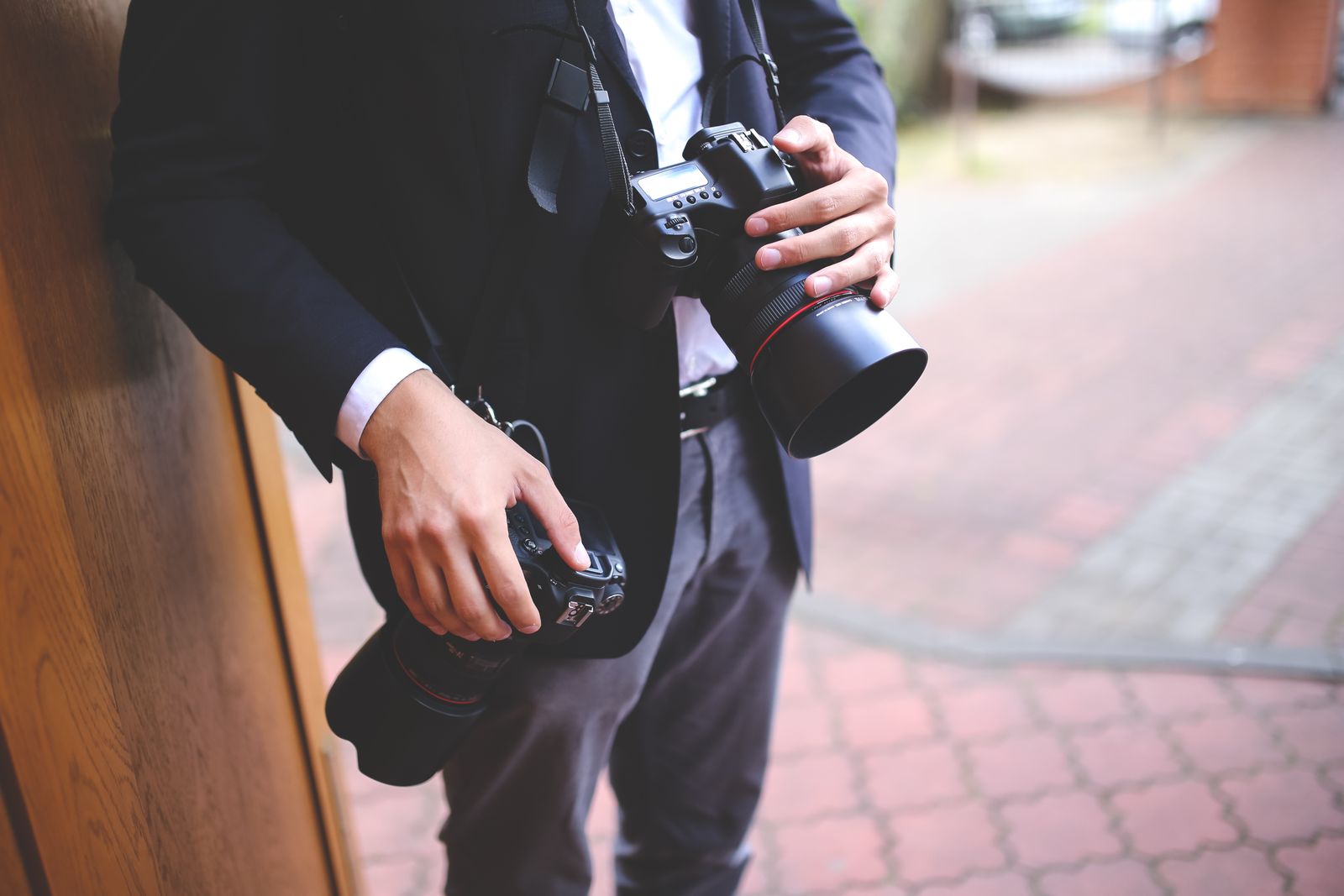
After: the delivery is a schedule, not a surprise
Event photographs decay. A recap post lands in the first days or it lands nowhere, which is why delivery terms belong in the pre-event brief and why the modern structure is staged:
| Stage | Typical timing | What it contains | What it's for |
|---|---|---|---|
| Sneak peek | Within 24 hours | 5–15 edited images | Social posts, press, sponsor thank-yous while the event is still news |
| Preview gallery | About 48 hours | 50–150 images | Newsletters, sponsor updates, internal reporting |
| Full gallery | 1–3 weeks | 250–800 images for a typical event | Archive, annual reports, next year's marketing |
Those ranges reflect current delivery practice: corporate events commonly deliver a sneak peek within 24 hours and a full gallery within five to seven business days for a one-day event, while larger multi-day conferences with 1,200 or more photographs run two to three weeks, and a four-hour event typically yields 250 to 400 finished images. The editing pipeline behind those numbers is real work — a 2,000-frame shoot takes hours simply to cull, before batch colour correction and individual work on the hero images — so a deadline that matters (a sponsor report, a press embargo, a sales page launch) should be agreed as a date, in the brief, not discovered as a hope.
When the gallery lands, your after-work has four steps, and skipping any of them wastes what you paid for:
- Check it against the brief within days. Tier-one shots present? Sponsor deliverables complete? Key people captured and correctly identified? Photographers commonly offer a short revision window — a week or two — for fixes and missed selects; a gap found in month two is an archive problem, not a revision.
- Caption and name the files while memory is fresh. Speaker names, session titles, sponsor names, in the file names or metadata. An unlabelled gallery of 600 faces is a depreciating asset; a labelled one is a searchable library.
- Distribute deliberately. Speakers get their photographs (with thanks — it is the cheapest goodwill in events), sponsors get their promised set promptly, and your own channels get the recap while it still converts.
- Archive with the rights paperwork. Keep the contract and usage terms with the gallery: who may republish what, for how long, and whether sponsors' rights were included. Next year's team will thank you, usually by not re-litigating it.
The mistakes that cost the most
Three preparation failures account for most of the disappointing galleries I saw from the studio side, and all three are cheap to prevent. The first is the unbriefed second audience: the photographs were commissioned by the events team but needed, urgently and afterwards, by a sponsor, a speaker's publicist, or next year's sales team whose requirements nobody collected — solved by asking, in the week before, "who else will want pictures from this, and of what?" The second is the unnamed group photograph, scheduled as "group shot, sometime after lunch," which dissolves into a twenty-minute hunt for missing executives while the room empties; it needs a time, a place, a list, and a herder. The third is the silent deadline: a recap post, press release, or sponsor report dated days after the event, known to everyone except the photographer, whose normal full-gallery window is two weeks. Every one of these is a five-line email in the week before, or an apology afterwards. Send the email.
The preparation, on one line
This site lists 721 events photographers, and any of the competent ones will tell you the same thing if you ask what separates their best galleries from their ordinary ones: it was the client who sent the brief. A week of small certainties — a run of show, a two-tier shot list, named faces, sponsor promises in writing, delivery dates agreed — converts a photographer from a person with a camera at your event into the person who brings back next year's marketing. Prepare like it, and the photographs will look less like documentation and more like what they were always supposed to be: the reason the next audience buys a ticket.
Sources
- XPOSRE Media, event photography shot list and brief template — a shot list has two parts (one-time moments with times and rooms, and shots to collect all day), and the one-page brief covers uses, key people, sponsor promises, rules, access, and delivery.
- Event Photo Journalism, coordinating with event photographers on site — send a written brief at least one week before the event, walk through it on a call, prioritise the shot list into must-haves and nice-to-haves, and share it at least three days ahead.
- San Diego Events Photography, how to brief an event photographer — start the brief with the deliverable and its uses, and send the run-of-show, floor plan, shot list, VIP list, brand guidelines, and venue contacts at least two weeks ahead for larger events.
- WebMobi, event photography guidelines — a two-day B2B conference generates demand for roughly 120–180 usable photographs, and the brief should cover the no-photo indicator, usage rights, and delivery timeline.
- Event Photo Journalism, event photography turnaround time and delivery expectations — sneak peeks of 5–15 images within 24 hours, preview galleries at about 48 hours, full galleries in one to three weeks; a one-day corporate event typically delivers fully within five to seven business days, and a four-hour event yields 250–400 final images.
- Framekit, how long photo delivery should take in 2026 — corporate events deliver same-day previews with full galleries in three to seven business days; conferences in two to five business days.
- Photo by Christina Morillo, https://www.pexels.com/photo/1181406/
- Photo by Karolina Grabowska, https://www.pexels.com/photo/6182/
- Photo by Jonathan Borba, https://www.pexels.com/photo/9714791/
More guides
- How to Find a Wedding Photographer: The Complete, Honest GuidePhotographers › Wedding Photographers
- How Much Does a Wedding Photographer Cost? Packages DecodedPhotographers › Wedding Photographers
- 10 Questions to Ask a Wedding Photographer Before You BookPhotographers › Wedding Photographers
- Wedding Photography Styles Explained: Documentary, Editorial, Traditional, Fine ArtPhotographers › Wedding Photographers
- Hiring a Wedding Photographer in California: Venue Light, Permits, and Price LevelsPhotographers › Wedding Photographers
- All Guides & ArticlesBrowse the full guides library