Photographers › Professional Photographers
Image Rights and Licensing: What You're Actually Buying From a Photographer
Almost every dispute I have ever reported between a photographer and a client begins with the same sentence, spoken in genuine surprise: "But I paid for the photos." The client paid — often thousands of dollars — and received beautiful files. Then the client put one of those files on a billboard, or handed it to a business partner, or used it in a paid advertisement two years after the shoot, and received an invoice, a takedown notice, or a lawyer's letter in return. Nobody in these stories is necessarily a villain. They are two parties who used the word "buying" to mean two different things.
When you hire a photographer, you are almost never buying the photographs themselves. You are buying the photographer's time and skill on the day, the finished files as a delivery format, and — this is the part that matters — a license: a defined permission to use the images in defined ways. This guide explains how that system works in plain language, what the standard terms mean, which clauses are worth negotiating before you sign, and what it can cost when the paperwork never happens. It is general information about how the trade works in the United States, not legal advice; a high-value campaign deserves thirty minutes with an intellectual-property attorney, which is cheaper than one hour of a dispute.
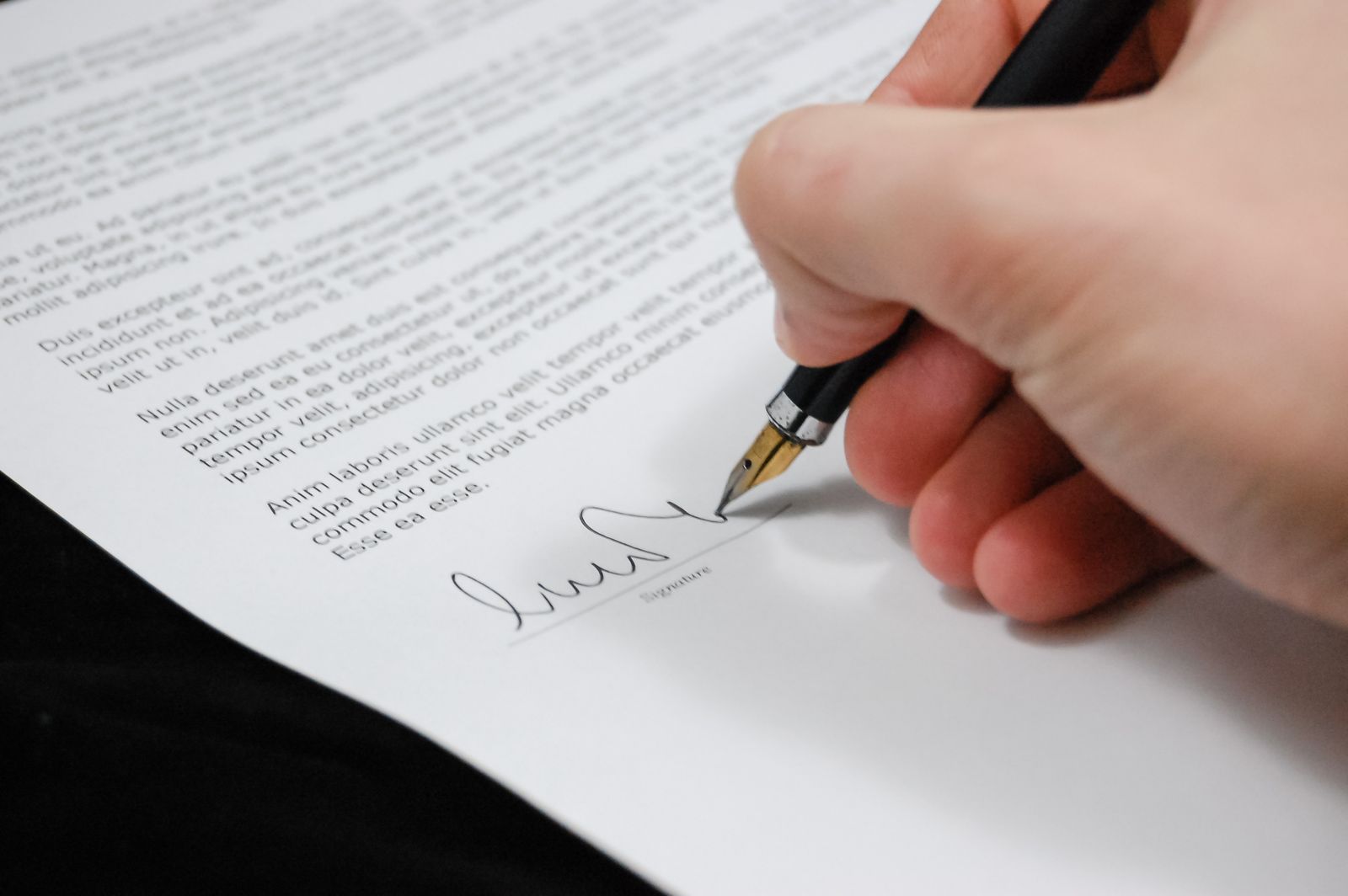
The default rule: the photographer owns the photograph
Under U.S. law, copyright in a photograph belongs to the person who took it, and it exists from the moment the image is captured — the U.S. Copyright Office puts it plainly: the author and initial copyright owner of a photograph is generally the person who "shoots" or "takes" the photo. No registration, watermark, or copyright symbol is required for that ownership to exist. Paying for the shoot does not change it. Being the subject of the photograph does not change it. Commissioning the work, art-directing it, and supplying the products, the location, and the catering does not change it.
What the copyright owner holds is a bundle of exclusive rights: to reproduce the image, to distribute it, to display it publicly, and to make derivative works from it. Everyone else — including the client who paid for the session — may do those things only with permission. That permission is the license, and nearly everything else in this guide is about its shape.
There are exactly two common ways ownership itself moves. The first is a written transfer: an assignment of copyright must be in writing and signed by the owner, so an email saying "sure, use them however" is not an assignment, however friendly it sounds. The second is the work-made-for-hire doctrine, which is narrower than most clients assume. It applies automatically when the photographer is an employee creating the work within the scope of that job — a staff photographer's pictures belong to the employer. For freelancers, a commissioned work counts as work made for hire only if it falls into one of nine specific categories in the Copyright Act (a contribution to a collective work, part of an audiovisual work, a compilation, and six others of the same flavor) and both parties have signed a written agreement saying so. A standalone set of product, portrait, or brand photographs usually fits none of those categories. A contract that simply declares freelance photos "work for hire" may therefore fail to do what it says — which is why experienced photographers and sophisticated clients use an assignment clause as a backstop when a genuine transfer is intended, and why most of the time neither side actually needs one.
A license is a list of permissions, not a vibe
A well-drafted photography license answers specific questions. If yours doesn't, the gaps will be filled later by assumptions — yours, the photographer's, and eventually a judge's. The standard vocabulary comes largely from the PLUS Coalition (Picture Licensing Universal System), an industry body formed by photographers' and publishers' associations to standardize licensing language, and from the American Society of Media Photographers (ASMP), whose business-practice guides are the trade's reference point. You do not need their full glossaries. You need these terms:
| Term | What it decides | What to watch for |
|---|---|---|
| Media | Where the images may appear: website, social media, print, packaging, paid advertising, broadcast, out-of-home | "Web use" does not include a paid ad campaign; a use that isn't named isn't granted |
| Term | How long the permission lasts: a season, one year, five years, in perpetuity | Campaign licenses commonly run one to three years; expiry is the most-missed date in the business |
| Territory | Where in the world the use is allowed: one market, the U.S., worldwide | Digital use is effectively worldwide unless the license says otherwise — say so explicitly |
| Exclusivity | Whether the photographer may license the same images to others | Exclusive rights cost more and can be narrowed by industry, territory, or time |
| Licensee / end user | Who may use the images: your company only, or also your retailers, sponsors, and partners | Third-party use is the clause that bites: your partners are not covered by your license unless it names them |
Two more pieces of vocabulary cause outsized confusion. "Buyout" is not a legal term at all. In studio slang it means "we paid a lot and don't want to think about this again," and it gets implemented — if it is implemented at all — as a copyright assignment, an unlimited exclusive license, or a work-for-hire agreement, three instruments with very different consequences. If a quote says "buyout," ask which of those documents you will actually sign. "Royalty-free," similarly, does not mean free. It is a stock-photography model in which a licensee pays once for broad, loosely tracked use — as opposed to rights-managed licensing, where each use is specified and priced individually. Neither term tells you anything until the underlying license spells out media, term, and territory.
And the files themselves: delivery of high-resolution files is not a grant of rights, and RAW files are a separate negotiation entirely. Most commercial photographers do not include RAW files unless the contract says so, because the RAW file is the unprocessed negative — handing it over surrenders control of the finished look and, practically, of future licensing. If your workflow genuinely needs RAWs (an in-house retouching team is the usual legitimate reason), negotiate it before the shoot and expect to pay for it.

Print releases, model releases, and other papers that are not licenses
Clients routinely conflate three different documents, so let us separate them cleanly.
A print release is the narrow permission most familiar from wedding and portrait work: it lets the client make prints and products for personal use — albums, wall art, holiday cards — without owing the photographer a fee per print. It is a license, but a small one: it does not authorize commercial use, advertising, resale, or handing the images to a magazine. If your portrait photographer gave you a print release and your company then used your headshot in a paid campaign, you have exceeded it.
A model release runs in the opposite direction. It is signed not by the photographer but by the person in the photograph, granting permission for their likeness to be used — and it is the use, not the shoot, that decides whether one is needed. ASMP's guidance is the industry's shorthand: commercial use — where the image sells a product, a service, or an idea — calls for a signed release; editorial, news, and art uses generally do not. Minors require a parent or guardian's signature. Recognizable private property can need its own property release. Note whose problem this is: if your brand runs a campaign with an unreleased face, the exposure is yours as the advertiser, so professional photographers collect releases on commercial shoots as a matter of course — ask for copies and keep them with the license.
Copyright is the third leg: ownership, which starts with the photographer and moves only by signed writing or true work-for-hire. Copyright, usage license, model release — ownership, permission, consent. Three different documents, three different signatories, and a complete commercial shoot needs all three accounted for.
What licenses cost, and why the same photo has many prices
New clients are often startled that a photographer's day rate and their license fee are separate lines, and that the license can exceed the day rate. The logic is the logic of all licensing: you are not paying for the hour the shutter was open; you are paying for the value of the uses. A headshot on a small company's "About" page and the same photographer's image wrapped around a bus are different products, and the market prices them differently. The variables that move a license fee are exactly the table above: broader media, longer terms, larger territories, and exclusivity all raise the price, because each one forecloses other income from the same image. An exclusive license is the extreme case — the photographer is being paid, in part, not to sell the picture again — and a full copyright assignment usually costs more still, which is why ASMP's long-standing advice to clients is that full ownership is rarely what they actually need. A license drafted to cover the uses you genuinely have, with an option to extend, is almost always the cheaper instrument.
This is also where to be honest with yourself about scope. The cheapest license is the narrow one you outgrow in eight months and have to renegotiate from a position of weakness — with the campaign already printed. The most expensive is "all media, worldwide, forever, exclusive" bought by a business that needed a website banner. Price the uses you can describe. If you cannot describe a use, you probably do not need to buy it yet.
The clauses worth negotiating before you sign
You do not need to redline a photographer's standard terms into a treaty. In my reporting, the same short list of clauses decides whether a licensing relationship stays friendly:
- Name the uses like a media plan, not a mood. "Digital use" is an argument waiting to happen. Write "company website, organic social media, and email newsletter; paid advertising excluded" and both sides know where they stand.
- Cover your partners or exclude them — explicitly. Retailers, distributors, sponsors, franchisees, and the venue that hosted your event will all want the photos. Third-party rights are a standard, purchasable add-on; discovering you needed them after your largest retailer runs the image is the expensive route.
- Set the term and the renewal conversation. Diarize the expiry. A license that lapses while the image is still on your homepage converts an administrative oversight into an infringement.
- Protect the photographer's portfolio right — and your launch. Photographers customarily keep the right to show the work in their portfolio and competitions; an exclusive license or assignment with no carve-out can legally stop them displaying their own pictures, which good photographers will not accept. Conversely, if your product launches in secret, negotiate an embargo date for that portfolio use.
- Say what happens to edits. Cropping and resizing are normal; heavy retouching, compositing your product into new scenes, or training an AI model on the images are not covered by vague words like "modify." If AI training or generative reuse matters to either side — increasingly, it does — spell it out.
- Keep the paperwork with the pictures. The license, the releases, and the invoice belong in the same folder as the image files, ideally with the license terms embedded in the files' metadata — the practice the PLUS standards were built to encourage. Rights you cannot find are rights you cannot prove.
What going without paperwork actually risks
The enforcement math is why photographers register their work and why clients should not treat an expired license as a technicality. A copyright owner who registered the work before the infringement (or within three months of publication) can elect statutory damages instead of proving actual losses: between $750 and $30,000 per infringed work as the court considers just, up to $150,000 per work for willful infringement, and as low as $200 for a genuinely innocent infringer. Those figures are per photograph, and courts in reported photographer cases have commonly awarded multiples of the license fee that would have settled the matter in advance. Registration is the photographer's chore, but its consequence — a claim that does not depend on proving what your use was worth — lands on the user.
In practice, most licensing failures are not lawsuits; they are renewals negotiated at gunpoint, takedowns during a live campaign, and relationships ended over a few hundred dollars of unlicensed use. The fix costs almost nothing: a one-page license, written in the PLUS/ASMP vocabulary, agreed before the shoot, filed with the images. On a directory like this one — which lists more than 18,000 professional photographers, including over 5,700 commercial and industrial specialists — you will find photographers at every level of paperwork formality. The ones who hand you clear terms are not being difficult. They are showing you, in advance, exactly what you are buying. That clarity is the product.
This guide is general information about U.S. photography licensing practice, not legal advice. For a specific contract or dispute, consult an attorney who works in copyright or media law.
Sources
- U.S. Copyright Office, Circular 42, "Copyright Registration of Photographs" — the photographer as author and initial owner; what copyright in a photograph protects. https://www.copyright.gov/circs/circ42.pdf
- U.S. Copyright Office, Circular 30, "Works Made for Hire" — the employee rule and the nine categories for specially ordered or commissioned works, via LegalClarity's summary of the Office's guidance. https://legalclarity.org/do-photographers-own-the-rights-to-their-photos/
- 17 U.S.C. § 504 — statutory damages of $750–$30,000 per work, up to $150,000 for willful infringement and down to $200 for innocent infringement. https://uscode.house.gov/us/usc/119-124/t17/s504/
- PLUS Coalition, Picture Licensing Universal System glossary — standard definitions of license, usage, exclusivity, and non-exclusive use. https://www.humphries-russ.com/glossary
- American Society of Media Photographers (ASMP), licensing and release guidance — commercial use is what triggers the need for a model release; how license descriptions should specify media, term, and territory, via Narrative's release guide and ASMP's Professional Business Practices in Photography. https://narrative.so/blog/photography-release-forms
- Stan Murzyn, "Who Owns Commercial Photos? Usage Rights Explained" — plain-language summary of media, term, territory, exclusivity, and why "buyout" is not a legal term. https://www.stanmurzyn.com/Guides/commercial-photography-usage-rights
Photographs: signing a document, photo by Pixabay, https://www.pexels.com/photo/person-signing-in-documentation-paper-48148/ ; hand signing a document on a desk, photo by Cytonn Photography, https://www.pexels.com/photo/white-paper-and-silver-fountain-pen-955394/ ; packing camera gear, photo by Wendy Wei, https://www.pexels.com/photo/person-holding-camera-lens-in-camera-bag-2994110/
More guides
- How to Find a Wedding Photographer: The Complete, Honest GuidePhotographers › Wedding Photographers
- How Much Does a Wedding Photographer Cost? Packages DecodedPhotographers › Wedding Photographers
- 10 Questions to Ask a Wedding Photographer Before You BookPhotographers › Wedding Photographers
- Wedding Photography Styles Explained: Documentary, Editorial, Traditional, Fine ArtPhotographers › Wedding Photographers
- Hiring a Wedding Photographer in California: Venue Light, Permits, and Price LevelsPhotographers › Wedding Photographers
- All Guides & ArticlesBrowse the full guides library