Photographers › Photographers Commercial & Industrial
Industrial Photography: Safety, Access, and Hiring Photographers for Plants and Sites
An industrial shoot does not begin when the photographer raises a camera. It begins weeks earlier, in an email chain with environmental health and safety, when someone in operations asks a question no wedding or portrait client would ever think to ask: if this person is hurt on our floor, or hurts someone else, whose problem is it? A plant manager or HSE officer who approves a photographer is not checking a box. They are taking on liability. That is why industrial photography — photographing refineries, chemical plants, factories, power stations, ports and construction-heavy sites while they are working — is a different hiring problem from every other kind of commercial photography. The pictures matter. The permission to take them matters more, and it is earned before anyone arrives.
This guide is for operations managers commissioning that work: what access actually requires, what safety preparation looks like when it is real rather than performed, what the work costs, and how to tell a photographer who has done this before from one who has simply photographed a factory from the car park.
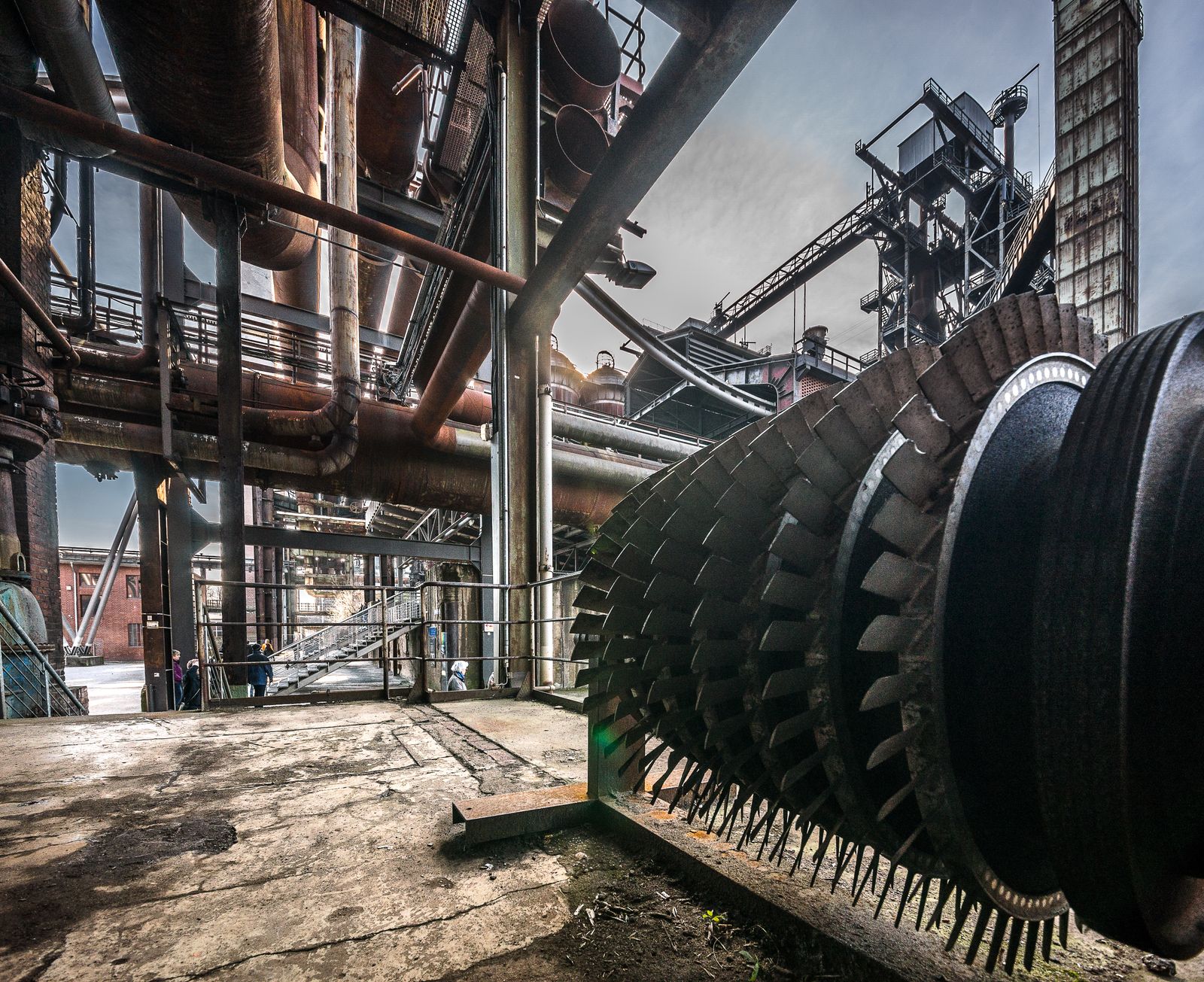
Why industrial sites are not studio locations with bigger rooms
In a studio, the photographer controls the environment. On a plant, the environment controls the photographer. Production does not stop for a photograph. Overhead cranes move loads along paths that cannot be crossed casually. Forklifts work to a rhythm the crew understands and a visitor does not. Energised machinery may require lockout/tagout confirmation before anyone places equipment near it, and some areas are no-go zones without an escort and written permission, however good the angle looks from the doorway.
There is also what the photographs themselves must do. A consumer shoot can tolerate a worker without eye protection if the light is pretty. An industrial company's own photographs cannot. Images published by the company will be read — by regulators, customers, recruits and competitors — as evidence of how the site runs. If your photographer delivers a heroic portrait of an operator without the PPE the site requires, you have not bought a marketing asset. You have bought a documented violation, in high resolution, with your logo likely in frame. Experienced industrial photographers understand that showing people properly protected is part of the job, not a constraint on it.
Access: the paperwork that happens before the photography
Expect, and welcome, a formal contractor route in. At larger facilities, especially in energy and chemicals, that route commonly runs through contractor-management platforms such as ISNetworld, Veriforce or Avetta, which track safety records, insurance documents and drug-testing status before a contractor is approved for site access. A photographer who has worked refineries and chemical plants will know these systems by name. One who has not will discover them from your email, three days before the shoot, which is three days too late.
Site-specific credentials layer on top. Many facilities require current OSHA training — a 10-hour or 30-hour card is a common ask — and, depending on where the shoot goes, confined-space or fall-protection qualifications. Secure port and maritime facilities may require a TWIC card, the Transportation Worker Identification Credential issued through the TSA and the Coast Guard for unescorted access to regulated port areas. Refineries covered by OSHA's Process Safety Management rules can require flame-resistant clothing for people conducting on-site work, contractors included — photographers included. None of this is bureaucracy for its own sake. It is the facility proving, to itself and to an auditor, that everyone inside the fence was qualified to be there.
Build the lead time into your commissioning calendar. Inductions, badging, drug screening where required, and platform vetting do not compress into the morning of the shoot. A realistic schedule allows weeks, not days, between booking and the first frame — and a photographer who quotes you a date without asking about your site's induction process has told you something important about their experience.
PPE: what "arrive prepared" actually means
At minimum, a qualified industrial photographer should arrive with their own steel-toe boots, hard hat, safety glasses and high-visibility clothing. That is the floor, not the full list. Depending on the hazard assessment for the areas you want photographed, the site may also require hearing protection, gloves matched to the hazard, respiratory protection, flame-resistant coveralls, or a harness and lanyard for work at height.
OSHA's general PPE rules put the logic plainly: the employer must assess the workplace for hazards that necessitate PPE, select equipment that protects against the hazards identified, and train each affected person in when it is necessary, what to wear, and how to wear and care for it. Your site's assessment governs your photographer too, while they are on your floor. Do not accept a photographer who treats PPE as a costume to be borrowed from a cupboard by the gate — sometimes loaner kit is the site's normal practice, but a professional asks in advance exactly what is required, sizes and standards included, and confirms what they must bring and what, if anything, the site supplies.
Ask, too, about the unglamorous details that separate preparation from theatre. Does the photographer's hard hat meet the site's standard and is it in date? Are their boots actually rated, or fashion steel-toes? If flame-resistant clothing is required, do they own it, in the right rating? The answers are quick for someone who does this work monthly and painfully slow for someone buying kit the night before.
Insurance, and the questions behind the certificate
Require a current certificate of insurance before access is granted, and read it rather than filing it. General liability is the baseline; larger operators will also ask about workers' compensation for the photographer's crew and, where vehicles come on site, auto coverage. Limits vary by facility and by corporate policy, so set yours explicitly in the commissioning paperwork instead of accepting whatever a photographer happens to carry.
The certificate is a proxy for a deeper question: does this business run like a contractor or like a hobbyist with invoices? Photographers who regularly work industrial sites carry insurance sized for industrial clients, keep certificates ready to send, and understand additional-insured and waiver language when a client's legal team asks for it. If producing a certificate takes a week of chasing, expect the same pace when you need a rescheduled induction or a corrected invoice coded to a purchase order.
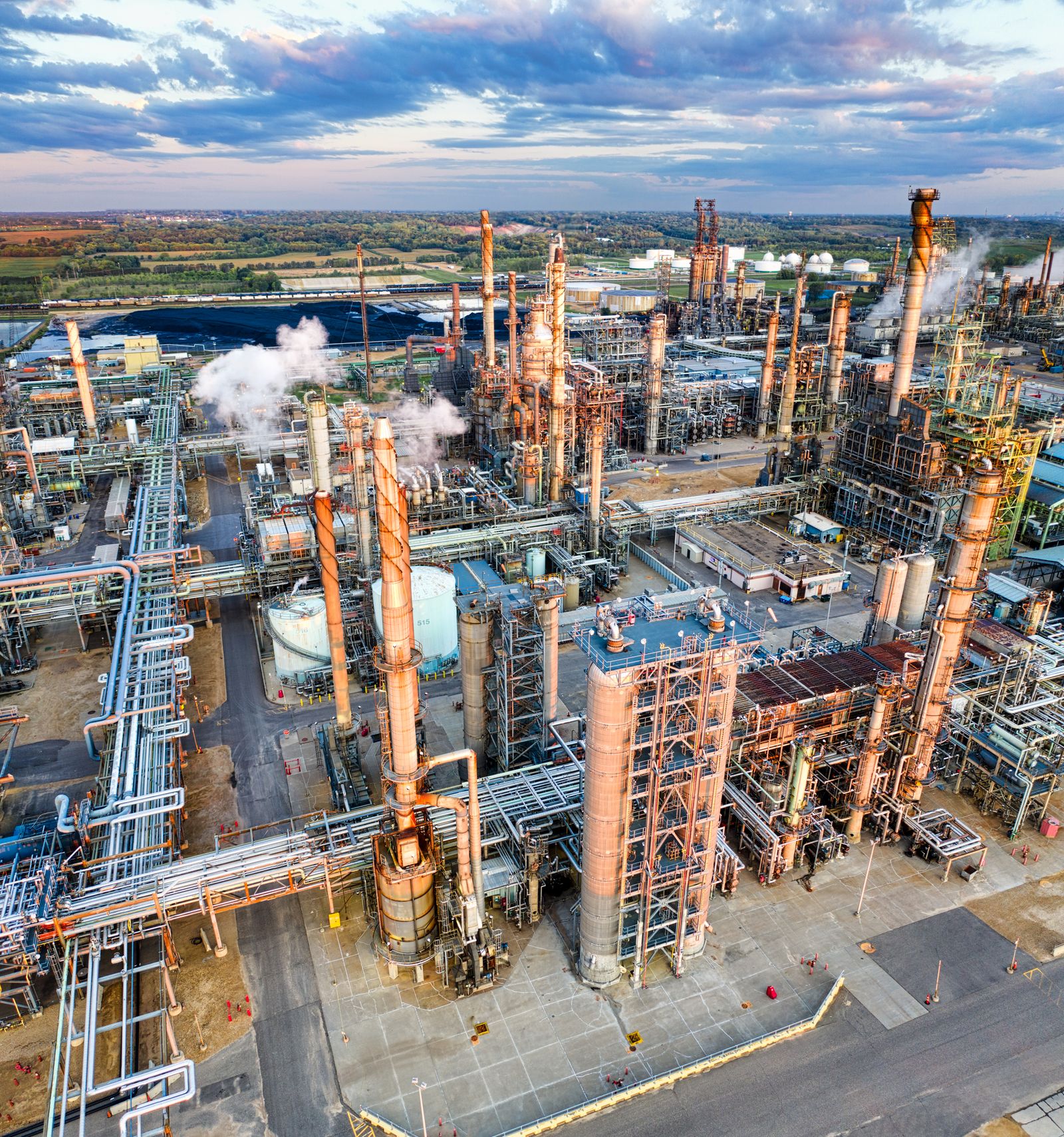
Drones deserve a separate line in this conversation. Aerial photographs of a plant are commercially valuable — nothing else shows scale, layout and investment as quickly — but flying over an active industrial site combines aviation rules, site security rules and plain common sense about what happens if an aircraft comes down in the wrong place. Confirm the pilot's credentials, confirm the site's own drone policy and any restricted areas, and agree in writing where flights may and may not happen. If your facility prohibits drones outright, a good photographer will have a ground-based plan for showing scale: elevated platforms where permitted, neighbouring vantage points with permission, and wide process sequences that build the picture across several frames.
What the work costs
Industrial work is priced as commercial production, not as an hourly favour. Published corporate pricing guides put half-day industrial and infrastructure production at roughly $1,800–$3,000 and a full day at roughly $3,500–$6,000 or more, with hourly commercial rates commonly in the $250–$500 range for short assignments. Individual rate cards vary — one established commercial studio's published 2026 sheet, for example, lists a half day at $1,300–$1,500 and a full day at $2,400–$3,300 depending on travel — so treat any single figure as one studio's card, not a market average.
| Engagement | Typical published range | What drives it |
|---|---|---|
| Half-day on site (up to ~4 hours) | $1,300–$3,000 | One location, defined shot list, standard editing and delivery |
| Full day on site (8–10 hours) | $2,400–$6,000+ | Multiple areas or processes, assistant, extended coverage |
| Short hourly assignment | $250–$500 per hour | Brief, local, single-subject work; minimums usually apply |
What moves a quote inside — or outside — those bands is rarely the camera. It is preparation time (inductions, scouting, safety meetings are work, and some photographers bill them explicitly), crew (an assistant or spotter is often a safety requirement, not a luxury), licensing and usage, travel and overnight costs for remote sites, and turnaround. Same-day or next-day delivery for a board meeting or a press deadline is a real product with a real price. Get the quote itemised: day rate, crew, travel, post-production and usage as separate lines, so you are comparing like with like and so procurement can code it without a second round of emails.
Planning the shoot day so production barely notices you
The best industrial shoot days are boring to watch, by design. That outcome is planned:
- A walked route, agreed in advance. Scout with the site contact, note light, hazards and safe camera positions, and mark permitted and restricted zones on a plan everyone shares.
- A shot list tied to process, not just places. "The new line at start-up, the inspection step, the control room at shift change" produces a library. "Some photos of the plant" produces forty pictures of pipework.
- A named escort and a named safety contact. The photographer should know, before gear is unpacked, who can authorise a change of plan, where first aid is, and what the facility's emergency number and muster point are.
- People prepared, not ambushed. Operators who know they will be photographed, in correct PPE, at an agreed moment, look competent. Operators surprised by a camera look startled, and occasionally reach for a phone to call a supervisor — reasonably.
- A stop rule everyone respects. If a required item on the safety checklist is unsettled — an escort unavailable, a zone's status unclear, a permit not signed — the shot waits. A photographer who argues with that rule on your site will argue with it on the day it matters.
Vetting: five questions that sort experience from enthusiasm
- Which industrial sites have you worked, and under what access system? Named facilities and named platforms (ISNetworld, Veriforce, Avetta) are verifiable. Vague talk of "lots of factories" is not.
- What PPE do you own, and what training cards do you hold? Listen for specifics: OSHA 10 or 30, TWIC where relevant, fall protection, confined space.
- Can you send a current insurance certificate today? Today is the operative word.
- Show me a complete industrial gallery, not a highlight reel. Look for correct PPE on every person, process shown in sequence, and interiors lit without turning the plant into a nightclub.
- What will you not photograph? A professional has an answer — proprietary processes they will avoid or clear first, areas they will not enter unescorted, angles that would misrepresent a safety practice. A photographer who will shoot anything, anywhere, for the fee is a risk you are choosing.
This site's directory reflects how specialised the wider market is: it lists 5,719 commercial and industrial photographers alongside 877 aerial photographers and 141 architectural photographers, out of more than 32,000 photography listings in total. Narrow that field by industrial experience first, paperwork second, and portfolio third — in that order, because on a plant, that is the order in which things can go wrong.
Sources
- Occupational Safety and Health Administration, PPE general requirements (29 CFR 1915.152) — hazard assessment, selection and training duties, https://www.osha.gov/laws-regs/regulations/standardnumber/1915/1915.152
- Joe Robbins, "Safety First: Why You Need an Industrial Photographer Who Knows Refinery and Plant Protocols" — OSHA training, flame-resistant clothing, TWIC and contractor platforms (ISNetworld, Veriforce, Avetta) in Harris County energy facilities, https://joerobbins.com/safety-first-why-you-need-an-industrial-photographer-who-knows-refinery-and-plant-protocols/
- Pixobo, "Industrial Photography: Practical Tips for Safer, Better Shoots" — on-site safety checklist including lockout/tagout, permitted zones, spotters and insurance, https://www.pixobo.com/industrial-photography-16-tips-for-superb-photoshoots/
- ChicoM Photo, "Corporate Photography Pricing Guide" — industrial and infrastructure production at $1,800–$3,000 per half day and $3,500–$6,000+ per full day; hourly commercial rates $250–$500, https://www.chicomphoto.com/corporate-photography-cost.html
- Deremer Studios, 2026 Standard Rate Sheet — half day $1,300–$1,500, full day $2,400–$3,300 by travel distance, https://drive.google.com/file/d/1DTlFQtDCoq7k3ZRt1m8W_s0j_DOLpXgF/view
- Factory machinery — photo by Mike van Schoonderwalt, https://www.pexels.com/photo/5503874/
- Refinery aerial — photo by Tom Fisk, https://www.pexels.com/photo/10396416/
More guides
- How to Find a Wedding Photographer: The Complete, Honest GuidePhotographers › Wedding Photographers
- How Much Does a Wedding Photographer Cost? Packages DecodedPhotographers › Wedding Photographers
- 10 Questions to Ask a Wedding Photographer Before You BookPhotographers › Wedding Photographers
- Wedding Photography Styles Explained: Documentary, Editorial, Traditional, Fine ArtPhotographers › Wedding Photographers
- Hiring a Wedding Photographer in California: Venue Light, Permits, and Price LevelsPhotographers › Wedding Photographers
- All Guides & ArticlesBrowse the full guides library