Photographers › Photo Restoration- Preservation- & Supplies
Photo Restoration and Preservation by Season: When to Book, When to Wait, and What Timing Changes
I spend my working life on event calendars: booking photographers, caterers, and venues against dates that cannot move. Restoration work runs on the same calendar, and most people discover that the hard way — usually in the second week of December, holding a water-stained portrait of a grandmother and asking a restorer to perform a miracle by Christmas Eve. The restorer can sometimes do it. You will pay for the miracle.
Restoration is one of the few photography services where when you book changes all three variables at once: the price, the queue, and — this is the part nobody expects — the physical condition of the photograph itself, because photographs keep deteriorating on their own seasonal schedule while you wait. This guide maps the year the way a professional would: when demand spikes, when it slackens, what the weather is doing to the box in your attic in the meantime, and when waiting is smart versus when waiting is just damage.
What restoration costs when nobody is rushing
Anchor the calendar in the unhurried price first. Professional restoration in 2026 typically runs about $19 to $59 per photograph for most work: roughly $19 to $25 for a light touch-up (dust, minor blemishes, color correction), $35 to $45 for full restoration (tear repair, reconstruction, face work), and $59 to $99 at the heirloom tier, with colorization and print-ready finishing included. One high-volume Florida studio publishes a flat $35 for hand restoration and $0.50 per photo for 600-DPI archival scanning — useful benchmarks for what efficient shops can charge when a job is simple and the timeline is relaxed.
Turnaround at standard rates is where providers diverge. Fast digital services quote standard delivery in two to seven days, and some in 24 hours. Traditional preservation studios are slower and say so: one long-running restoration practice quotes approximately 10 to 15 business days for most photographs, longer for extensive tears, missing areas, water or fire damage, and large collections — and warns plainly that turnaround stretches further in periods of high demand. Both models are legitimate. They are simply built for different Decembers.
The rush ladder is consistent across the industry, and it is steep. Expedited delivery commonly adds a 50 to 100 percent premium; the Florida studio's published schedule is typical of the honest end of the market — rush at five days costs 25 percent extra, and next-day service doubles the price. In other words, the photograph does not get more damaged in December. Your deadline does the damage to your invoice.
The demand calendar: when everyone else wants the same restorer
Restoration demand is gift demand, and gift demand follows the holidays with total predictability. The preservation studio cited above names the dates explicitly when it urges clients to submit early: Veterans Day, Mother's Day, Father's Day, Thanksgiving, Christmas, and Hanukkah. Add the event industry's own peaks — wedding season, when restored portraits appear at receptions and in memorial displays; graduation season in May and June; and family-reunion season in summer — and the shape of the year becomes clear.
| Window | What is happening | Booking advice |
|---|---|---|
| January–February | The quietest stretch of the year; post-holiday lull, restorers caught up | The best window of the year for large collections and heirloom work — book the big box now |
| March–April | Mother's Day and graduation orders build through April | Order by early April for May dates; scanning projects still move quickly |
| May–June | Mother's Day, graduations, Father's Day, wedding season opens | Standard turnaround still fine if you start at the month's beginning; do not start at its end |
| July–August | Reunion season; heat and humidity at their worst for storage | Good booking availability; urgent preservation triage — get collections out of attics and garages now |
| September–October | The professional's sweet spot: holiday gifting not yet peaked, summer backlog cleared | The last relaxed window for Christmas gifts — submit by late October |
| November–December | Peak season: Thanksgiving, Christmas, Hanukkah, year-end memorial and anniversary work | Expect the longest queues and the full rush ladder; a December start for a December gift means rush fees |
Two refinements from the events world. First, the spike is sharper than the table suggests, because restoration is a chain: scan, restore, proof, print, frame. Each link has its own queue, and the framer's December is worse than the restorer's. A gift that needs framing should be in a restorer's hands by early November, not because any single step is slow, but because four ordinary queues in series are. Second, businesses run on this calendar too. A restaurant restoring photographs for an anniversary, a hotel building a history wall, a firm digitizing its archive for a rebrand — all of them want delivery near a launch or a holiday, and all of them compete with grandmothers for the same small pool of skilled restorers. Book a commercial archive job in the January lull and you will get the restorer's best attention at their standard rate.
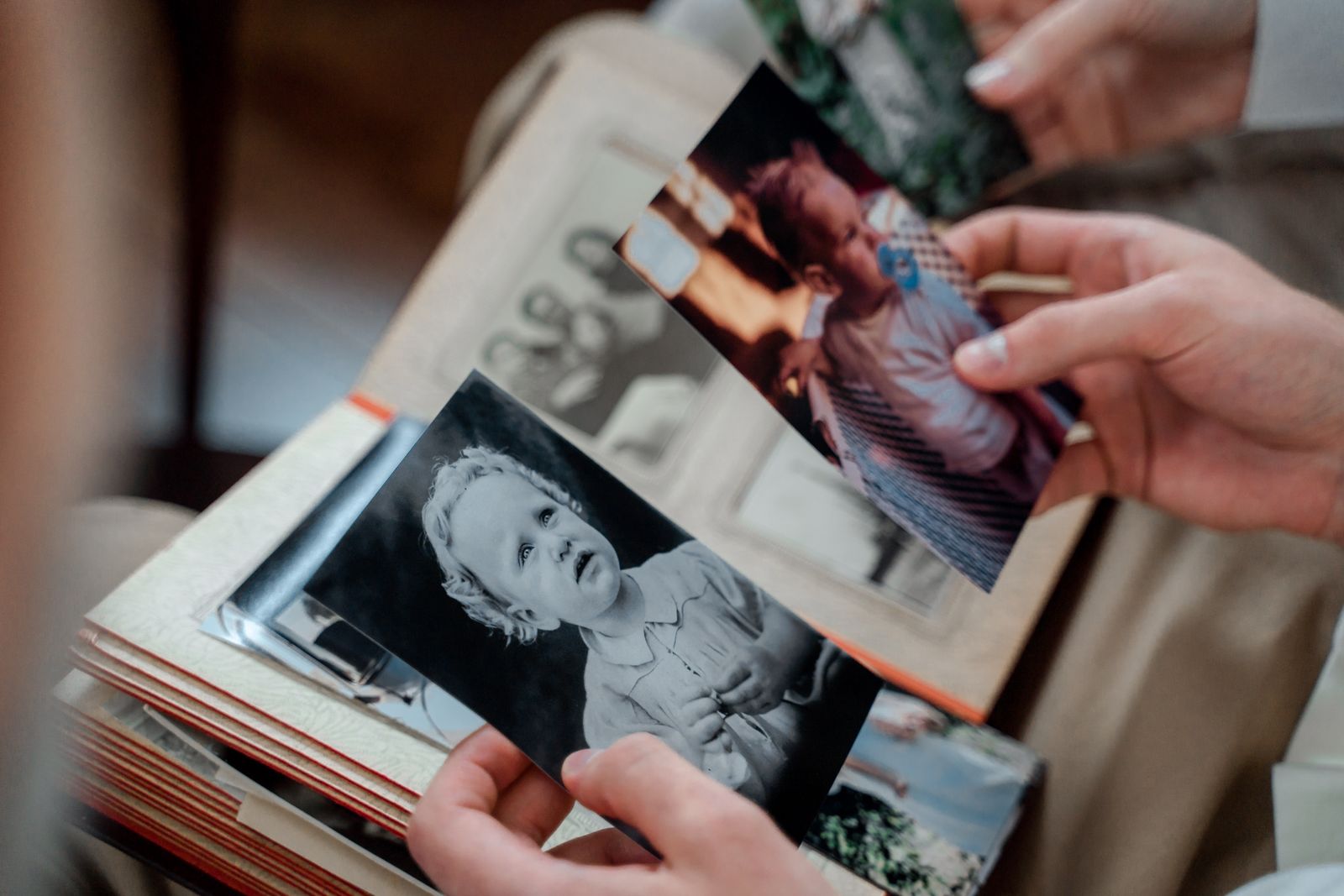
The damage calendar: what the seasons do while you wait
Here is the half of the timing question that has nothing to do with queues. Photographs deteriorate chemically, and the rate is set by temperature and humidity — which is to say, by season and by where in the house the box lives.
The U.S. National Archives' guidance for family photographs is blunt: store items below 75 degrees Fahrenheit, keep relative humidity below 65 percent to prevent mold and reduce insect activity, and avoid very low humidity — below about 15 percent, materials turn brittle. Its list of places not to store photographs reads like a list of where photographs actually live: damp basements, garages, and hot attics. The Library of Congress's guidance, as summarized in current preservation guides, is tighter still: 70 degrees or below, relative humidity between 30 and 50 percent, ideally changing by less than 5 percent within a day — and for color photographs and negatives, which fade fastest, cold storage at about 40 degrees or below.
Now run the seasons against those numbers. Summer is the destructive season for most of the country: attic temperatures soar far past the 75-degree ceiling, and in humid regions the air itself is a hazard — one Orlando digitizing studio tells its customers, as a matter of routine, that Central Florida humidity sits around 75 percent most of the year and pushes past 85 percent in summer, well above the mold threshold, in exactly the garages and storage units where family archives sit. Winter is gentler on prints stored in living spaces, but heated indoor air can crash humidity toward the brittle end, and the real winter hazard is the pipe that bursts over the basement box. Spring flooding and summer storms are when water damage — the single most common catastrophe restorers are handed — actually happens.
The practical conclusion is not "restore everything now." It is triage, in season:
- Before summer: move collections out of attics, garages, and storage units into a lived-in room. This costs nothing and is the highest-value preservation act available to you.
- After any water event: photographs that have been wet are a genuine emergency job. Do not wait for a quiet season; mold and emulsion damage progress in days, and this is the one case where a rush fee is money well spent.
- Color material first: color prints, slides, and negatives fade and deteriorate within decades even at room temperature, per the National Archives. If a collection mixes black-and-white prints and 1970s color, the color goes to the scanner first.
When waiting actually helps
Waiting is a strategy in exactly three situations. The first is the large collection with no deadline: a whole family archive, a business's decades of prints. Submitted in January or February, it gets standard pricing, an unhurried restorer, and — because scanning is often priced per photo at rates like the $0.50 benchmark above — bulk efficiency that a December one-off never sees. The second is the photograph whose damage is stable: a torn corner, a crease, fading that has already happened in a print now stored properly. Stable damage does not worsen on a calendar that matters, so the job can wait for a quiet month and a better price. The third is colorization and other discretionary, interpretive work, where the back-and-forth of proofing goes better when nobody is watching a holiday clock.
Waiting is a mistake in three opposite situations: anything wet or moldy, anything stored where this summer will be its worst yet, and anything with a fixed date attached — a memorial, a wedding display, a holiday gift, a business launch. Fixed dates do not negotiate, and the rush ladder is the price of pretending otherwise.
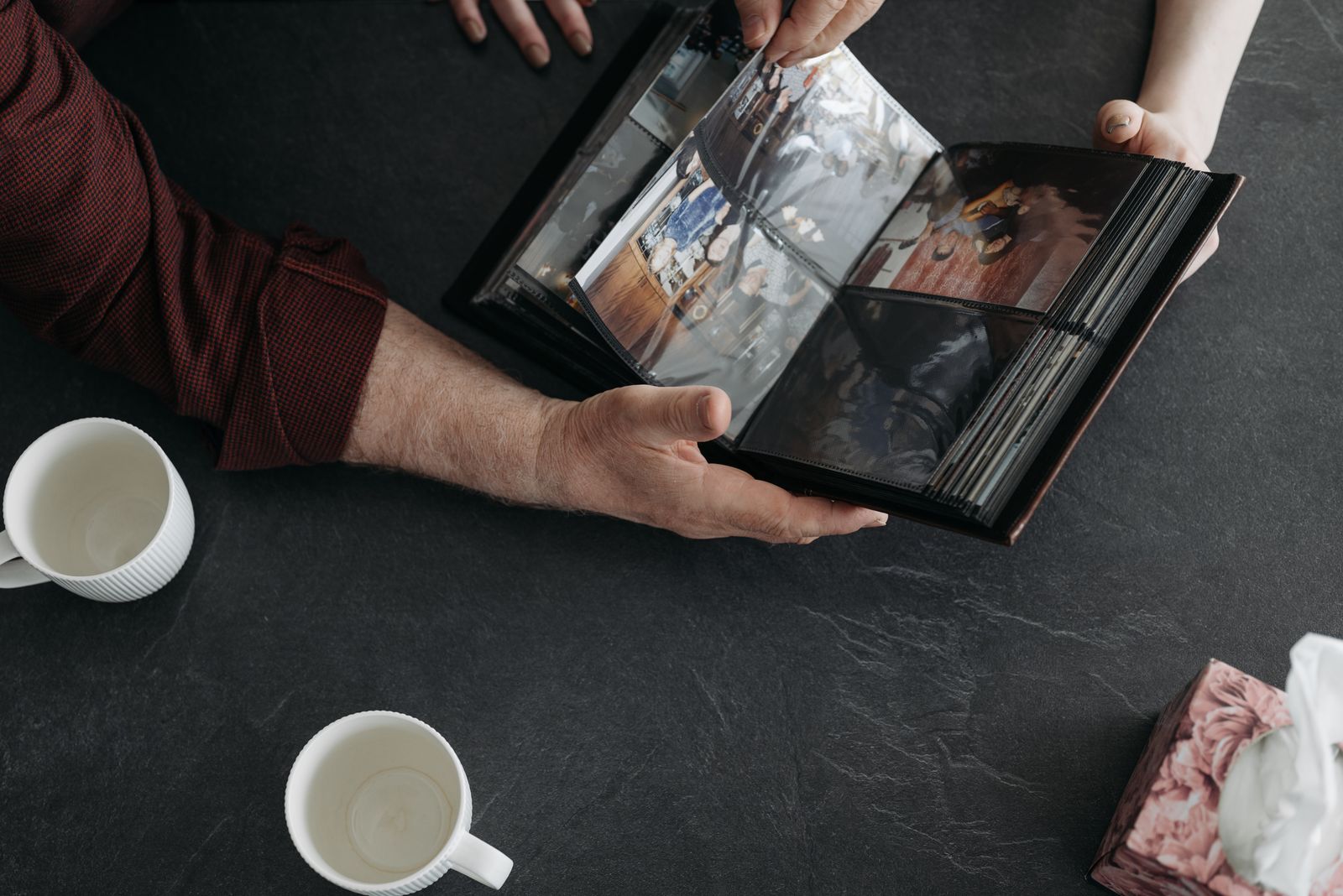
Preservation is the off-season job
The cheapest restoration is the one that never becomes necessary, and preservation work is perfectly shaped for the quiet months because most of it is supplies and sorting, not skilled labor. The standards are consistent across the National Archives and the Library of Congress: enclosures — sleeves, folders, boxes — should be acid-free and lignin-free, and for photographs should have passed the Photographic Activity Test; safe plastics are uncoated polyester, polyethylene, or polypropylene, never PVC; handle prints by their edges, with clean hands or nitrile gloves; label on the back edge in pencil, not pen; and never apply rubber cement, glue, or pressure-sensitive tape to a photograph.
For the digital half of preservation, the Library of Congress's personal-archiving advice, as summarized in current guides, is a rhythm rather than a project: keep at least two copies on different media, check once a year that the files still open, and make fresh copies about every five years. Put that check on the same January calendar as the restoration booking. One quiet-season afternoon a year — sort, scan the new arrivals, check the drives, order the one restoration that matters — is the entire system.
Finding the right restorer, in any season
This site's directory counts 1,063 listings under Photo Restoration, Preservation & Supplies — a category that mixes true restoration artists, scanning services, and supply retailers, which is precisely why the directory is a starting map and not a verdict. Shortlist by the actual job: ask a candidate what their standard turnaround is this month, what their rush schedule looks like, whether originals are scanned and returned or worked on directly, and what the per-photo price is for your level of damage before you ship anything irreplaceable. Then book like an events professional: name your date, count backwards through scan, restore, proof, print, and frame, and put the start date in a month when the restorer is glad to see you. In this trade, timing is not a detail. It is half the price and most of the quality.
Sources
- Restored Past, "Photo Restoration Cost Guide 2026" — https://www.restoredpast.com/blog/photo-restoration-cost
- Forever Studios, Orlando digitizing and restoration pricing (hand restoration $35; scanning $0.50/photo; rush +25% at five days, +100% next day; Orlando humidity) — https://foreverstudios.com/locations-orlando-florida/
- Preserve Your Past, restoration FAQ (10–15 business day standard turnaround; submit well in advance of Veterans Day, Mother's Day, Father's Day, Thanksgiving, Christmas, and Hanukkah) — https://www.preserveyourpast.org/frequently-asked-questions.html
- Vector Design US, photo restoration services and pricing tiers — https://www.vectordesign.us/photo-restoration-services/
- U.S. National Archives, "How to Preserve Family Archives (papers and photographs)" — https://www.archives.gov/preservation/family-archives/storing
- Library of Congress storage and handling guidance, as summarized in "How to preserve old photos" — https://www.colorate.app/blog/how-to-preserve-old-photos.html
- Photos: photo by cottonbro, https://www.pexels.com/photo/8848784/ ; photo by Pavel Danilyuk, https://www.pexels.com/photo/8057039/ ; photo by Valeria Boltneva, https://www.pexels.com/photo/724644/
More guides
- How to Find a Wedding Photographer: The Complete, Honest GuidePhotographers › Wedding Photographers
- How Much Does a Wedding Photographer Cost? Packages DecodedPhotographers › Wedding Photographers
- 10 Questions to Ask a Wedding Photographer Before You BookPhotographers › Wedding Photographers
- Wedding Photography Styles Explained: Documentary, Editorial, Traditional, Fine ArtPhotographers › Wedding Photographers
- Hiring a Wedding Photographer in California: Venue Light, Permits, and Price LevelsPhotographers › Wedding Photographers
- All Guides & ArticlesBrowse the full guides library