Photographers › Photo Restoration- Preservation- & Supplies
Photo Restoration and Preservation Contracts and Paperwork: What to Read, Question and Never Sign Blind
Every other photography service starts with something that can be reshot. A restoration starts with the opposite: an object that exists once. The only print of your grandfather in uniform. A wedding portrait water-damaged in a flood, already fragile before anyone touches it. When you hand that object — or its only good scan — to a restoration service, the contract you sign decides three things that no amount of Photoshop skill can fix afterwards: what happens if the original is lost, what "restored" was actually promised to mean, and who may use the finished image, and how. Most customers read none of it. They read the price.
I spent years as a commercial photographer's assistant, logging prints in and out, and the disputes I watched were never really about retouching. They were about paperwork nobody had read: an estimate that silently became a blank cheque, a liability clause that valued a lost heirloom at the cost of a blank sheet of photo paper, a proof approved by accident that triggered a non-refundable print run. This guide walks the documents in the order you will meet them — estimate, intake, liability, proofing, delivery, preservation terms — and flags the clauses that decide disputes, with the prices and preservation standards that give those clauses context.
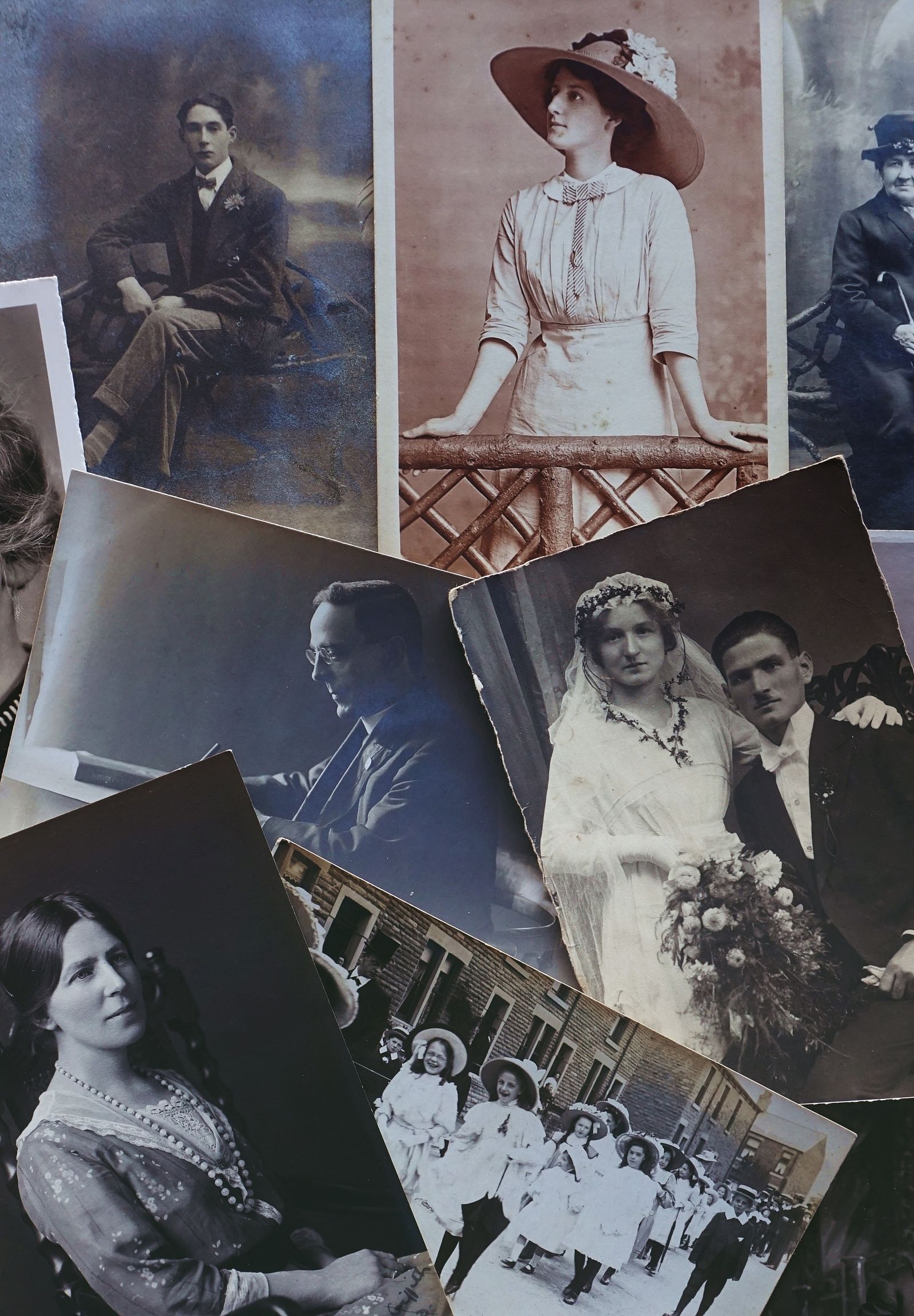
First, understand what you are buying: a file, not a repaired object
Reputable digital restoration does not alter your original at all. As restoration specialist Ctein puts it in his long-running FAQ, the work happens in the computer, not on the photograph: the original is scanned at high quality, the scan is what gets repaired, and you receive the restored image as high-resolution files — in his case TIFF and JPEG, typically 80–100 MB — plus, in his practice, a full-size print, and your original back "unharmed and unaltered." That structure is the industry norm, and your contract should state it explicitly.
That matters legally and practically. Legally, because if a service proposes physical work on the object itself — flattening, cleaning, inpainting the actual print — you are no longer buying restoration, you are buying conservation treatment on an artefact, and the paperwork, qualifications and risk are of a different order. Practically, because the deliverable being a file means the contract must specify the file: format (an archival TIFF as well as a JPEG), resolution, colour space if you care about printing, and whether the un-restored master scan is included. Get the master scan in the agreement. It is your insurance policy and your future freedom to have the work redone by someone else — and some services treat it as an extra.
The estimate: where "from $20" goes to become a real number
Restoration pricing is damage pricing. Published services converge on the same ladder, which is useful for reading any estimate you are given:
| Damage level | Published range | What it usually covers |
|---|---|---|
| Light | $3–$20 per photo at the cheapest services; $35–$85 in higher-end guides | Dust, scratches, fading, small spots, contrast recovery |
| Medium | $24–$36 (ScanCafe); $85–$150 (Fash guide) | Tears, stains, simple removals, black-and-white to colour |
| Advanced | $40–$60 per photo | Severe tears, larger missing areas rebuilt, face refinement |
| Extreme / complex | $97 and up; $250–$500+ in high-end guides | Major reconstruction, mould damage, painted rebuilding, full colourising |
ScanCafe, for example, publishes basic work at $3.00–$18.14, medium at $24.19–$36.29, advanced at $48.39–$60.49 and extreme at $96.79 and up; Vector Design US starts its tiers at $20, $30, $40 and $50; a 2026 cost guide surveying professional retouchers puts human restoration at roughly $30–$150 per photo. Thumbtack's cost guide, cited in that survey, averages $78 a job. The spread is real, and it is exactly why the estimate clause matters more than the headline price.
Read the estimate for four things. Is it fixed or is it a ceiling? A quote "from $40" with the final price set after inspection is normal — no one can price a torn face unseen — but the document should say the firm price is confirmed before work begins and that you can decline and owe nothing, or only a stated assessment fee, if the firm price is not acceptable. What counts as one photo? A group portrait with twelve damaged faces is one photograph and twelve problems; some services price per person for detailed face work. What is an extra? Colourisation is the classic one — one large service charges $19.95 on top for it — along with rush delivery, extra prints and eye or detail retouching per person. When does the estimate expire, and can it change mid-job? Damage sometimes reveals itself at scanning resolution. A fair clause lets the restorer stop, show you the new evidence, and re-quote before proceeding — not proceed and present the difference as a fait accompli.
Never sign an estimate that authorises "all work deemed necessary" at an hourly rate with no cap. That single sentence converts a $60 restoration into an open account.
The intake form: the most important document nobody reads
When originals are mailed or handed over, the intake paperwork creates the record of what existed, in what condition, on what date. Insist it does three things, and keep your copy.
First, an itemised inventory: each photograph identified — subject, size, format (print, negative, slide, glass plate) — not "one box of photos." If twelve items go in, twelve items are listed. Second, a condition note: existing tears, mould, brittleness, a print stuck to glass. This protects you (damage pre-dating the service cannot later be attributed to your packaging) and protects an honest restorer (they are not blamed for the flood). Photograph every original yourself before it leaves you, front and back, next to something that shows scale. Third, handling instructions and their limits: if a print must not be removed from its frame or album page, say so in writing on the form, not in a phone call. Some studios now scan albums in place precisely because removal is the riskiest moment in the whole job.
If a service will not itemise what you sent, send scans instead — or send nothing. The absence of an intake record is what turns a loss into an argument about whether the item was ever there.
Liability for the original: the clause that decides the worst day
This is the section to read twice, because the industry's honest practitioners will tell you the uncomfortable truth themselves. One UK restorer's terms state it plainly: original photographs "are not insured for any financial value while in my care, as personal photographs cannot usually be formally valued"; customers are advised to make a copy before sending; if an original is lost or damaged in their care, a replacement print from the scan is "the limit of my liability"; and photographs sent by post are the sender's responsibility until received — postal compensation schemes require proof of value that, for a family photograph, almost nobody has.
MemoryCherish, a US service, structures the same risk more formally: mailing an irreplaceable original carries unavoidable shipping and handling risk; the service stands behind its own handling with a default level of protection and lets customers raise it through optional insured, declared-value handling. Other studios make the insured route the default — prepaid insured kits both ways, originals logged by name on arrival, returns shipped insured at declared value.
You cannot contract away the sentimental loss. What you can do is decide, in writing and in advance: who bears transit risk in each direction; what the service's liability is capped at if the original is lost in their care (a replacement print, a fixed sum, declared value — all are found in real terms; know which one you signed); whether a high-quality scan is made immediately on arrival, so that even a later loss leaves a restorable file; and whether you should be using the mail at all. For a truly irreplaceable item, the safest contract term is the one where the original never travels: a local handover, scanning while you wait, or sending a scan you made or commissioned locally. Several restorers work entirely from customer scans and say so — Ctein's model still involves the original for scanning, but many online services never touch paper at all, which eliminates this entire clause at the cost of scan quality being in your hands.
Never sign blind a clause that caps liability at the service fee, or at the value of the materials, for an original you have described to the same company as priceless. If those are the only terms available, that is information: use their scan-only route.
Proofing, revisions and the approval that costs money
The normal workflow is a watermarked approval proof, your comments, then final files. The contract should state how many revision rounds are included, what a revision is (correcting the restoration) versus a change of brief (a different result — legitimately billable), and the deadline by which you must respond. One service's guarantee, for instance, gives you 30 days from delivery to say you are not satisfied — after which the promise lapses. Diarise yours.
The sharpest clause in this section concerns printing. MemoryCherish states it openly: once you approve a proof and the photo is custom-printed, the printing cannot be undone. Approval is therefore not a courtesy click; it is the point of no return for the print part of the bill. Zoom into faces at full size before approving. Check names, dates and any text the restorer has reconstructed. If the proof is low-resolution and watermarked across the exact area you need to judge, ask for a cropped full-resolution section as your proof — a reasonable request that good services accommodate.
Refund language deserves the same care as revision language. "Money-back guarantee" in marketing copy resolves, in real terms, into conditions: a satisfaction window, sometimes a cap on the number of refunds per customer per year, and exclusions once custom printing has been approved. None of that is sinister. All of it should be in the document you sign, matching the advertisement you believed.
Copyright, privacy and your face in their portfolio
Two separate rights hide in this section. The first is yours to warrant: services routinely require you to confirm you own the photographs or have the copyright owner's permission to have them restored. For your own family prints that is straightforward; for a professional portrait still in copyright, or work you plan to sell, it is a real question, and the clause usually makes it your problem, including an indemnity if you get it wrong.
The second is theirs to ask and yours to grant or refuse: use of your before-and-after images in their portfolio, website, exhibitions or marketing. Honest terms make this opt-in or permission-based — one restorer's terms say before-and-afters are shown with the customer's permission, and removed promptly on request. If the clause instead grants the service a broad, perpetual licence to your family photographs as a condition of doing the work, strike it or walk. A restored portrait of your mother is not advertising stock, and no discount is priced to make it so. The same clause family covers data handling: how long the service keeps your scans, whether files are used to train anything, and how to get them deleted. If the terms are silent, ask, and get the answer in the order paperwork.
Preservation terms: what happens after the restoration
A restoration that is then stored badly is a subscription to the same problem. If the service sells preservation as well — archival printing, sleeving, boxing, storage advice — the paperwork should name the standard, not the adjective. "Archival" on its own is marketing. The Library of Congress's care guidance gives you the vocabulary to check: storage materials should meet ISO 18902 and pass the Photographic Activity Test (PAT); the environment should be relatively dry at 30–50% relative humidity, cool at 70°F or below, and stable — humidity swings under 5% in 24 hours matter, and relative humidity is the single most important factor for most prints. For colour photographs and film negatives, temperature is the controlling factor, and cold storage at 40°F or below is recommended. Attics, basements, exterior walls and spots near vents or radiators are all on the avoid list.
So if a preservation quote says "archival box," ask: PAT-passed? If it promises a restored print will "last 100 years," ask: printed how, on what, and stored where — because the honest answer always ends with the environment, which is in your house, under your control. And for the digital side, the deliverable terms should leave you with files you can preserve yourself: the archival TIFF, the master scan, in formats you can open without the service's permission or survival.
A five-minute checklist before you sign anything
- Deliverable defined: file formats, resolution, master scan included, original returned unaltered.
- Price defined: firm price confirmed before work, extras listed, mid-job re-quote requires your approval.
- Intake defined: itemised inventory, condition noted, your own photographs taken before handover.
- Liability defined: transit risk, in-care cap, immediate scan on arrival — or a scan-only route for the irreplaceable.
- Proofing defined: revision rounds, satisfaction window diarised, print approval understood as final.
- Rights defined: your copyright warranty understood; portfolio use opt-in only; file retention and deletion stated.
- Preservation defined: PAT/ISO 18902 named for materials; storage numbers (30–50% RH, ≤70°F) in the advice you are paying for.
This site's directory lists 1,063 photo restoration, preservation and supplies listings among its more than 32,000 photography listings — a crowded field in which the retouching, honestly, is often the easy part to judge from samples. The paperwork is the service. Read it like the photograph matters, because to exactly one party in the transaction, it does.
Sources
- ScanCafe, photo restoration pricing — basic $3.00–$18.14, medium $24.19–$36.29, advanced $48.39–$60.49, extreme $96.79 and up, https://www.scancafe.com/services/photo-restoration?srsltid=removed
- Vector Design US, photo restoration services and 2026 cost guide — tiers from $20/$30/$40/$50 per image; Thumbtack average $78 per job; Fash guide $35–$85 light to $250–$500+ severe, https://www.vectordesign.us/photo-restoration-services/
- Relively, "How Much Does Photo Restoration Cost? (2026 Guide)" — professional retouchers roughly $30–$150 per photo, https://www.re-lively.com/blog/photo-restoration-cost
- Ctein, "Questions and Answers about Digital Photo Restoration" — digital restoration leaves the original unaltered; deliverables as TIFF/JPEG files of 80–100 MB plus print and return of the original, https://photo-repair.com/restoration_faq.htm
- Restoring Glory, Terms — originals not insured for financial value in care; replacement print as limit of liability; postal transit at sender's risk, https://www.restoringglory.co.uk/page/Terms/2/
- MemoryCherish, Refund & Returns Policy — 30-day satisfaction window; mailed-original risk with optional insured declared-value handling; approved-proof custom printing cannot be undone, https://memorycherish.com/refund-policy/
- Library of Congress, "Care, Handling and Storage of Photographs" — 30–50% relative humidity, 70°F or below, ISO 18902 / Photographic Activity Test for storage materials, cold storage at 40°F or below for colour and negatives, https://www.loc.gov/preservation/care/photo.html
- Vintage portraits — photo by Suzy Hazelwood, https://www.pexels.com/photo/old-photos-3617531/
- Hands examining a photo album — photo by cottonbro studio, https://www.pexels.com/photo/person-holding-baby-pictures-8848784/
More guides
- How to Find a Wedding Photographer: The Complete, Honest GuidePhotographers › Wedding Photographers
- How Much Does a Wedding Photographer Cost? Packages DecodedPhotographers › Wedding Photographers
- 10 Questions to Ask a Wedding Photographer Before You BookPhotographers › Wedding Photographers
- Wedding Photography Styles Explained: Documentary, Editorial, Traditional, Fine ArtPhotographers › Wedding Photographers
- Hiring a Wedding Photographer in California: Venue Light, Permits, and Price LevelsPhotographers › Wedding Photographers
- All Guides & ArticlesBrowse the full guides library