Photographers › Photo Retouching & Coloring
Photo Retouching and Coloring at Three Budgets: What Budget, Mid-Range and Premium Really Buy
On commercial shoots, the retouching decision was never made in the abstract. It was made at the end of the day, over a contact sheet, with the art director pointing: this hero shot goes to the expensive retoucher, these forty catalog frames go to the service, and this one — the one nobody will ever look at for more than a second — gets whatever is cheapest and fastest. Nobody on those sets believed the cheap and expensive versions of the work were the same product. They also didn't believe expensive was automatically better. They believed in matching the level of handwork to the size the picture would be seen at and the money riding on it.
That is the right frame for your own spending, whether you sell products online, shoot portraits for clients, or want a grandparent's black-and-white portrait brought into color. Retouching and coloring are sold at prices that differ by a factor of a hundred — literally, from a few cents an image to well over a hundred dollars — and the spread is not mostly markup. It is mostly time, judgment, and how much of a human being's attention your photograph receives. This guide walks the three budget levels side by side, so you can see what each step up actually buys and where the steps stop being worth climbing.
The three levels at a glance
Published price lists from working retouching services cluster into three recognizable bands. The boundaries blur — one studio's premium is another's standard — but the work inside each band is consistent enough to shop by.
| Level | Typical price per image | What happens to your photo |
|---|---|---|
| Budget | $0.50–$3 for retouching; $0.05–$0.10 for AI coloring | Automated or high-volume pipeline work: exposure and color correction, dust and spot removal, basic cleanup; coloring by algorithm with no human color decisions |
| Mid-range | $3–$15 for retouching; $25–$45 for hand coloring | A person works on your image: portrait polish, background cleanup, object removal, natural skin work; hand coloring with researched, plausible color choices |
| Premium | $15–$150+ for retouching; $60–$95+ for coloring with restoration | Named specialist, pen-tablet handwork: dodge and burn, frequency separation, hair and reflection reconstruction, compositing; coloring combined with repair of damage |
Two cautions before the detail. First, per-image prices assume ordinary complexity — a straightforward portrait or product frame. A group shot, a reflective surface, or a torn original moves any quote up a band. Second, freelancers often price by the hour instead, commonly $30 to $50 an hour for competent retouching, which converts to premium per-image prices on slow, careful work and mid-range prices on fast work. The bands above are the honest landscape either way.
Budget: the pipeline, and when the pipeline is enough
At the bottom of the market, retouching is a volume business. Large services publish starting prices under a dollar an image for simple work — dust, spot and scratch removal from about $0.69, basic color correction lower still in bulk — and the general run of budget retouching lands between fifty cents and three dollars a photograph. What you are buying is a standardized sequence: white balance and exposure correction, contrast and saturation adjustment, minor blemish and dust removal, a crop and resize to your specification, delivered fast, often overnight.
For a large class of pictures, that is genuinely all they need. E-commerce catalog frames that will be seen at thumbnail-to-medium size, real-estate interiors, event coverage, social posts, and any image whose job is to be clear and accurate rather than beautiful — these live happily at budget level. Sellers moving hundreds of product photos a month would be irrational to pay more; the customer zooming on a shoe listing is checking the stitching and the true color, not the artistry of the finish.
Budget coloring is a different animal, and it has been transformed by software. AI colorization services now charge between five and ten cents an image at volume, and around a dollar or two for a single full-resolution photograph. The algorithm predicts plausible colors from the tones in the frame, and on landscapes, street scenes, and well-exposed portraits the results can be startlingly good for the price of a stamp. What you do not get is knowledge. The software does not know your grandfather's regiment wore a particular shade, or that the family car was red; it guesses the statistically likely color, and it guesses skin, uniforms, and signage wrong often enough that every AI-colored photograph should be treated as an interpretation, not a recovery.
The budget tier's real limits are consistency and judgment. Pipelines apply the recipe; they do not notice that one frame in your set was shot under different light and now clashes with the other thirty-nine, and they do not stop when an edit starts to look wrong. Buy budget for volume and for pictures that will be seen small and briefly. Do not buy it for the one photograph that will be printed large and kept.
Mid-range: a person, paying attention
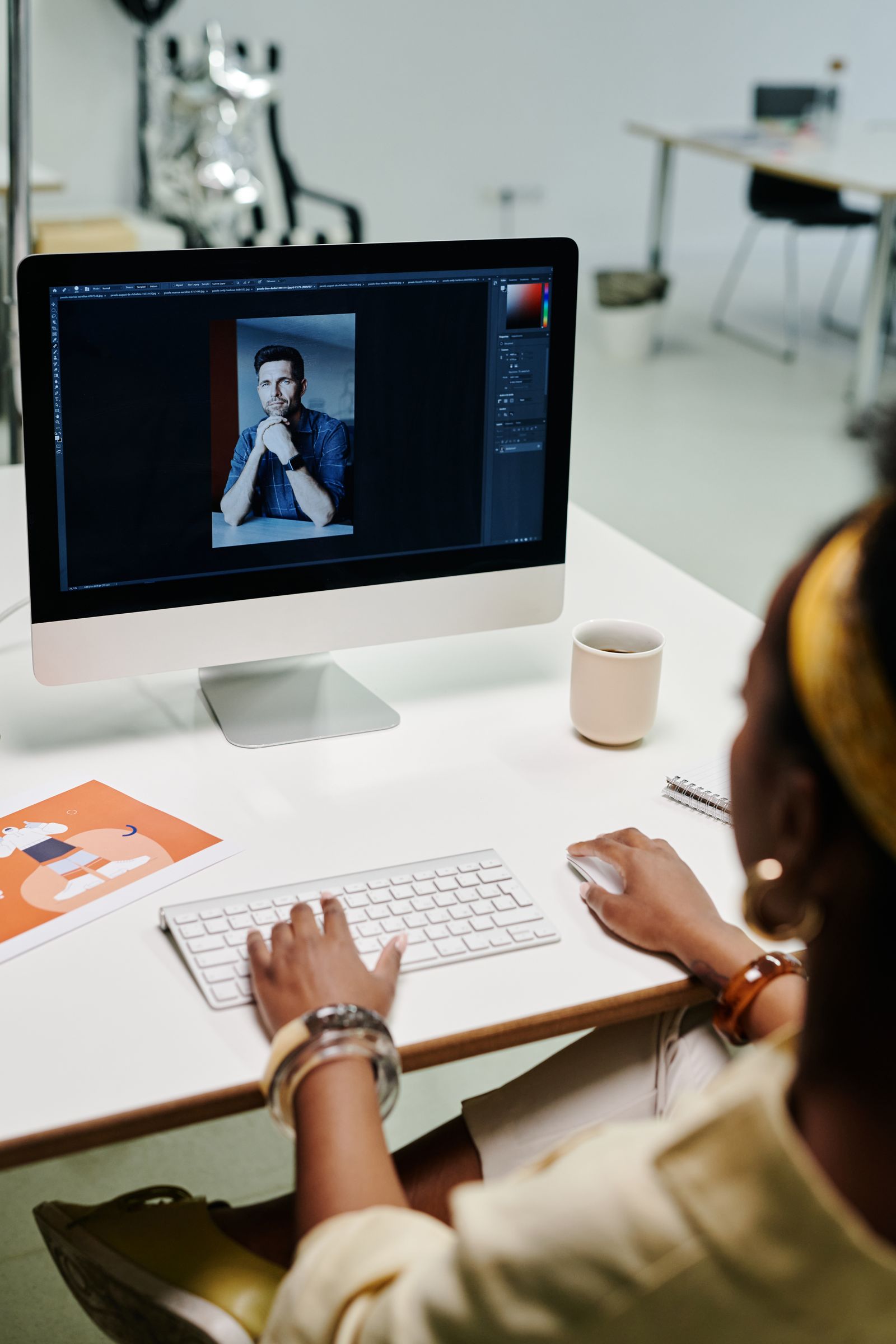
The step from three dollars to somewhere between three and fifteen dollars an image is the largest quality jump in this market, because it is the step where a human being starts making decisions about your specific photograph. Published mid-range lists — standard portrait retouching around $4 to $5, advanced work on busier frames around $8 — buy recognizable handwork: skin cleaned while keeping its texture, teeth and eyes brightened with restraint, stray hairs removed, backgrounds tidied or replaced, distracting objects taken out, wrinkles smoothed from clothing, and a color grade applied with some sense of what the picture is for.
For creators and sellers, this is the tier that converts. A marketplace portrait, a headshot, a product hero image, a listing photograph for a premium listing — these are seen closely, by people deciding whether to trust you with money, and the difference between pipeline-clean and properly retouched is visible at exactly that distance. Mid-range is also where revision rounds normally appear: most services at this level include one or two rounds of corrections, which matters more than it sounds, because the first version of any subjective edit is a negotiation opener, not a verdict.
Hand coloring lives at this tier, and it is a craft product. Individual specialists charge around $25 an image for colorization with personal review, and small studios around $45, and what the money buys over the AI version is research and restraint: skin tones built up in layers rather than averaged, colors chosen for the period and the objects in the frame, and a person checking the result against what you told them — the dress really was blue, the house really was white. If the photograph also needs repair — tears, stains, fading — that is a separate charge at most studios, commonly $45 to $60 and up, and it is worth asking whether coloring a damaged photograph before repairing it will simply tint the damage. Usually it will.
Mid-range is the right answer for most photographs that matter to identifiable people: the portraits your clients will frame, the product shots your brand will be judged by, the family photographs your relatives will argue about. It is also the tier where you should insist on seeing a sample edit of your own image before committing a batch — every reputable service at this level will do one.
Premium: the specialist, and the pictures that carry campaigns
Above roughly fifteen dollars an image, and running past a hundred for complex commercial work, retouching stops being a service and becomes a specialty. The techniques have names you will hear in quotes: frequency separation, which splits skin texture from skin color so each can be corrected without destroying the other; dodge and burn done by hand with a pen tablet, sculpting light across a face or a product one stroke at a time; hair masking and rebuilding; reflection control on glass, jewelry, and cars; and full compositing, where elements from several photographs are built into one seamless frame. Creative compositing packages at working studios run from about $16 to $60 an image, and high-end commercial finishing for advertising — with reconstruction, several approval rounds, and output prepared for large-format print — is where the $100-plus figures live.
What the premium actually buys is three things. First, invisibility at scale: a beauty photograph that will be printed at billboard size or scrutinized in a magazine cannot carry the smearing and haloing that pass unnoticed on a phone screen. Second, consistency across a campaign: a named retoucher holds thirty images to one look in a way a pipeline, however good, does not. Third, accountability: at premium prices you are buying a person whose name is attached to the result, who will argue with you — usefully — when the brief asks for something that will look wrong.
Premium coloring is really restoration-plus-coloring: studios pricing it from about $60 to $95 an image are repairing damage, reconstructing missing areas, and then coloring, with the color decisions made by someone who understands period clothing, military uniforms, and how film stocks of different eras rendered the world. For a single irreplaceable photograph — the only portrait of a great-grandparent, damaged and monochrome — this is not extravagance. It is the difference between a tinted scan and an heirloom.
Just as important is where premium buys nothing. A social post does not need frequency separation. A catalog of four hundred products does not need a named retoucher; it needs the budget pipeline and one mid-range pass on the twenty hero images. The assistants I worked alongside had a rule of thumb: retouch to the size and lifespan of the picture's job, not to the size of your anxiety about it.
How to spend: a short decision sequence
Work through four questions, in order. How large will it be seen? Phone-screen images forgive almost everything; wall prints and campaign placements forgive nothing. How many are there? Volume pushes you down a tier and makes per-image negotiation real — published lists commonly discount meaningfully at fifty images and beyond. Is a person's identity in it? Faces — especially faces of people who are loved, or who are paying you — deserve the human-attention tier at minimum. Does color carry facts? If the colors in a colorized photograph will be taken as historical truth by your family, pay for the version where a person chose them and can tell you why.
Then test before you commit. Send the same two or three images — including your hardest one, not your easiest — to a service at the tier you are considering and, if the stakes justify it, to one tier up. Compare them at the size the pictures will actually be used. The difference between tiers is never abstract once your own photograph is on the screen, and a test batch costing ten dollars settles arguments that no price list can.
Finally, a word on finding the people. This site lists 3,152 photo retouching and coloring businesses — a number that tells you this is a mature, competitive trade, not a handful of boutiques. Use that breadth the way the studios I worked for used it: shortlist by the tier your pictures actually need, run the test batch, and let the work, not the price list, promote a service up a level in your estimation. The cheapest retouching is the kind you only pay for once, at the level the photograph deserved in the first place.
Sources
- BeEdits, retouching price list — establishes per-image tiers from $2.50 high-volume cleanup to $10.50 editorial retouching and $16–$60 creative compositing.
- Path Edits, "Photo Retouching Costs: The 2026 Pricing Guide" — establishes basic retouching from $0.69 per image and commercial/editorial work at $15–$150+.
- Vector Design US, photo retouching services — establishes basic retouching from $1.50, advanced from $2.50, professional from $8, and high-end from $12 per image.
- UniqRetouch, "Photo Retouching Rates in USA" — establishes the $0.50–$3 basic, $3–$10 standard, $10–$40+ advanced, and $25–$100+ high-end planning ranges and $30–$50 freelance hourly rates.
- Revive (Fortify Media), "How Much Does It Cost to Colorize Photos? (2026)" — establishes AI colorization at $0.05–$0.10 per image.
- Photo Digitizer, photo colorization service — establishes hand colorization at $25 per image with personal review, restoration separate at $60.
- Pacific Hill Studio, colorize a black-and-white photo — establishes hand-picked colorization at $45 per photo.
- Arperture Media, enhancement, restoration and colorization — establishes combined restoration and colorization tiers at $45–$95 per image.
- Retouching photograph: photo by Darlene Alderson, https://www.pexels.com/photo/a-woman-using-a-computer-7971616/
- Product shoot photograph: photo by J. S. J. S., https://www.pexels.com/photo/18190257/
More guides
- How to Find a Wedding Photographer: The Complete, Honest GuidePhotographers › Wedding Photographers
- How Much Does a Wedding Photographer Cost? Packages DecodedPhotographers › Wedding Photographers
- 10 Questions to Ask a Wedding Photographer Before You BookPhotographers › Wedding Photographers
- Wedding Photography Styles Explained: Documentary, Editorial, Traditional, Fine ArtPhotographers › Wedding Photographers
- Hiring a Wedding Photographer in California: Venue Light, Permits, and Price LevelsPhotographers › Wedding Photographers
- All Guides & ArticlesBrowse the full guides library