Photographers › Photo Retouching & Coloring
Photo Retouching and Coloring for Seniors: Costs, Comfort and the Adjustments Worth Asking About
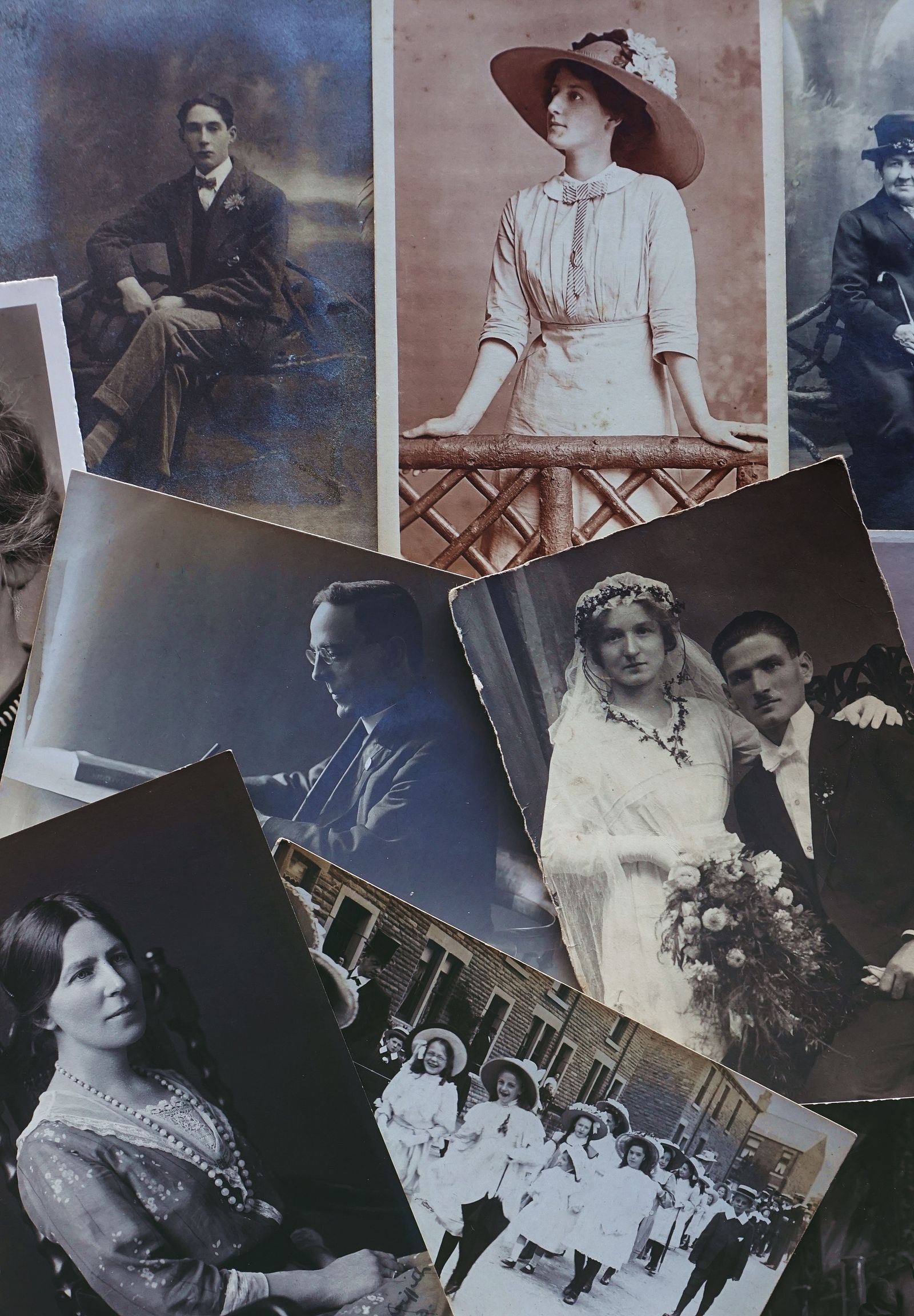
There are two kinds of retouching jobs that arrive from older customers, and they look similar only in the inbox. The first is a new portrait — a 70th birthday, a golden anniversary, a family reunion — where the person in the picture wants to look like themselves on a good day, not like a stranger smoothed into porcelain. The second is an old photograph: a wedding portrait from 1968, a parent in uniform, a house that no longer stands, faded, creased, sometimes torn, that a family wants restored and perhaps colored for a celebration or a memorial.
Both jobs fail in the same way when a provider treats them as ordinary orders. The retouching is too heavy, the colors are guessed without asking, the proof is sent as a tiny file nobody can judge on a phone, and the original — sometimes the only copy in the family — is handled carelessly. Good providers make a set of adjustments for older customers without being asked. This guide explains what those adjustments are, what the work should cost, and the questions that separate a careful studio from a fast one. It is written for the couples and families planning the event — and often paying for the photographs that will outlast it.
Retouching a new portrait of an older person: less is the skill
Modern retouching software makes excess easy. A single preset can erase every line, whiten teeth to appliance white, and lift shadows until a face loses the structure that makes it recognizable. On a younger subject that reads as "glamour." On an 80-year-old it reads as erasure — and families notice, even when they cannot name what is wrong. Grandmother does not look younger. She looks missing.
The professional standard for senior portraits is softening, not removal:
- Wrinkles softened, never deleted. Good retouchers reduce the contrast of lines rather than painting them out, and they leave expression lines around the eyes and mouth entirely alone. Those lines are the expression.
- Skin texture kept. Frequency-separation work at a light hand evens blotchiness and removes temporary blemishes — a scratch, a bruise from a blood draw, a spot that arrived last week — while keeping pores, moles, and the marks that have been there for decades. Ask explicitly: temporary things go, permanent things stay unless the sitter says otherwise.
- Eyes and teeth treated gently. Red-eye and dull catchlights are fixed; teeth are cleaned of stains but not bleached. Heavy whitening is the fastest way to make a portrait look artificial.
- Hands included. In anniversary and reunion portraits, hands are in the frame — holding a spouse's hand, a bouquet, a grandchild. Age spots on hands get the same softening as the face, or the contrast between a polished face and untouched hands looks odd.
- Color kept honest. Older skin is often rendered too pink by automated correction. A careful retoucher checks skin tone against the sitter's actual coloring, and checks it again in print, where screens lie.
If a provider's portfolio shows only young faces, ask to see work on older sitters before you book. It is a different discipline, and the honest ones will say so.
Coloring an old photograph: a collaboration, not a filter
Colorization — adding color to a black-and-white photograph — is the service families most often buy for a senior celebration: a restored wedding portrait, in color, framed for the anniversary party. It is also the service with the widest gap between a cheap automatic result and careful hand work.
Automatic colorizers are fast and cost a few dollars or less, and for a casual look at an undamaged photo they can be charming. Their weakness is that they guess, silently and confidently. Skin goes orange, a dark dress becomes navy or burgundy at random, and damaged areas are filled with invented detail. On a one-of-a-kind heirloom, invention is the problem: a rebuilt face is no longer quite the person.
Hand colorization works differently. A restorer first repairs the black-and-white image — dust, scratches, creases, fading — then builds color in layers, choosing colors by era, material, and reference: what fabrics looked like, how a uniform was actually dyed, what a 1950s kitchen wall was painted. Crucially, a good colorist asks the family what they know. The color of a mother's wedding dress, a father's eyes, the house's trim — living memory is the only primary source that exists, and older relatives are often the last people who hold it. That is a practical reason to do this work while the family's elders can still be consulted, and a good provider will prompt you for those details rather than guessing past them.
Expect to receive both versions — the restored black-and-white and the colorized file — because the color work is built on top of the restoration. Any provider who delivers only the color version has taken your original portrait's future options with it.
What it costs
Retouching a new portrait and restoring an old one are priced differently — the first by the image and the depth of work, the second mostly by damage.
| Service | Typical price | What drives it |
|---|---|---|
| Basic retouching per image | $1.50–$2.50 | Exposure and color correction, spot removal, light cleanup |
| Standard portrait retouching | $4–$8 per image | Skin work, under-eye cleanup, hair, teeth, group and event frames at the top of the range |
| High-end retouching | $12 and up per image | Hand dodge-and-burn, detailed beauty work, composites |
| Restoration, light damage | $20–$35 per photo | Dust, scratches, fading, tone recovery |
| Restoration, moderate damage | $30–$85 per photo | Creases, stains, small missing areas; Thumbtack's average restoration job is $78 |
| Restoration, severe damage | $150–$500 or more | Torn faces, large missing sections, painted reconstruction |
| Colorization | Often $25–$100 added to restoration | Number of people and colors; some services bundle it from about $50 per photo |
Those ranges come from published price lists: volume retouching services start basic work at $1.50 per image and high-end work at $12; studio retouchers put standard client portrait work around $4–$5 per image; restoration guides put light work at $35–$85 per image rising to $250–$500 for severe damage, with colorization an added $25–$100, while flat-rate restorers advertise hand restoration from about $19–$20 per photo and small family-archive bundles — five photos, colorized, for $89 at one service — at the keen end. Treat any quote that arrives before the provider has seen a proper scan with suspicion: honest restorers confirm the price after inspecting the damage, because a crease across a face changes the job entirely.
For an event, budget the retouching conversation into the photography booking itself. If your photographer includes "retouching" in a package, ask how many images, to what depth, and whether senior portraits get the lighter treatment described above. A small per-image fee for careful work on the ten portraits that matter beats heavy automated work on three hundred.
Comfort and pacing: the adjustments good providers make
The technical adjustments matter. The human ones matter as much, and they are where older customers are most often failed by ordinary workflows.
Proofs you can actually see. Proofs should arrive large, at a size that can be judged on a tablet without pinching and zooming, with a plain-language note of what was changed. Good providers offer a printed proof for color work on request — screens vary, paper does not — and they allow time. A 24-hour revision deadline is a policy designed for e-commerce, not for an 84-year-old consulting her daughter in another state.
Plain language, no jargon invoices. "Frequency separation" means nothing at a kitchen table. Careful studios describe the work as what it does — softened lines, cleaned background, color added to the dress — and price it in a short written quote before starting, not as a surprise line item.
Patience with revisions, stated up front. Many services include two free revisions on retouching; restorers commonly include one revision round on a restored photo. For senior work, ask for the revision policy in writing and for changes to be discussed by phone if email is a barrier. Providers who work with families regularly offer this without being pushed.
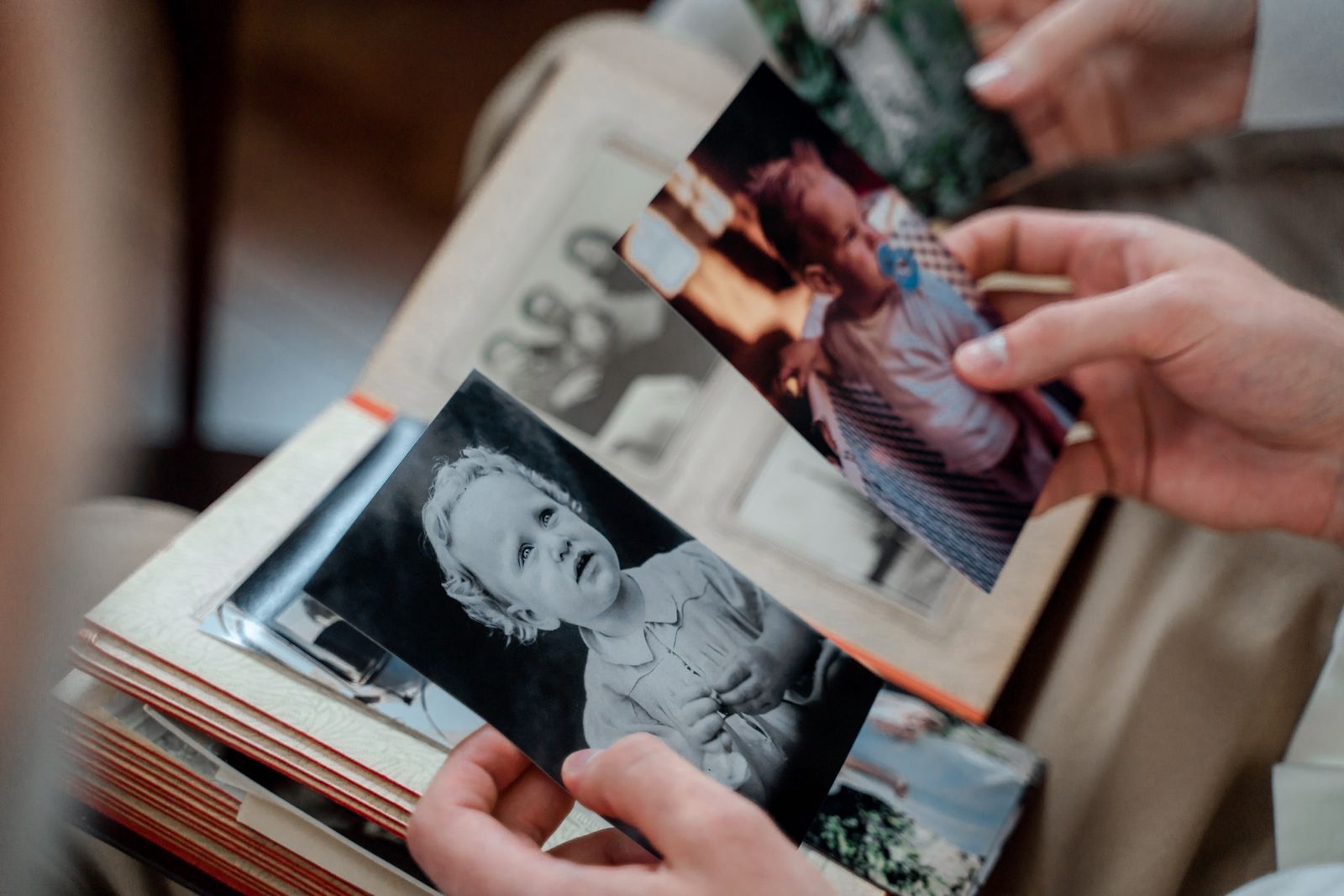
Handling originals like borrowed property. The rule is absolute: originals are scanned, never "repaired" physically, and returned in the same condition, ideally with the scan done while you wait or by a tracked, insured route if posted. Many families should choose the safer path — have the original scanned locally at high resolution, keep the print at home, and send only the file to an online restorer. A provider who asks you to mail the only copy of a 70-year-old print with no discussion of risk has told you something important.
No pressure at the point of grief or celebration. A meaningful share of senior restoration work is memorial work, ordered under time pressure and emotional strain. Reputable providers quote a rush fee plainly — flat-rate services charge meaningfully more to turn work in three days instead of twenty — and do not use a funeral date as leverage. If the upsell conversation feels like pressure, walk away; the photograph has waited fifty years and can wait for an honest studio.
Accessibility details worth asking about
A few practical questions sort providers quickly:
- Can you send proofs by email in large format, and will you talk through changes by phone?
- Can a family member be copied into the conversation and the proofs? (For many older customers, a son or daughter is the project manager. Good providers welcome that rather than treating it as interference.)
- Is the quote fixed after you see the scan, and how many revision rounds are included?
- For colorization: will you ask us about known colors — eyes, dress, uniform, house — before you begin, and will we see a small test area first on a large job?
- Will we receive both the restored black-and-white file and the color version, in a print-ready size, not only a web-size file?
- How are originals handled, insured, and returned — and can we supply a scan instead?
- What is the real turnaround, and what does rushing it cost, stated plainly?
AI tools: a honest place for them
It would be dishonest to pretend the cheap automatic tools have no use. For scanning a shoebox of undamaged snapshots to share in a family group chat, an AI colorizer costing a few dollars is a delight, and nobody should pay hand-restoration prices for a photo that is merely faded. The line is damage and importance. Software invents what is missing; a restorer reconstructs from what survived and tells you what could not be recovered. For the portrait that will be framed, printed large, or placed at a memorial, pay for the person. For the shoebox, use the tool — and spend the savings on proper scanning, which improves every later version.

Finding a provider
This site lists 3,152 photo retouching and coloring businesses and 1,063 photo restoration services, so the choice is wide — narrow it by the work, not the headline price. Ask for before-and-after examples on older faces and older photographs specifically, confirm the originals policy, get the post-scan quote in writing, and start with one photograph before handing over a family's whole archive. The right provider treats a senior's portrait with a lighter hand and a family's heirloom with a slower one. Both are forms of respect, and both are visible in the work before they are visible in the price.
Sources
- Vector Design US, photo retouching and photo restoration price lists — retouching from $1.50 per image for basic work to $12 for high-end work; restoration from $20 per image by damage level, with full colorizing at the top tier.
- Vector Design US, "Photo Restoration Cost in 2026" — Thumbtack's average restoration job of $78 with a typical range of $55–$100; damage-based ranges from $35–$85 for light wear to $250–$500 or more for severe damage; colorization adding $25–$100.
- BeEdits, "How Much Does Photo Retouching Cost?" — standard client portrait retouching at $4 per image and beauty retouching at $5, with what each tier includes.
- Gdefoto, old photo restoration service — hand restoration at $19 per photo, $25 with colorization, and a five-photo family archive with colorization for $89; its stated practice of colorizing by era and material and never inventing a missing face.
- ToyboxAI, "Photo Restoration Services vs AI: Cost Compared" — professional services at $30–$60 per photo at most tiers, rush pricing, and the distinction between AI tools inventing detail and restorers reconstructing it.
Photographs: old portraits — photo by Suzy Hazelwood, https://www.pexels.com/photo/old-photos-3617531/ ; album in hands — photo by cottonbro, https://www.pexels.com/photo/8848784/ ; retoucher at a desk — photo by Darlene Alderson, https://www.pexels.com/photo/a-woman-using-a-computer-7971616/
More guides
- How to Find a Wedding Photographer: The Complete, Honest GuidePhotographers › Wedding Photographers
- How Much Does a Wedding Photographer Cost? Packages DecodedPhotographers › Wedding Photographers
- 10 Questions to Ask a Wedding Photographer Before You BookPhotographers › Wedding Photographers
- Wedding Photography Styles Explained: Documentary, Editorial, Traditional, Fine ArtPhotographers › Wedding Photographers
- Hiring a Wedding Photographer in California: Venue Light, Permits, and Price LevelsPhotographers › Wedding Photographers
- All Guides & ArticlesBrowse the full guides library