Photographers › Photo Retouching & Coloring
Photo Retouching Services by Season: When to Book, When to Wait, and What Timing Changes
Every small business that sells with pictures has two busy seasons, whether it admits it or not. The first is the one customers see: the launch, the sale, the holiday catalog, the spring refresh. The second is quieter and earlier, and it belongs to the retouchers. Weeks before your product page goes live, somebody has to remove the backgrounds, fix the color that drifted between shoots, rebuild the shadow under a shoe, and make three hundred images shot on four different days look like one deliberate afternoon. That work has a season too — and if you book it in the wrong week, you pay more for it, wait longer for it, and sometimes get a worse version of it.
I book photographers and post-production for events and small brands for a living. The pattern below is the one I plan around now: what retouching actually costs, how turnaround really behaves across the year, and which jobs gain from waiting — and which ones quietly rot while you do.

First, what you are buying — because the season hits each tier differently
"Retouching" covers at least four different products, and they do not respond to seasonal pressure in the same way.
Production edits are the high-volume, rule-based jobs: clipping paths and background removal, basic cleanup, color correction, resizing and shadow work. Published rates from large editing houses start remarkably low — from about $0.25 for a simple shadow, $0.39 for a clipping path, and under a dollar for basic retouching or a ghost-mannequin effect on apparel. These services run like factories, with default turnarounds of about 24 hours and paid options from roughly 6 to 96 hours. Seasonal pressure shows up here as queue length, not as craft failure.
Standard retouching is the middle tier most small businesses actually buy: portrait cleanup, product polish, color matching across a set. Done-for-you services commonly charge about $2–$8 per photo for portrait-level work, with per-image tiers at individual studios running from roughly $1.50 for light cleanup to $8 for busier frames and group shots.
High-end retouching — beauty and campaign work, jewelry, detailed composites — is handwork: frequency separation, pen-tablet dodge and burn, rebuilding reflections in metal and glass. It starts around $10–$12 per image and climbs well past $25 for advanced work. This tier has a real capacity ceiling, because the number of people who can do it well does not expand in October.
Freelance retouchers sit across all three tiers. On marketplaces, listing start prices for retouching run from under $10 to several hundred dollars, with the middle half of listings roughly between $15 and $83 — a spread that tells you the marketplace is selling everything from batch cleanup to a named specialist's day rate under one search term.
Keep the tiers separate in your head, because the seasonal advice splits cleanly along them: production edits you can rush; high-end work you mostly cannot.
The year in retouching: a working calendar
Late September through November: the squeeze
This is the industry's harvest season, and it arrives earlier than the shopping does. Roughly two in five holiday shoppers start browsing and buying before November, and November–December have historically accounted for about 19 percent of total U.S. retail sales — so retailers push sale events into October, and the imagery deadlines land weeks before Black Friday, not on it.
What that means in practice: every e-commerce brand, catalog, and photographer with a holiday book is sending batches at once. Services that normally promise 12–24-hour turnaround will tell you, if they are honest, that turnaround "may extend a little" during extremely high-volume periods like the holiday season. The extension is rarely the real problem. The real problem is revision math. A batch planned as shoot, retouch, approve, publish — with one revision round — becomes three rounds when merchandising swaps a colorway mid-edit, and each round re-enters the longest queue of the year. Post-production specialists who plan Q4 calendars for fashion brands make the same point every year: schedules fail not because the shoot ran late, but because retouching was scoped for a normal month.
Book it rule for autumn: lock the product, angle, and spec before you send the batch; subtract your retoucher's turnaround and at least one revision round from the go-live date; and treat any date after mid-October as rush territory whether or not anyone calls it that.
December: two different months
Early December is the tail of the squeeze — last-minute holiday work, expedited fees, and retouchers working through other people's emergencies. Rush delivery inside 72 hours commonly carries a 25–50 percent premium on production work, and same-day and 6-hour options exist at the big houses precisely because December clients will pay them.
Late December is something else: the quietest fortnight in the trade. Studios and freelancers who were unreachable in November answer email in January with empty calendars and, occasionally, flexibility on price for substantial batches. If you have non-urgent work — archive cleanup, a back-catalog color pass, next spring's evergreen product shots — this is when to send it.
January through March: the buyer's market
The new year is when retouching capacity is cheapest relative to quality. Wedding and portrait retouchers are between seasons; e-commerce volume is at its annual low after the holiday peak; freelancers are building their year. This is the window to do the unglamorous things that pay all year: run test batches with two or three services, negotiate volume terms, build a written style guide with reference images, and get your spring and summer catalogs edited before you need them.
It is also the right time to fix your files. Color consistency problems that you tolerated in a December rush — the same handbag photographed three slightly different reds — are January problems, solvable at standard rates with unhurried revision rounds.
April through June: the wedding-and-graduation build
Demand climbs again, but on a different engine: weddings, graduations, and spring retail. Portrait retouching tightens first, because the same specialists who polish a boutique's product shots in February are buried in wedding galleries by May. If your business depends on people pictures — staff headshots for a spring relaunch, event photography from a conference, a salon's portfolio — book the retouching when you book the photographer, not when the files arrive. Production (product) work is still readily available in this window; it is the portrait specialists who vanish.
July and August: the deceptive lull
Midsummer looks quiet and mostly is — for product work. Back-to-school and early fall catalogs are being shot, but the retouching crunch has not yet landed, and turnaround at the big houses is at its most reliable. Two cautions. First, individual freelancers take holidays in August like everyone else; a one-person studio's "24-hour turnaround" is a promise made by a person who may be at a lake. Confirm a named backup or use a service with a bench. Second, this is your last cheap chance to pre-position autumn work. Every batch you finish in August is a batch that does not pay December prices or join the November queue.
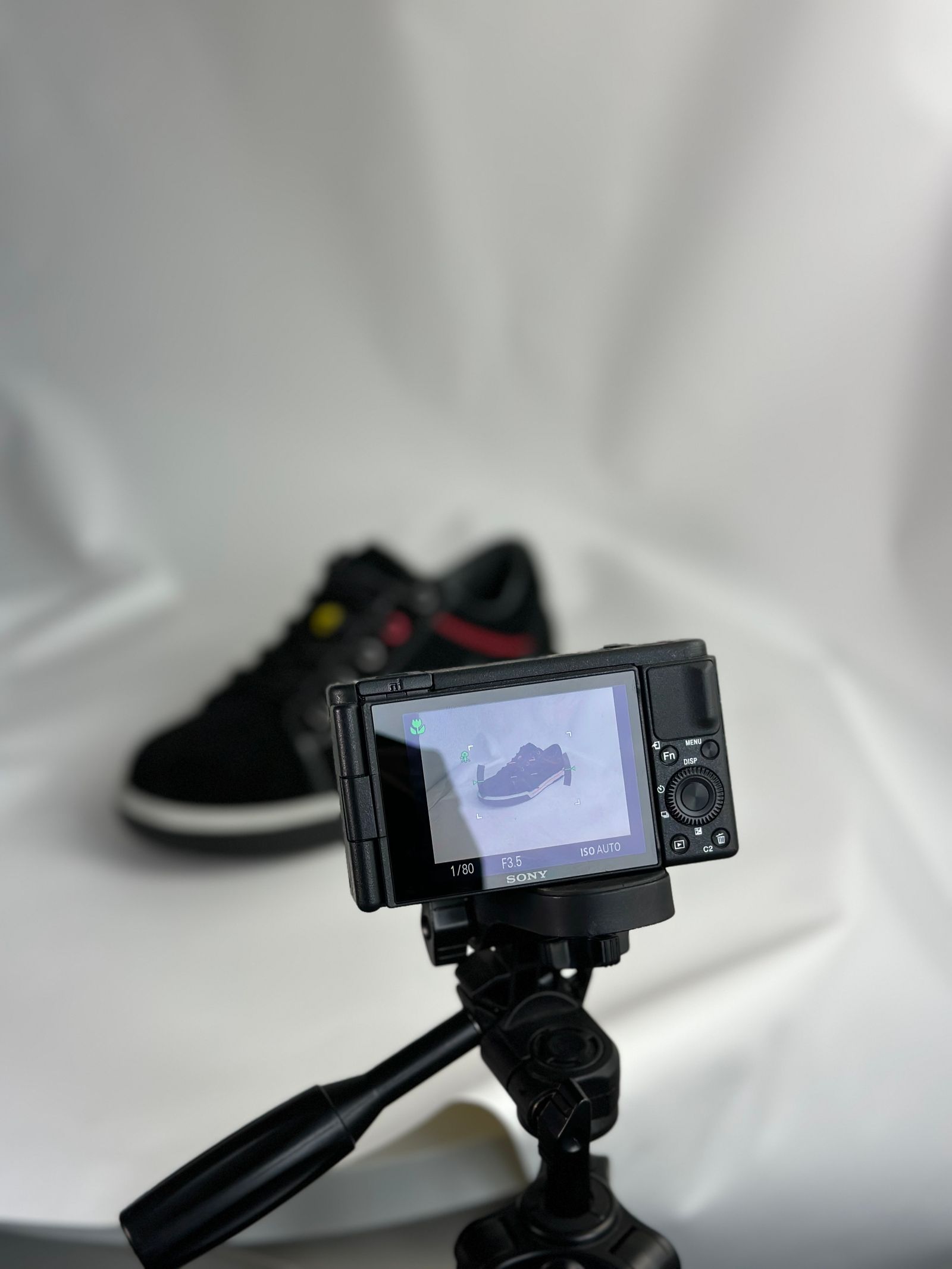
What timing actually changes: price, speed, and the third thing
Price. The per-image rate card barely moves across the year at the big services — a clipping path costs what it costs. What moves is everything around the rate: rush premiums (25–50 percent inside 72 hours is a published norm), minimums waived or enforced, volume discounts available in quiet months and unavailable in peak ones, and the freelance market, where a good retoucher's effective rate in October is whatever the third client in line will pay. Timing rarely halves a rate. It routinely decides whether you pay the rush multiplier on the whole batch or on none of it.
Speed. Standard turnaround at scale is 12–24 hours for production edits and 24–48 hours for most retouching services, with high-end work measured in days. In peak weeks, treat every published turnaround as a floor, not a promise — and notice that the services themselves say so in their own FAQs. The honest question to ask in September is not "what is your turnaround?" but "what was your turnaround last November, for a batch my size?"
Quality — the third thing, and the one nobody warns you about. Seasonal pressure does not usually make retouchers careless. It makes you careless: briefs get shorter, reference images get skipped, approval happens from a phone in an airport. Most bad retouching I have had to pay for twice was not badly executed — it was badly briefed, in a hurry, in November. The seasonal quality risk lives on the client side of the desk. That is why the style guide and the test batch belong in January: they are quality insurance you can only buy when nobody is busy.
| Your job | Best window | Window to avoid | Why |
|---|---|---|---|
| Holiday catalog / Q4 product batches | Shoot and edit August–September; lock specs before sending | Mid-October onward | Queues peak, rush premiums attach, revision rounds multiply |
| Back-catalog cleanup, color consistency pass | Late December–March | Any peak | Non-urgent handwork gets standard rates and unhurried revisions |
| Portrait and headshot retouching | Book with the shoot, winter–early spring | May–June wedding build | Portrait specialists are the first capacity to disappear |
| Test batches and style-guide building | January–February | September–November | You need the retoucher's attention, which is the scarcest thing in autumn |
| True emergencies | Any time — pay the rush rate | — | 6-hour options exist at large houses; expect a 25–50% premium inside 72 hours |
When waiting is the strategy — and when it is just delay
Wait, deliberately, when three conditions hold: the images are evergreen (a back catalog, a standard product line, brand portraits with no launch date), the work is judgment-heavy (color matching, beauty, anything where a second revision round improves it), and the deadline is yours rather than the market's. Work meeting all three tests gets cheaper, slower in the good way, and better between December and March.
Do not wait when the image is the deadline: seasonal merchandise, event photography with a news or social window, marketplace listings for stock that is sitting in a warehouse costing money. A product that cannot be listed until its photographs are finished is paying rent on your delay, and the rent dwarfs any off-season saving on a $2 edit.
And do not wait on one specific thing at any time of year: the test batch. Ten images, your hardest ten, sent to any service or freelancer before the first real order. Every reputable house offers free or cheap trial edits, and the test is what converts a rate card into knowledge — how they interpret a brief, how their color sits against your brand, how a revision request comes back. A test batch done in a quiet month is also a relationship: in November, you are a known client with a style guide on file, not a stranger in the queue.
Finding the capacity, in any season
This site's directory lists 3,152 photo retouching and coloring businesses among its photography listings — a reminder that "the retouchers are all busy" really means "the three you already know are busy." The working method is the same in every month: match the tier to the job (production house for volume, named specialist for the hero images), send the hardest ten files as a test, put turnaround, revision rounds, and rush rates in writing, and ask the November question — what did delivery actually look like in last year's peak? Book the answer you can plan around, and the season stops being something that happens to your pictures.
Sources
- Lars Miller Media, "Product Photography Retouching: Levels, Costs and Rules" — published outside rates: shadow from $0.25, clipping path from $0.39, basic retouching from $0.69, ghost mannequin from $0.89, masking from $1.19 per image; high-end retouching from $10 per image; rush delivery inside 72 hours at a 25–50% premium; default 24-hour turnaround with 6–96-hour options. https://larsmillermedia.com/product-photography-retouching-guide/
- Tucia, "How to Choose a Photo Retouching Service: Costs Compared" — done-for-you portrait retouching about $2–$8 per photo; Fiverr listing start prices checked November 2026, middle half roughly $15–$83. https://www.tucia.com/photo-retouching-services
- Vector Design US, photo retouching pricing — from $1.50 per image for light cleanup, $2.50 typical portrait/product, $8 busier frames, $12 high-end; 24-hour delivery, rush in about 6 hours. https://www.vectordesign.us/photo-retouching-services/
- Pixofix, "Holiday Product Photography: A Q4 Retouching Timeline" — roughly two in five holiday shoppers start before November; November–December historically about 19% of U.S. retail sales; lock assets and brief retouchers against go-live dates with revision buffer. https://www.pixofix.com/blog/holiday-product-photography-q4-retouching-timeline
- Clipping Area, photo editing FAQ — standard turnaround 12–24 hours for most services; turnaround may extend during extremely high-volume periods such as the holiday season. https://clippingarea.com/faq/
Photographs
- photo by Darlene Alderson, https://www.pexels.com/photo/a-woman-using-a-computer-7971616/
- photo by J. S. J. S., https://www.pexels.com/photo/camera-taking-a-photo-of-a-shoe-18190257/
More guides
- How to Find a Wedding Photographer: The Complete, Honest GuidePhotographers › Wedding Photographers
- How Much Does a Wedding Photographer Cost? Packages DecodedPhotographers › Wedding Photographers
- 10 Questions to Ask a Wedding Photographer Before You BookPhotographers › Wedding Photographers
- Wedding Photography Styles Explained: Documentary, Editorial, Traditional, Fine ArtPhotographers › Wedding Photographers
- Hiring a Wedding Photographer in California: Venue Light, Permits, and Price LevelsPhotographers › Wedding Photographers
- All Guides & ArticlesBrowse the full guides library