Photographers › Photofinishing Retail
Photofinishing Retail for Renters: What You Can Arrange, What Needs Permission and What the Landlord Covers
Renters live with a quiet contradiction. The photographs are theirs — the phone full of them, the family archive, the work they sell — but the walls are somebody else's. So every photofinishing decision a renter makes runs through two filters at once: what the print labs offer, and what the lease allows. Order the wrong product and you have a beautiful 24×36 canvas leaning against a wall it may never hang on. Drill for it anyway and the canvas costs you twice — once at the lab, once at the deposit.
I assisted a commercial photographer, and the studio's renter clients taught me to sort every print order into three piles before anyone paid for anything: what you can arrange entirely on your own, what needs the landlord's written permission first, and what is actually the landlord's cost and problem, not yours. This guide is that sorting, with the lab prices and the lease rules that decide it. It is written for renters generally — including creators and sellers finishing photographs for a rented home or a rented workspace — and it is general information about how leases and labs typically work, not legal advice about yours.
Pile one: everything you can arrange without asking anyone
Photofinishing retail — the labs that turn your files into prints, books, canvas, metal, and framed pieces — is a mail-order business now, and none of it touches your landlord. Ordering, paying, and receiving are entirely yours to arrange:
- Standard prints. The price ladder is steep and worth knowing: budget services start around $0.09 per 4×6 print, quality consumer labs run about $0.30 to $0.40 (Mpix at roughly $0.36, Nations Photo Lab around $0.30, Printique around $0.40), and a pro lab with manual colour correction starts nearer $0.89. An 8×10 runs about $3 to $3.50 at the quality labs. Shipping routinely costs more than a small print order, so batch your orders — one renter in a hands-on test of 111 prints found exactly that.
- Large prints. A 20×30 lustre print lists at $46.58 at Nations Photo Lab (about $31 on sale at the time of comparison), $44.99 at Mpix, and as low as $21.99 on matte poster paper at Snapfish; Bay Photo goes up to 48×96 inches for the truly committed. A 24×36 canvas runs about $57 at a value canvas service, against $89 for a 16×20 canvas wrap at Mpix — size for size, canvas is often the cheaper large format, which matters for pile two, because canvas is also light.
- Books and albums. Photo books from about $13 at budget services and $30 to $50 for a quality 20-page hardback need no wall at all. For a renter, the album is the zero-permission heirloom: it lives on a shelf, travels when you move, and never argues with a lease.
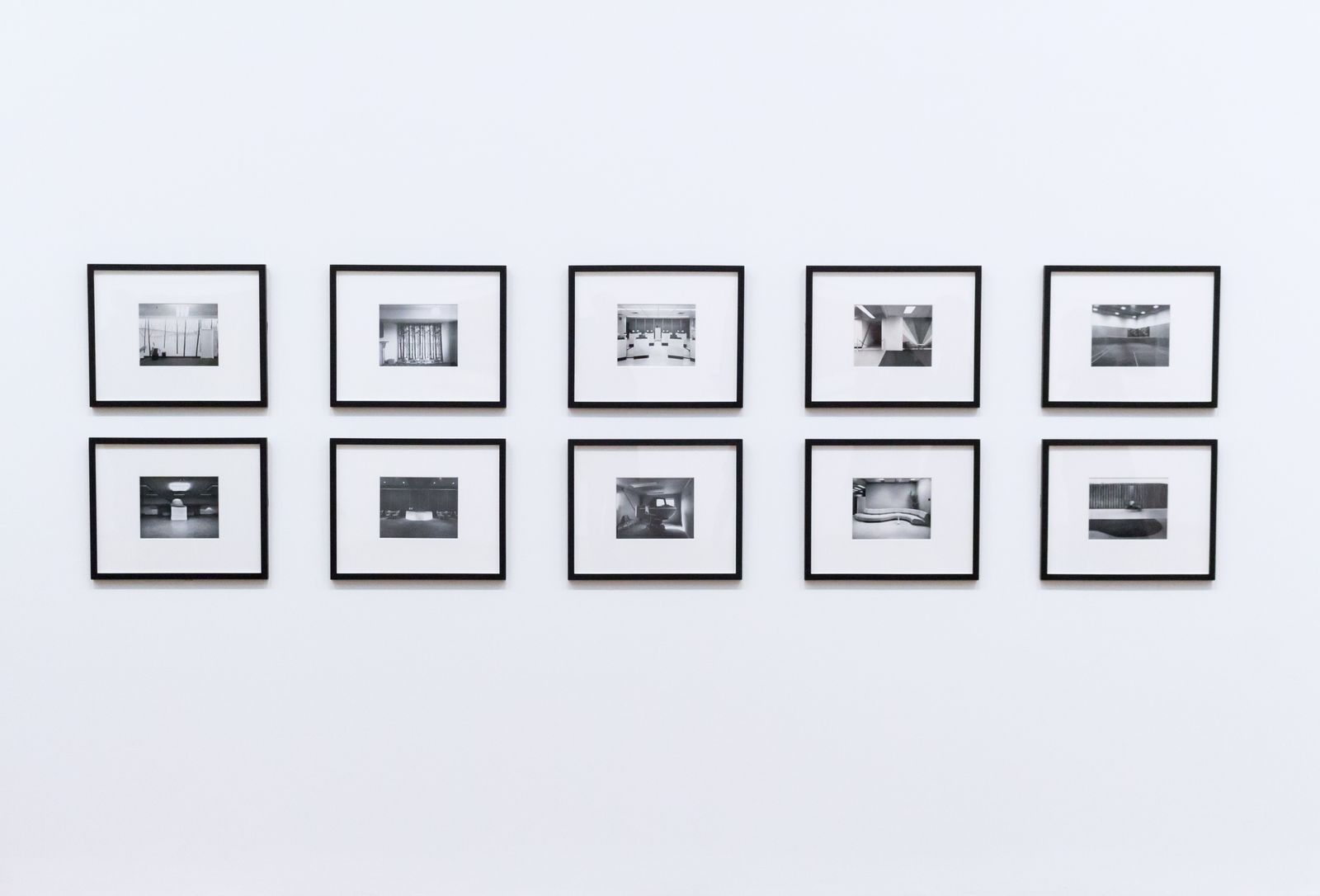
- Leaning, shelving, and adhesive display. Picture ledges that sit on furniture, framed pieces leaned on mantels and sideboards, easels, and — with the caution in pile two — adhesive strips and hooks rated for the weight. Monkey hooks, which leave the smallest mark of any hook, are the hardware some landlords actively recommend for light items.
The creative principle for renters: spend on the print, save on the penetration. A metal print or a framed piece displayed on a ledge gives you the gallery wall without the gallery wall's holes. Order the photographs as large as your rooms deserve; just choose display methods your tenancy can carry.
Pile two: what needs the landlord's written permission
Your lease is the governing document, and most residential leases contain an alterations clause prohibiting physical changes to walls, floors, and ceilings without the landlord's prior written consent. The line the law and practice draw runs by size and repair scope:
| What you want to do | Typical position | Why |
|---|---|---|
| A few small nail or pin holes for picture hooks | Generally fine — treated as normal wear and tear | HUD guidance lists small nail holes among routine-use marks a landlord should expect; many leases carve them out expressly |
| Monkey hooks for light frames | Fine at many properties; some landlords recommend them | Smallest possible mark, no drilling |
| Adhesive strips and hooks | Check the lease; damage from adhesives is commonly charged | Adhesive failure tears paint and drywall paper — one property's guidance lists adhesive damage explicitly as chargeable |
| Drilling for anchors, brackets, shelving, TV mounts, heavy gallery systems | Written permission first | Anchor and toggle-bolt holes need patching, sanding, and repainting — chargeable damage, not wear and tear |
| Painting a wall to create a backdrop or gallery background | Permission — and many landlords simply refuse | Unapproved paint is treated as damage the tenant pays to reverse |
| Running photofinishing as a business from the home — a darkroom, chemical processing, client traffic, signage | Written permission, and often a different conversation entirely | Commercial use, plumbing and chemical disposal, and alterations all sit outside an ordinary residential lease |
Three working rules make pile two painless. First, ask in writing and keep the answer — a well-prepared written request (what, where, how it will be made good) dramatically improves your odds, and the email thread is your evidence at deposit time. Second, photograph every wall when you move in. Deposit disputes compare move-out condition to move-in condition; your dated photographs of pre-existing holes and patches are the difference between an argument and a document. Third, fill and make good as you go — a small hole filled in seconds with spackle is wear and tear; the same hole discovered by the landlord among twenty others is a repainting invoice.
And one renter-specific photofinishing trap: order for the walls you have permission for, in the order you'll hang them. A seller preparing product photographs or a creator building a portfolio wall in a rented studio should settle the hanging method before ordering the set, because the products differ — a canvas wrap hangs happily from one hook, a framed 30×40 with wire wants two fixings, and a metal print with a float mount wants a level, solid fixing that plasterboard and good intentions may not provide.
Pile three: what the landlord covers — and what they never will
Renters overestimate this pile in one direction and underestimate it in the other, so be precise.
The landlord covers the wall itself. Normal wear and tear — the small nail holes, pin holes, minor scuffs, and faded paint of ordinary living — is the landlord's cost of doing business, absorbed at turnover, and generally may not be deducted from your security deposit. HUD's standards treat small nail and tack holes as too minor to count as deterioration at all, and courts routinely use that guidance as the benchmark. If a wall was already tired when you arrived, repainting it is not your farewell gift to the property.
The landlord does not cover your display ambitions. Damage beyond wear and tear — large or numerous holes, anchor damage, crumbled drywall, adhesive tears, unapproved paint — is chargeable to the tenant, deducted from the deposit at documented repair cost. Nor does the landlord cover your prints: a frame that falls because the hook was underrated, a canvas warped by the radiator wall you chose, a print order in the wrong size — those are the tenant's losses, which is why the weight rating on the hook and the fixing method matched to the wall type are photofinishing decisions, not hardware-store afterthoughts.
One exception with real force: tenants who need structural modifications for accessibility have protections under federal fair-housing law that can override a lease's alterations clause. That is a specific legal route with its own process — if it is your situation, take advice on it properly rather than treating this paragraph as permission.
The special case: finishing photographs you sell
If the photographs are inventory — prints you sell, client work you finish at home, a small photofinishing operation run from a spare room — the lease conversation changes category. A residential lease's alterations clause is only the first document; most also restrict business use of the premises, and a home darkroom or print-finishing setup touches plumbing, ventilation, chemical storage and disposal, and client or courier traffic, none of which a standard residential tenancy contemplates. The practical route is not to negotiate all of that into a home lease — landlords who refuse a picture hook will not warm to a darkroom — but to split the operation the way the labs already allow: keep the digital work and the ordering at home, where it is indistinguishable from any other desk work, and let retail photofinishing happen at the lab, which is what the labs are for. Your home stays a home, your products are finished to a professional standard you could not match in a spare room anyway, and the only tenancy question left is the pleasant one from pile one: how the finished pieces hang.
A renter's ordering workflow
Put the three piles together and a sensible sequence emerges for any renter finishing photographs — for home, for family, or for a shop wall in a rented unit:
- Read the alterations clause first. Know whether your lease is silent, permissive of small nails, or written-consent-for-everything — before the print order, not after.
- Photograph the walls you plan to use, dated, before anything hangs.
- Choose the display system per piece: ledge or lean for the large and heavy, monkey hooks or small nails for the light, adhesive only where the lease and the paint can take it.
- Get written permission for anything drilled, anchored, painted, or commercial — and keep it with the lease.
- Order from the labs in batches, at the quality tier the photograph deserves: pro-lab colour correction for the hero prints, budget tiers for volume, books for the archive that must survive the next move intact.
This site lists 7,823 photofinishing retail listings, so the supply side will never be your constraint. The constraint is a sheet of paper you signed before you ever chose a frame. Work inside it knowingly — permission where it is needed, wear-and-tear confidence where it is earned — and a rented wall can hold as much of your photographic life as an owned one. It just asks you to hang it like a guest who intends to be invited back: beautifully, and reversibly.
Sources
- LegalClarity, can you drill into walls in a rental — most leases restrict drilling through an alterations clause requiring prior written consent; small nail holes for picture frames generally count as normal wear and tear, while anchor and bracket holes cross into alterations needing approval, and unauthorised drilling can trigger deposit deductions.
- LegalClarity, can I use nails in an apartment, and can a landlord charge for nail holes — HUD guidance treats small nail holes as normal wear and tear that may not be charged to the tenant, large or numerous holes and anchor damage are chargeable, and photographing the walls at move-in is the key deposit protection.
- RentW2 resident guidance, what needs approval — light items on monkey hooks are fine without asking, mounting TVs or shelves and any painting need written approval or are not allowed, and adhesive damage is charged to the resident.
- PhotoWorkout, best places to print large photos in 2026 — a 20×30 lustre print at $46.58 list at Nations Photo Lab, $44.99 at Mpix, and $21.99 at Snapfish; a 24×36 canvas at $57; Bay Photo paper prints up to 48×96 inches.
- InspireFusion, best photo printing services for high-quality prints in 2026 — 4×6 prints at about $0.36 at Mpix, $0.30 at Nations Photo Lab, $0.40 at Printique, and $0.89 at Bay Photo; 8×10 prints from about $2.99 to $3.49.
- LoveMaddily, a 111-print comparison of ten photo companies — per-print prices from $0.29 at Shutterfly to $2.00 or more at premium services, with shipping frequently costing more than a small print order.
- Photo by Dom J, https://www.pexels.com/photo/310435/
- Photo by Matheus Viana, https://www.pexels.com/photo/2372977/
- Photo by Suzy Hazelwood, https://www.pexels.com/photo/1989747/
More guides
- How to Find a Wedding Photographer: The Complete, Honest GuidePhotographers › Wedding Photographers
- How Much Does a Wedding Photographer Cost? Packages DecodedPhotographers › Wedding Photographers
- 10 Questions to Ask a Wedding Photographer Before You BookPhotographers › Wedding Photographers
- Wedding Photography Styles Explained: Documentary, Editorial, Traditional, Fine ArtPhotographers › Wedding Photographers
- Hiring a Wedding Photographer in California: Venue Light, Permits, and Price LevelsPhotographers › Wedding Photographers
- All Guides & ArticlesBrowse the full guides library