Photographers › Photographers Commercial & Industrial
Photographers Commercial and Industrial at Three Budgets: What Budget, Mid-Range and Premium Really Buy
On my first industrial job, I spent the morning in steel-toe boots holding a reflector outside a loading bay while the photographer waited for a forklift driver to finish a run he was not allowed to interrupt. We shot for perhaps ninety minutes that day. The client paid for eight hours. That is the first thing to understand about commercial and industrial photography: you are rarely paying for shutter time. You are paying for access, preparation, safety, crew, retouching, and the right to use the pictures afterwards — and the balance between those things is what changes, dramatically, as you move from budget to mid-range to premium.
This guide is written for creators and sellers who need photographs that convert — product images that sell a thing, facility images that win a contract, portraits of people at work that make a buyer trust the company behind them. It compares the three tiers side by side, with real published prices, so you can see what each step up actually buys and where the extra money stops earning its keep.
First, unbundle the quote
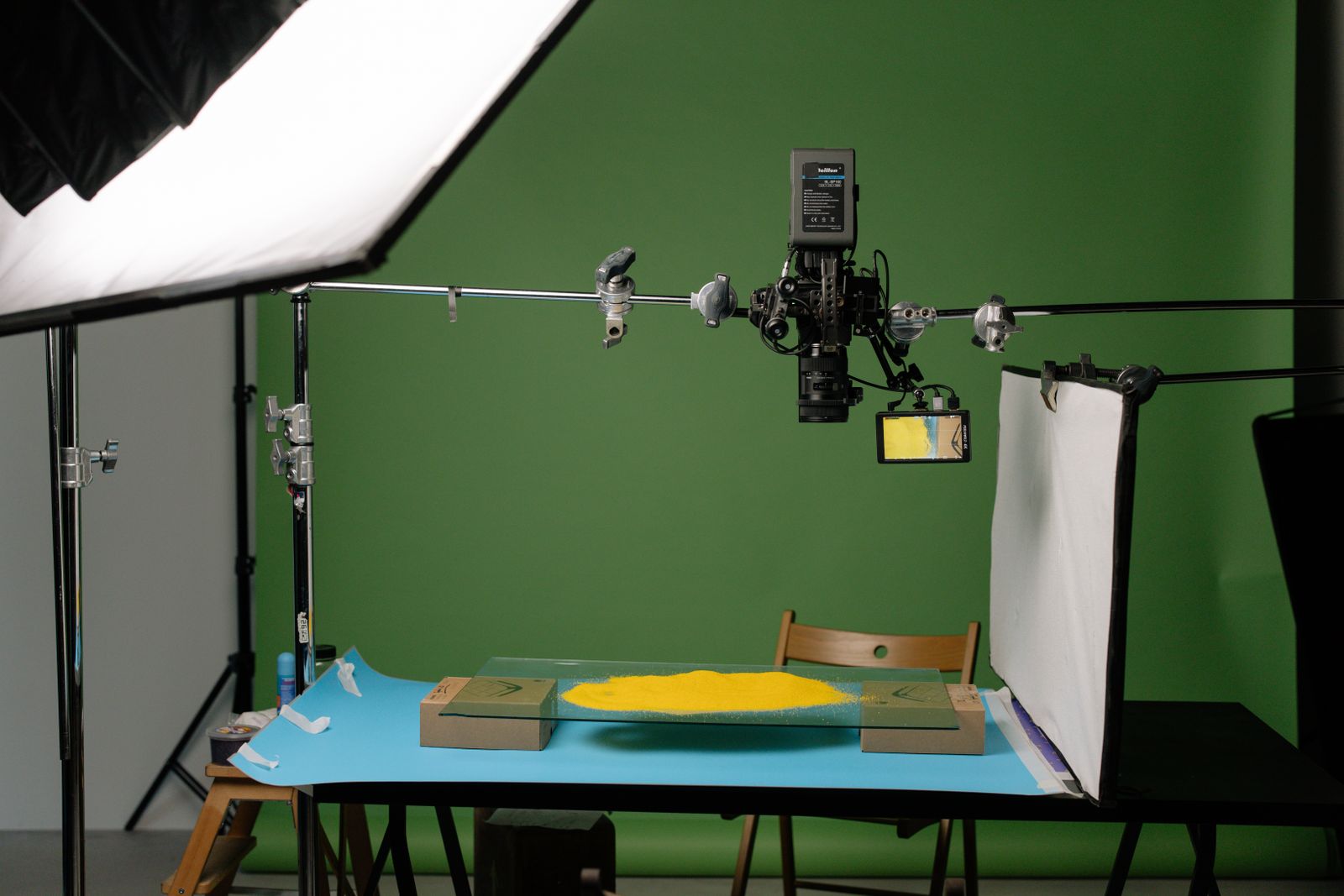
Every commercial estimate, however it is dressed up, is built from the same layers. A standard teaching model for commercial practice separates them cleanly: a creative fee for the photographer's time and expertise, pre- and post-production fees, a separate usage or licence fee for the right to use the images in specified media, territories and periods, expenses such as crew, rentals and studio, and sometimes a production markup on those expenses. Photographers may combine the creative and usage fees into one figure, but separating them makes later use easy to price — and makes two competing quotes comparable.
That last layer is the one first-time buyers miss. In the United States, the photographer owns the copyright in commissioned work unless it is a genuine work made for hire, so what you receive is a licence, not ownership. One published commercial rate card makes the arithmetic blunt: a half-day commercial shoot is listed at $1,500 and a full day at $2,500 as creative fees alone, with licensing priced separately — a one-year standard licence for a local business starting at $250 per image for use on the client's own website, organic social media, internal communications and ordinary marketing materials. Their worked example — a half day plus ten licensed images — totals $4,000. The photograph was never the whole bill.
Industrial work adds a layer the studio product shoot does not have: the site itself. Manufacturing plants, warehouses, ports, construction sites and energy facilities impose safety briefings, personal protective equipment, escorted access, restricted areas that may not be photographed, and production lines that will not stop for you. Established industrial photographers advertise exactly that readiness — PPE compliance, willingness to sign a non-disclosure agreement before arrival, certificates of insurance at $1 million / $2 million levels, and planning done around the production schedule rather than against it. At the budget tier, much of that infrastructure simply is not there.
The three tiers, side by side
Published 2026 pricing for product and commercial work clusters into recognisable bands. Per-image studios publish white-background images from roughly $15 to $200 each and styled lifestyle images from about $50 to $400 each; half-day shoots run roughly $500 to $3,500 and full days $1,000 to $5,000 and up, depending on complexity and who is on set. Industrial work in a major market sits higher: one detailed Los Angeles production guide puts an experienced industrial photographer's creative fee at $2,500 to $4,000 for a half day and $4,500 to $8,500 for a full day, with licensing added on top. Read the table below as three different products, not three prices for the same product.
| Budget | Mid-range | Premium | |
|---|---|---|---|
| Typical spend | $39–$75 per white-background image; $500–$1,000 per half day | $1,200–$2,500 per half day; $2,200–$4,500 per full studio day | $4,500–$8,500 per day creative fee for industrial work; $15,000–$50,000+ per day all-in for a full campaign production |
| Who is on set | Photographer alone, sometimes one assistant | Photographer, assistant, digital tech; stylist for product work | Producer, photographer, assistants, digital tech, stylist, hair and makeup, safety or site liaison |
| What you get | Clean packshots and simple listing images; basic retouching | Styled lifestyle images, multiple setups, tethered review on set, proper retouching | Concept development, pre-production, scouted locations or controlled plant access, images built for a campaign |
| Licensing | Usually narrow or bundled without discussion — read it | A defined licence: media, territory and term stated in writing | Licensing negotiated as its own line; internal, marketing and advertising uses priced separately |
| Best for | A catalogue refresh, marketplace listings, a single product launch | A season of e-commerce, wholesale and social assets shot in one day | Recruiting, capability and brand campaigns; facilities, fleets and processes as the subject |
What budget really buys — and where it breaks
The budget tier is not a scam. It is a factory of a different kind: high volume, fixed setups, fast turnaround. One high-volume studio publishes $39 per photo plus a $149 studio fee per booking, with delivery in 72 hours; another publishes $15 per white-background photo plus a $100 setup fee. For a seller moving a straightforward product — a candle, a wallet, a bottle — that can be entirely rational money. The lighting is repeatable because the set never changes, and repeatability is what a listing page needs.
It breaks in three predictable places. First, anything reflective, transparent, oversized or alive — chrome, glass, jewellery, food that wilts, a product that must be worn — needs styling and problem-solving time that a per-image conveyor belt does not sell. Second, there is no art direction: nobody on a budget set is paid to notice that your hero colour is the one your competitor owns, or that the image does not match the campaign it will sit inside. Third, and most quietly, licensing is often vague. If the terms do not say you may use that $39 image in paid advertising, on packaging, or for more than a year, assume you may not — and expect to renegotiate from weakness after the image is already on your site.
For industrial subjects, budget usually means a generalist with a camera who has never been inducted onto a live site. That is not a moral failing; it is a risk transfer onto you. If the photographer arrives without the right boots, without insurance your facilities team will accept, or without any plan for the areas that must stay off-camera, the lost morning is yours.
What mid-range buys: a production, in miniature
The step from budget to mid-range is the largest quality jump in commercial photography, because it buys people and time rather than polish. Published mid-market figures tell the story: a half-day lifestyle shoot typically runs $800 to $2,000 and produces 15 to 30 final images; a full studio day covering 15 to 30 products runs roughly $2,200 to $4,500 and can yield 60 to 150 finished images across those products, delivered as web files, print files and cut-outs where needed. Past roughly 25 images, a day rate in that band usually costs less than paying per image for the same volume.
What those people do is visible in the pictures. A digital tech shooting tethered to a computer means you approve the actual file on set, not a thumbnail on the back of a camera — problems are fixed while the product is still on the table. A stylist means the lifestyle shot looks lived-in rather than staged by the warehouse team at lunch. Proper retouching — one published production estimate prices it at $100 per image, at up to an hour each — means skin, labels, reflections and colour are finished, not filtered.
Mid-range is also where licensing becomes a conversation instead of a surprise. Expect a written licence covering your website, organic social and ordinary marketing for a stated term, with paid advertising, packaging and third-party use priced as additions. That is not upselling; it is the structure that lets the photographer quote the shoot itself keenly. Agree the uses you can foresee now. Buying a broader licence on the day is almost always cheaper than extending a narrow one after a campaign has performed.
What premium buys: certainty at scale
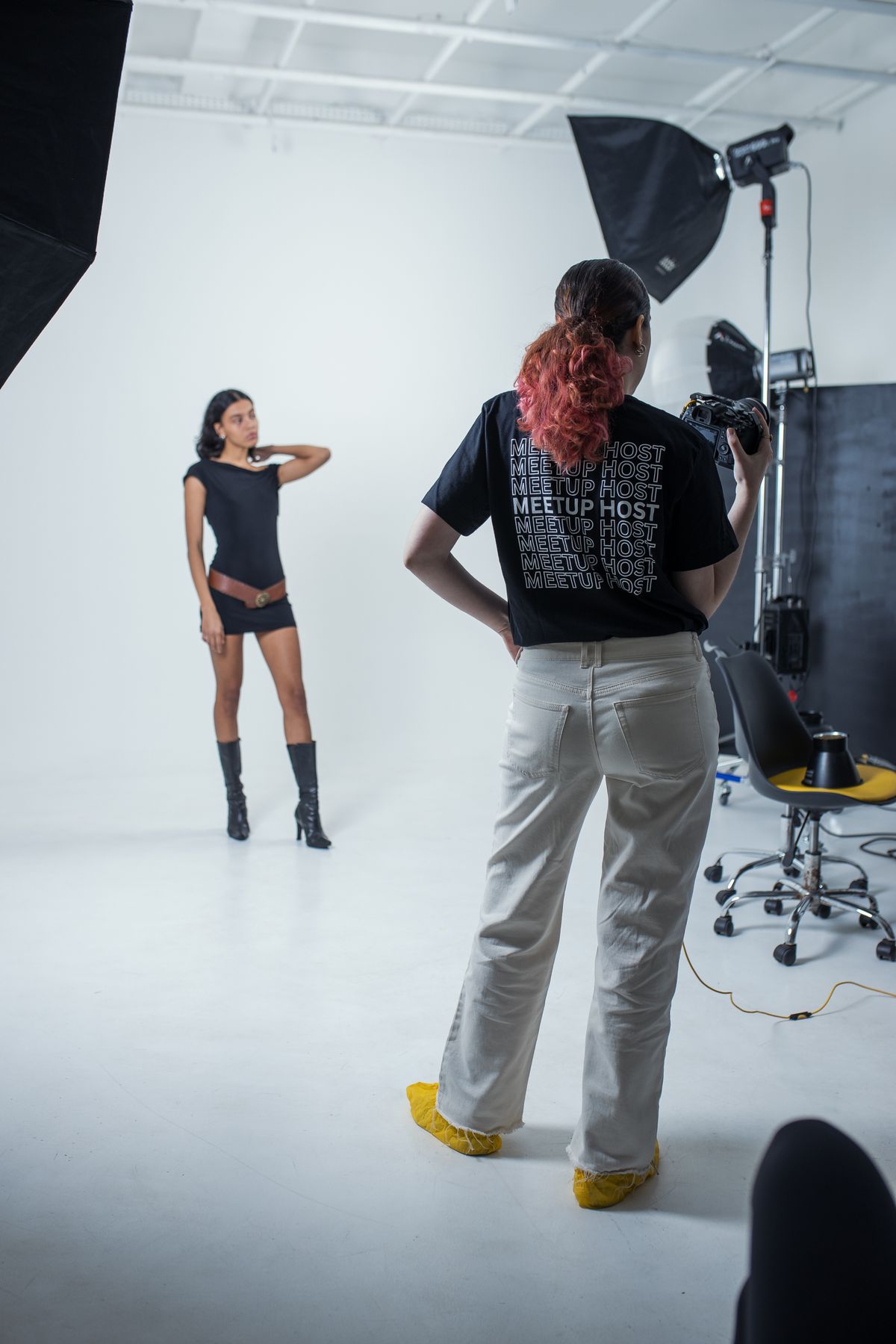
Premium commercial and industrial photography looks expensive until you price the alternative: a plant shut down for a reshoot, a national campaign delayed, or images a large client's brand team rejects. At this level you are buying a production company that happens to deliver photographs. A published agency estimate for a single apparel campaign day itemises a photographer at $2,500 a day, a first assistant at $750, a digital tech at $850, a producer at $1,000, a prop stylist at $950, hair and makeup at $850, an agency model at $1,400 plus a 20 percent agency fee, and $2,300 for camera, lighting and grip rental — before retouching. Full advertising productions are commonly put at $15,000 to $50,000 or more per day all-in.
Industrial premium work is priced with the same logic and an extra premium for consequence. The Los Angeles industrial guide cited above separates licensing by use in a way worth copying into your own brief: internal-only use — intranet, training, internal presentations — is the cheapest tier, at roughly $1,500 to $3,000 for one year and $5,000 to $10,000 in perpetuity; a corporate marketing licence for up to 25 final images runs roughly $4,000 to $8,000 for one year in North America and $15,000 to $30,000 in perpetuity; paid advertising and recruiting campaigns sit above that again. The same image of the same production line can therefore legitimately cost three different amounts for three different clients, because what is being sold is not the file. It is the audience the file will reach.
Premium also buys compliance as a deliverable: safety planning before the shoot, a photographer who works around forklifts, cranes and active cells without slowing the line, non-disclosure agreements signed before arrival, and insurance paperwork your procurement team can file without a chase. For a creator or a small seller, most of that is overhead you do not need. For a manufacturer bidding for work where the buyer will judge the facility from the photographs, it is the product.
Choosing your tier honestly
Start from the use, not the shoot. Write down, before you request a single quote: where the images will appear, for how long, in which countries, and whether any of it is paid advertising. Then match the tier to the consequence of failure. If a weak image costs you a relisting fee, buy budget and spend the savings on volume. If a weak image costs you a season — a catalogue, a trade show, a wholesale pitch — buy mid-range and insist on tethered review and a written licence. If a weak image costs you a contract, a recruitment round or a plant's reputation, buy premium and treat the production line items as insurance you can itemise.
Whichever tier you choose, get the same five things in writing: the number of finished images, the retouching standard, the delivery date, the exact licence — media, territory, term, exclusivity — and what happens if the site, the weather or the product is not ready on the day. And compare quotes layer by layer: creative fee against creative fee, licence against licence, expenses against expenses. A quote that bundles everything into one seductive number is not simpler. It is just harder to argue with later.
This site lists 5,719 commercial and industrial photographers, among more than 18,000 professional photographers in total — so at every tier above, you have real choice. Use it. Ask each photographer for one complete job at your tier, not a greatest-hits reel: the budget shooter whose packshots are clean and consistent, the mid-range studio whose lifestyle work matches your category, the industrial specialist who can show you a live plant shot safely and well. The right tier, honestly chosen, is the cheapest photography you will ever buy — because you will only have to buy it once.
Sources
- Lars Miller Media, Product Photography Pricing 2026 — per-image ranges for white-background and lifestyle work, half-day and full-day rates, and budget, mid-range and premium day-rate bands.
- Overs Studio, How Much Does a Product Photo Shoot Cost in 2026 — published per-image prices at named studios, including a $39-per-photo studio with a $149 booking fee, and an agency campaign-day estimate itemising crew, talent, rental and retouching rates.
- HSM University, PHOT-310 Estimates, Usage Licensing and Production — the structure of a commercial estimate: creative fee, usage fee, production expenses and markup, and how the terms are stated.
- Jeremy Glazier, Photography Booking and Image Licensing — published half-day and full-day commercial creative fees, with standard commercial licensing priced separately per image.
- Scott Lorenzen, Industrial Photoshoot Los Angeles production guide — industrial creative-fee ranges and licence fees separated into internal, corporate marketing and advertising uses.
- Jack Robert Photography, Industrial and Manufacturing Photography — site-readiness practice for live facilities: PPE compliance, insurance levels, non-disclosure agreements and planning around production schedules.
- Photo by cottonbro studio, https://www.pexels.com/photo/5878878/
- Photo by Matheus Bertelli, https://www.pexels.com/photo/33714920/
- Photo by Alexander Dummer, https://www.pexels.com/photo/134469/
More guides
- How to Find a Wedding Photographer: The Complete, Honest GuidePhotographers › Wedding Photographers
- How Much Does a Wedding Photographer Cost? Packages DecodedPhotographers › Wedding Photographers
- 10 Questions to Ask a Wedding Photographer Before You BookPhotographers › Wedding Photographers
- Wedding Photography Styles Explained: Documentary, Editorial, Traditional, Fine ArtPhotographers › Wedding Photographers
- Hiring a Wedding Photographer in California: Venue Light, Permits, and Price LevelsPhotographers › Wedding Photographers
- All Guides & ArticlesBrowse the full guides library