Photographers › Photographers Commercial & Industrial
Photographers Commercial and Industrial for Beginners: The Mistakes First-Timers Make, and How to Dodge Them
In a portrait studio, almost everything is under your control. The light is where you left it yesterday. The floor is not moving. Nobody needs a permit, a hard hat, or a safety briefing to stand in front of a backdrop. Commercial and industrial photography is the opposite bargain: the photographer works inside someone else's operation — a plant that cannot stop for your pictures, a warehouse on a shipping deadline, a product line that has to look cleaner and calmer than it ever looks at 7 a.m. on a Tuesday — and the value of the work depends on how well the shoot was planned before anyone picked up a camera.
That is why first-timers rarely fail on photography. They fail on the brief, the rights, the access, and the clock. I watched clients make the same seven or eight mistakes in roughly the same order, usually while insisting they were saving money. This guide names them, explains why each one happens, and gives you the cheap way around it — because almost every dodge in commercial hiring costs a conversation, not a fee.
Mistake one: asking for a price before saying what the pictures are for
The most common first email in commercial photography is some version of: "We need some photos of our facility and team. What do you charge?" It feels efficient. It is actually unanswerable, and the quotes that come back prove it — one photographer prices a relaxed website refresh, another prices an advertising campaign, and the client concludes the cheaper one is the better deal.
A useful brief starts with placement, not with the camera. Where will the images live: a product-detail page, a recruitment site, a trade-show backdrop, an investor presentation, a press release, paid advertising? Placement decides almost everything downstream — how many images you need, what orientation and resolution they need, how much retouching is honest, and, above all, what usage rights you must buy. Practitioners who publish their hiring guidance make the same point in the same order: define the audience and the channel first, then the deliverable count, the location, the deadline, and the budget range, and only then ask for quotations.
The dodge is a one-page brief. Business and locations, with access notes. The channels the files will live in. Still, video, or both, and whether you need vertical cuts as well as horizontal heroes. The people involved, and whether their faces will be identifiable. A ranked shot list — must-haves first, nice-to-haves last, because weather, light, and operations will force choices on the day. Hard dates. Two or three campaigns or competitors whose look you admire, not as a style to copy but as a shared reference. Send that page to every candidate, and the quotes you receive will finally be prices for the same job.
Mistake two: assuming you bought the photographs
In portrait work, clients are used to paying a session fee and receiving files they treat as theirs. Commercial photography does not work that way, and discovering it late is the single most expensive beginner error.
The photographer normally retains copyright. What you buy is a license: permission to use finished images in named ways, for a named period, in a named territory. Published rate cards state the structure plainly — a creative fee for the assignment, and licensing priced separately according to the number of images selected, where and how they will be used, how long the license runs, the geographic reach, whether the use is advertising, and whether you want exclusivity. One working photographer's published example makes the proportions concrete: a half-day commercial shoot at $1,500, plus ten images licensed for one year of standard business use at $250 an image, for a project total of $4,000. The license was larger than the shoot.
Beginners make two opposite errors here. They buy too little — web and organic social rights for an image that marketing later wants on packaging and in paid ads — and then renegotiate from weakness after the image has proved itself. Or they demand "all rights, forever," which is the most expensive possible answer to a question they did not need to ask, and which many good photographers will simply decline.
The dodge is to license for the life you can honestly foresee, plus one plausible step beyond it. If there is a realistic chance the hero image reaches paid media or a trade-show wall, say so before the shoot, when extending the license is a line item. Write the expiry date into the same calendar as your domain renewal, because an expired license nobody diarised turns a routine brochure reprint into an infringement. And if partners, distributors, or franchisees will need the files, negotiate that at the start: a standard license covers you, not everyone who sells your product.
Mistake three: comparing day rates as if they were the same product
Commercial pricing looks like a menu and behaves like an estimate for building work. Published guides put professional commercial rates in broad, overlapping bands:
| What you are buying | Typical published range | What moves the price |
|---|---|---|
| Hourly commercial work | $150–$500 an hour | Experience, market, and whether licensing is included |
| Half day (about 4 hours) | $800–$2,000 | Crew, location complexity, number of setups |
| Full day (about 8 hours) | $1,500–$4,000 | Senior specialists sit at the top; national campaign work runs above this |
| Standard image licensing | From about $250 an image | Media, duration, territory, exclusivity |
| Additional coverage | Around $350 an hour | Agreed in advance, or argued about afterwards |
Those ranges come from working photographers' published 2026 rate guides, and the spread inside them is the lesson. A day photographing your team for your website and a day producing the lead image of a product launch are both "a day." They are not the same product, and the cheaper quote is often cheaper because it quietly excludes the things the expensive one includes: an assistant, a digital technician, styling, location fees, travel, retouching beyond a basic pass, or the license itself.
The dodge is to compare totals for an identical scope, line by line. Ask every candidate to separate the creative fee, production costs, post-production, and licensing, and to state how many finished images are included, at what resolution, with how many revision rounds, delivered on what date. A quote that cannot be unbundled cannot be compared — and a photographer who unbundles willingly is telling you something good about how they run a job.
Mistake four: treating an industrial site like a location, not a workplace
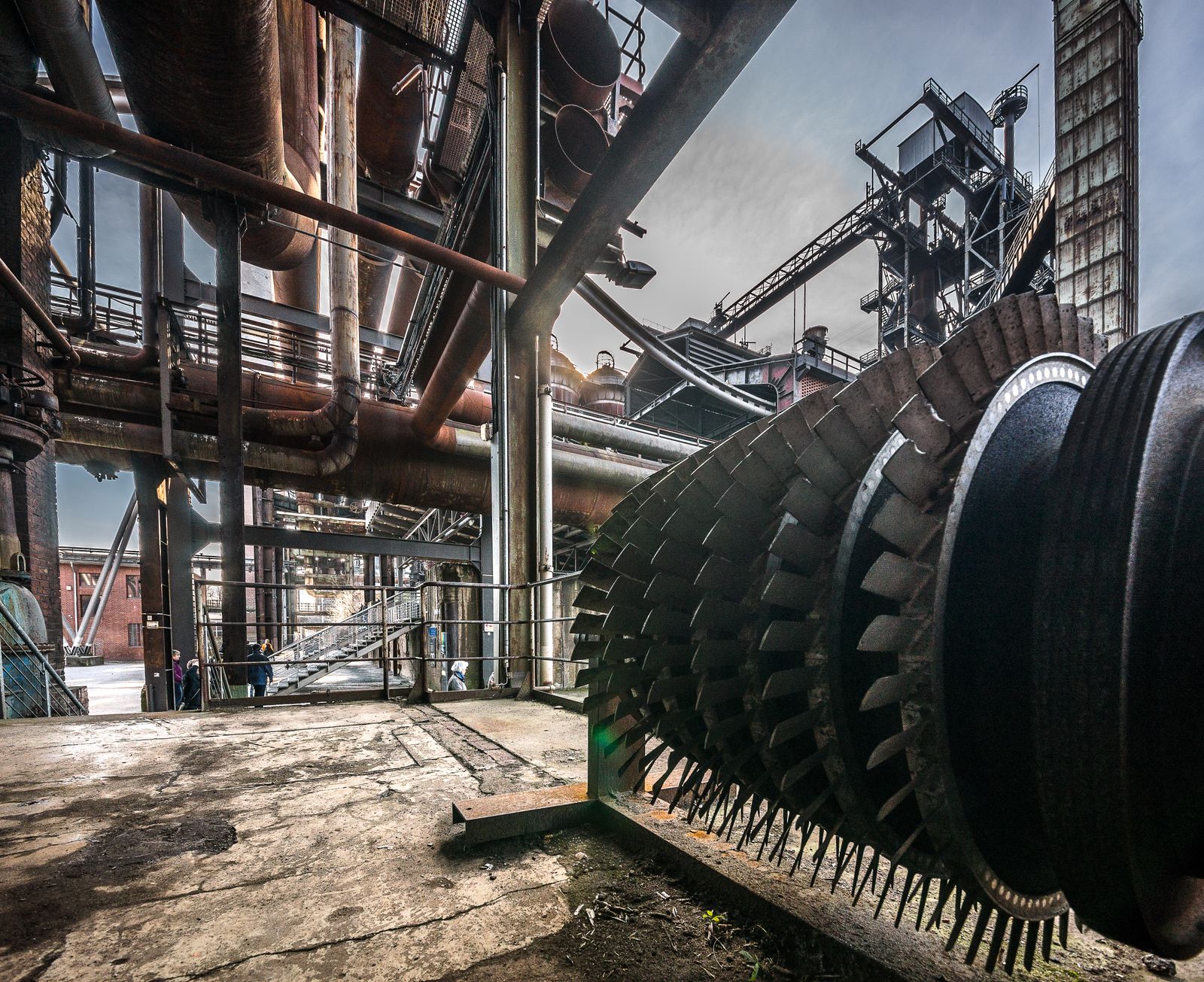
This is the mistake with consequences beyond money. On an active industrial site, the photographer is a contractor inside someone else's safety system, and a first-time client who books "a photographer for Thursday" without talking to their own safety officer has set up a day that can end at the gate.
Industrial photographers who work energy and manufacturing sites describe the gatekeeping plainly. At a minimum, expect the site to require steel-toe boots, a hard hat, safety glasses, and high-visibility clothing; facilities with fire risk add flame-resistant clothing. Many sites require current OSHA 10-hour or 30-hour training, site-specific safety orientations that can take days to schedule, and verification through contractor-management platforms that track insurance and safety records. Secure port facilities can require a TWIC card — the federal credential for unescorted access to regulated maritime areas — and some sites require background checks before a name is even added to a visitor list.
None of this is bureaucracy for its own sake. The plant manager or safety officer who approves your photographer is taking on liability for them. A photographer who has never worked industrially will slow operations down or, worse, create exposure nobody priced.
The dodge is a pre-shoot conversation that happens weeks, not days, ahead. Walk the site contact and the photographer through the same checklist: required protective equipment and who supplies it; permitted and restricted zones, marked before the day; which processes can be photographed while running and which require lockout/tagout confirmation; overhead crane paths and exclusion zones; emergency contacts, first-aid points, and evacuation routes; and a named escort if the site requires one. Ask the photographer directly whether they have completed site orientations before, whether they carry their own protective equipment, and whether they understand stop-work authority — the rule that anyone on site can halt work they believe is unsafe. The right photographer answers those questions the way a pilot answers questions about weather: without taking offense.
Mistake five: hiring a portfolio instead of a relevant past
Every working photographer has a beautiful portfolio; that is the entry fee, not the evidence. The beginner error is to hire the strongest generalist gallery and discover that product metalwork, dark production floors, and people in protective equipment are a different discipline from weddings, portraits, or bright lifestyle work.
Ask instead for complete examples from comparable assignments — your industry, your kind of location, your kind of subject — and ask what went wrong on one of them and what changed as a result. Photographers who actually do this work can answer that question in detail. Look, in industrial samples, for honest evidence of the environment handled well: workers wearing the protective equipment the site requires (an image of an unprotected worker on a factory floor advertises your safety culture, and not in your favor), machinery shown at a scale that reads clearly, and process sequences that explain how something is made rather than merely posing people beside equipment.
The dodge, for a large or recurring programme, is a short paid test: one half-day, one location, a tight shot list, full delivery terms. It costs a fraction of the main commission and replaces guesswork — yours and theirs — with a delivered set of files you can judge at the sizes you will actually publish.
Mistake six: leaving people, releases, and the day itself to chance
Commercial images usually contain people, and identifiable people in commercial use need signed releases — including your own employees, on your own premises, for your own website. Industry guidance from photographers' associations is consistent on this: get a release for commercial use, and make sure it describes the use you actually intend. A release signed for "the company website" does not obviously cover a national advertisement, and an employee who leaves the company does not withdraw a properly signed release — which is exactly why the wording matters at signing, not later.
Then there is the day itself. Beginners under-schedule in both directions: they book a half day for a full day's shot list, then pay additional-coverage rates by the hour while apologising to their own staff; or they assemble twenty employees in a conference room at 9 a.m. for portraits that will happen, one at a time, across four hours. Rank the shot list, build the hero frames first while energy and light are best, schedule people in small staggered groups, and name one person on your side — one — who can approve images on set and say "that one, move on." Committees reviewing selects by email a week later are how retouching bills double.
Mistake seven: forgetting delivery, files, and the archive
The shoot is the visible third of the job. What you live with afterwards is the delivery: how many finished files, in which formats, at what sizes, named how, delivered when, and backed up where. Beginners accept "you'll get a gallery link" as a delivery spec, then discover, eighteen months later, that the link is dead, the raw files were never part of the deal, and nobody in the company can find the high-resolution version the printer needs.
Put the unglamorous list in writing before the shoot: the number of finished images; the formats (full-resolution files for print, web-sized files for the site, and vertical crops if social is in the plan); the delivery date for selects and for finals, separately; the number of retouching rounds included and the hourly rate beyond them — one published rate card puts additional retouching at $175 an hour, which is a normal order of magnitude; who holds the archive, and for how long; and what happens if you need a file re-exported in three years. None of this is distrust. It is the difference between buying a shoot and buying a working image library.
A beginner's pre-booking checklist
- One-page brief sent to every candidate: placement, channels, shot list ranked, people, dates, budget range.
- Quotes unbundled the same way: creative fee, production, post-production, licensing — with finished-image count and delivery dates stated.
- License matched to honest use: media, territory, duration, exclusivity, and partner use, with the expiry diarised.
- Relevant complete assignments reviewed, not just hero images — and, for a big programme, a paid test half-day first.
- For industrial sites: safety officer involved early, protective equipment and training confirmed, restricted zones and escort arrangements agreed.
- Releases prepared for every identifiable person, worded for the uses in the license.
- Delivery specified in writing: formats, sizes, naming, retouching rounds, archive holder.
Do those seven things and the beginner mistakes mostly never happen — not because commercial photography became simple, but because you moved every hard question to the cheap end of the job, where it is still a conversation. This site lists 5,719 commercial and industrial photographers, so a shortage of candidates is not your problem. Your problem, as a first-timer, is choosing like a producer rather than like a shopper: brief first, rights honestly, safety before schedule, and everything that matters in writing. The photographs will take care of themselves — that, after all, is the part the photographer has done a thousand times.
Sources
- Jeremy Glazier, photography booking and image licensing rates — published commercial half-day and full-day creative fees, per-image standard licensing from $250, additional coverage and retouching rates, and a worked half-day project totalling $4,000.
- Lars Miller Media, Commercial Photography Rates & Pricing 2026 — hourly, half-day, and full-day market ranges by photographer tier.
- Joe Robbins Photography, industrial photography safety guidance — site requirements for protective equipment including flame-resistant clothing, OSHA training, TWIC credentials for port facilities, and contractor verification platforms.
- Pixobo, Industrial Photography: Practical Tips for Safer, Better Shoots — on-site safety checklist covering permitted zones, lockout/tagout, spotters, and emergency contacts.
- Rudrriv Tech, Photographers for Business: Hiring Guide — brief construction, like-for-like quote comparison, and deliverable and usage specification.
- ASMP guidance via model-release guidance summaries — releases for identifiable people in commercial use, including a business's own website.
- Factory machinery — photo by Mike van Schoonderwalt, https://www.pexels.com/photo/5503874/
- Refinery aerial — photo by Tom Fisk, https://www.pexels.com/photo/10396416/
More guides
- How to Find a Wedding Photographer: The Complete, Honest GuidePhotographers › Wedding Photographers
- How Much Does a Wedding Photographer Cost? Packages DecodedPhotographers › Wedding Photographers
- 10 Questions to Ask a Wedding Photographer Before You BookPhotographers › Wedding Photographers
- Wedding Photography Styles Explained: Documentary, Editorial, Traditional, Fine ArtPhotographers › Wedding Photographers
- Hiring a Wedding Photographer in California: Venue Light, Permits, and Price LevelsPhotographers › Wedding Photographers
- All Guides & ArticlesBrowse the full guides library