Photographers › Photographers Commercial & Industrial
Photographers Commercial and Industrial for Small Businesses: What Changes When It Is Not Personal
The first time I assisted on an industrial shoot, I made the rookie mistake in the first ten minutes. I stepped toward a production line to get a better angle for a test frame, and the escort — a plant supervisor who had been perfectly friendly in the car park — stopped me with one sentence: "You don't go there without me, and you don't go there in those shoes." My boots were wrong, my vest was in the car, and the photograph I had been about to take was, in that building, not a photograph at all. It was a safety incident waiting for paperwork.
That is the whole difference, in one moment. When you hire a photographer for your family, you are buying pictures. When your business hires a commercial or industrial photographer, you are buying pictures plus a contract, a licence, a set of releases, an insurance position, a tax record, and — on a live site — a visitor who has to be allowed through the gate. Small businesses often discover this backwards: they book the photographer they liked for a cousin's wedding, agree a friendly price, and only learn what "commercial" changes when the invoice, the usage argument, or the site manager arrives. This guide is the version you read before that happens.
The job splits in two: the shoot and the rights
Every commercial job is really two purchases stapled together. The first is a service: planning, travelling, shooting, and editing. The second is a legal permission: the right to use the finished images, in particular places, for a particular time, for a particular purpose. Consumer photography hides the second purchase because a family session usually comes with broad personal use built in. Commercial work separates them, and prices them separately, because the value of an image to a business depends on what the business does with it.
Under US copyright law, the photographer owns the copyright in the images they create unless there is a written assignment or the work genuinely qualifies as work made for hire — and paying the invoice does not, by itself, transfer anything. What you normally receive is a licence. Good commercial contracts say so plainly: who owns the copyright, exactly what you may do with the images, and what is restricted — resale, handing the files to third parties, or uses nobody discussed at booking are common limits.
This is not a trick. It is the trade's normal structure, and it cuts both ways. A licence written for "website and social media, one year, North America" is cheaper than perpetual national advertising rights because it is a smaller thing. The mistake is not licensing; the mistake is assuming. If your brochure, your packaging, your franchisees, and a trade-show banner are all in the plan, say so before the shoot, when adding those uses is a line item — not two years later, when it is a renegotiation.
What it costs, and why quotes look so different
Published 2025 pricing guides put commercial day rates roughly between $800 and $5,000, with hourly rates around $135 to $400 for shorter work. Product work is often priced per image instead: basic e-commerce photographs on a white background commonly run about $40 to $70 per finished image, while styled lifestyle and campaign days sit far higher — $2,500 to $7,500 a day for full productions in some published guides, before usage fees. Licensing sits on top, from a few hundred dollars for limited local use to $10,000 or more for national, perpetual rights.
Those ranges are wide because the word "commercial" covers a food truck that needs twelve menu photographs and a manufacturer that needs a capability library for bids, recruitment, and a trade press launch. To compare quotes honestly, unbundle them:
| Line item | What it covers | What to check |
|---|---|---|
| Creative / shoot fee | The photographer's time and skill on the day | Half-day or full-day? How many finished images are included? |
| Production | Studio or location, assistants, styling, props, travel | Are these included, estimated, or passed through at cost? |
| Post-production | Selection, retouching, formatting for web and print | How many retouched finals? What does extra retouching cost? |
| Licensing / usage | Media, territory, duration, exclusivity | Does it cover every channel you actually plan to use? |
| Paperwork and access | Certificates of insurance, vendor onboarding, site orientation time | Who supplies the certificate, and how long does onboarding take? |
A small business does not need the most expensive version of any of this. It needs the version that matches the plan. A café that will use images on its own website, menus, and Instagram for two years should not buy a perpetual buyout — and should not accept a licence so narrow that the menu reprint in year three becomes a fresh fee nobody budgeted for.
Volume changes the conversation
Consumer shoots are about a moment. Business shoots are about a library, and volume changes both the price and the working method.
A product business might need 300 SKUs photographed consistently — same angle, same light, same background — so that a catalogue or web store reads as one system rather than 300 separate afternoons. That work is priced per image or per product, shot in batches, and judged on consistency more than on any single hero frame. A service business needs the opposite: fewer images, each carrying more weight — the crew at work, the premises, the finished job — because those photographs have to stand in for a reputation.
Volume also changes delivery. Ask how files will be named, sized, and organised: web-resolution and print-resolution sets, files named by SKU or by room or by process, delivered in a structure your staff can actually search. On an assistant's day, half the invisible labour of a good commercial shoot is this discipline — a shot list agreed in advance, ticked off on the day, so that the one image the bid document needs is not the one angle nobody took.
Finally, volume changes timing. Businesses shoot against deadlines that do not move: a product launch, a tender submission, a seasonal menu, a recruitment round. Put the delivery date in the contract, stage by stage if the job is large — contact sheets or proofs first, finals by an agreed date — and agree what a rush costs before anyone needs one.
The paperwork is part of the product
A commercial contract should cover, at minimum: the parties (the photographer's business and yours), the scope and location of the shoot, the deliverables and their format and deadline, fees separated into shoot, licensing, editing, travel, and any rush charges, who owns the copyright, the precise licence, any restrictions, who is responsible for releases, and whether the photographer may use the images in their own portfolio. If any of those is missing, you have not bought certainty — you have bought a friendly understanding, which lasts exactly as long as both sides remember it the same way.
Releases are the part small businesses forget. If an identifiable person appears in an image you use to advertise or promote your business, you generally need that person's signed consent — a model release. That includes your own staff. An employee who happily posed in March can leave in October and object to fronting your website in November; a signed release from shoot day is what makes that a non-event. Property and location permissions matter the same way for recognisable private premises, interiors, artwork, and other companies' branded products appearing prominently in shot. A competent commercial photographer will raise releases before the shoot and collect them on the day. If yours does not mention them at all, that silence is information.
Vendor paperwork is the other quiet gate. Larger customers, landlords, and industrial sites routinely ask a visiting photographer for a certificate of insurance, a tax form such as a W-9, and sometimes a signed non-disclosure agreement before arrival — working industrial photographers advertise exactly that readiness, with liability cover commonly at $1 million per occurrence / $2 million aggregate, because they know the shoot does not happen without it. A small business hiring for its own premises should ask the simpler version of the same question: are you insured, and can you show me the certificate? Cameras, stands, and cables move through workplaces full of stock, customers, and other people's property all day.
Tax and money: the business differences nobody mentions
Three money details separate a business booking from a personal one, and all three are easier before the shoot than after it.
First, this is a business expense, so document it like one. Keep the contract, the itemised invoice, and the licence together. The itemisation matters: a single undifferentiated total is harder for your bookkeeper to treat correctly than an invoice that separates the shoot fee, production costs, and licensing, and if the images are a long-lived brand asset rather than a one-season campaign, your accountant may want to know exactly what was bought and for how long the licence runs. Ask your accountant; do not guess — but give them paperwork that lets them answer.
Second, payment terms are negotiated, not assumed. Consumer shoots usually mean a deposit and a balance on delivery. Business work commonly runs on deposits for booking, staged payments on larger jobs, and invoice terms — net 30 is a normal offer from established commercial photographers to approved business clients. Agree the schedule in the contract, including what happens on cancellation, because a commercial day that falls through may have turned away other work, rented a studio, and booked an assistant.
Third, sales tax treatment varies with what is delivered and where you are — tangible deliverables and digital delivery are not treated the same way in every state. This is another reason the itemised invoice matters, and another question for your own tax adviser rather than for the photographer's say-so. What you should not do is treat a tax line on a commercial invoice as an error just because your family session never had one.
Industrial work adds a second rulebook: the site's
Everything above applies double on industrial premises, because the site — not the photographer, and not you as the client who commissioned the pictures — sets the conditions.
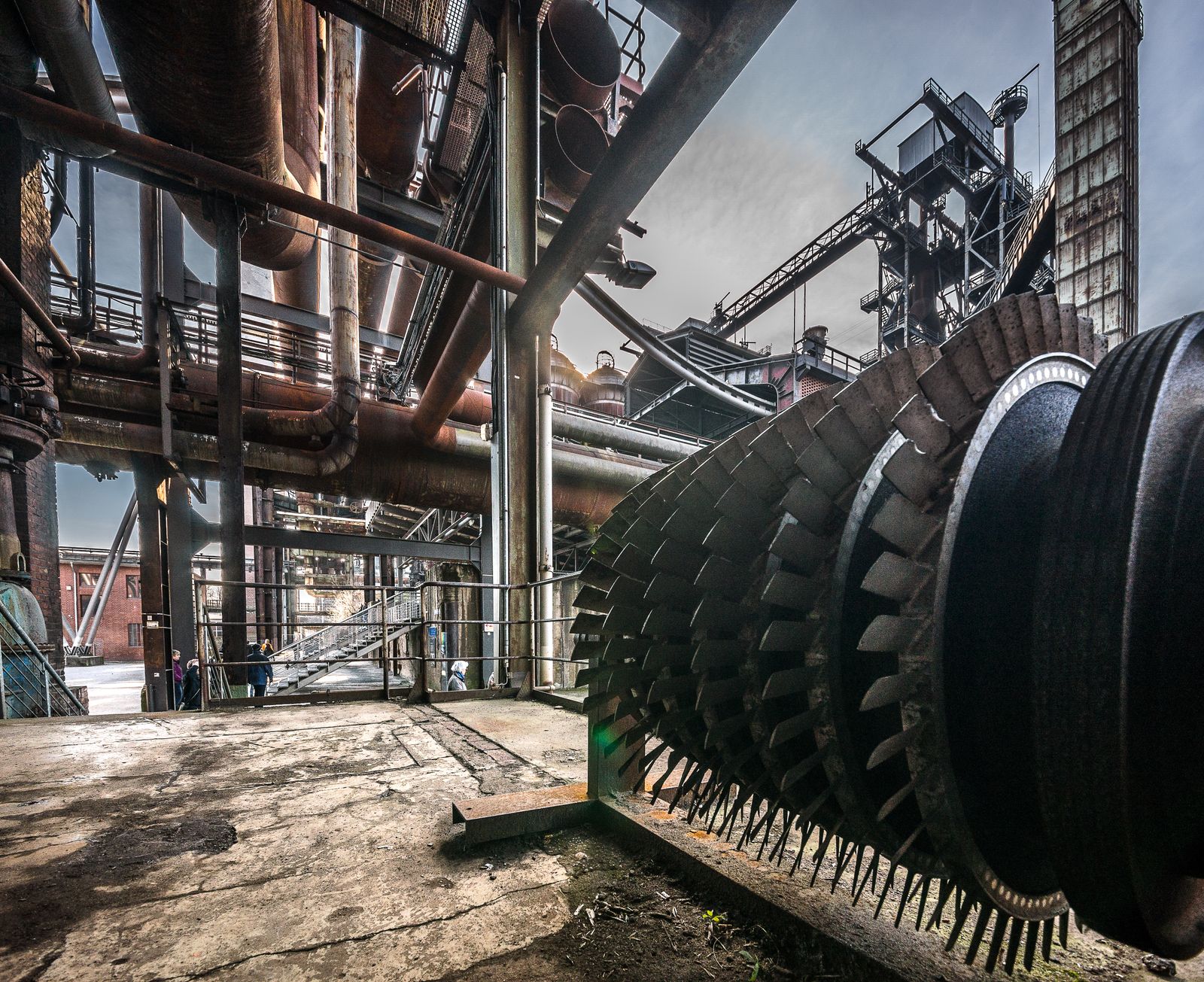
Protective equipment is decided by the site's own hazard assessment. Under OSHA's general PPE standard, the employer must assess the workplace for hazards and provide and require the equipment those hazards call for. For a visiting camera crew the usual baseline is a hard hat, safety glasses, steel-toe boots, and high-visibility clothing, with hearing protection, flame-resistant clothing, or more required where the site says so. Site orientation, escorts, gate paperwork, and restricted zones are settled before the shoot date, and an escort can veto a setup. Some areas cannot be photographed at all — proprietary processes, classified or controlled areas where ordinary camera gear may not be permitted, and places an unescorted visitor simply does not go. Experienced industrial photographers treat all of this as the job, not as friction: they arrive with the right kit, sit through the orientation, sign the NDA, and plan the shot list around production rather than asking production to stop for the camera.
For a small manufacturer, fabricator, or contractor, the practical translation is this: choose a photographer who has worked on sites like yours, ask what they will need from your safety lead and by when, and build the orientation and escort time into the day you are paying for. The cheapest industrial shoot is the one that happens once, with access planned — not the one that loses its morning at the gate.
How to choose, in practice
This site lists 5,719 commercial and industrial photographers — a large enough field that "a photographer" is not a shortlist. Narrow it the business way:
- Match the specialism to the job. Product consistency, premises and people, or live industrial process are three different crafts. Ask for work of your kind, ideally a complete delivered set, not a highlight reel.
- Ask for the licence in writing before you discuss price. Half of all quote confusion is two people pricing different rights.
- Ask for the certificate of insurance and, for site work, what PPE and training the photographer already holds.
- Agree the shot list, file organisation, and delivery dates in the contract — including proofs, finals, formats, and naming.
- Settle releases and portfolio use. Your staff sign releases on the day; you know in advance whether your premises and products may appear in the photographer's marketing.
- Keep the whole file — contract, itemised invoice, licence, releases — together, as the business record of what you bought.
Do that, and the difference between commercial and personal stops being a surprise that arrives with the invoice. It becomes what it should have been from the start: a business buying a business asset, on business terms, from a professional who was expecting exactly that.
Sources
- Creative Olsen, commercial photography pricing guide — day rates of $800–$5,000, hourly rates of $135–$400, and licensing from $500 for small local use to $10,000 or more for national perpetual rights.
- Jason Bump Photography, commercial product photography pricing guide — basic e-commerce images at about $40–$70 per image, and full-day commercial lifestyle shoots at $2,500–$7,500 plus usage fees.
- Sprintlaw US, photography contracts for commercial use — paying for a shoot does not transfer copyright; contracts should separate shoot fees from licensing and state deliverables, restrictions, and release responsibilities.
- Marmalade Media, industrial and manufacturing photography — site orientation, escorts, gate paperwork, and PPE are settled before the shoot date, and the site's hazard assessment governs what a crew wears and where it may stand.
- Occupational Safety and Health Administration (OSHA), general PPE standard as summarised by Marmalade Media — the employer must assess workplace hazards and provide and require the protective equipment they call for.
- Jack Robert Photography, industrial and manufacturing photography — vendor-ready commercial practice: certificate of insurance, W-9, and NDA available before arrival, liability cover at $1M / $2M, and net-30 terms for approved businesses.
- Photo by Mike van Schoonderwalt, https://www.pexels.com/photo/5503874/
- Photo by cottonbro studio, https://www.pexels.com/photo/5878878/
- Photo by Tom Fisk, https://www.pexels.com/photo/10396416/
More guides
- How to Find a Wedding Photographer: The Complete, Honest GuidePhotographers › Wedding Photographers
- How Much Does a Wedding Photographer Cost? Packages DecodedPhotographers › Wedding Photographers
- 10 Questions to Ask a Wedding Photographer Before You BookPhotographers › Wedding Photographers
- Wedding Photography Styles Explained: Documentary, Editorial, Traditional, Fine ArtPhotographers › Wedding Photographers
- Hiring a Wedding Photographer in California: Venue Light, Permits, and Price LevelsPhotographers › Wedding Photographers
- All Guides & ArticlesBrowse the full guides library