Photographers › Photographers Commercial & Industrial
Photographers Commercial and Industrial on a Tight Budget: Where to Save, and Where Saving Backfires
The first commercial shoot most businesses book is not a campaign. It is a factory that needs photographs for a new website, a machine shop that has won a contract and suddenly needs to look like it can deliver it, or a warehouse team that needs competent pictures of people and equipment before a trade show. The budget is real, it is usually smaller than the photographer would like, and the temptation is to treat every line on the quote as negotiable in the same way.
It is not. I managed a portrait studio, where the same argument happened in miniature every week: clients saved happily on some things and regretted saving on others within a month. Commercial and industrial work follows the same pattern, only the sums are larger and the cost of a reshoot is measured in shut-down production lines and staff called back on overtime. This guide separates the safe savings from the false economies, with the actual price landscape laid out first so you know what “tight” even means.
What the work actually costs
Commercial photography is not priced like a portrait session. Published rate cards and pricing guides put the work in three broad bands:
| Scope | Typical price | What it usually buys |
|---|---|---|
| Focused half day, one site | $600–$1,300 | Up to 4 hours on site, one location, standard editing and digital delivery |
| Full day, one site | $1,100–$2,600 | 8 hours, fuller shot list, more finished images, planning included |
| Industrial or infrastructure day | $3,500–$6,000+ | Safety coordination, specialised lighting, difficult access, larger crew |
| Licensing for web and organic social | $500–$2,000 | Use on your own website and social channels, on top of the shoot fee |
| Full buyout | $5,000–$25,000+ | Perpetual, all-channel, exclusive use of a set of images |
Those bands are wide because the work is wide. One published 2026 rate sheet charges $350 an hour with a two-hour minimum, $1,300 for a half day and $2,400 for a full day, with same-day delivery priced separately at $500 and an assistant at $125 an hour. A Midwestern studio publishing its 2026 rates puts most business shoots between $600 and $1,500 a day. A national pricing guide puts industrial, architectural and infrastructure work considerably higher — $1,800 to $3,000 for a half day and $3,500 to $6,000 or more for a full day — because active industrial sites demand safety coordination and technical planning that an office shoot does not.
Hold those numbers together and a sensible planning figure emerges: a straightforward half day at one plant, with a usable web licence, should land somewhere between about $1,100 and $3,300 all-in. If you are quoted far less, something in the scope — time, finished images, licence, or the photographer’s experience on industrial sites — is smaller than you think it is.
The three-part quote, and why it matters for saving
Every commercial quote is really three numbers wearing one coat: the creative fee for the photographer’s time and direction, production costs (crew, equipment, travel, assistants), and licensing — payment for the right to use the images, scaled by where they run, for how long, in what territory, and whether anyone else can use them.
That structure is your budget map. Production and licensing are where honest savings live, because they scale with choices you control. The creative fee is where cutting does the most damage, because it is the part that buys judgement: the photographer who knows how to light a dark press hall, keep verticals straight on a building-sized machine, and get a tired shift crew to look competent rather than cornered.
Where saving is safe
Narrow the licence to what you will actually use. Licensing guides put web and organic social use for a set of 10 to 20 images at roughly $500 to $2,000 on top of the shoot, while a full commercial licence across print and paid advertising runs $2,000 to $10,000 or more, and a full buyout $5,000 to $25,000 or more. If these photographs are for your website, a capabilities brochure and your own social channels, say so and buy exactly that. Do not buy billboard rights for a photograph that will never be on a billboard. A narrower licence today can usually be extended later if a campaign appears — and paying later for a use that actually happened is cheaper than paying now for five that never will.
Do the preparation yourself. A photographer billing by the hour should not spend the first hour moving pallets, finding the member of staff who knows where the new line is, or waiting while a machine is cleaned. Walk the site the day before with your shot list. Clean what will be photographed. Decide which people appear, confirm they have agreed to it, and have their protective gear ready. Every hour of site readiness you supply is an hour you do not rent.
Consolidate locations and days. Travel, set-up and safety induction are charged once per visit. Two half days at two buildings cost more than one full day covering both, because the fixed costs are paid twice. If a second site can wait a month, batch it with the next shoot rather than booking a separate trip.
Accept standard delivery. Next-day or same-day turnaround is a priced extra — $500 a day on the published rate sheet mentioned above — because it displaces other work. If the trade show is in three weeks, standard delivery inside ten business days costs you nothing and saves the rush fee in full.
Reduce the finished-image count, not the shoot. Retouching and finishing take time per image. Asking for 25 properly finished photographs instead of 60 lightly finished ones usually lowers the bill and raises the quality of what you actually publish. Most businesses use fewer than half the images from a first shoot; the unused files are the most expensive part of many packages.
Use your own people and your own site, as they are. Hiring models, styling and location dressing are production costs a first industrial shoot rarely needs. Buyers of industrial capability want to see your floor, your machines and your crew. Authenticity is not a compromise here; it is the point.
Where saving backfires
Cutting the licence too far — or ignoring it. The opposite error is worse than over-buying. If the quote quietly assumes internal and web use and you then put the hero image on a trade-show booth, a paid campaign and a distributor’s catalogue, you are outside the licence. Fixing that afterwards means renegotiating from weakness, sometimes after the image is already in print. The cheap move is not a small licence; it is an accurate one, written down, with the uses you genuinely plan.
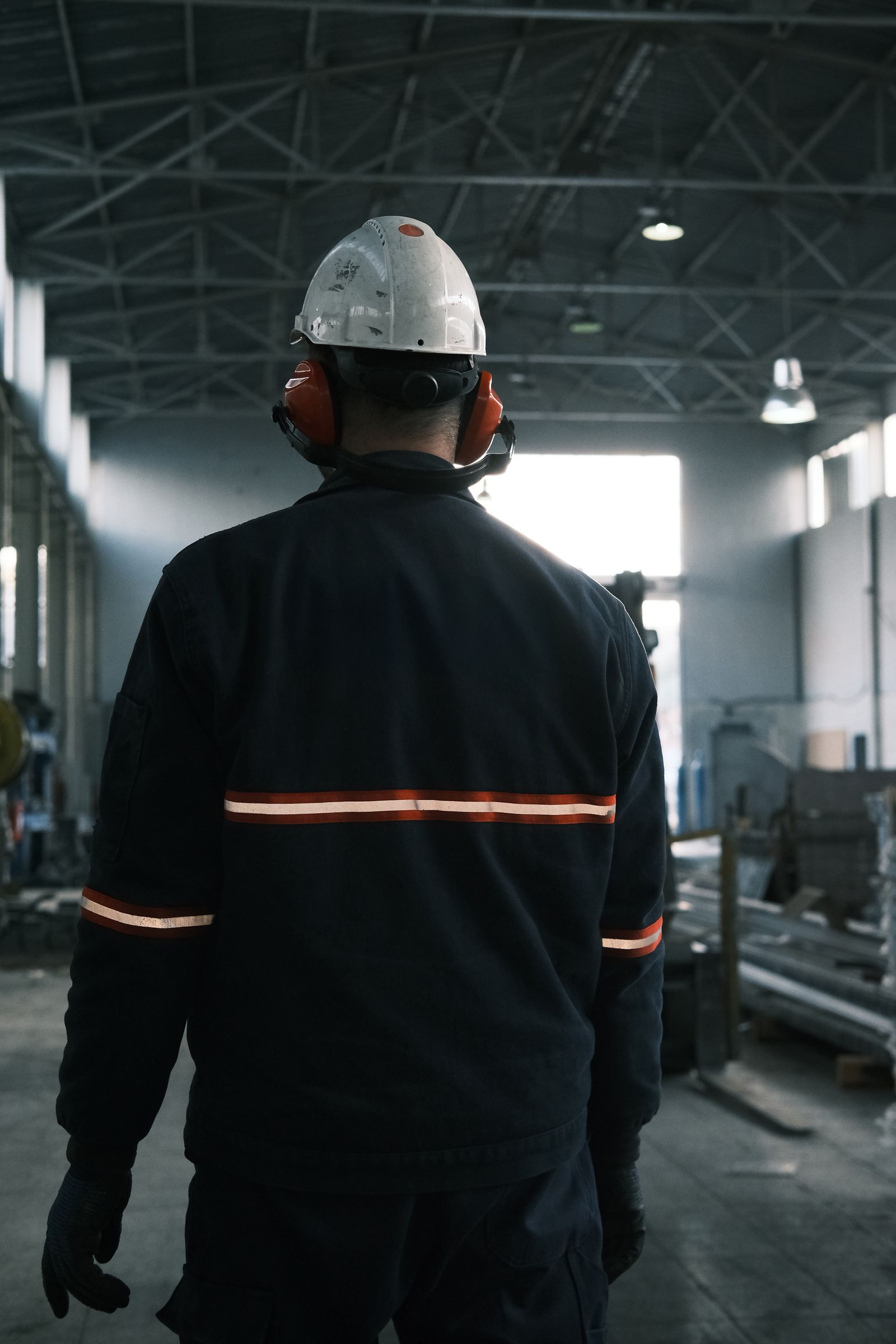
Hiring on price alone for an active industrial site. Industrial sites are not studios with bigger props. They have induction requirements, restricted areas, moving vehicles, and processes that cannot stop for a photograph. A photographer who has never worked a live plant will be slower, may be refused access to areas you needed photographed, and can create a safety problem your site manager has to solve mid-shoot. The saving evaporates the moment a second visit is needed to capture what the first one missed.
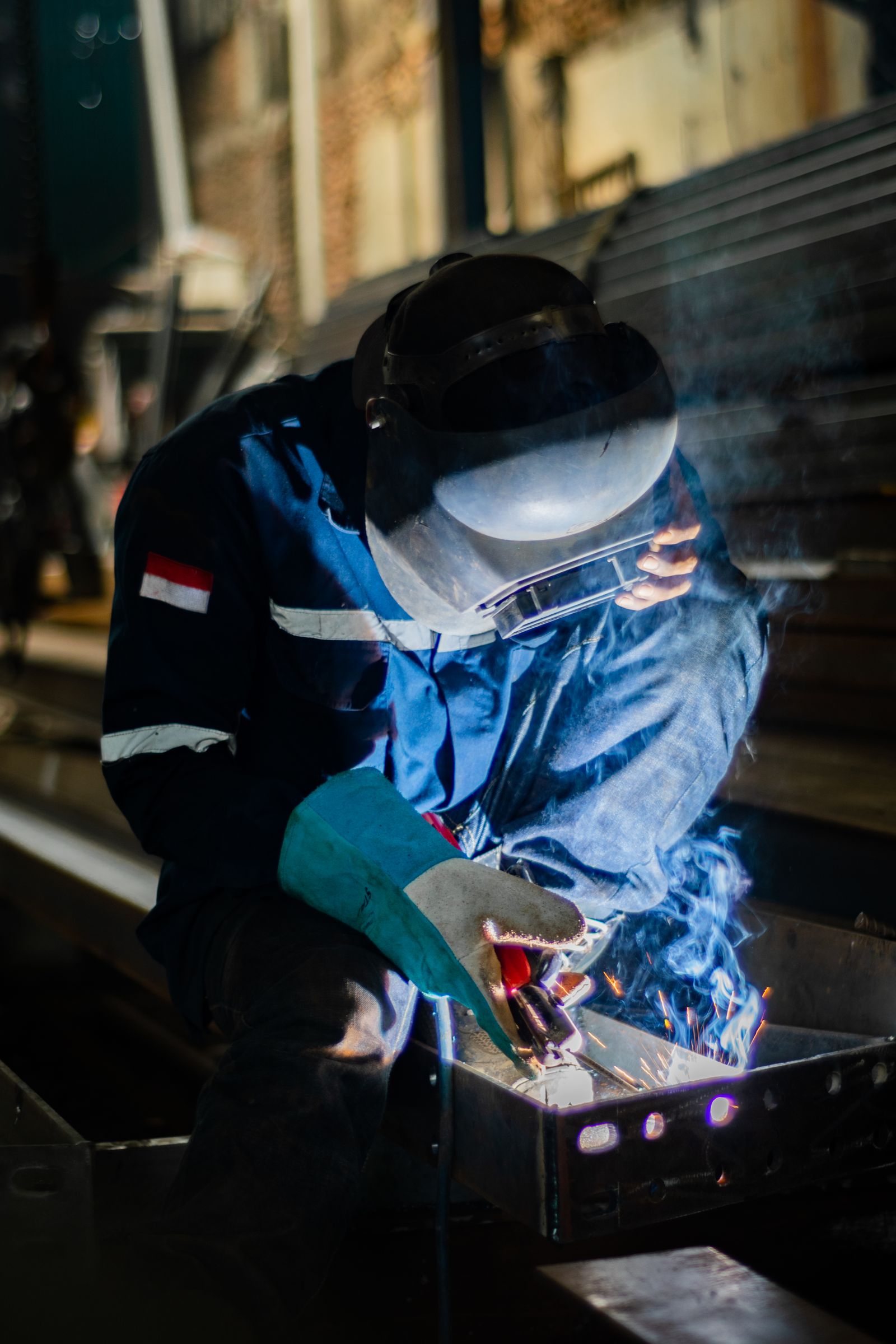
Skipping the assistant on a big site. An assistant at around $125 an hour looks like pure overhead until you watch a solo photographer move lights across a warehouse while the production window closes. On a simple office shoot, skip the assistant freely. On a large floor with lighting, the assistant is what keeps the day to one day.
Demanding every raw file. Asking for all unedited files sounds like getting more for your money. In practice it buys you hundreds of unfinished images you cannot use without editing skill, and many photographers either refuse or charge for the extra handling and the loss of quality control. Pay for fewer, finished, licensed images.
Compressing the day. Booking a half day for a full day’s shot list does not produce a cheaper full day. It produces rushed compositions, missed details and a prioritisation argument at hour three. If the budget only stretches to a half day, cut the shot list to fit it honestly: one building, one process, the team portraits. A tight list done well outperforms a long list done at a run.
Choosing the photographer who will not itemise. A single lump sum with no split between shoot, production and licence cannot be trimmed intelligently, because you cannot see which part you are cutting. Itemised quotes are not bureaucracy; they are the tool that makes a tight budget possible. A photographer who will not provide one is asking you to save blind.
A worked tight-budget plan
Suppose a components manufacturer needs website photographs: the plant exterior, two production processes, six staff portraits and one team photograph. Priced naively — full day, broad licence, rush delivery, 60 finished images — quotes could plausibly reach $5,000 or more. Priced deliberately, the same need becomes: one consolidated half day at $1,300, a web-and-social licence at the lower end of its range, 25 finished images, standard delivery, and the site prepared by the company’s own staff the day before. That version can land near $2,000 without touching the photographer’s creative fee or pretending the licence says something it does not. The difference is not haggling. It is scope, written tightly.
Questions to ask before you sign
- What is split between creative fee, production and licensing in this quote?
- Exactly what uses does the licence cover, for how long, and what does extending it later cost?
- How many finished images are included, and what does an extra finished image cost?
- Have you photographed an active industrial site before, and what safety induction do you need from us?
- What is standard delivery time, and what is the rush fee if we need it?
- What happens if the site stops us finishing the shot list — do we pay for a return visit?
Finding the right photographer on a budget
Start narrow. This site lists 5,719 commercial and industrial photographers, which is far too many to browse hopefully and exactly enough to filter by your town, your industry and the kind of site you run. Shortlist three, send each the same written shot list and the same honest statement of use, and compare the itemised quotes that come back. The cheapest of three comparable quotes is a bargain. The cheapest quote that assumed a smaller job than the other two is a second invoice waiting to happen.
A tight budget, handled this way, is not a weaker shoot. It is a shoot with no waste in it — and the photographs, which are the only part anyone will remember, are precisely the part you did not cut.
Sources
- Chicom Photography, Corporate Photography Pricing Guide — establishes commercial billing models, hourly rates of $250–$500, and industrial half-day rates of $1,800–$3,000 and full-day rates of $3,500–$6,000 or more.
- Deremer Studios, 2026 Standard Rate Sheet — establishes published rates of $350 per hour, $1,300 per half day and $2,400 per full day, plus $500 same-day delivery and $125 per hour for an assistant.
- NVAR Studios, Commercial Photographer Rates in Lincoln, NE 2026 — establishes most business shoots landing between $600 and $1,500 per day in that market.
- Raised Media Co., What Commercial Licensing Fees Cover in Photo and Video — establishes licensing ranges of $500–$2,000 for web and organic social, $2,000–$10,000+ for a full commercial licence, and $5,000–$25,000+ for a full buyout.
- WhatShouldICharge, Photography Usage Rights Pricing 2026 — establishes licensing at 25–100% of the creative fee for advertising use and buyouts at $1,500–$10,000 in its ranges.
- C&I Studios, How Much Does Brand Photography Cost? — establishes the three-part structure of creative fee, production and licensing, and that copyright stays with the photographer unless explicitly assigned.
Photo by Cemrecan Yurtman, https://www.pexels.com/photo/industrial-worker-in-safety-gear-at-factory-29988954/ Photo by ERFIN EKARANA, https://www.pexels.com/photo/welder-in-factory-26840744/
More guides
- How to Find a Wedding Photographer: The Complete, Honest GuidePhotographers › Wedding Photographers
- How Much Does a Wedding Photographer Cost? Packages DecodedPhotographers › Wedding Photographers
- 10 Questions to Ask a Wedding Photographer Before You BookPhotographers › Wedding Photographers
- Wedding Photography Styles Explained: Documentary, Editorial, Traditional, Fine ArtPhotographers › Wedding Photographers
- Hiring a Wedding Photographer in California: Venue Light, Permits, and Price LevelsPhotographers › Wedding Photographers
- All Guides & ArticlesBrowse the full guides library