Photographers › Photographic Equipment Service & Repair
Photographic Equipment Service and Repair Gone Wrong: Your Options, Your Rights and How Fixes Actually Work
When a repair goes wrong, it rarely goes wrong in one clean way. The camera comes back with the fault still in it. Or fixed, with a new fault riding along. Or it does not come back at all — weeks pass, the estimate becomes a moving target, and the shop's answers get shorter as your questions get more specific. If the equipment earns your business money, every one of those weeks is a double loss: the repair bill you are heading toward, and the work you cannot shoot while you wait.
I managed a portrait studio, and I have been the person making the increasingly tense phone calls. This guide is the calm version of what I learned: how camera repair actually works, so you can tell a normal delay from a failing one; what your options are at each stage, from the shop's own redo obligations to warranties, regulators, and small claims; and how to put yourself in the strongest position before you ever hand a camera over. It is general information about how these disputes work in the United States, not legal advice — but the sequence matters, and most people get the sequence wrong by starting at the top, furious, with no paper. Start at the bottom, documented, and you will rarely need the top.
How a repair is supposed to work
Understanding the normal shape of a repair is what lets you spot the abnormal one. A reputable service — manufacturer service center, authorized repairer, or established independent — runs the same basic course. This site lists 571 businesses under Photographic Equipment Service & Repair, and the good ones, whichever kind they are, share a workflow:
- Intake and diagnosis. You describe the fault; the shop examines the equipment and diagnoses it. Diagnostics commonly cost $20 to $75, often credited toward the repair if you proceed. Turnaround for an estimate should be days, not weeks.
- A written estimate. Parts, labor, and total, before work begins. Labor in this trade typically runs $50 to $150 an hour; common benchmarks give you a sense of scale — sensor cleaning $50 to $150, LCD replacement roughly $100 to $300, many lens repairs $100 to $300, with complex work above that. One long-established repairer's published price list shows the texture: minor lens work from about $38.50, most zoom lens repairs $128.50 to $228.50 plus parts, a classic-camera overhaul $278.50 to $378.50 plus parts.
- Your authorization. Work proceeds on the estimate you approved. If diagnosis finds more damage, the professional pattern is a revised estimate and a fresh authorization — not a larger bill presented as a surprise at collection.
- Repair and testing, on a stated clock. Published turnaround norms: minor repairs with parts in stock, two to three business days; standard repairs needing ordered parts, two to three weeks; factory service, four to six weeks; a full overhaul, six to eight weeks. Parts availability is the great variable, especially on older equipment.
- Return with a warranty on the work. Most shops warranty their repairs, typically 30 to 90 days. That warranty — on the repair itself — is your first and cheapest remedy when the fault persists, which is why it belongs in writing from step two, not discovered at step five.
Against that shape, the failure modes stand out clearly: an estimate that keeps being revised upward after authorization; a repair that passes its stated window with no parts explanation; a camera returned untested, with the original fault untouched; a new fault that was not there at intake; a bill containing work you never approved; or silence — the shop that stops answering, which converts every other problem into a recovery problem.
First moves: document, then talk
Whatever has gone wrong, do these before the difficult conversation, because they decide how the conversation ends.
Reconstruct the paper trail. Gather the intake receipt or work order, the written estimate and your authorization, any revised estimates, invoices, and every message. Note dates: when the equipment went in, what was promised, when each promise moved. If the fault is still present, record it — photographs of the defect from several angles, and for a functional failure, a short video of the camera failing to do the thing it was repaired to do. The same evidence serves every later stage, from the shop's own redo to a card dispute months later, so make it once and make it well.
State the problem in one written message. Describe the fault plainly, state what you were promised, name the resolution you want — the repair redone, the unauthorized charges removed, a refund of the repair price — and set a reasonable deadline for a response, commonly seven to fourteen days. Keep the tone professional and the facts heavy. Written, not phoned: a phone call can be remembered two ways, and in a dispute the version with the timestamp wins.
Give the shop its own remedy first. Most repair failures are competence or capacity failures, not fraud, and most shops will redo their own work under their repair warranty when the problem is put to them clearly. This step is not just courtesy. Every later forum — card issuer, consumer agency, court — will ask whether you gave the business a fair chance to fix it, and the documented answer strengthens everything downstream.
Your rights, in the order you will actually use them
The repair warranty and the original warranty
Two different warranties can be in play, and confusing them wastes weeks. The shop's own repair warranty covers the work just done — if the same fault returns inside its window (commonly 30 to 90 days), the redo is the shop's obligation, not a new purchase. The manufacturer's warranty, if the equipment is still inside it, covers defects in materials and workmanship — and it is why in-warranty equipment should go to the manufacturer or an authorized repairer in the first place.
Federal law adds a floor under written warranties. The Magnuson-Moss Warranty Act requires warranty terms to be clear, and it generally bars a warrantor from voiding coverage merely because you used another brand's parts or an independent shop — if a shop claims your warranty died because someone else opened the camera, ask them to show, in writing, the specific term and the damage the other work caused. If a warrantor refuses to honor a written warranty, ask for the denial in writing, with the reason and the term relied on. A refusal that cannot survive being written down often does not survive being asked to be.
The money routes: card disputes
If you paid by credit card and the service was not delivered as agreed, a dispute through your card issuer is a real route and works even when the shop has gone quiet. Issuers treat "not as promised" claims as billing-error disputes with their own notice deadlines, which is one more reason the documented timeline matters. Keep the claim factual and attach the paper trail: estimate, authorization, evidence of the persisting fault, your written complaint and the shop's response or silence.
The complaint routes: agencies and bureaus
A complaint to your state attorney general or consumer protection office costs nothing, and many such offices mediate disputes for free. The Federal Trade Commission takes reports that build the pattern files enforcement is made from. The FTC's longstanding consumer guidance runs in the same order as this guide: contact the seller first and keep records of who said what and when; escalate to the company or manufacturer in writing; then take it to the state and local organizations and dispute-resolution programs. A single complaint may only produce mediation. A pattern of them produces action — and shops know it, which is why a calm letter that mentions the complaint you are about to file often resolves what three phone calls did not.
Small claims court: the last rung, and a practical one
For a repair bill, a ruined shoot's deposit, or equipment held hostage to an unauthorized invoice, small claims court is designed for disputes of exactly this size: low filing costs, no lawyer required, and a judge who will want to see — predictably — the estimate, the authorization, the evidence of the fault, and your written attempt to resolve it. Follow any dispute-resolution step your warranty or contract requires first; some agreements specify an informal dispute program before suit. And keep the claim proportionate: courts remedy money, so quantify yours — repair price, replacement rental costs while the equipment was held, documented losses — rather than asking a judge to punish frustration.
Three situations, worked through
| What happened | Your strongest first move | If that fails |
|---|---|---|
| Fault still present on return | Written notice inside the repair-warranty window; demand the redo the warranty promises | Card dispute on the repair charge; consumer-agency complaint with the evidence file |
| Bill includes work never authorized | Refuse the unauthorized items in writing, citing the approved estimate; pay the authorized portion | Agency complaint; small claims for the difference or the equipment's return |
| Shop has held the equipment for weeks past the window, answers thinning | Written deadline: return date or full status with parts evidence, by a named day | Demand return of the equipment; agency and FTC reports; small claims if it is not returned |
One caution that applies to all three: do not authorize "whatever it takes" work mid-dispute, and do not hand over more equipment — a second body "to look at while you wait" — to a shop already failing you. Disputes are settled from the position you hold, and your position is your paperwork plus your property. Keep both in your hands as far as you can.
Before the next repair: the five-minute version
Everything above gets easier if the intake is done properly, and it takes five minutes. Photograph the equipment's condition at handover, including serial numbers. Get the diagnosis and estimate in writing, with the repair warranty's length stated on it. Agree the rule for surprises before there is one: no work beyond the estimate without your written approval. Note the promised return date. And for equipment your business depends on, hold a fallback — a rental relationship, a second body, an agreement with another shop — because the best dispute outcome still leaves you without a camera for its duration. The 571 service and repair businesses listed on this site include manufacturer centers, authorized repairers, and independents with decades of bench time. The ones worth your equipment will do every one of these steps without being asked. That, in the end, is the whole test: a good repairer documents like someone who expects to be checked. Send your camera to one of those.
Sources
- Precision Camera and Video, published in-house repair price list — lens mount and filter work from $38.50, most zoom lens repairs at $128.50–$228.50 plus parts, classic camera overhaul at $278.50–$378.50 plus parts, minor repairs with parts in stock in 2–3 business days, standard repairs in 2–3 weeks, factory repair in 4–6 weeks, and overhauls in 6–8 weeks.
- GBTimes, How Much Does It Cost to Fix a Digital Camera? and Where Can I Fix My Digital Camera? — diagnostic fees of $30–$75, labor at $50–$150 an hour, sensor cleaning at $50–$150, LCD replacement at $100–$300, manufacturer, authorized and independent repair routes compared, and shop repair warranties typically of 30 to 90 days.
- RobinClaim, Warranty Not Honored: What to Do, Step by Step — the Magnuson-Moss Warranty Act's requirements for clear warranty terms, its general bar on voiding coverage for using other brands of parts or independent service, asking for a denial in writing with the term relied on, and the sequence of written demand, attorney-general complaint and small claims court.
- Federal Trade Commission, Solving Consumer Problems — the FTC's escalation order: contact the seller first and keep a record of conversations, write to the company or manufacturer with copies of receipts, repair orders and warranties, then use state and local consumer organizations and dispute-resolution programs.
- Consumoteca, Defective Item After the Return Deadline: U.S. Rights — the separate deadlines that can apply to one purchase: store return policy, written warranty, implied warranty, marketplace protection, credit-card billing-error disputes, and lawsuit limitation periods.
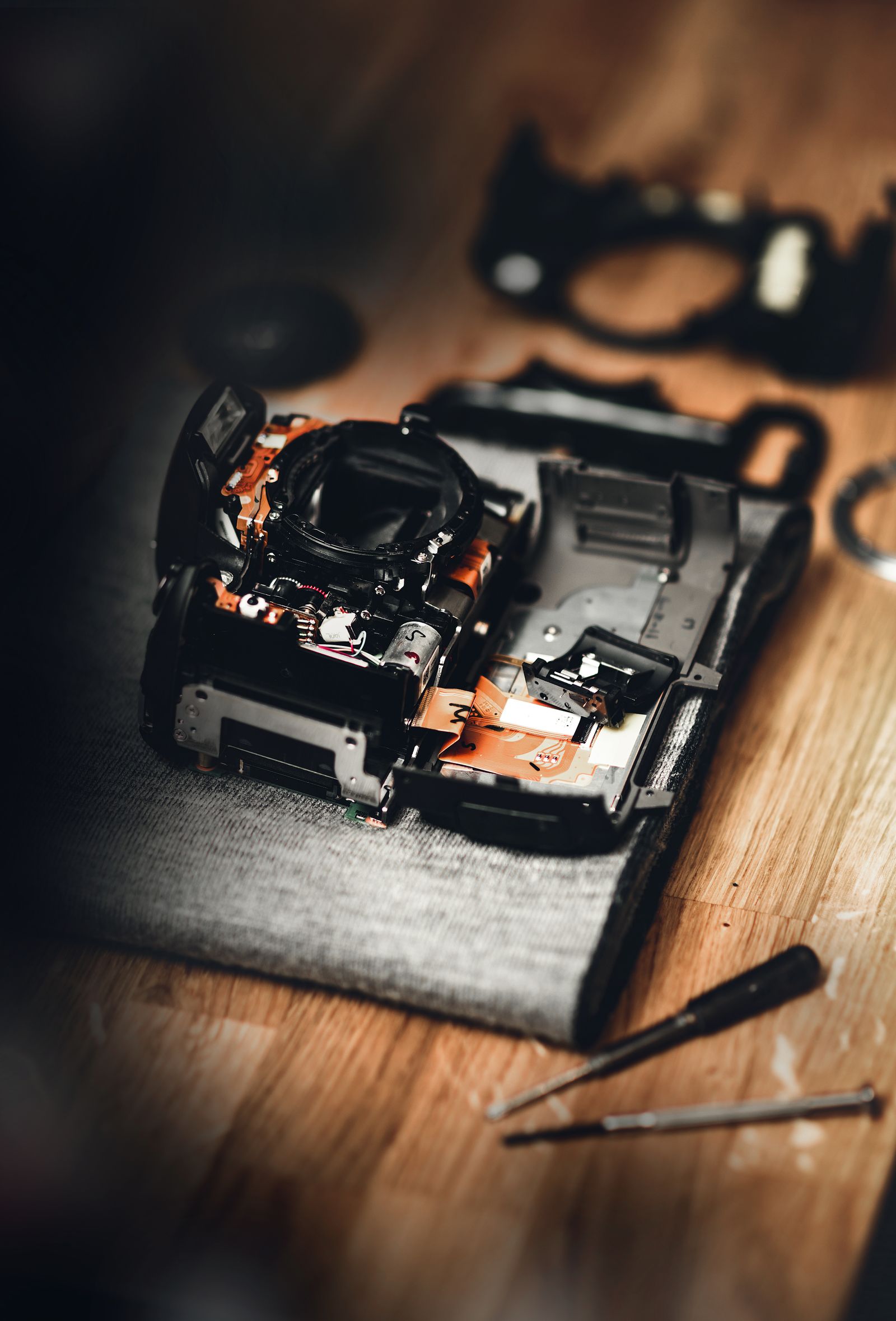
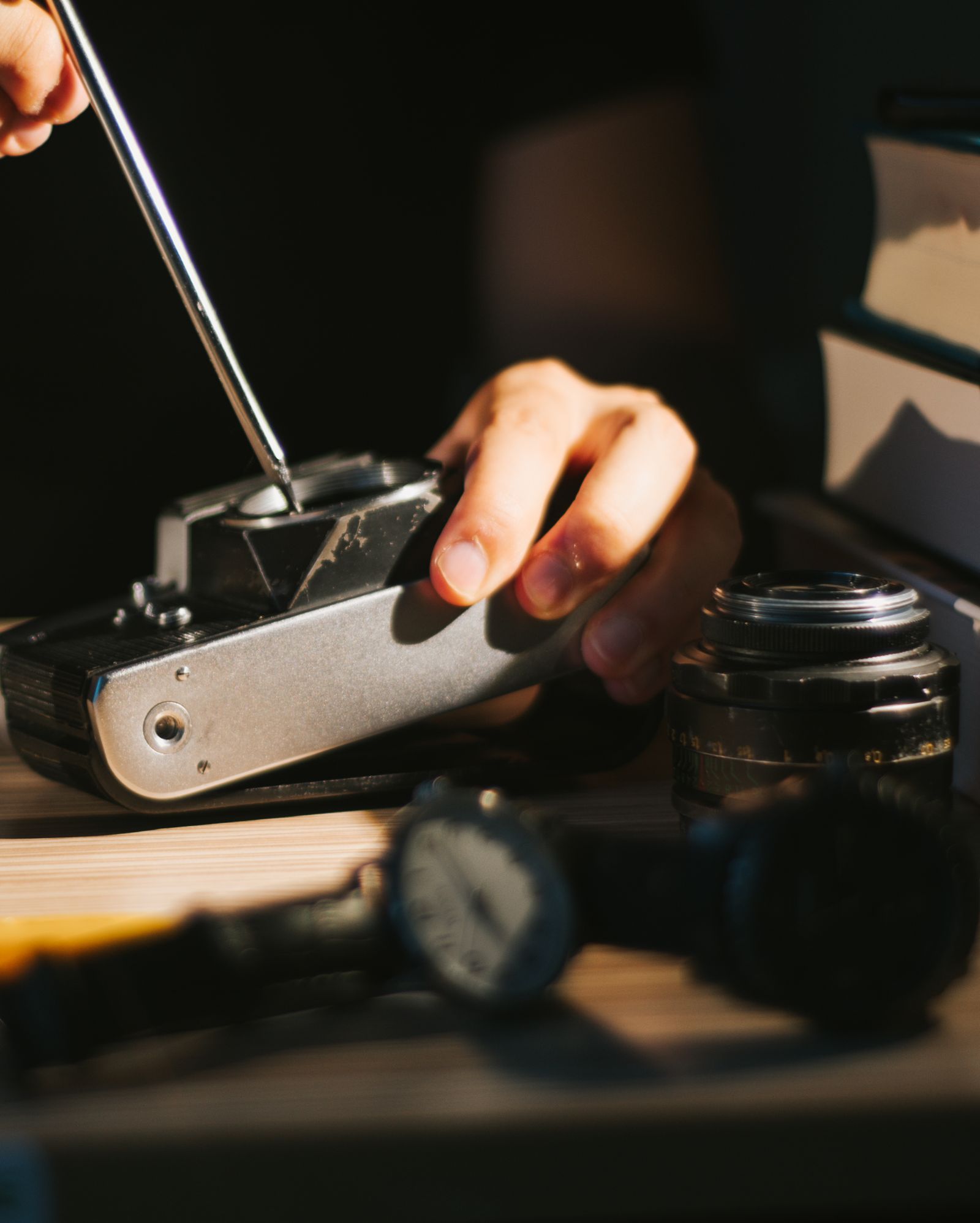
Photographs: disassembled camera on a repair bench, photo by Alex Andrews, https://www.pexels.com/photo/821642/ ; hands repairing camera equipment, photo by Ahmet Polat, https://www.pexels.com/photo/5587333/
More guides
- How to Find a Wedding Photographer: The Complete, Honest GuidePhotographers › Wedding Photographers
- How Much Does a Wedding Photographer Cost? Packages DecodedPhotographers › Wedding Photographers
- 10 Questions to Ask a Wedding Photographer Before You BookPhotographers › Wedding Photographers
- Wedding Photography Styles Explained: Documentary, Editorial, Traditional, Fine ArtPhotographers › Wedding Photographers
- Hiring a Wedding Photographer in California: Venue Light, Permits, and Price LevelsPhotographers › Wedding Photographers
- All Guides & ArticlesBrowse the full guides library