Photographers › Portrait & Commercial Photography
Portrait and Commercial Photography for Beginners: The Mistakes First-Timers Make, and How to Dodge Them
There is a sentence that opens almost every first commercial shoot, worded a little differently each time: "Can you just get some good photos of the products and the team?" I know, because I was the assistant on those shoots — logging what was captured, holding the reflector, and discovering at the end of the day, along with everyone else, that nobody had defined "good," nobody had listed what was needed, and the homepage's wide banner crop had never been shot. The photographs were fine. The project failed anyway.
Portrait and commercial photography is not harder than personal photography; it is less forgiving of vagueness, because the images have jobs to do — sell the product, fill the website, front the pitch deck — and a picture that cannot do its job is worth nothing however beautiful it is. This guide is the beginner mistakes, in the order they usually happen, and the cheap dodges for each. It is written for the creators and sellers who commission this work: founders, shop owners, and anyone whose photos have to convert.
This site lists 381 portrait and commercial photography listings within a much larger bench of 5,719 commercial and industrial photographers — plenty of choice, which is exactly why the brief matters more than the browsing.
Mistake one: booking before you know where the images will live
Every other mistake descends from this one. A commercial photographer is not paid to document your business as it happens; they are paid to produce a defined set of assets for defined destinations. So the first task is not choosing a photographer. It is listing the destinations: homepage hero, product pages, marketplace listings, the About page and team bios, your Google Business Profile, social channels (each with its own crop), sales decks, packaging, trade-show graphics, press.
Each destination imposes requirements — orientation, resolution, background, mood. A marketplace main image wants a clean white background and tight framing; a homepage hero wants a wide, calm image with space for text; a trade-show banner wants a vertical, high-resolution file. A photographer told the destinations can design one shoot that serves them all. A photographer told "some nice pictures" will optimise for whatever looks good in the room, and you will discover the missing vertical at the printer's, where discoveries cost rush fees.
The deliverable, stated properly, sounds like this: a defined set of final images, in defined formats, licensed for a defined set of uses, ready to drop into each destination without another round of edits. If your booking conversation does not produce that sentence, it has not finished.
Mistake two: no shot list
The shot list is the deliverable made concrete: a written inventory of every image the shoot must produce, organised by location, subject and intended use, agreed before the day. Skip it, and the predictable pattern follows — the crew captures what catches the eye, everyone goes home happy, and a week later someone asks where the storefront establishing shot is, or the detail shot of the product's one feature that justifies its price.
Build the list backwards from the destinations in mistake one. For each: subject, setting, orientation, roughly how many usable frames. Three work areas need three establishing shots. Each product needs its angles, its detail, its scale reference. Each team member needs a headshot in the same light and crop as everyone else's, or your About page will look like a ransom note. The list feels bureaucratic for exactly one day — shoot day, when it converts a wandering session into a production, and lets the photographer price and schedule honestly instead of padding for chaos.
Mistake three: choosing on price and a highlight reel
Commercial photography is a bundle of specialisms that do not transfer. A gifted wedding photographer may never have lit a reflective product; a product specialist may be hopeless at coaxing a nervous founder through a portrait. The beginner move is to hire a beautiful Instagram grid. The professional move is to ask for a complete assignment resembling yours — products that behave like yours (glass, fabric, food and metal all light differently), people as awkward as yours, a full gallery rather than the five best frames of a career.
Price needs the same scepticism, because the market's structures hide the comparison. Published rates for this work:
| What you're buying | Published prices | Watch for |
|---|---|---|
| Individual headshot session | $150–$750 typical; beginners $100–$250, established professionals $500–$1,000 | How many retouched finals are included — often just 2–5 |
| Personal branding session | $450–$950 for solo-founder packages; $1,850 for a 90-minute styled classic session at one studio | Makeup, styling and image count vary enormously inside the same headline price |
| Full brand library | $2,800 for a 3-hour session with 75+ images; $4,800 for 5–6 hours with 150+ images at one Twin Cities studio | Whether commercial usage rights are included — some studios state it, many don't |
| Team headshot day | $395 per person on-site at one studio; New York team packages $1,449 for up to 5 people | Per-person economics flip fast as team size grows |
| Retainer / subscription | From $550 with a 3-month commitment at one studio; $650/month on a 12-month quarterly-content plan at another | For creators who publish constantly, this beats re-booking from scratch |
Two quotes at the same headline price routinely differ by: number of final images, retouching depth, whether a stylist or makeup artist is included, delivery time (two weeks is a common standard; one studio charges $100 to deliver a week early), and — the big one — usage rights, which is mistake four.
Mistake four: assuming you own the photographs
You do not. The photographer owns the copyright from the moment of capture; what you buy is a licence to use the images in agreed ways. Beginners discover this at the worst moments: when the best image goes into a paid campaign the licence never covered, when a retailer asks for files your licence doesn't let you share, when the photographer's portfolio use of your unreleased product surprises you at launch.
Some studios bundle broad commercial usage into their packages — websites, social, marketing, press and print, stated in so many words — and that bundling is a genuine selling point worth paying for. Where it is not bundled, negotiate it at booking: list the uses (web, marketplaces, social, paid ads, packaging, PR), the term, and the territory, and write them into the contract. Also settle the mirror-image question: the photographer's right to use the images in their own portfolio, and any embargo until your launch date. Both directions are normal commercial conversation. Neither can be fixed gracefully afterwards.
People in the photographs need paperwork too: identifiable individuals in images used to promote or sell generally require signed model releases — your staff and customers included — while purely editorial use generally does not. A professional will raise this. If yours doesn't, raise it yourself, on the day, with signatures, not later by email.
Mistake five: expecting retouching to rescue the day
Retouching refines; it does not rescue. A product that arrives wrinkled, scratched, dusty or wrongly assembled will be photographed wrinkled, scratched and dusty, and fixing it in post costs more per hour than the steamer, the lint roller and the spare sample would have. The same applies to people: the night before a portrait session is not the time for a new haircut, a spray tan or an all-night launch.
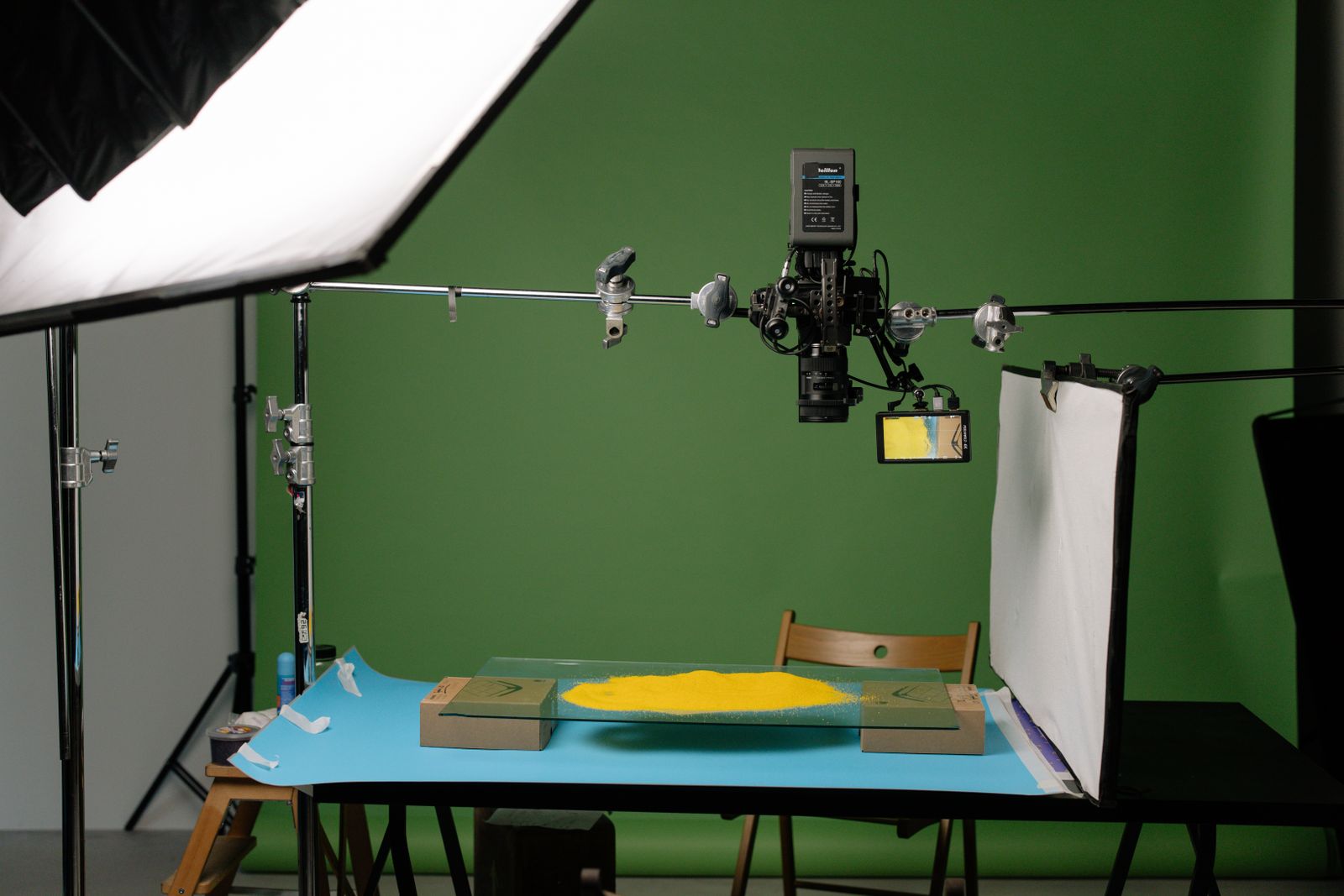
Prepare like a producer, because on a commercial shoot you are one: products cleaned, steamed, assembled and duplicated (one hero sample, one backup); wardrobe chosen against the brand palette and the background, with spares; the space tidied beyond what feels necessary, because the camera sees the cable, the sticker and the scuff you have stopped noticing; and one named person on your side empowered to approve images on the day. Tethered review — frames appearing on a monitor as they are shot — exists precisely so that approval happens while the set is still standing. Use it. Approving from a gallery a week later, when the set is struck and the model has flown home, converts every correction into a reshoot quote.
Mistake six: changing direction mid-shoot, and vanishing after it
A clear plan does not forbid creativity; it protects the booked deliverables from it. The classic beginner pattern — a mid-shoot pivot ("actually, let's do the whole thing outdoors, moodier") — spends the paid hours on the new idea and leaves the shot list half-finished. Park new ideas in a written list, shoot them after the list is complete if time remains, and let the photographer say what the pivot costs before it happens.
The mirror mistake comes after delivery: treating the job as finished when the gallery lands. Commercial images are assets with a lifespan — they need filing with their licence terms attached, resizing for each channel, refreshing as the team and products change (which is why retainers exist), and a feedback loop: which images actually converted? Sellers who track that — the product angle that sells, the portrait style that gets replies — brief the next shoot from evidence. Everyone else re-books the same session and hopes.
The beginner's pre-flight checklist
- List every destination the images must serve, with orientation and format.
- Turn it into a shot list; agree it, and the deliverable count, in writing.
- Judge candidates on a complete assignment like yours, not a highlight reel.
- Compare quotes on finals count, retouching, delivery time and usage rights — not the headline.
- Put the licence (uses, term, territory), portfolio rights and any launch embargo in the contract.
- Collect model releases for every identifiable person, staff included.
- Prepare products, wardrobe and space as if retouching did not exist; name your on-the-day approver.
- File the delivered images with their licence; note what converted, for next time.
Do those eight things and your first commercial shoot stops being a leap of faith. The photographer gets a brief they can price honestly, you get images built for the places they will actually work, and the photographs start earning back their fee — which, for creators and sellers, was the entire point of booking them.
Sources
- Design in Houston, Commercial Photography Deliverables Guide — establishes that a commercial deliverable is a defined set of final images in defined formats licensed for defined uses, and that a shot list built backwards from destinations prevents the missing-format failure.
- Ryan Velting, Hiring a Commercial Photographer: What to Know First — establishes the pre-shoot decisions (uses, products, deadlines, deliverables, approver) and that first-time clients commonly overspend or receive fewer useful images through poor planning.
- Rare Studio LA, Common Mistakes Business Owners Make When Hiring a Commercial Photographer — establishes the recurring mistakes: choosing on price alone, not checking relevant portfolio work, shooting without a shot list, expecting retouching to fix unprepared products, and not defining image usage in advance.
- All Ages Photography, How Much Should You Charge for a Professional Headshot — establishes headshot pricing of $150–$750 per session typically, beginners at $100–$250, professionals at $500–$1,000 and executive branding specialists at $1,000–$2,500+.
- Studio Freyja Brand Photography, session pricing — establishes a $950 refresh session, a $2,800 three-hour signature session with 75+ images, a $4,800 brand library with 150+ images, founder headshot days at $395 per person, and a quarterly content retainer at $650/month.
- Maddie Meteer Photo, branding and headshot pricing — establishes packages from $275 (headshot) and $450 (entrepreneur), commercial usage rights included across websites, social, marketing, press and print, a two-week standard turnaround and rush delivery a week early for $100.
- Match Production, headshot pricing — establishes New York team headshot packages from $1,449 for up to five people and individual studio sessions from $399.
Photographs: brand portrait of a woman — photo by Andrea Piacquadio, https://www.pexels.com/photo/762020/ ; studio product setup — photo by cottonbro studio, https://www.pexels.com/photo/5878878/ ; business portrait of a man — photo by Thyrone Paas, https://www.pexels.com/photo/1722198/
More guides
- How to Find a Wedding Photographer: The Complete, Honest GuidePhotographers › Wedding Photographers
- How Much Does a Wedding Photographer Cost? Packages DecodedPhotographers › Wedding Photographers
- 10 Questions to Ask a Wedding Photographer Before You BookPhotographers › Wedding Photographers
- Wedding Photography Styles Explained: Documentary, Editorial, Traditional, Fine ArtPhotographers › Wedding Photographers
- Hiring a Wedding Photographer in California: Venue Light, Permits, and Price LevelsPhotographers › Wedding Photographers
- All Guides & ArticlesBrowse the full guides library