Photographers › Portrait Photographers
Portrait Photography in Alaska: Permits, Prices and Local Know-How
National portrait advice assumes a world of short drives, next-day shipping, and a sun that behaves roughly the same in June as in January. Alaska breaks all three assumptions at once. I assisted on commercial and portrait work long enough to know that the photographer's skill matters everywhere — but in Alaska, the difference between a good booking and an expensive lesson is usually logistics: which land manager owns the ground you're standing on, how many hours of usable light the season actually gives you, and what it costs to move a photographer, an album, or a framed print across a state where many communities are reached only by air or water. This guide is the Alaska version of hiring a portrait photographer: permits first, because they have deadlines; light second, because it cannot be negotiated with; then prices, and what actually drives them here.
The permit Alaska actually requires
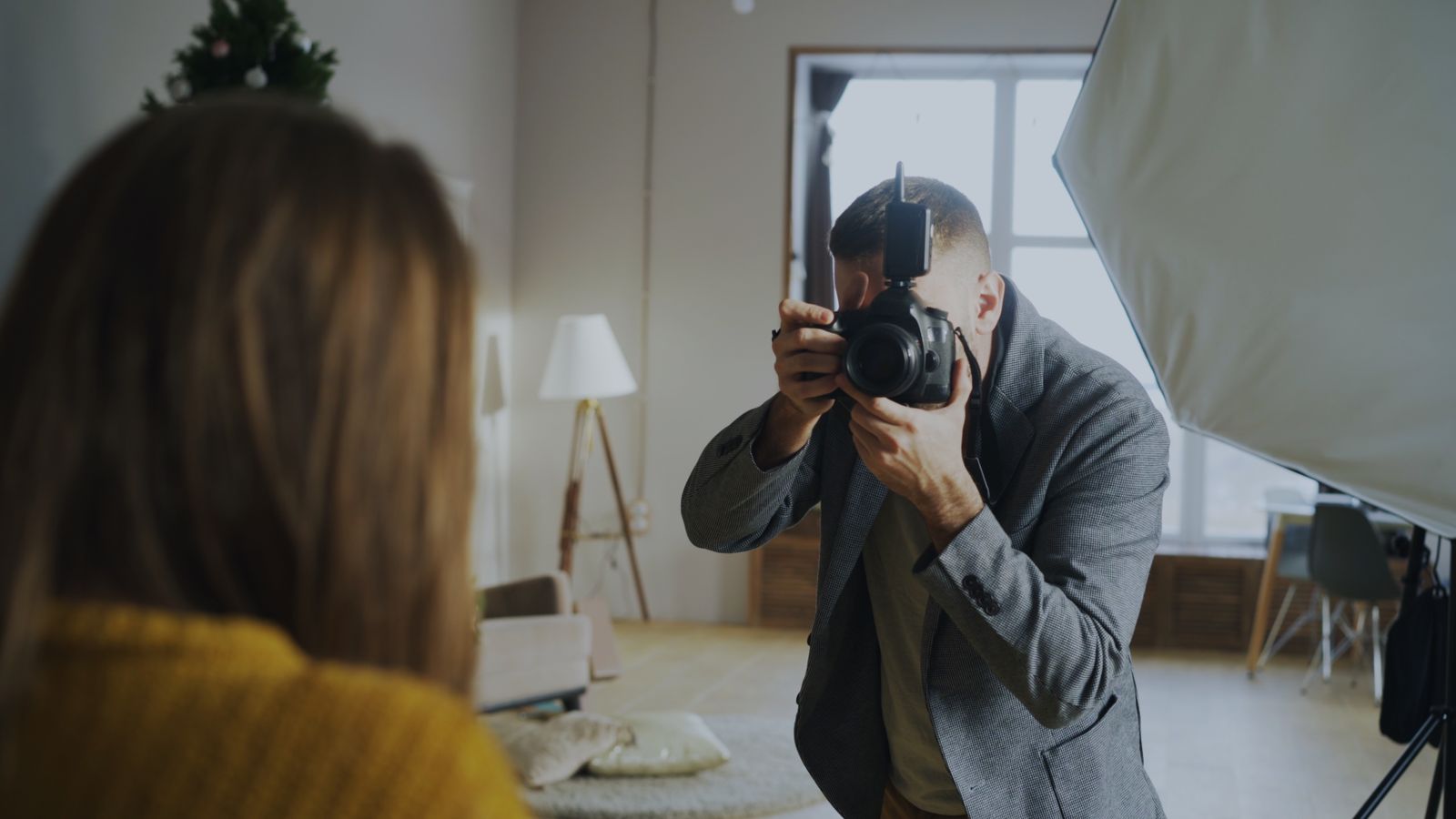
Here is the fact that separates Alaska from the national advice: portrait photography is named, explicitly, as a commercial activity in Alaska State Parks. The Division of Parks and Outdoor Recreation's own fact sheet lists "portrait photography" among the examples of commercial activities that require a Commercial Use Permit — a CUP — for anyone conducting them within a state park unit. Chugach State Park, the mountain backdrop behind half of Anchorage's outdoor portraits, is a state park. So are many of the most photographed landscapes in the state.
The mechanics matter, because they set your timeline:
| Alaska State Parks requirement | The figure or rule |
|---|---|
| Commercial Use Permit (annual, for portrait photography) | $450 total — a $100 application fee plus a $350 permit fee; expires December 31 of the year issued |
| Commercial filming/photography day rates (per project) | $100 application fee, plus $100/day for 1 person, $250/day for 2–10 people, $350/day for 11–20, $450/day for 21–30, $1,000/day over 30 |
| Drone use in a state park | $100 per day on top of the people-based fee — and some parks restrict it further (see below) |
| Processing time | Allow up to 30 days for the application |
| Insurance | Commercial general liability insurance is required for commercial activities, with Alaska State Parks listed as additionally insured |
| Business license | A valid Alaska business license is part of the application |
Read that table the way a client should. A legitimate Alaska portrait photographer who shoots in state parks carries an annual cost — the CUP, the insurance, the license — before your session begins, and it is one reason established Alaska photographers do not price like a hobbyist with a camera. It also means the question "can we do the session at the park this weekend?" has a bureaucratic answer as well as a photographic one: if your photographer does not already hold a permit, the state's own guidance says to allow up to 30 days. Photographers working alone on speculation, not under contract, are exempt from the filming permit — but your booked, paid portrait session is precisely the contracted case the permit exists for.
Two more boundaries to know. The land manager matters more than the map: Chugach State Park lies mostly within the Municipality of Anchorage, so a location that looks like "an Anchorage park" may be state land with state rules, while promotional photography on Anchorage municipal parkland runs through the city's own film permit process instead. And drones: Chugach State Park prohibits drone takeoff and landing everywhere except the Bold Airstrip at Eklutna Lake, whatever the day fee schedule says elsewhere. A photographer who promises drone portraits in Chugach is promising something the park has already refused.
What to ask: "Do you hold a current Commercial Use Permit for state parks, and which permit covers my location?" A professional answers with a permit year. Anyone else is about to learn the system at your expense — or skip it at yours.
Light: the Alaska condition that runs everything
Anchorage sits far enough north that daylight is a seasonal resource, not a daily one. Around the summer solstice the city gets more than 19 hours of daylight; around the winter solstice, fewer than six. For portrait work this inverts the national playbook twice a year.
In summer, there is effectively no bad hour and no true golden hour either — the sun circles rather than sets, evening light stays soft and usable late into the night, and a 9 p.m. family session in June is not a stunt, it is good scheduling. The constraint is not light but people: photographers' summer calendars fill with exactly these long-evening sessions, plus the wedding season stacked on top.
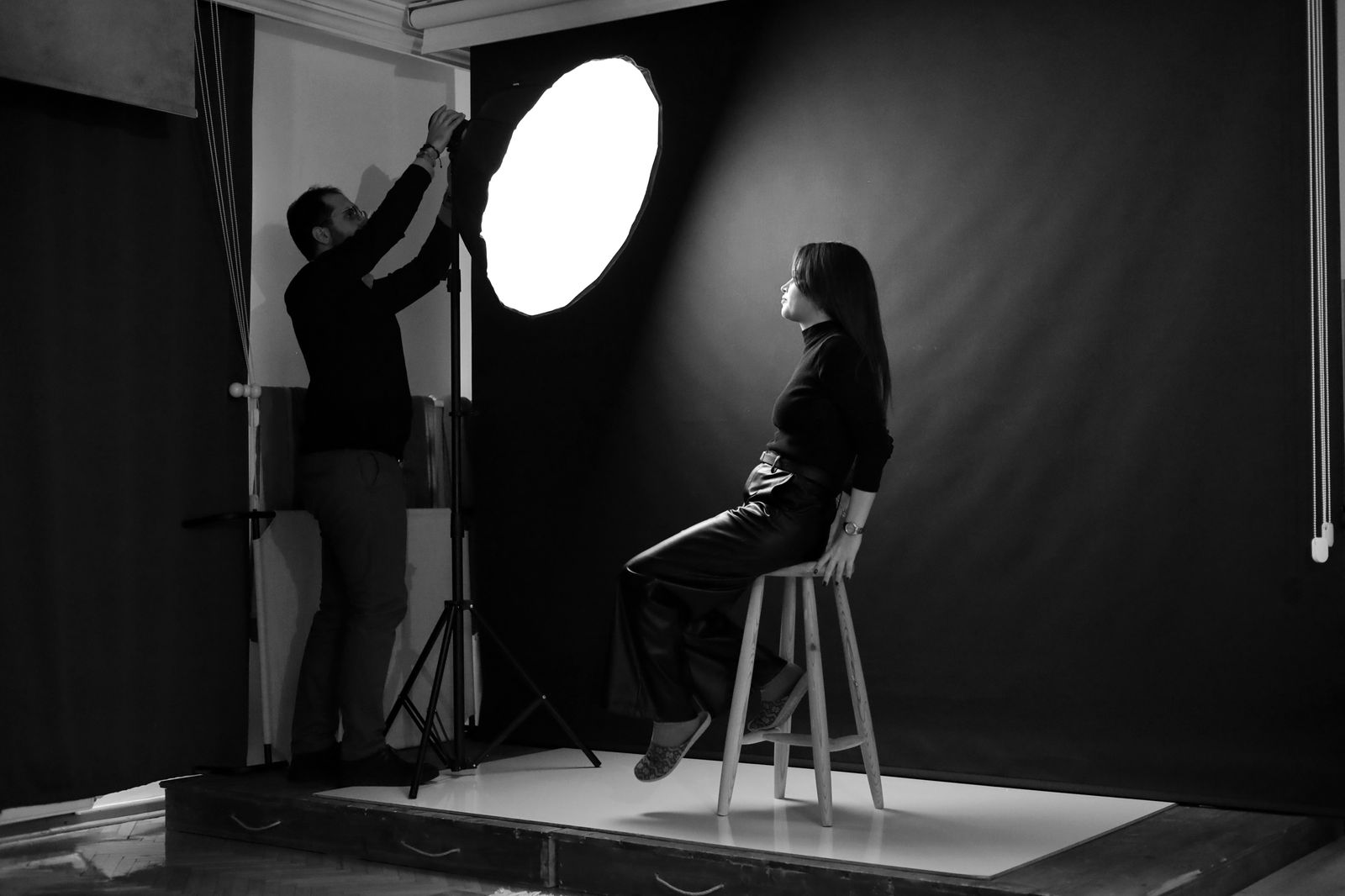
In winter, outdoor portraiture compresses into a midday window of low, raking light that is genuinely beautiful — the sun never climbs, so the whole short day is angled like permanent late afternoon — and brutally cold to stand in. Sessions get shorter, locations get closer to the car, and the professionals plan for batteries that drain faster and fingers that stop cooperating. Much winter work retreats to studios, which is why Anchorage supports a real studio bench: dedicated portrait studios downtown and across the city, including boutique studios built around senior portraits and headshots and at least one fashion-and-beauty studio with national magazine credits. In Alaska, "studio or location?" is a seasonal question before it is an aesthetic one.
In between — March and September especially — Alaska offers the compromise locals quietly prefer: real sunrises and sunsets at civilized hours, snow or early color still on the mountains, and calendars with gaps in them.
Weather deserves one blunt paragraph. Coastal Alaska — Anchorage, the Kenai, Juneau and the Southeast — is maritime: rain and low cloud are normal, not unlucky, and a photographer who works here shoots well in flat gray light or does not work. Interior Alaska around Fairbanks trades the rain for temperature extremes. Either way, your contract's weather clause — who decides to postpone, by when, and whether the deposit moves — matters more in Alaska than in any state where a rain check costs an afternoon instead of a season.
Prices: what drives them in Alaska
Alaska portrait pricing follows a pattern first-time buyers misread. Session fees at established Anchorage studios sit broadly in line with comparable Lower 48 boutique studios — the market supports everything from a department-store portrait counter (JCPenney Portraits operates in Anchorage) to expensive-end boutique studios — because the photographers' time costs what photographers' time costs. Where Alaska separates from the national picture is everything around the session:
- Travel is a real line item, not a courtesy. A photographer flying to a bush community, or driving the Parks Highway to Fairbanks, is spending a day to reach your hour. Expect travel to be quoted explicitly — flights, mileage, lodging — and expect it to be non-negotiable in a way a suburban mileage fee is not.
- Prints and albums travel too. Most professional labs are in the Lower 48. Your album is printed there and shipped north, which adds freight cost and, more importantly, time: a reprint that takes three days in Ohio takes a week or more to reach Alaska, and a photographer who promises otherwise is promising on the carrier's behalf. Build delivery expectations around shipping reality, especially for holiday deadlines.
- The permit and insurance overhead is baked in. The $450 annual CUP, liability cover, and business licensing described above are fixed costs spread across a small market's worth of clients. Thin markets do not produce discount competition; this site lists 672 portrait photographers nationally, and Alaska's share of working professionals is a small bench in a very large state — in many communities, the choice is between two or three real professionals, or flying one in.
- Season concentrates demand. The long-light months are when everyone wants outdoor portraits, senior sessions stack into late summer, and the good calendars close early. Winter, by contrast, is when Alaska photographers have time — and when studio sessions, headshots, and commercial work can be negotiated.
The tax answer is "it depends where you stand"
Couples and families arriving from states with a single sales-tax rate find Alaska's system genuinely strange: Alaska is one of five states with no state-level sales tax at all. Instead, more than 100 local jurisdictions — cities and boroughs — levy their own, at rates from 0 percent up to about 7.5 percent, each with its own base and exemptions. The two largest portrait markets, Anchorage and Fairbanks, levy no general sales tax: a session and prints bought in Anchorage carry no sales tax line. Juneau's combined rate is 5 percent; Sitka's is 6 percent (and seasonal — 5 percent in winter, 6 percent from April to September); Ketchikan sits at 5.5 percent and Kodiak at 7 percent. So the correct answer to "is tax included?" is a question back: in which community, for delivery where? Alaska sources its local taxes by destination, so prints shipped from a no-tax studio into a taxing community can pick up that community's tax. A photographer who works statewide should be able to explain their own community's rule in one sentence. One who quotes you a "standard Alaska sales tax" is inventing it — there isn't one.

Booking well, the Alaska way
Pull the threads together and the Alaska checklist looks like this. Choose the season for the light you actually want, and book summer evenings early. If the location is outdoors and public, ask which land manager owns it and whether your photographer's Commercial Use Permit covers it — and if the answer requires a new application, start 30 days out, not three. Get travel, shipping-dependent delivery dates, and the weather-postponement rule in the contract, in numbers. Confirm the tax treatment for your community rather than assuming a statewide rule that does not exist. And judge the photographer on range: mountain light and studio light, summer and winter, because in Alaska you are not hiring for the day you imagined. You are hiring for the day the state actually gives you — and the professionals here are the ones who have already planned for it.
Sources
- Alaska Division of Parks and Outdoor Recreation, Commercial Use Permits and Special Use Permits fact sheet — establishes that portrait photography is a listed commercial activity requiring a Commercial Use Permit, the $450 CUP fee ($100 application plus $350 permit), insurance requirements, and the up-to-30-days processing guidance.
- Alaska Department of Natural Resources, Director's Order 328 — establishes commercial filming and photography day rates by group size ($100–$1,000 per day) and the $100-per-day drone addition.
- Alaska State Parks, Non-Competitive Permit for Commercial Activities — Filming and Photography — establishes the application requirements: Alaska business license, certificate of commercial liability insurance, and permit carried while operating in a state park.
- Masters' Guild, Anchorage Photography and Videography hiring guide — establishes that Chugach State Park lies mostly within the Municipality of Anchorage, that Anchorage municipal parkland has its own film permit route, and that Chugach prohibits drone takeoff and landing except at Bold Airstrip, Eklutna Lake.
- TaxCloud, Alaska Sales Tax Rates 2026 — establishes that Alaska has no state-level sales tax, that over 100 local jurisdictions levy their own at 0–7.5 percent, and the city rates for Anchorage (0%), Fairbanks (0%), Juneau (5%), Sitka (6%), Ketchikan (5.5%), and Kodiak (7%).
- Stripe, 2026 Alaska Sales Tax Rates — establishes Alaska as one of five states with no statewide sales tax and the destination-based sourcing of its local taxes.
Photographs: portrait session — photo by Vitaly Gariev, https://www.pexels.com/photo/36697244/ ; adjusting a studio light — photo by syd.trgt, https://www.pexels.com/photo/36182206/ ; studio portrait — photo by Andrea Piacquadio, https://www.pexels.com/photo/774909/
More guides
- How to Find a Wedding Photographer: The Complete, Honest GuidePhotographers › Wedding Photographers
- How Much Does a Wedding Photographer Cost? Packages DecodedPhotographers › Wedding Photographers
- 10 Questions to Ask a Wedding Photographer Before You BookPhotographers › Wedding Photographers
- Wedding Photography Styles Explained: Documentary, Editorial, Traditional, Fine ArtPhotographers › Wedding Photographers
- Hiring a Wedding Photographer in California: Venue Light, Permits, and Price LevelsPhotographers › Wedding Photographers
- All Guides & ArticlesBrowse the full guides library