Photographers › Portrait Photographers
Portrait Photography in Arizona: Costs, Rules and Local Reality
Every state has portrait photographers. Arizona has portrait photographers who plan like meteorologists. If you run a small business in Phoenix, Scottsdale, Tucson or Flagstaff and you need images — a proper headshot, portraits of your team, pictures of you in the place you actually work — the national advice about booking a session and showing up smiling is only half the job here. The other half is heat, light that changes with elevation, a clock that never changes, and a patchwork of permit rules for the desert land everyone wants in the background.
I assisted on commercial and portrait shoots in conditions like these. This guide is the Arizona version: what sessions cost in the Phoenix market, where the permit lines actually sit, and how to schedule so the weather works for your business instead of ending the shoot.
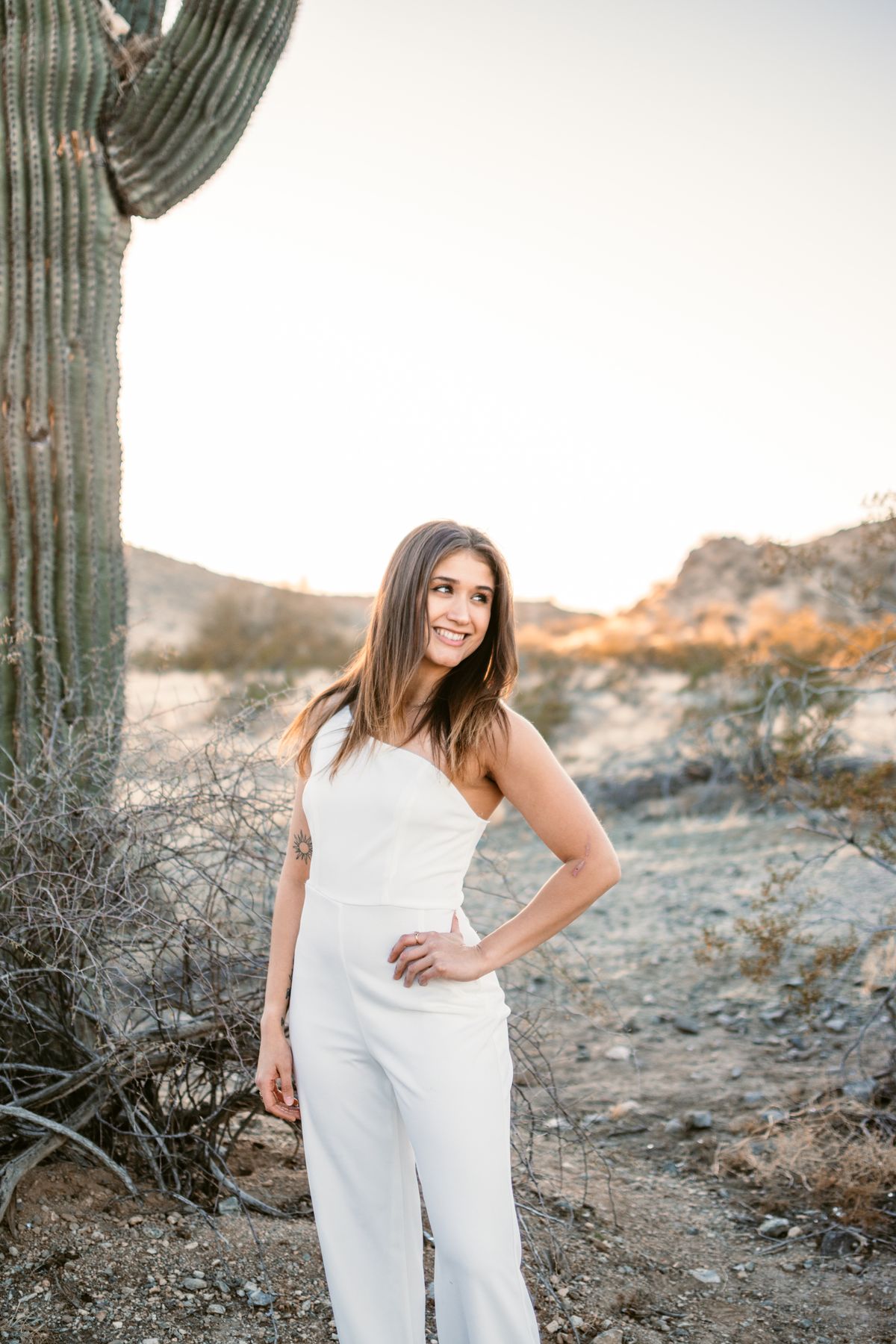
What a portrait is, for a small business
For a business, "portrait photography" usually means three different products, and they price differently:
The headshot. One person, studio or office, a short session, a small number of retouched files sized for a website, LinkedIn and press use. This is the entry product and the one most often under-bought: a single good headshot for the founder and phone snapshots for everyone else reads, to a customer, as two different companies.
The team and environmental session. Photographers come to you — or you go to a location that says something about the business — and produce portraits of each person plus working pictures: you with clients, at the bench, in the shop. A Scottsdale portrait studio that specialises in outdoor business portraits makes the honest Arizona point about scale: in heat and bright light, large groups are hard to do well outdoors, so executive teams are often photographed outside and larger staff groups split across sessions or moved indoors.
The personal-brand or campaign session. Longer, styled, multiple looks and locations, built to feed a website and months of social content. This is where Phoenix package pricing becomes visible: one Phoenix studio's published portrait-session packages for couples and individuals run $350 for an hour with 10 edited photos, $550 for an hour with 20 photos and a framed print, and $750 for an hour and a half with 30 photos and a larger print, with delivery in about two weeks. Business work is quoted on brief rather than off that menu, but the structure — time, finished-image count, and physical products as the price steps — is the same structure you will see in a business quote.
Use those figures as a floor and a shape, not a promise. A half-day on location with a full team, multiple setups and commercial usage for advertising will cost more than a one-hour personal session, and it should: more people, more finished files, broader rights.
The Arizona rule that runs everything: heat
Phoenix summer is not "warm." It is a production condition. Local studios build their entire summer method around it, and a business booking portraits between June and September should expect — and demand — the same discipline:
- Sunrise is the summer session. In summer, the first hour after sunrise is the safer choice: the light is as soft as at sunset, locations are empty, and the heat is still bearable. Late afternoon, by contrast, holds the day's accumulated heat even as the light improves.
- Sunset is the rest of the year's session. The last hour before sunset is when Arizona portraits look their finest — soft, golden, nobody squinting. In Phoenix that hour moves a long way through the year: sunset is about 5:21 p.m. in December and as late as 7:43 p.m. at the end of June, so a "golden hour booking" is a different clock time in January than in July.
- Arizona does not change its clocks. The state stays on Mountain Standard Time all year. That makes local planning simpler — and confuses out-of-state clients and remote teams, who should be told explicitly what time zone the call sheet means.
- Monsoon is a season, not a surprise. The National Weather Service defines Arizona's monsoon season as June 15 through September 30. Afternoon storms can arrive with wind, dust and rain within minutes. A summer afternoon booking needs an indoor or covered backup location chosen in advance, water for everyone, shade between setups, and a reschedule policy agreed before the day — reputable Phoenix studios reschedule weather-stopped sessions at no cost, and you should confirm yours does.
- Makeup, wardrobe and people come first. Heat melts makeup and wilts a pressed shirt in minutes. Powder and tissues for touch-ups, a spare shirt, and an air-conditioned place nearby are not luxuries on an Arizona shoot; they are how the last frame looks as good as the first. If anyone feels unwell, the session stops. A good photographer will say this before you do.
For a business, the scheduling consequence is practical: book team portraits in the morning in summer, keep outdoor groups small and quick, and do the big all-staff photograph in the cooler months or indoors. Spring and autumn are Arizona's portrait high seasons for a reason, and photographers' diaries fill accordingly.
Where you may shoot: the permit patchwork
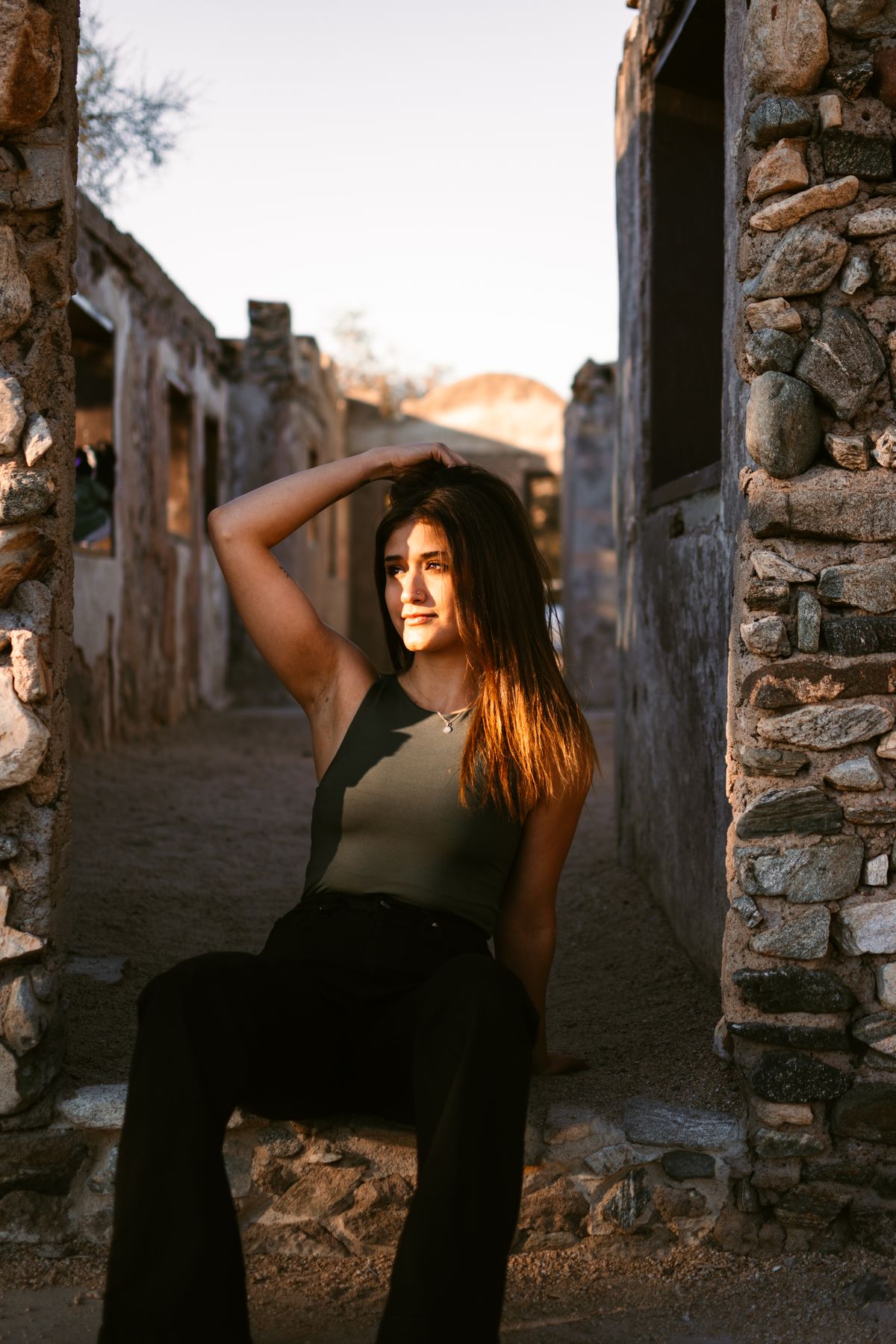
Arizona's portrait locations sit under at least four different authorities, and "it's public land" is not a permit. Know which one owns your background:
Arizona State Parks. The state's administrative code treats commercial photography as a special use. A commercial photography permit must be requested at least 30 days before the shoot, covers no more than seven consecutive days and no more than 14 days in a calendar year at a particular park, and the permit application requires a certificate of insurance showing $1 million of general liability coverage naming Arizona State Parks and Trails as an additional insured. The published application puts the commercial film and photography usage fee at up to $300 per day, with fees paid at least seven days before the date of use, and notes that entrance and special-use fees may still apply. In plain terms: a paid portrait session at a state park — Lost Dutchman, Catalina, Red Rock and the rest of the postcard list — is a month-ahead, insured, paid production, not a walk-up.
State Trust Land. Much of the open desert that looks like nobody's land is State Trust Land, which is not public parkland. Being on it at all requires a permit from the Arizona State Land Department; recreational use needs a recreation permit, and commercial events need a Special Land Use Permit. A photographer who suggests "a quiet spot in the desert" should be able to tell you whose land it is.
City and county parks. Phoenix, Scottsdale, Tucson and the Maricopa County regional parks each run their own rules, reservations and, for some ramadas and areas, permits. South Mountain Park/Preserve alone covers more than 16,000 acres, and parts of it require reservations. The photographer's job — confirm this is in their service, in writing — is to check the specific park, not to assume last month's location had the same rules.
Private and tribal land. Resorts, ranches, historic properties and tribal lands are private permission, priced and conditioned by the owner or nation. Some of Arizona's most photographed landscapes are tribal land with their own photography rules and fees, and no state or city permit overrides them.
The business takeaway is not to become a permit expert. It is to hire one: ask any photographer you are considering where they shoot business portraits, what permission those locations need, and who obtains it. A vague answer in Arizona is a red flag with a 30-day lead time attached to it.
Licensing and business basics, Arizona edition
Arizona does not require a state occupational licence simply to work as a photographer — there is no photographer's licence to ask to see, and anyone implying otherwise is confused or selling something. What a legitimate Arizona photography business does have is more ordinary and more checkable: a registered business, a transaction privilege tax licence where their city requires one for their activities — Arizona's sales tax is a transaction privilege tax, and how it applies depends on what is sold and where — liability insurance (which the state-park permit above will demand proof of anyway), and a contract that states the commercial essentials.
For a small business buying portraits, the contract points that matter are usage and people:
- Usage. You need the right to use the portraits in your business marketing — website, social, print, advertising — for a sensible term. Confirm it is written in, and confirm whether paid advertising is included or priced separately.
- Files and formats. How many finished, retouched images, at what sizes, delivered when. Two weeks is a published Phoenix norm for a personal session; team and campaign work should have its delivery date in the agreement.
- Deposits and rescheduling. A published Phoenix pattern is a $150 non-refundable deposit to hold a session, applied to the package, with the balance due 48 hours before, rescheduling on 72 hours' notice, and free rescheduling when weather stops the session. Your business quote will differ in scale, but it should be equally specific — especially the weather clause, in monsoon season.
- Your team's consent and comfort. Portraits of employees are portraits of people. Schedule them as participants, not props: tell staff in advance, allow for anyone with a genuine objection to talk to you privately, and never make a summer outdoor session a test of endurance.

Choosing a photographer in Arizona
This site's directory lists 672 portrait photographers among its Arizona-relevant categories nationally — the honest way to use any directory is to narrow by city and specialty, then verify locally. For Arizona, verification has a local accent:
- Ask for Arizona work in your season. A portfolio of desert portraits shot in October tells you little about a photographer's July method. Ask what changes in summer — the answer should be sunrise starts, shade plans and a weather policy, unprompted.
- Ask the permit question for your location. State park, trust land, city park or private: who permits it, how long does it take, and is the fee in your quote?
- Compare finished images, not headline prices. Time, retouched-file count, usage and products are the price. Two quotes $300 apart may be $300 apart in deliverables, not in greed.
- Check the delivery promise against the season. Peak spring and autumn diaries stretch turnaround. Get the date in writing if the portraits are tied to a launch.
- Meet the light where it is. If a photographer proposes a midday outdoor team portrait in Phoenix in July as a first choice, keep looking. The state's good portrait photographers are easy to recognise: they talk about the clock and the thermometer before they talk about the camera.
Arizona rewards that discipline with something few states can offer a small business: portraits that could have been made nowhere else — saguaro desert, red rock, mountain light an hour from a major airport — made safely, legally and at the right hour. Hire for the local reality, and the pictures will look effortless. They will not have been. That is rather the point.
Sources
- IAZ Photo Studio, "Planning Arizona portraits? Time them by sunset and temperature" — Phoenix sunset times through the year (about 5:21 p.m. in December to 7:43 p.m. in late June), sunrise as the safer summer session, and Arizona's year-round Mountain Standard Time. https://blog.iazphotostudio.com/en-us/best-time-photo-session-arizona/
- IAZ Photo Studio, "Summer Wedding or Quince in Arizona: Heat and Monsoon Plan" — National Weather Service monsoon season of June 15 to September 30, HeatRisk guidance, and summer scheduling practice. https://blog.iazphotostudio.com/en-us/arizona-heat-and-monsoon-photo-tips/
- IAZ Photo Studio, Phoenix engagement and portrait session packages — $350 / $550 / $750 session packages, $150 deposit, balance and rescheduling terms, and two-week delivery. https://fotoyvideophoenix.com/en-us/engagement-photos-phoenix-az/
- Parkhurst Photography, "Best Time for Outdoor Family Photos in Phoenix" — sunrise and sunset practice for Phoenix outdoor sessions and seasonal planning. https://parkhurstphotography.com/timing-is-everything-choosing-the-perfect-moment-for-your-outdoor-family-photos-in-phoenix/
- Duane Furlong Studios, "Outdoor Business Portraits" (Scottsdale) — outdoor executive portrait practice in Arizona heat and group-size limits outdoors. https://duanefurlongstudios.com/outdoor-business-portraits/
- Arizona State Parks and Trails, Agency Rules and Regulations, Ariz. Admin. Code R12-8-125 — commercial photography as a special use: request at least 30 days ahead, maximum seven consecutive days and 14 days per year at a park. https://azstateparks.com/agency-rules-regulations
- Arizona State Parks and Trails, Commercial Photography/Filming Permit Application — $1 million general liability certificate naming Arizona State Parks and Trails, usage fee up to $300 per day, fees paid at least seven days before use. https://arizona-content.usedirect.com/storage/Permit%20Application%202023-24%20fillable.pdf
- Arizona State Parks and Trails, "Trails on State Trust Land" — State Trust Land permit requirements and the Special Land Use Permit for commercial events. https://azstateparks.com/trails-on-state-trust-land
- Photograph: photo by Ryan Leeper, https://www.pexels.com/photo/11432629/
- Photograph: photo by Ryan Leeper, https://www.pexels.com/photo/11432630/
- Photograph: photo by Andrea Piacquadio, https://www.pexels.com/photo/774909/
More guides
- How to Find a Wedding Photographer: The Complete, Honest GuidePhotographers › Wedding Photographers
- How Much Does a Wedding Photographer Cost? Packages DecodedPhotographers › Wedding Photographers
- 10 Questions to Ask a Wedding Photographer Before You BookPhotographers › Wedding Photographers
- Wedding Photography Styles Explained: Documentary, Editorial, Traditional, Fine ArtPhotographers › Wedding Photographers
- Hiring a Wedding Photographer in California: Venue Light, Permits, and Price LevelsPhotographers › Wedding Photographers
- All Guides & ArticlesBrowse the full guides library